Driving And Parking In Bilbao
Bilbao, in Spain's Basque Country, is compact and walkable, so most visitors never need a car inside the city. This guide covers when driving makes sense, how parking works, and which coastal and inland day trips are genuinely easier with wheels.
Short answer
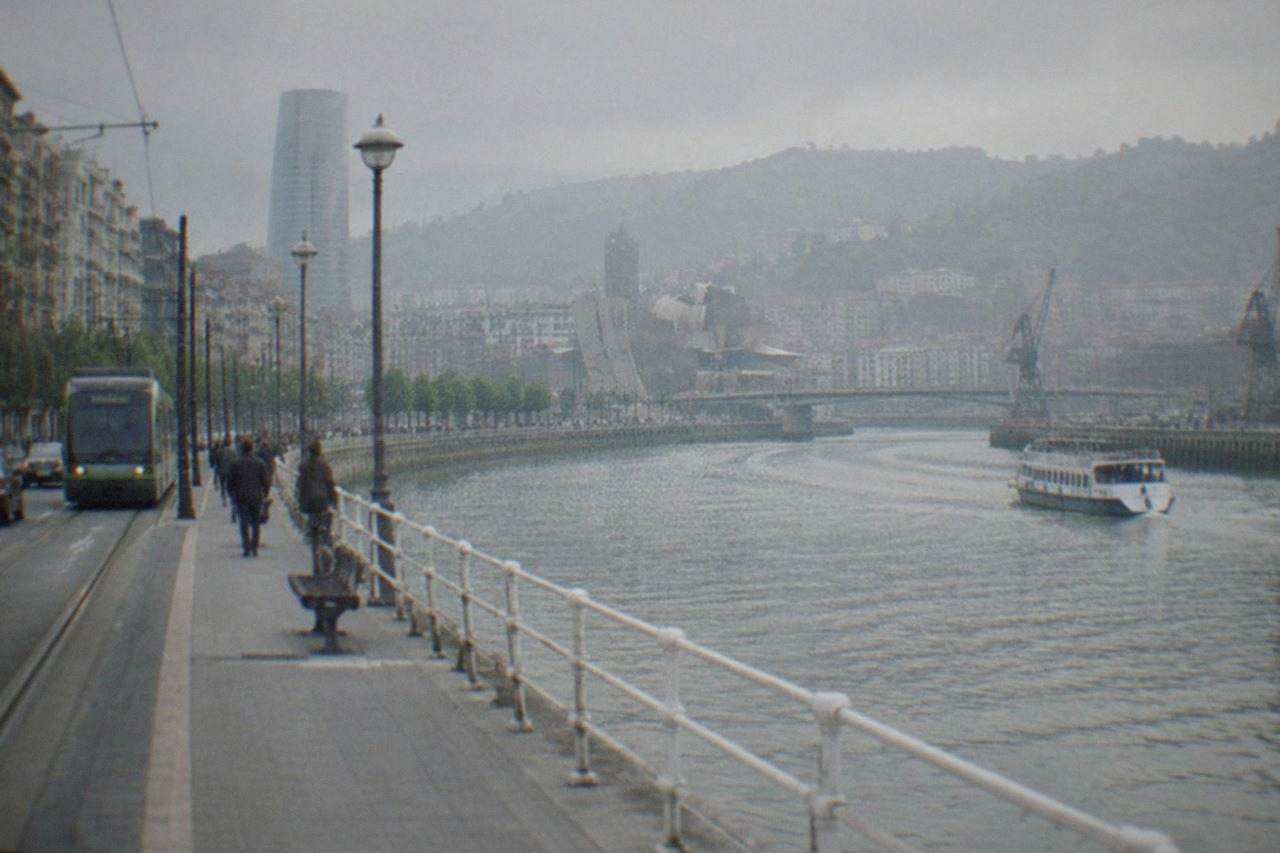
You do not need a car inside Bilbao itself: the city is compact, the metro and tram cover the main districts, and the old town is best on foot. A car earns its keep only for coastal day trips like Gaztelugatxe, Bermeo and Mundaka, or inland loops through Rioja, where public transport runs but takes longer.
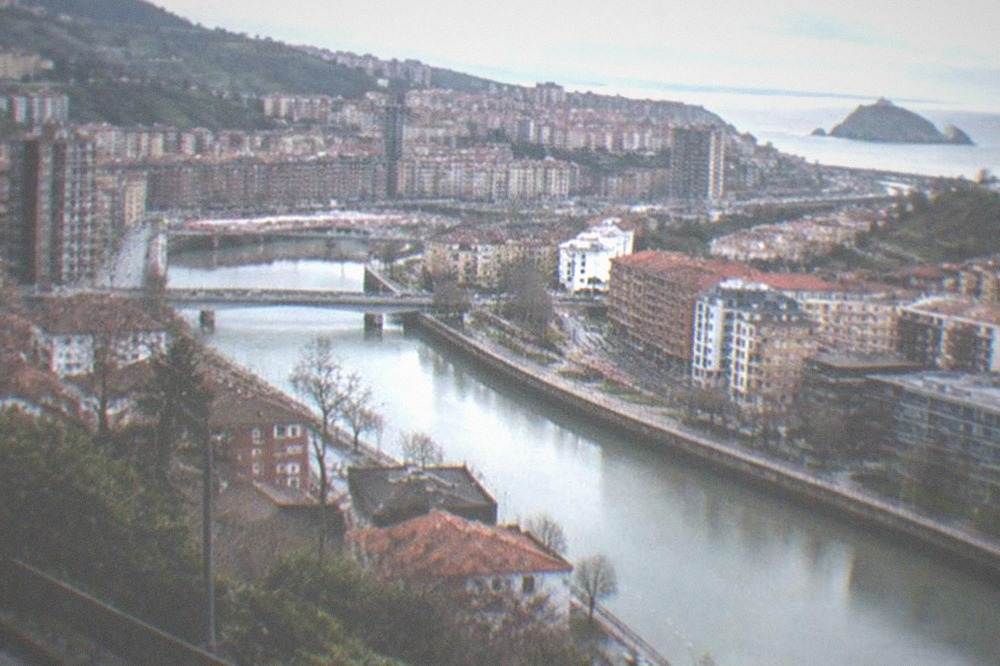
Bilbao sits on the tidal Nervion/Ibaizabal estuary in Biscay (Bizkaia) province, Basque Country, northern Spain, about 15 km upriver from the Bay of Biscay. It is a dense, mid-sized city of 346,933 residents (Eustat, 1 January 2025) built around a valley floor, which shapes every driving decision you will make here. The streets are narrow in the Casco Viejo, the one-way systems in Ensanche reward a calm navigator, and the hills on both riverbanks mean tunnels, elevated roads and a funicular rather than gentle grid driving. This guide from Bilbao Travel Guide covers when a car helps, when it actively hurts, and how to handle parking once you have one.
Do You Need A Car In Bilbao At All?
No, you do not need a car for Bilbao itself, and for most first-time visitors a car inside the city is a liability rather than a help. The centre is walkable end to end, the metro covers the estuary districts in Zone 1 for 1.02 EUR with a Barik card, the tram runs along the river past the Guggenheim, and the airport is served by a direct bus every 15 minutes for 5 EUR. A car only starts paying for itself on coastal and inland day trips.
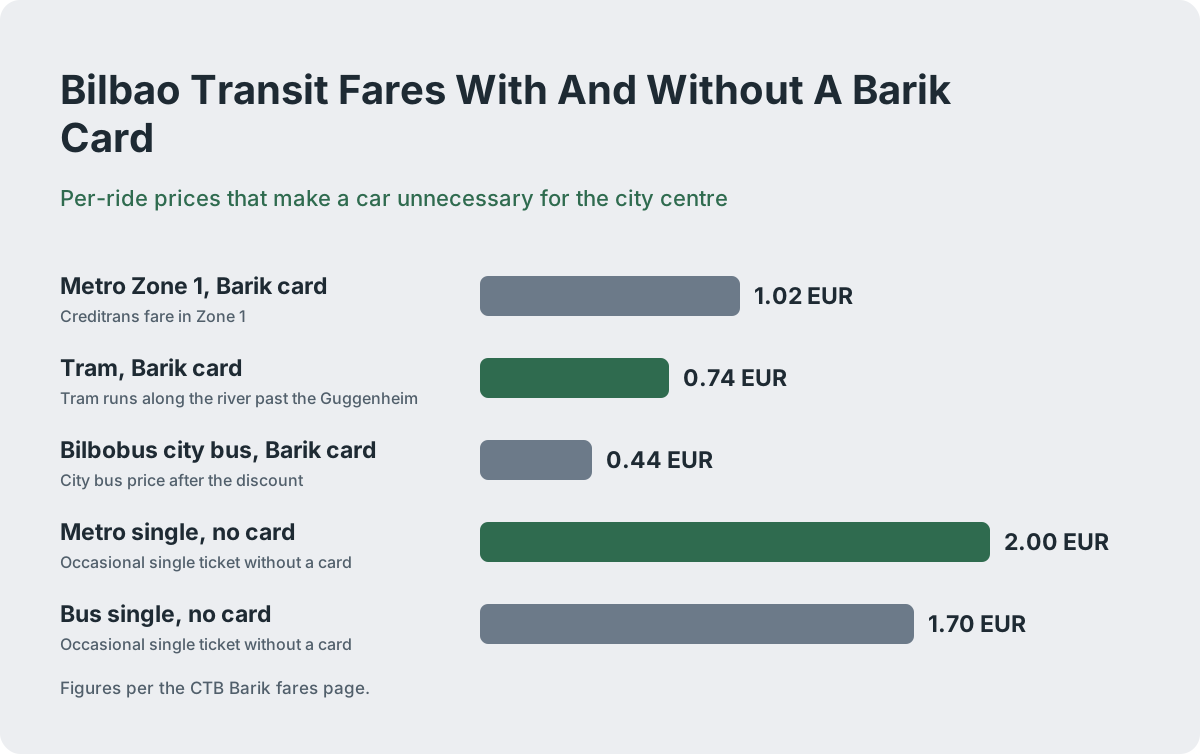
The arithmetic is simple. A Barik Creditrans metro ride in Zone 1 costs 1.02 EUR, a tram ride 0.74 EUR, and a Bilbobus city bus around 0.44 EUR after the discount, per the CTB fares page. Even the occasional single tickets without a card, 2.00 EUR on the metro and 1.70 EUR on the bus, cost a fraction of what parking for a day in the centre would run, and the CTB Barik fares page gives all of these figures directly. Add the Bilbao Bizkaia Card at 10 EUR for 24 hours of unlimited transport plus attraction discounts, and the car-free case for the city itself is close to airtight. The Bilbao Bizkaia Card page breaks down exactly what the card covers.
Where the calculus flips is the coast. San Juan de Gaztelugatxe, the hermitage on its rocky islet, has no rail station of its own, and public bus connections involve Bizkaibus lines with journey times of roughly 1 hour 10 minutes to over 2 hours each way, against a quicker run by car. Bermeo and Mundaka sit on an Euskotren branch line that takes about 1 hour 21 minutes from the Casco Viejo station, pleasant but slow. Rioja wine country is the other big exception: a car lets you hop between Haro, Laguardia and villages that buses reach awkwardly, if at all.
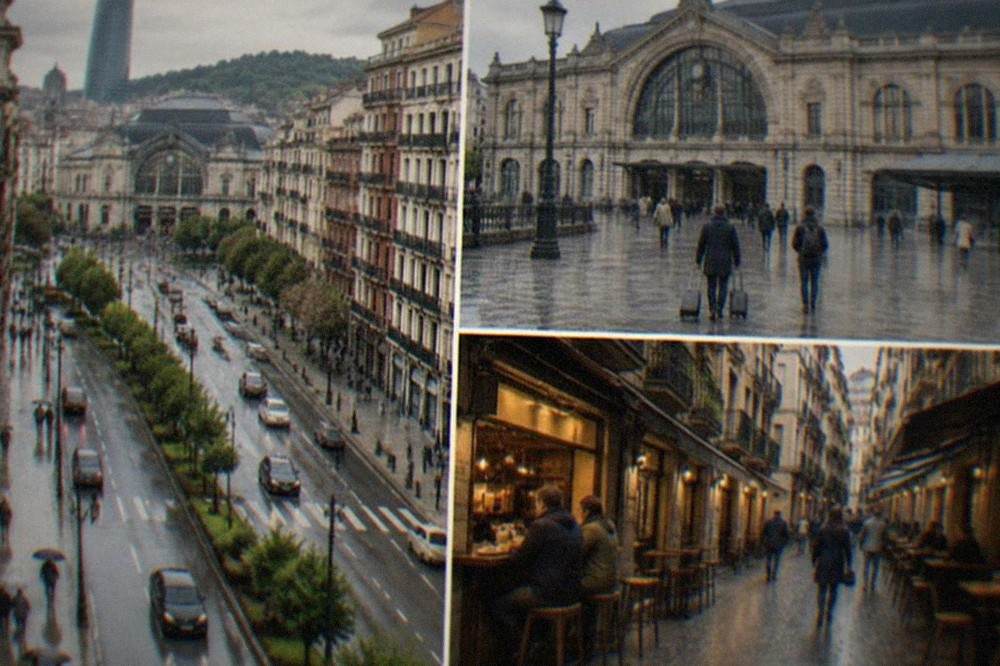
The honest summary: arrive car-free, enjoy the city on foot and by metro, and rent a car for a day or two only if your itinerary leans heavily toward the coast or Rioja. Even then, guided day trips cover the same ground without the parking headache, as the options below show.
What Is Driving In Bilbao Actually Like?
Driving in Bilbao is manageable but not relaxing: the city is built along a narrow river valley, so expect one-way systems in Ensanche, restricted old-town streets, frequent rain that keeps the asphalt glossy, and tunnels and elevated roads connecting the hillside districts. Traffic is typical of a city of this size, and the main motorways radiating out toward the coast, San Sebastián and Rioja are in good condition.
The geography is the thing to understand. The city core hugs the estuary, with steep neighbourhoods climbing both banks. That means the driving you do inside the city is mostly short, urban and hemmed in, while the funicular and the Artxanda tunnel handle the big elevation changes. The Artxanda tunnel is tolled, and the airport taxi guidance notes the toll is included in the regulated fare bands, so if you drive it, budget for it as a separate toll charge.
Rain is the other constant. AEMET's Bilbao Aeropuerto/Loiu station (1082) normals show 1,134 mm of precipitation a year, with November the wettest month at 147 mm and even the driest summer month, July, still collecting 50 mm. This is a temperate oceanic, Atlantic-influenced climate, so wet roads are simply a fact of driving here in every season. The Bilbao weather guide has the month-by-month detail.
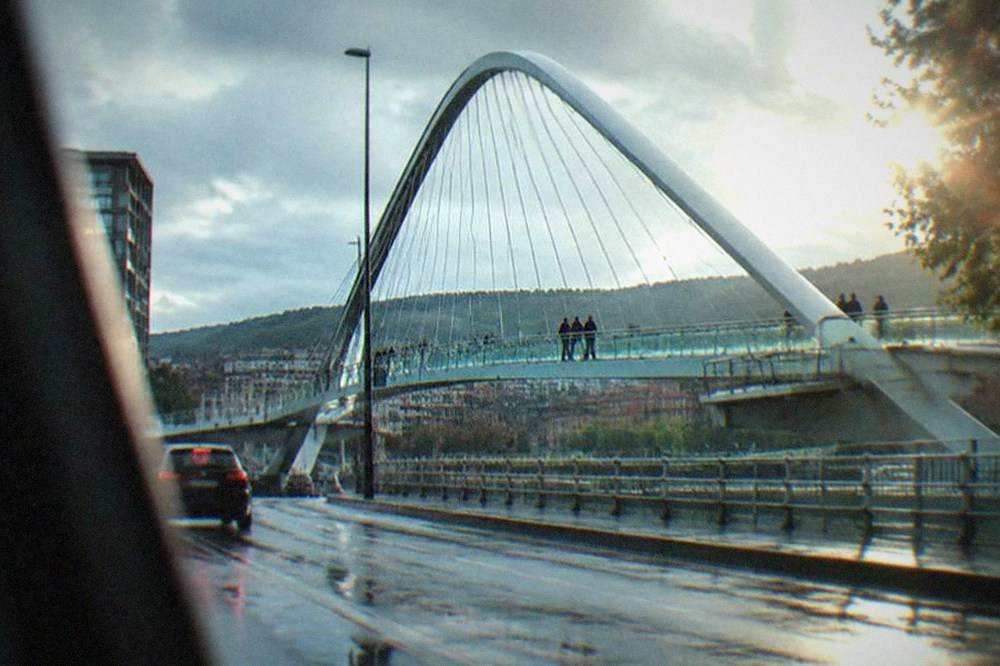
Outside the city, driving improves dramatically. The motorway east toward San Sebastián and the French border is fast and scenic once you clear the metro area, and the coastal road toward Bakio and Gaztelugatxe is a winding, rewarding drive with the Atlantic in view. The main caution is the last stretch to Gaztelugatxe itself, where the approach road and parking area fill quickly on controlled-access days, when the site caps visitors at 1,462 per day.
Where Can You Park In Bilbao?
Bilbao offers a mix of underground public car parks in the centre, on-street paid zones in the Ensanche and newer districts, and informal park-outside-and-metro-in options at stations along the river, but no specific car park's address, price or hours are published in this guide. The reliable strategy is to park once on arrival, leave the car, and move around the city on foot and by metro.
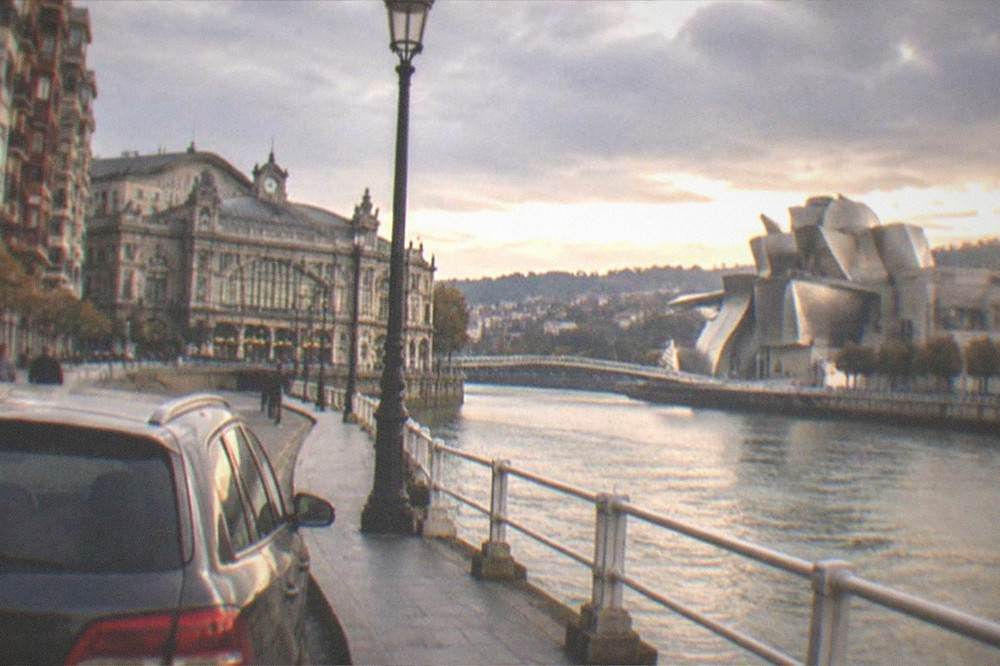
That strategy deserves emphasis because it removes the worst part of urban driving here. The Casco Viejo's Siete Calles are effectively a no-go for casual parking, a medieval street plan with pedestrians everywhere, and the streets around the Guggenheim and Abandoibarra are busy with trams, tour buses and strollers. Parking on the periphery and riding in is how many locals handle big events. Metro Bilbao stations are step-free with elevators throughout the network per the operator's 2025 accessibility documentation, so this works for wheelchair users too, a point the accessibility in Bilbao guide develops.
For day trips, the parking question inverts. Coastal destinations like Getxo and Portugalete are easy to reach by car, with the drive running 15 to 20 minutes from central Bilbao, and metered or lot parking near the Vizcaya Bridge is the standard approach. At Gaztelugatxe, arrive early: the site's own controlled-access system with its 1,462 daily cap exists precisely because the access road and parking strain under peak demand.
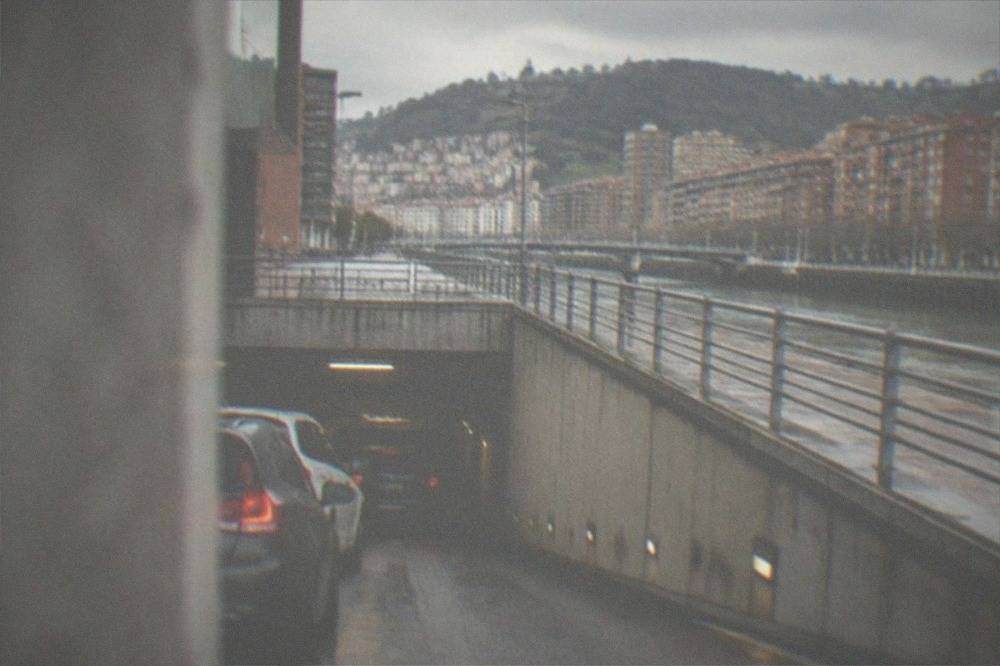
One more practical note: hotel parking in the centre is common in mid-range and upscale properties but is a per-hotel question, so confirm directly when booking, and check the where to stay in Bilbao guide for which districts suit a car-free or car-light trip best.
Which Day Trips From Bilbao Are Easiest By Car?
The day trips where a car clearly wins are Gaztelugatxe and the Urdaibai coast, the Rioja wine villages around Haro and Laguardia, and multi-stop coastal loops combining Getxo, Portugalete and Sopelana, with drive times of roughly 30 to 60 minutes to Gaztelugatxe, 45 to 60 minutes to Vitoria-Gasteiz and 1 hour to 1 hour 40 minutes to San Sebastián. For single-destination trips to San Sebastián or Vitoria, the direct bus is competitive.
The table below pulls the verified public-transport and car figures together, so you can see where the wheel earns its keep and where it does not.
| Destination | By car | By public transport | Car advantage |
|---|---|---|---|
| Getxo / Vizcaya Bridge | 15-20 min | Metro Line 1, 28-29 min | Small, both easy |
| Gaztelugatxe | 30-45 min | Bizkaibus, ~1h 10m to 2h+ | Large |
| Bermeo | ~35 min | Euskotren, ~1h 21m | Large |
| Mundaka | 30-40 min | Euskotren, ~1h 16m | Large |
| Vitoria-Gasteiz | 45-60 min | Bus, ~1h to 1h 32m | Marginal |
| San Sebastián | 1h to 1h 40m | Direct bus, ~1h 20m | None for the centre |
Read the last row carefully. For San Sebastián itself, the direct bus from Bilbao's intermodal station takes about 1 hour 20 minutes, comparable with driving, and spares you San Sebastián's own parking scramble. The car's edge there is only real if you want to string together Hondarribia, Getaria and coastal stops along the way, the sort of loop the San Sebastian day trip and best base in the Basque Country pages explore. The Euskotren train to San Sebastián exists too, but at 2 hours 40 minutes and up it is a scenic choice, not a fast one.
Gaztelugatxe is the opposite case. The bus still leaves you with the access logistics, while the drive is quick. That is why this is the single day trip where a car or a guided tour both beat public transport comfortably, and why the coast draws most of Bilbao's driving visitors.
Is Driving To Gaztelugatxe And The Basque Coast A Good Idea?
Yes, the Basque coast is the best driving territory within reach of Bilbao, with the 30 to 45 minute run to Gaztelugatxe passing through Bakio and some of the most photogenic Atlantic shoreline in northern Spain, but you must handle the site's free timed reservation system on controlled-access days, arrive early for parking, and respect the days reserved for local romerias.
The reservation system is the detail that trips people up. On official controlled-access days, roughly mid-June through about 20 September daily, plus Easter and holiday weekends per the yearly calendar, every visitor needs a free timed ticket booked through tiketa.eus, capped at 1,462 people per day and up to 10 people per reservation. On all other days access is free with no reservation, and live reporting confirmed it reverted to exactly that from 21 September 2026 through the end of the month. A handful of festival dates, including 24 June, 31 July, 29 and 31 August, and 30 December, are reserved for local socio-cultural events, and visitors are asked to stay away then.
Beyond the hermitage, the coast rewards a loose plan. Bermeo's fishing harbour and Mundaka's surf break sit minutes apart by car, and the drive between them hugs the Urdaibai estuary, a biosphere reserve. The Gaztelugatxe, Mundaka and Urdaibai guides cover each stop in depth. If the reservation calendar, the parking and the timing sound like more logistics than you want, a guided coastal day trip handles all of it, and the tour below is the most-reviewed option on this route.
What About Driving To San Sebastian, Rioja And The French Basque Country?
Driving to San Sebastián takes 1 hour to 1 hour 40 minutes, to Vitoria-Gasteiz 45 to 60 minutes, and into Rioja wine country around an hour, making the car genuinely useful for Rioja's scattered wineries and for French Basque loops through Biarritz and Saint-Jean-de-Luz, but unnecessary for a simple city-to-city run to San Sebastián where the direct bus matches the drive.
Rioja is the strongest inland case for driving. Haro and Laguardia are small towns where the wineries are spread along back roads, and a car turns a rigid bus itinerary into a flexible one. The trade-off is the driver's: whoever is behind the wheel does not taste much, which is why guided Rioja tours with tastings included remain popular, and the Rioja wine day trip guide weighs both approaches.
| Inland destination | Drive from Bilbao | Public transport | Verdict for drivers |
|---|---|---|---|
| Vitoria-Gasteiz | 45-60 min | Bus ~1h to 1h 32m | Bus is fine for the centre |
| Haro (Rioja) | ~1h | Regional options, slow | Car wins |
| Laguardia (Rioja) | ~1h | Awkward by bus | Car wins |
| San Sebastián | 1h to 1h 40m | Direct bus ~1h 20m | Bus wins for the city |
| Biarritz (France) | ~2h with stops | Multi-leg | Car or guided tour wins |
Crossing into France is straightforward: Spain is a founding Schengen member, so there is no border control on the road between Irun and Hendaye. The French Basque loop through Biarritz, Saint-Jean-de-Luz and Bayonne is a full, rewarding driving day, and the Saint-Jean-de-Luz and Biarritz page covers it. If you would rather not drive it, a guided excursion covers the same triangle in one booked day.
What Are The Rules Of The Road In The Basque Country?
Driving rules in the Basque Country are Spanish national rules: drive on the right, speed limits are posted in km/h with motorways typically at 120, alcohol limits and seatbelt requirements match the rest of Spain, and Spain's Schengen membership means no border formalities on the French crossing, while fuel, tolls and parking are paid in euro. A full licence from any EU country is valid, and most other visitors can drive on their national licence for tourist stays.
A few local specifics matter more than the generic rules. Rain is near-constant in the oceanic climate, 1,134 mm a year at the airport station, so slow down on the coastal road's bends in wet weather. The Artxanda tunnel is tolled, so if you use it to cross the hill rather than the river roads, keep some change or a contactless card handy. And the parking discipline in residential streets is enforced, so read the curb markings before leaving the car anywhere in Ensanche or the riverside districts.
For the practicalities of getting the car itself, the renting a car in Bilbao guide covers agencies and insurance, and the flights to Bilbao from the US page handles the arrival side. One warning worth repeating from the airport research: watch the pre-existing-damage check at pickup, since phantom-damage charges at airport rental desks are among the scams reported by visitors to the region, a topic the safety in Bilbao guide puts in context.
Airport Driving: Picking Up A Car At Bilbao Airport?
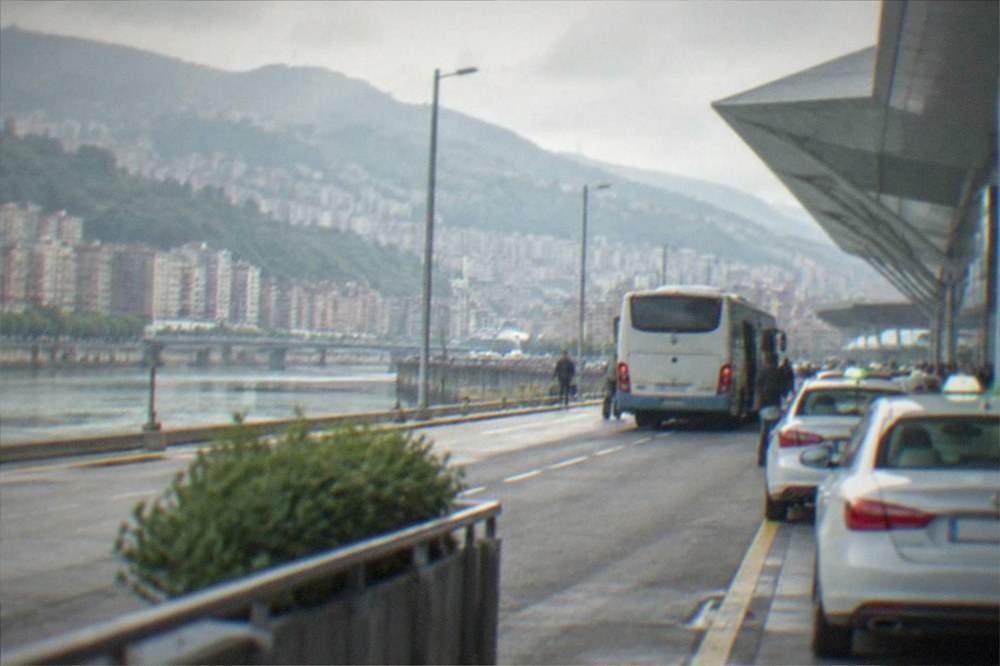
Bilbao Airport (BIO) sits about 15 to 25 minutes from the centre by road, with the Bizkaibus A3247 running every 15 minutes for 5 EUR without a Barik card and a regulated taxi running roughly 24 to 29 EUR with no airport supplement and the Artxanda tunnel toll included, so you can collect a rental car at the airport or ride into town first and rent in the city.
The airport has no metro or train link, and the city council's own position is that none arrives before 2035, so the choice is bus, taxi, rental car or pre-booked private transfer. If your plan is city-first-then-coast, riding the A3247 into town, enjoying Bilbao car-free, and picking up a rental downtown for the coastal leg is often the smoother sequence than holding a parked rental in the city for days you are not using it.
| Airport-to-centre option | Cost | Journey time | Notes |
|---|---|---|---|
| Bizkaibus A3247 | 5 EUR without Barik | 15-25 min | Every 15 min, ~06:10-23:40 from airport |
| Taxi | ~24-29 EUR | 10-15 min | No airport supplement, tunnel toll included |
| Rental car | Varies by operator | 15-25 min | No metro/train link exists |
| Private transfer | Fixed pre-booked rate | ~15 min | Book ahead |
The Bilbao airport guide and airport to city centre pages carry the full detail, including the Barik discount on the airport bus. Note the airport's own future: the 364 million EUR expansion approved in September 2026 adds 25,000 square metres of terminal and doubles the boarding bridges by around 2032, so the rental desks and road approaches will keep evolving over the coming years.
When Does A Car In Bilbao Make Sense?
A car in Bilbao makes sense for three itineraries: a coastal day combining Gaztelugatxe, Bermeo and Mundaka, an inland wine day in Rioja around Haro and Laguardia, and a French Basque loop through Biarritz and Saint-Jean-de-Luz. For the city itself, for a single-focus San Sebastián trip, and for a first visit built around the Guggenheim, the old town and pintxos, the metro, tram and your own feet beat parking every time.
The pattern across this guide is consistent: Bilbao is one of Spain's easiest cities to enjoy without a car, and its surroundings are some of the most rewarding to drive. The 40-plus verified tours on this site exist largely because the middle case, visitors who want the coast without the logistics, is so common. Whether you drive yourself, ride the metro and book a guided day trip, or mix the two, the decision framework is the same: car for loops and scattered villages, no car for everything the getting around Bilbao guide covers so well.
Common Questions About Driving And Parking In Bilbao
Do you need a car in Bilbao?
No. The city centre is walkable, the metro Zone 1 fare is 1.02 EUR with a Barik card, the tram runs along the river, and the airport bus costs 5 EUR. A car only helps for coastal and Rioja day trips.
Is parking difficult in Bilbao?
It is challenging in the Casco Viejo and around the Guggenheim, where narrow medieval streets and busy boulevards discourage casual parking. The standard approach is to park once in a central underground car park or on the periphery and use public transport.
Can you drive to San Juan de Gaztelugatxe?
Yes, the drive takes 30 to 45 minutes from Bilbao. On controlled-access days, roughly mid-June to about 20 September plus Easter and holiday weekends, you still need a free timed reservation via tiketa.eus, with a daily cap of 1,462 visitors.
Is there a metro or train from Bilbao Airport?
No. There is no metro or rail link to Bilbao Airport, and the city council's position is that none arrives before 2035. The Bizkaibus A3247 every 15 minutes and regulated taxis are the options.
Is driving to San Sebastian from Bilbao easy?
The drive runs 1 hour to 1 hour 40 minutes on good motorway, but the direct bus takes about 1 hour 20 minutes, so for the city centre alone the bus is simpler and avoids San Sebastián's parking.
Do you pay tolls driving around Bilbao?
The Artxanda tunnel is tolled, and the airport taxi fare guidance confirms the toll is included in regulated taxi prices, meaning drivers pay it separately. Main regional motorways are generally free-flowing; check your route for toll gantries before setting out.