La Rioja Wine Country Day Trip
La Rioja is the wine country that sits closest to Bilbao, and a single day is enough to taste it: the historic wineries of Haro's Station District, the walled town of Laguardia, and the cellars carved beneath it.
Short answer
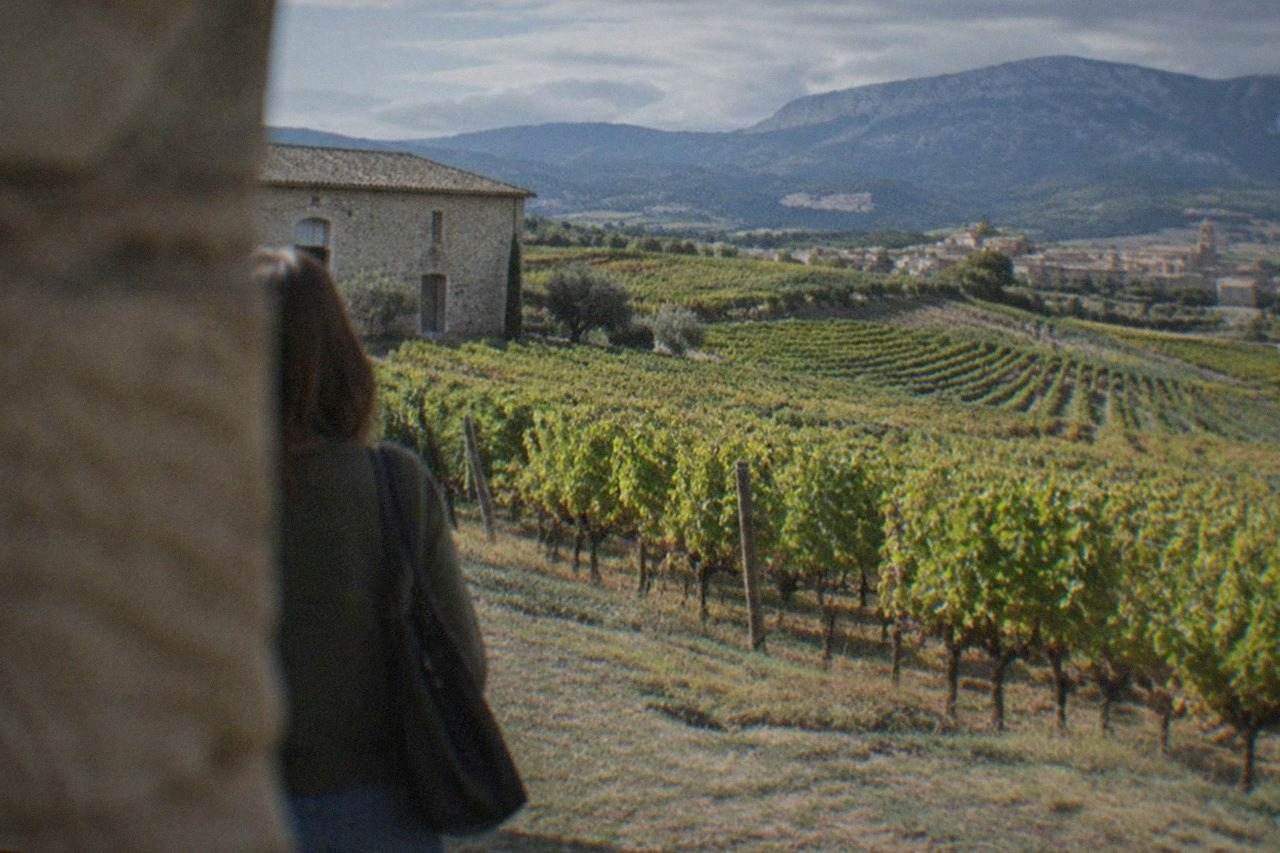
The classic La Rioja wine country day trip from Bilbao pairs Haro's Barrio de la Estación wineries with the walled hilltop town of Laguardia in the Rioja Alavesa. Guided small-group tours with tastings included run year-round, and the region is close enough to Bilbao, in the Basque Country of northern Spain, that you can be back in the city for late pintxos.
La Rioja is Spain's most famous red wine region, and it begins barely beyond the hills that ring Bilbao, in Biscay province, Basque Country, northern Spain. A day trip from the city delivers you into a landscape of low vine-covered slopes, centuries-old bodegas and two of the most rewarding small towns in northern Spain: Haro, with its extraordinary concentration of historic wineries in one railway district, and Laguardia, a walled medieval hill town in the Rioja Alavesa whose cellars are tunneled directly beneath the streets. This guide lays out what a Rioja day trip involves, which towns matter, what guided options cover, how to travel without a car, and when to go.
Why Is La Rioja The Classic Wine Day Trip From Bilbao?
La Rioja is the classic wine day trip from Bilbao because it is the nearest internationally famous wine region to the city, and its two headline sights, Haro's Station District and the walled town of Laguardia, are compact enough to combine in a single day with tastings at working wineries. The Basque Country and Rioja share a border, and organized tours from Bilbao run year-round, so the trip needs no advance planning beyond a booking.
The geography explains the pairing. Bilbao sits on the tidal Nervion estuary, about 15 km from the Bay of Biscay, and the vineyards begin as you climb south out of the green coastal strip into the drier interior valleys of the Ebro. The Rioja Alavesa, the sub-zone inside Alava province, is administratively Basque, which is why Laguardia appears on so many Basque Country itineraries even though the wine region as a whole carries the Rioja name. For travelers based in the city, that means a wine region of global standing is a practical day out rather than a multi-day detour, and it slots neatly alongside the other options on the things to do in Bilbao compiled page.
The wine itself rewards the journey. Rioja is built on Tempranillo, aged in American and French oak, and the region's gran reserva classifications are among the most age-worthy in Spain. What surprises most first-time visitors is not the quality, which is expected, but the setting: tasting rooms inside grand railway-era warehouses, cellars dug by hand under a medieval hill town, and family bodegas where the same name has been on the door for generations.
Which Rioja Towns Should A Day Trip From Bilbao Include?
A day trip from Bilbao should include Haro for the wineries and Laguardia for the town itself, and if the itinerary has room for a third stop, the small Rioja Alavesa villages such as Elciego or Samaniego add atmospheric cellar visits between the two. Haro's Barrio de la Estacion concentrates several historic producers within a short walk of each other, while Laguardia gives you walls, views and underground cellars in one photogenic package.
Haro is the wine capital of the Rioja Alta. Its Barrio de la Estacion, a district of grand old bodega buildings clustered around the old railway station, holds one of the densest concentrations of century-old wineries anywhere in Spain. This was the era when Rioja wine traveled by rail to France, and the architecture still shows it: long stone warehouses, deep cellars and iron-age industrial confidence. A tasting here feels closer to visiting a Bordeaux chateau than a modern industrial bodega, which is exactly why so many Bilbao day tours make it the anchor stop.
Laguardia is the emotional counterweight. The town stands on a hill ringed by intact medieval walls, its streets largely car-free, and beneath the paving runs a lattice of family cellars, some still owned by the households above them. The town also sits in the heart of the Rioja Alavesa, the sub-zone our dedicated Laguardia and Rioja Alavesa page covers in depth. Between the two anchors, the Alavesa villages offer smaller, family-run visits where the person pouring the wine is often the person who made it.
| Stop | Zone | What It Is Known For | Best For |
|---|---|---|---|
| Haro (Barrio de la Estacion) | Rioja Alta | Historic railway-era bodegas, deep cellars, flagship producers | Serious tastings, wine history |
| Laguardia | Rioja Alavesa | Walled medieval town, car-free streets, cellars under the streets | Photos, old-town atmosphere, lighter tastings |
| Elciego | Rioja Alavesa | Bold contemporary winery architecture alongside old cellars | Design and architecture lovers |
| Samaniego | Rioja Alavesa | Small family bodegas, village-scale visits | Intimate, low-key cellar visits |
| Logrono | Rioja Alta | Regional capital, famous tapas street Calle Laurel | Evening food, an overnight add-on |
Guided tours stitch these stops together so the driving, the timing and the tasting reservations are handled. The most popular format pairs Haro-area wineries with Laguardia and includes two tastings, and the roster's dedicated Rioja option does exactly that.
If you would rather compare the headline options before deciding, the trio below spans the classic Rioja itinerary, a Bilbao-based food and wine walk for a non-driving day, and a Basque coast alternative if the weather argues for the sea instead.
What Do Rioja Wine Day Trips From Bilbao Actually Include?
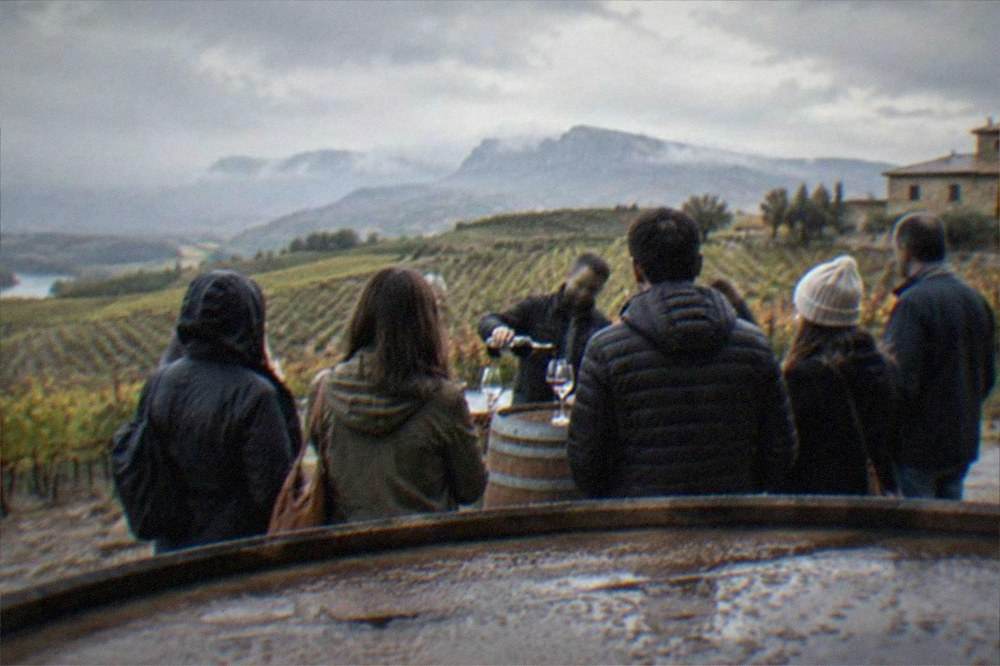
Most guided Rioja day trips from Bilbao include round-trip transport from the city, guided visits at one or more working wineries with tastings at each, a stop in Laguardia or Haro's old town for free time and lunch, and a small group led by a guide who handles the reservations and explains the wines in English. What varies between operators is the number of wineries, whether lunch is included and the group size, so the listing, not the brochure, is where you check.
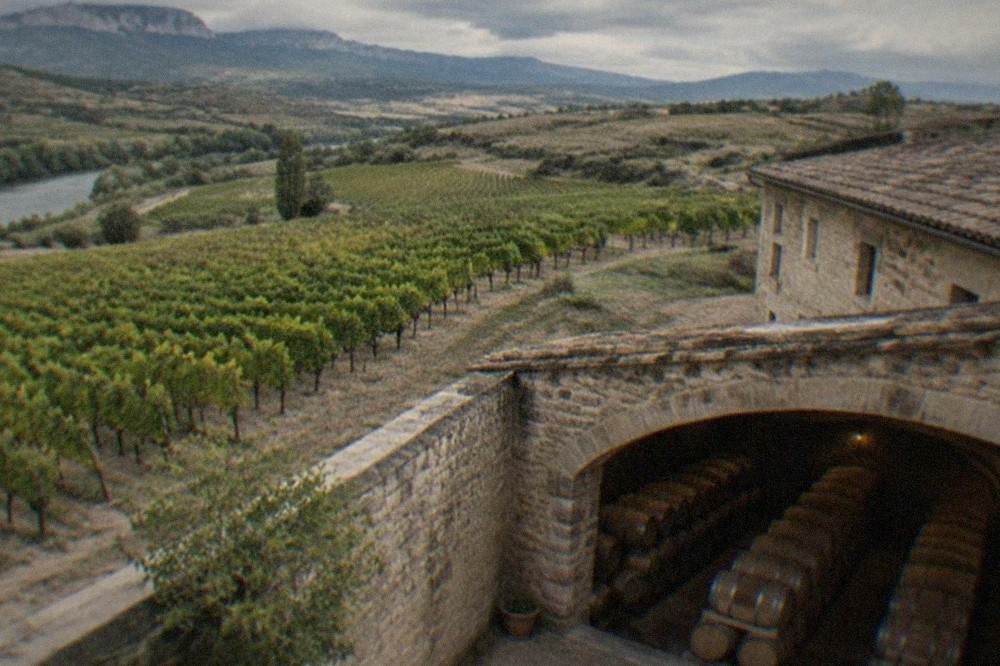
The core product is consistent: you are collected in central Bilbao, driven into wine country, walked through a bodega, poured a tasting flight, given time in a town, and returned to the city with the evening still ahead of you. The differences that matter are practical. Some tours visit two wineries with a long town stop, others prioritize three tastings over sightseeing. Some include lunch, others leave lunch to you in Laguardia, where the pintxo bars and restaurants are easy to navigate on foot. Group size ranges from large coach groups to semi-private formats, and the price moves accordingly.
The premium end of the market is worth knowing about even if you do not book it. A semi-private tour visiting three premium wineries exists in the roster, and it represents the connoisseur option: fewer fellow travelers, more cellar time, more serious pours.
There is also a hybrid itinerary that combines Rioja with Vitoria-Gasteiz, the elegant Basque capital, for travelers who want wine and a city in one day. That option is covered on our Vitoria-Gasteiz day trip page as well.
For a decision moment, the standard Haro and Laguardia itinerary with two tastings remains the best fit for most first-time visitors, and live availability changes with the seasons.
Is A Guided Tour Or Independent Travel Better For Rioja?
A guided tour is better for a single-day Rioja visit from Bilbao because it removes the driving, the winery reservations and the timing risk, all of which are the hard parts of an independent day; independent travel makes sense only if you have a rental car, want to linger in one town, or are staying overnight in the region. Without a car, a tour is effectively the only practical way to reach the wineries and get home the same evening.
The reservation issue decides it for many people. Rioja's famous bodegas require booked tasting slots, often days ahead, and in harvest season the popular cellars fill completely. A tour operator holds those relationships and the standing reservations. Driving yourself is genuinely pleasant, the roads are quiet and the scenery rewards it, but then nobody in your party is tasting properly, and Laguardia's car-free core means parking at the edge and walking in. Our renting a car in Bilbao guide covers that route if you prefer it.
What Is Barrio De La Estacion In Haro, And Why Does It Matter?
Barrio de la Estacion is a single district of Haro where several of Rioja's most historic wineries stand side by side around the old railway station, a legacy of the era when Rioja wine was shipped by rail to France and the bodegas built their cellars next to the tracks. It is the densest concentration of century-old wineries in the region, which is why it anchors nearly every serious Rioja day trip from Bilbao.
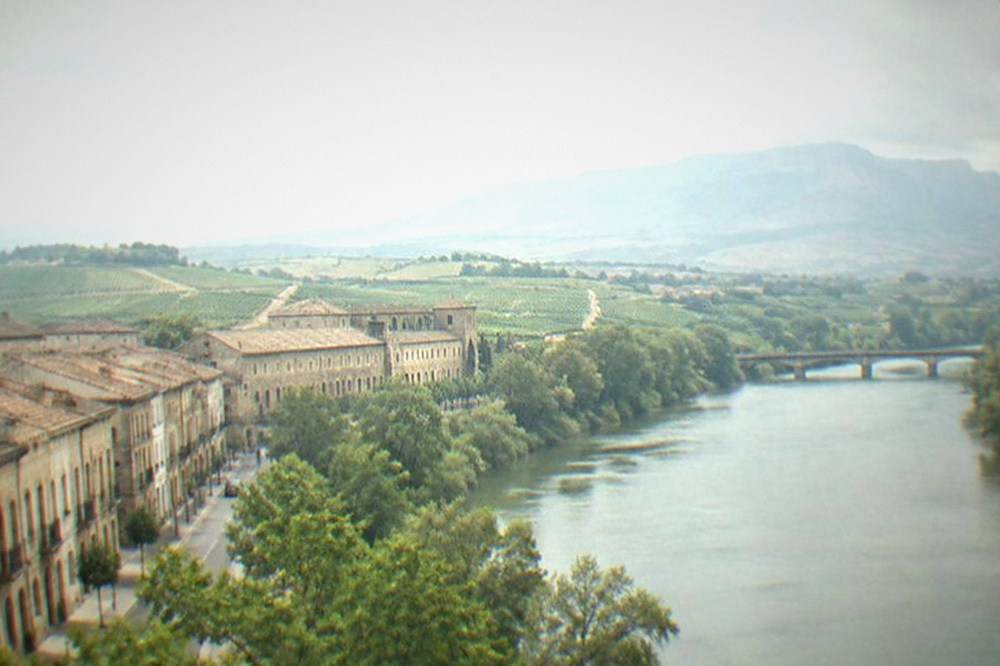
The story is commercial history at its most visible. When phylloxera devastated French vineyards, Rioja producers were positioned to supply the gap, and the railway line turned Haro into the shipping point. The grand bodegas that grew rich on that trade built their facilities within meters of each other, and today a visitor can walk between tasting rooms that each hold kilometers of underground cellars. Few wine regions anywhere offer that density of history within one short street.
For the day-tripper, the district's practical advantage is efficiency. Two or three tastings are possible within a compact area, which is precisely what tour itineraries exploit. If your day includes Haro, wear shoes you can walk cellar stairs in, and expect the temperature underground to be noticeably cooler than the street above, whatever the season.
Why Is Laguardia The Rioja Alavesa's Star Attraction?
Laguardia is the star of the Rioja Alavesa because it is a fully walled medieval hill town whose car-free streets sit above a network of family wine cellars dug directly beneath the houses, giving visitors old-town atmosphere and working bodegas in the same visit. Its position in Alava province makes it administratively Basque Country, so it doubles as both a wine destination and a piece of Basque heritage.
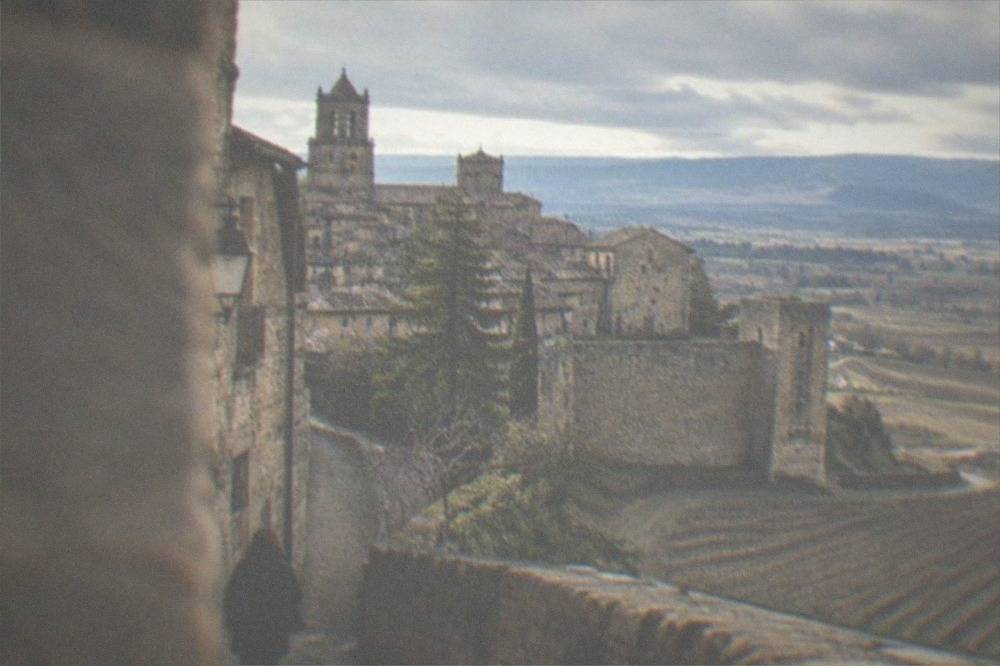
The town rewards slow wandering. The walls are intact, the church of Santa Maria de los Reyes guards one gate with a remarkable polychrome portico, and the viewpoints over the vineyards stretch to the Sierra de Cantabria. Beneath your feet, the cellars are the point: for centuries each household dug its own, and some are still used for family production. The town's bars pour the Alavesa's local wines by the glass, which makes lunch here as much a tasting as a meal.
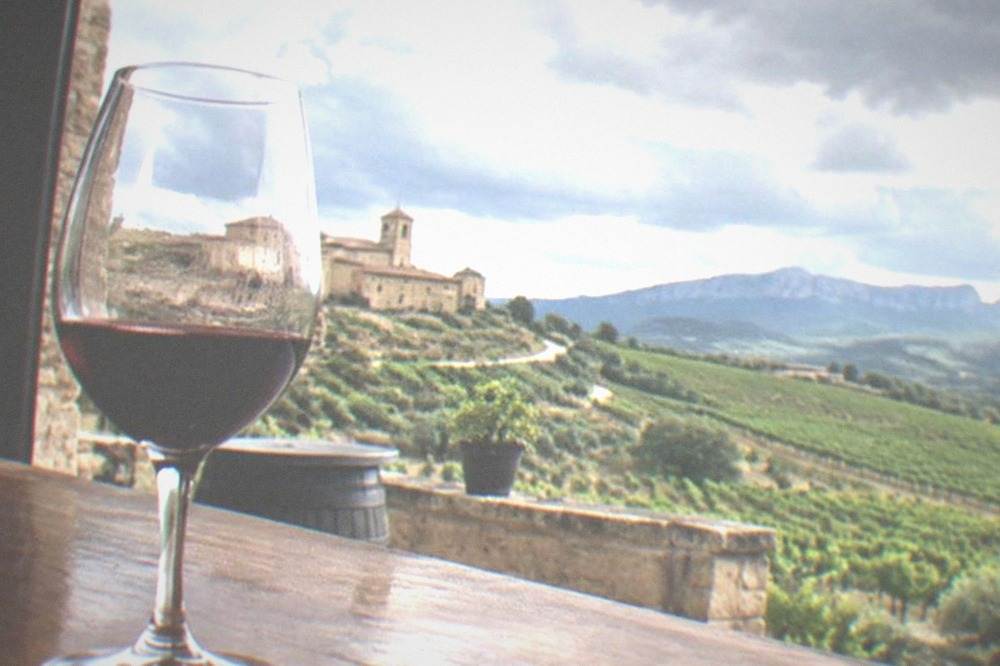
Tours time their Laguardia stop for the middle of the day, which is the right rhythm: wineries in the morning, town and lunch at midday, a second tasting on the way back toward Bilbao. If you are building your own itinerary from our one day in Bilbao framework, note that Laguardia also works as a standalone day trip, and it pairs naturally with the smaller Alavesa villages around it.
How Do You Get From Bilbao To Rioja Without A Car?
Without a car, the practical way to reach Rioja from Bilbao for a day is a guided tour with transport included, because the wineries and Laguardia are spread across villages that public transport does not serve conveniently in a single day; independent travelers can reach Logrono, the regional capital, by intercity bus, but the wine country beyond it effectively requires a vehicle, a tour or an overnight stay.
No verified public transport fare or journey time for a Bilbao to Rioja wine country route appears in this site's research, so treat any figure you see elsewhere with caution. What the research supports is simpler: tours from Bilbao operate year-round with durations shown on their live listings, and the tour's own listing is the authoritative source for how long you will spend on the road. If you drive yourself, the same applies: plan the day around your stops rather than a quoted drive time, and check road conditions in winter when fog can sit in the Ebro valley.
The no-car case is genuinely common among Bilbao visitors. Cruise passengers on a port day, city-break travelers without luggage space for driving, and anyone who intends to taste seriously all land on the same answer: book the tour, let someone else drive. For a rainy day that argues against wine country altogether, our rainy day Bilbao page lists indoor alternatives, and the Bilbao wine bars guide shows where to taste Rioja without leaving the city at all.
When Is The Best Time Of Year For A Rioja Wine Day Trip?
The best time for a Rioja wine day trip from Bilbao is late spring through early autumn, with September and October outstanding because that is the harvest season, when the vineyards are heavy with grapes and the wineries are at their most active; July and August are warmest and most reliable for weather, while winter visits trade scenery for quiet cellars and lower crowds. The region's inland position gives it hotter summers and colder winters than temperate oceanic Bilbao.
Bilbao itself is Atlantic. AEMET's Bilbao Aeropuerto/Loiu station (1082), 1981-2010 normals, put the city's monthly mean temperatures between 9.3 C in January and 20.9 C in August, with 1,134 mm of rain a year, and the wettest month is November at 147 mm. Rioja, over the Sierra de Cantabria and down into the Ebro valley, runs hotter and drier in summer and colder in winter. A day trip in August can mean leaving a mild, overcast Bilbao and arriving in vineyards ten degrees warmer under a hard blue sky, and the reverse applies in January.
| Month | Bilbao Mean Temp (C) | Bilbao Rain (mm) | What It Means For A Rioja Day Trip |
|---|---|---|---|
| March | 11.5 | 90 | Bare vines, quiet cellars, cool tastings |
| May | 15.7 | 78 | Fresh green vineyards, comfortable touring |
| July | 20.4 | 50 | Warmest reliable weather, peak season tours |
| September | 19.2 | 73 | Harvest season, the most atmospheric month |
| November | 12.4 | 147 | Wettest in Bilbao, muted scenery, lowest crowds |
Harvest is the connoisseur's calendar. From roughly September into October, the bodegas are receiving fruit, the sorting tables run, and the vineyards turn from green to gold and rust. The trade-off is demand: this is when tours sell out furthest ahead, so book earlier than you would for a February visit. Winter has its own case, since the deep cellars are at their most welcoming when the streets above are cold, and Laguardia under low winter light is memorably atmospheric.
What Should You Know Before Booking A Rioja Wine Tour From Bilbao?
Before booking, check three things on the live listing: how many wineries and tastings are included, whether lunch is covered or left to you in Laguardia, and the cancellation terms, since mountain weather and harvest-season demand can change plans. Confirm the pickup point in central Bilbao, bring ID for winery visits, and remember that 2026 visitors pay no tourist tax in Bilbao, since the Bizkaia regional tax does not take effect until 1 January 2027.
The tourist tax point is worth a line because it is new and widely misunderstood. Under Norma Foral 3/2026, a regional tourist tax takes effect across Bizkaia on 1 January 2027, and Bilbao's own approved municipal rates run from 1 euro per night at pensions up to 5 euro at five-star hotels, with 6.50 euro for tourist apartments. A 2026 visit pays nothing, a 2027 visit does, and the difference is worth knowing when you see accommodation prices quoted. The tax applies per adult per night, with exemptions for minors and certain other stays.
| Accommodation Type | Approved Bilbao Nightly Rate From 1 Jan 2027 |
|---|---|
| 5-star hotel | 5.00 EUR |
| 4-star hotel | 4.00 EUR |
| 3-star hotel | 2.00 EUR |
| 2-star hotel | 1.50 EUR |
| Pension | 1.00 EUR |
| Tourist apartment (VUT) | 6.50 EUR |
Beyond tax, practical booking notes are few and simple. Tastings are included on the tours in our roster, but lunch policies vary by product, so read the inclusions list on the listing rather than assuming. Tell the operator about any dietary needs in advance, since winery visits sometimes end with bread, cheese or charcuterie. And if you are combining Rioja with a wider Basque itinerary, the wine day pairs well with a coast day: the San Sebastian day trip makes the classic contrast, and the French Basque coast option on our Saint-Jean-de-Luz and Biarritz page extends it further.
How Does A Rioja Day Trip Compare With Other Bilbao Day Trips?
A Rioja day trip is the best Bilbao day trip for wine and inland scenery, while the coastal options, Gaztelugatxe, Getxo and San Sebastián, win on dramatic water views, and cultural towns such as Gernika and Vitoria-Gasteiz sit in between; choosing comes down to whether your day should taste of Tempranillo or smell of the Atlantic, since both are within reach of the city.
| Day Trip From Bilbao | Character | Best If You Want |
|---|---|---|
| Rioja wine country (Haro, Laguardia) | Inland vineyards, wineries, medieval town | Wine, food, warm scenery |
| Gaztelugatxe | Rocky hermitage islet on a stone causeway | The iconic coastal photo |
| Getxo and the Vizcaya Bridge | Beaches, promenade, UNESCO transporter bridge | An easy half-day by metro |
| San Sebastian | Elegant beach city, legendary pintxos | Food and city atmosphere |
| Gernika | Historic town, peace museum, Basque symbolism | History and reflection |
| Mundaka | Surf town on the Urdaibai estuary | Surf, estuary views, seafood |
The honest summary is that Rioja is the most distinctive inland option and the only one built around wine. The Basque coast is magnificent, but it is not unique to this corner of Spain in the way Rioja's railway bodegas are. If your trip allows two day trips, one sea day and one wine day is the pairing that shows the widest range of what the region offers.
For travelers who want to keep tasting after the tour returns, the city itself carries the theme home: the Bilbao wine bars guide maps where Rioja pours well in the evening, and the food tour with wine pairings in the trio above turns a non-driving day into its own tasting itinerary. More planning help lives across this site, from the Bilbao cruise port day itinerary to the wider collection on Bilbao Travel Guide.
Common Questions About A Rioja Wine Country Day Trip
Can You Do A Rioja Wine Day Trip From Bilbao Without A Car?
Yes, and a guided tour is the standard way to do it. Tours from Bilbao include round-trip transport, winery visits with tastings and a stop in Haro or Laguardia, so the driving and reservations are handled. Independent car-free travel to the scattered wineries is impractical in a single day.
How Many Wineries Can You Visit In One Day?
Most tours include tastings at one or two wineries plus a town stop, which is the comfortable maximum for a day that also includes travel from Bilbao. Premium formats exist that visit three wineries in a semi-private group, trading town time for cellar time.
Is Laguardia Or Haro Better For A First Visit?
They do different jobs. Haro is better for serious wine, with the historic Station District bodegas, while Laguardia is better for atmosphere, with its intact walls and cellars beneath the streets. The best day trips include both.
When Is Harvest Season In Rioja?
Roughly September into October, when the vineyards are at their most scenic and the wineries are actively processing fruit. It is the most atmospheric time to visit and also the busiest, so book tours further ahead than you would in other seasons.
Do You Need To Book Rioja Winery Tastings In Advance?
Yes. Rioja's well-known bodegas run on reserved tasting slots, and in peak season the popular cellars fill days ahead. Guided tours carry standing reservations, which is one of their main advantages over independent visits.
Is There A Tourist Tax In Bilbao Or Rioja?
In 2026, no tourist tax applies to visitors in Bilbao. The Bizkaia regional tourist tax takes effect on 1 January 2027, with Bilbao's approved rates ranging from 1 euro per night at pensions to 5 euro at five-star hotels and 6.50 euro for tourist apartments. Check current rules for your travel dates.