Vitoria-Gasteiz Day Trip From Bilbao: The Complete Guide
Vitoria-Gasteiz, the capital of Álava province and seat of the Basque Government, is one of the easiest big day trips from Bilbao: a direct bus connects the two cities in roughly an hour to an hour and a half, and the reward is a compact medieval hilltown, green ring of parks, and a calmer, more administrative pace than Bilbao's estuary-side buzz.

Short answer
Take the direct bus from Bilbao Intermodal to Vitoria-Gasteiz (about 1h to 1h32m, roughly 6 to 7 EUR one way), spend the day walking the hilltop medieval center and green belt, and return by bus or train in the evening. A guided tour that pairs Vitoria with a Rioja winery visit is the strongest option if you would rather not plan the logistics yourself.
Vitoria-Gasteiz sits inland from Bilbao, in the neighboring province of Álava in the Basque Country (Euskadi), northern Spain, and it makes an unusually low-effort day trip: the two cities are linked by a frequent direct bus service, and the destination itself rewards walking far more than driving. Where Bilbao is an estuary port turned architecture showcase, Vitoria-Gasteiz is the region's political capital, a hilltop medieval core ringed by parks, with a slower rhythm that feels deliberately unlike its bigger neighbor. This guide lays out how to get there, what to do with a single day, what it costs, and when it makes sense to fold in the Rioja wine country that begins just south of the city.
Why Is Vitoria-Gasteiz Such An Easy Day Trip From Bilbao?
Vitoria-Gasteiz works as a day trip because the direct bus from Bilbao Intermodal takes roughly one hour to one hour and a half and costs around 6 to 7 EUR each way, which is faster and cheaper than any rail option, and the city's main sights sit inside one compact hilltop center you can cross on foot. No transfer, no coastal detour, no border: the two cities are both in the Basque Country, so a single regional bus ticket covers the whole journey, and the same language, currency and transport logic apply at both ends.
The practical case is simple. Bilbao's Intermodal station, next to the Abando train hub in the city center, is where the direct Vitoria buses leave from, and services run frequently enough across the day that you are not hostage to a single morning departure. The fare band of roughly 6 to 7 EUR one way comes from current schedule aggregators; check the operator's own booking page for your exact date, because these are planning ranges rather than fixed tariffs.
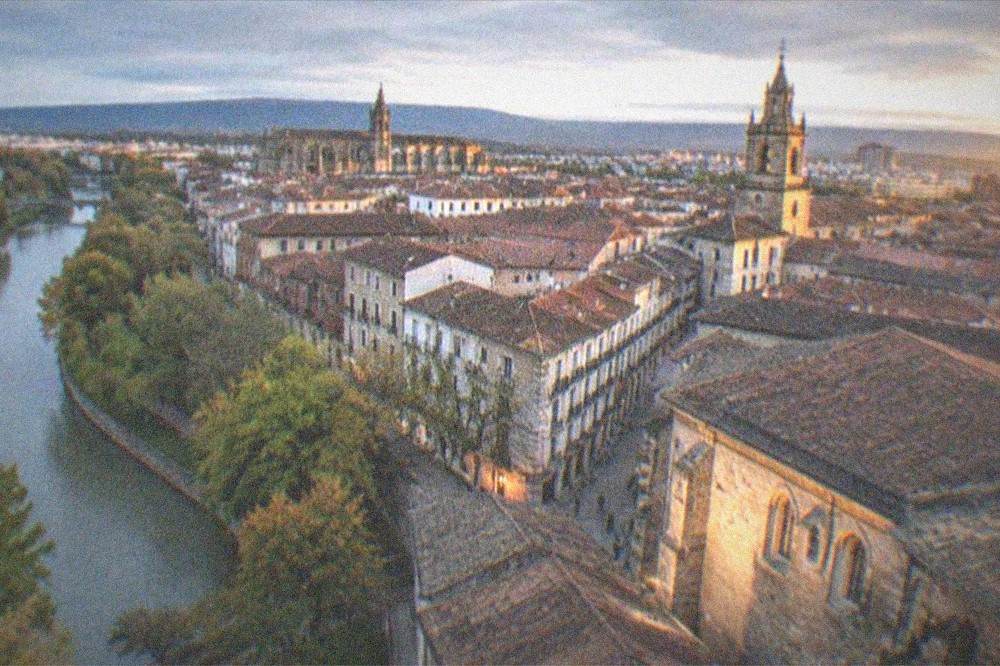
What you get at the other end is a city built for a day visitor. Vitoria-Gasteiz's medieval center climbs a low hill, so the sightseeing is vertical but short: you walk up, you wander the old streets, you look out over the newer city below, and you walk down again. The green belt that surrounds the center means the walk back to the bus stops can double as a park stroll rather than a traffic-dodge.
It is also the calmer counterweight to Bilbao. If your Bilbao days are full of titanium architecture, pintxos crowds and estuary noise, Vitoria-Gasteiz delivers a slower, more local version of the Basque Country: administrative buildings, students, families in parks, and fewer tour groups per square meter. Travelers comparing the region's two big names often read our San Sebastian day trip guide alongside this one, and the honest summary is that San Sebastián is the food-and-beach play while Vitoria is the history-and-green-space play.
How Do You Get From Bilbao To Vitoria-Gasteiz Without A Car?
The direct bus from Bilbao Intermodal to Vitoria-Gasteiz is the best car-free option: it runs the roughly 50 km route in about 45 to 60 minutes by car or 1 hour to 1 hour 32 minutes by bus, costs around 6 to 7 EUR one way, and departs frequently through the day. The train exists but is slower, typically 2 to 3 hours and often with a change, at a fare band of roughly 5 to 13 EUR, so rail only makes sense if the bus times do not fit your day or you specifically want the scenery.
Here is how the three realistic options compare, using the planning figures in this site's research pack:
| Option | Typical journey time | Fare band (one way) | Best for |
|---|---|---|---|
| Direct bus from Bilbao Intermodal | ~1h to 1h32m | ~6-7 EUR | Almost everyone; fastest and cheapest public option |
| Train (Renfe, often 1 change) | ~2h to 3h | ~5-13 EUR | Travelers who prefer rail or miss the bus times |
| Car or taxi | ~45-60 min (~50 km) | Fuel plus parking | Flexibility, or combining Vitoria with Rioja villages |
A few planning notes that matter more than the raw numbers. First, the bus is the option locals use, so it runs year-round and at sensible intervals; you do not need to book weeks ahead outside peak festival dates, but buying your return leg when you arrive removes the only real friction in the day. Second, Vitoria-Gasteiz's bus and train stations are both close enough to the center that you will not need a local transit ticket for the day: the hilltop core is walkable from either.
Third, if you are touring wider Biscay and Álava with a car, Vitoria pairs naturally with the wine towns to the south, and our Laguardia and Rioja Alavesa guide covers that route in detail. Without a car, the strongest alternative to self-planning is a guided day tour, which handles the drive and the winery stop in one booked package; the section on combining Vitoria with Rioja below covers that option.
If you are still building the overall Bilbao itinerary, the Bilbao first-timers guide explains how a Vitoria day fits into a wider week, and the Rioja wine day trip guide covers the wine-country alternative if you must choose between the two.
What Should You Actually See In Vitoria-Gasteiz In One Day?
Spend your day in three layers: the hilltop medieval center with its old streets and viewpoints, the green belt of parks that rings it, and the newer civic city below, in that order, because the hill is the reason to come and everything else rewards whatever time is left over. A realistic one-day plan is a morning in the old town, lunch inside the center, an afternoon in the parks and lower city, and an early-evening bus back to Bilbao.
The medieval core is the headline. Vitoria-Gasteiz's old town occupies a low hill, and its street pattern predates the grid of the expanded city below it, so the pleasure is unstructured: walk uphill, follow whatever alley looks oldest, and use the height at the top to orient yourself. The center is compact enough that you will cross it several times in a day without trying, which is exactly the point; this is a place for wandering, not for ticking a list.
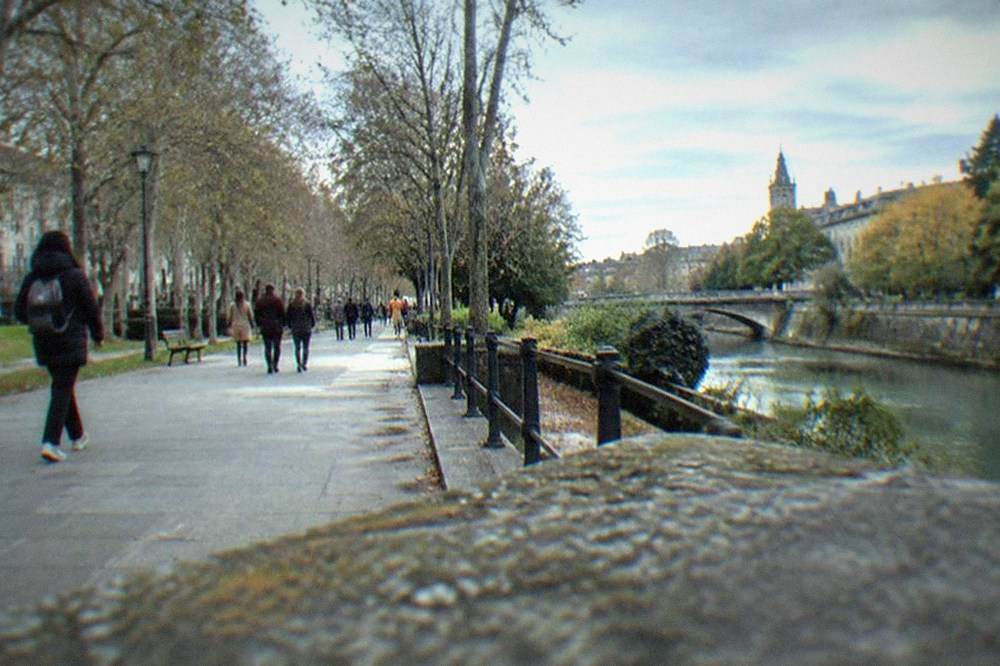
The green belt is the city's second signature. Vitoria-Gasteiz is known for the parks and wetlands that wrap around the built-up area, and the stretch nearest the center is easy to fold into the walk back down the hill. It makes the city feel noticeably greener than Bilbao, whose waterfront is dramatic but whose central districts are dense.
For pacing, the practical shape of the day looks like this:
| Time | Where | What you are doing |
|---|---|---|
| Morning | Hilltop medieval center | Arrive, walk uphill, explore the old streets and viewpoints |
| Midday | Old town bars | Long Basque lunch; Vitoria eats later than northern Europe |
| Early afternoon | Green belt and lower city | Parks, civic architecture, a slower loop back toward the center |
| Late afternoon | Center | Coffee, a last wander, then walk to the bus or train station |
| Evening | Return to Bilbao | Direct bus back; you are in Bilbao in time for dinner |
One honest caveat: Vitoria-Gasteiz is not a museum city in the Bilbao sense. If your non-negotiable is a single world-famous building, Bilbao's Guggenheim Museum is the better use of that day, and Vitoria is the better use of a day when you want Basque history, parks and local life instead. Many visitors do Vitoria precisely because it is the day when nothing is compulsory.
Where Should You Eat On A Vitoria-Gasteiz Day Trip?
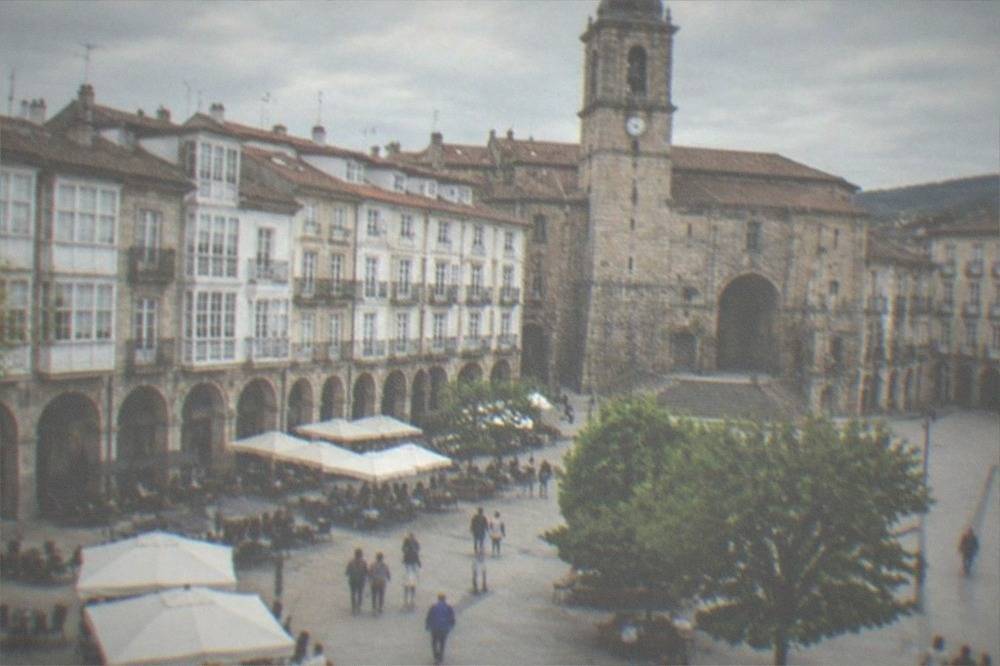
Eat inside the hilltop center at lunch, because the old town's bars and restaurants are where Vitoria's food culture concentrates, and a proper Basque lunch is the natural midpoint of the day before the afternoon park loop, built on Rioja wine and hearty inland cooking rather than coastal fish. The city sits in Álava, on the edge of Rioja wine country, which is why the local table leans inland rather than toward the coastal fish that dominates Bilbao's pintxos bars.
Do not over-plan lunch. The old center's bars operate on the same pintxos-and-raciones logic as Bilbao's, and the best move is the same one that works in Plaza Nueva in Bilbao: walk until a bar looks full of locals, then eat what the bar is known for. Prices are generally gentler than Bilbao's tourist-core equivalents, though this site's research does not carry verified per-dish figures for Vitoria, so treat any specific price you read elsewhere with caution and check the menu on the door.
Timing matters more than venue choice. The Basque lunch hour runs late by northern European standards, and kitchens in the old town will be serving well into the mid-afternoon, which suits a day-tripper's schedule perfectly: a late morning arrival, a long hilltop walk, and then lunch when the bars are at their liveliest. If you want to compare the pintxos culture before you commit, our best pintxos in Bilbao guide explains how the crawl works, and the same etiquette transfers directly.
For the wine angle, Álava's position matters. The Rioja Alavesa wine district lies just south of the city, and Vitoria's wine lists reflect that proximity; ordering a Rioja by the glass with lunch is normal rather than a splurge. If wine is the actual reason you are considering this trip, read the next section before deciding how to structure the day.

Should You Combine Vitoria-Gasteiz With The Rioja Wine Region?
Yes, if wine is a priority, because Vitoria-Gasteiz sits on the northern edge of the Rioja wine region and a guided tour can cover both the city and a winery in a single booked day, which is very hard to replicate with public transport and nearly effortless with a car or a tour. The trade-off is honest: combining the two means less unhurried time in the old town, but it turns a city stroll into a full Basque inland day.
The public-transport reality is the constraint. The Rioja Alavesa towns are not practical to reach from Vitoria on a day-trip timetable by bus and still do the city justice, so your realistic choices are: drive, with all the parking and tasting-logistics questions that brings, or take a guided tour that handles the route. This site's research pack does not carry verified winery opening details or tasting fees for the Rioja district, so do not plan a self-drive itinerary around assumed numbers; check each winery's own booking page before you commit.
The guided option is genuinely strong here. A tour that pairs Vitoria-Gasteiz with a Rioja winery visit runs as a single day trip from Bilbao, and the operator's live listing carries the current price, duration and inclusions:
If you would rather go deeper on wine and skip the city entirely, the dedicated Rioja wine day trip from Bilbao and the Laguardia and Rioja Alavesa guide cover the wine-country-only version of the day, including the walled village of Laguardia that anchors most Rioja Alavesa itineraries.
How Much Does A Vitoria-Gasteiz Day Trip Cost?
Budget roughly 12 to 14 EUR per person in round-trip bus fares, plus lunch, which makes Vitoria-Gasteiz one of the cheapest full-day trips from Bilbao: the transport is a fixed, verified band of about 6 to 7 EUR each way, and the city's sights are free to walk. A modest day with a proper Basque lunch lands well below what a coastal tour or a wine tour costs, and the only real variable is how much you eat and drink.
Here is the cost picture with the figures this site has actually verified:
| Cost item | Planning figure | Basis |
|---|---|---|
| Bus, Bilbao to Vitoria (one way) | ~6-7 EUR | Direct bus, current schedule aggregators |
| Train, Bilbao to Vitoria (one way) | ~5-13 EUR | Slower; often 1 change |
| Old town and green belt | Free | Walking sights, no ticketed core |
| Guided Vitoria plus Rioja winery day tour | On the operator's live listing | Price, duration and inclusions render from the booking page |
Two Bilbao-side notes affect the budget. First, if you are buying transport within Bilbao on the same day, the CTB Barik fares page gives Metro Zone 1 at 1.02 EUR with a Barik card and 2.00 EUR without, and the Bilbao Bizkaia Card site states 24-hour tourist cards at 10 EUR, 48-hour at 15 EUR and 72-hour at 20 EUR, though the regional bus to Vitoria is a separate operator and is not covered by those city fares. Second, the tourist tax question that hangs over 2027 trips does not apply to day trippers at all: the Bizkaia regional tourist tax (Norma Foral 3/2026) does not take effect until 1 January 2027, and even then it is charged per night on accommodation, not on day visitors.
The weather budget matters too, in a different sense. Vitoria sits inland from Bilbao's Atlantic-influenced coast, but this site's verified climate data covers the Bilbao station, and AEMET's Bilbao Aeropuerto/Loiu (station 1082) normals show rain in every month of the year, from 50 mm in July to 147 mm in November, with an annual total of 1,134 mm. Pack for the possibility of showers on any month of the year, and treat the hilltop's exposed viewpoints as places to enjoy quickly if the weather closes in.
| Month | Mean temperature (C) | Mean precipitation (mm) |
|---|---|---|
| January | 9.3 | 120 |
| April | 12.6 | 107 |
| July | 20.4 | 50 |
| August | 20.9 | 76 |
| November | 12.4 | 147 |
| Annual | 14.7 | 1,134 |
What Are The Alternatives If You Have Already Seen Vitoria-Gasteiz?
If Vitoria-Gasteiz is already done, the strongest same-effort alternatives from Bilbao are the coastal and wine-country day trips: the Gaztelugatxe hermitage walk along the Basque coast, the Rioja Alavesa wine villages, or the estuary-side towns like Getxo, each reachable as a guided tour or, in some cases, by public transport. The choice comes down to whether your spare day wants coast, wine or city.
The coastal option is the most photogenic. San Juan de Gaztelugatxe, the rocky islet hermitage reached by a stone causeway and a long staircase, anchors a whole family of tours from Bilbao, and the rules are worth knowing before you go: a free timed reservation is required only on official controlled-access days, roughly mid-June to about 20 September plus Easter and holiday weekends, with a daily cap of 1,462 visitors on those days, booked free via tiketa.eus for up to 10 people. On all other days access is free without a reservation. Our Gaztelugatxe guide covers the full access picture.
A compact coast-walk version of that trip looks like this:
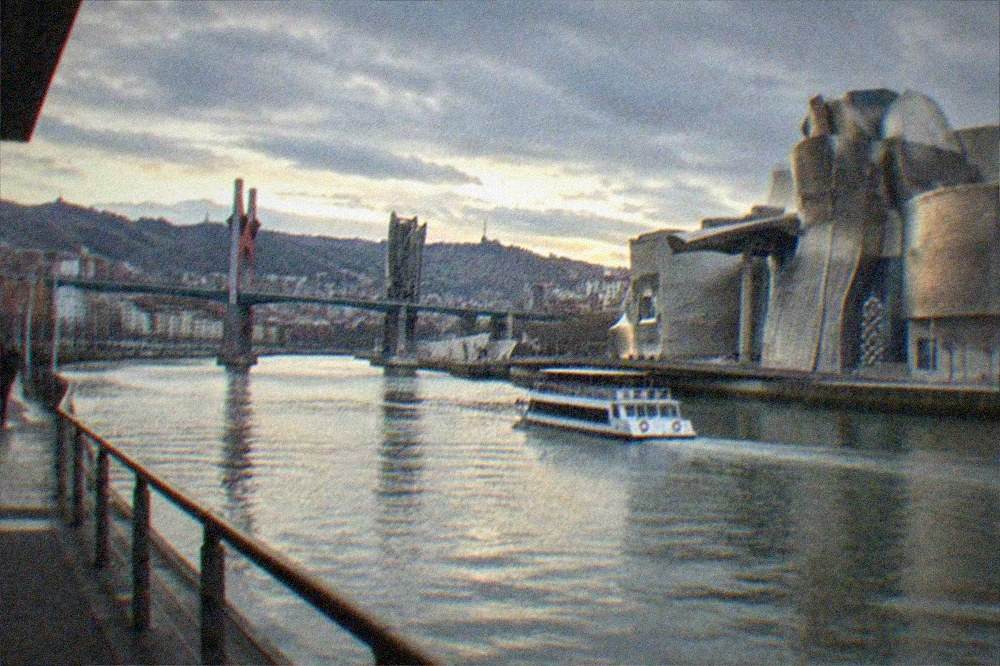
Closer to home, Getxo and the UNESCO-listed Vizcaya Bridge make a half-day trip covered in our Getxo guide, and the fishing ports of Bermeo and Mundaka sit on the same coastal corridor. If you would rather spend the spare day inside Bilbao itself, a guided e-bike loop is the efficient way to cover the estuary, the old town and the Guggenheim's riverside in one pass:
Common Questions About Vitoria-Gasteiz Day Trips
Is Vitoria-Gasteiz Worth A Day Trip From Bilbao?
Vitoria-Gasteiz is worth a day trip if you want Basque history, parks and a calmer inland capital after Bilbao's intensity, and it is the easiest such trip to run: a direct bus of about an hour to an hour and a half, a walkable hilltop center, and no compulsory tickets. It is not worth it if your only interest is blockbuster architecture or beaches, in which case Bilbao's own museums or the coastal day trips serve you better.
How do I get from Bilbao to Vitoria-Gasteiz?
Take the direct bus from Bilbao Intermodal: roughly 1 hour to 1 hour 32 minutes, around 6 to 7 EUR one way, with frequent departures. The train is slower, typically 2 to 3 hours and often with a change, at a fare band of about 5 to 13 EUR. Check the operator's live timetable for your date.
Can you do Vitoria-Gasteiz and Rioja in one day?
Yes, but realistically only by car or guided tour. Public transport does not comfortably link the Vitoria old town with the Rioja Alavesa wineries inside a single day, so the practical options are booking a tour that combines both or dedicating separate days, with the Rioja wine day trip guide covering the wine-only version.
Is one day enough for Vitoria-Gasteiz?
One day is enough for the hilltop medieval center, a proper lunch and the nearest stretch of the green belt, which is the core of what a visitor comes to see. A second day only adds value if you are pairing the city with the Rioja wine region or exploring Álava's smaller towns.
Is there a tourist tax on a Vitoria-Gasteiz day trip?
No tourist tax applies to day visitors. The Bizkaia regional tourist tax under Norma Foral 3/2026 takes effect on 1 January 2027 and is charged per night on accommodation, not on day trips, and Vitoria-Gasteiz sits in Álava province rather than Bizkaia in any case.
What is the best time of year for a Vitoria-Gasteiz day trip?
July and August are the warmest and driest months in the region, with AEMET's Bilbao Aeropuerto/Loiu normals showing 20.4 C and 50 mm in July, but spring and early autumn are quieter and still pleasant. November is the wettest month at 147 mm, so pack rain gear from late autumn through winter.
Do I need a car for a Vitoria-Gasteiz day trip?
No. The direct bus covers the journey in about an hour to an hour and a half, and everything worth seeing in Vitoria-Gasteiz is walkable from the center. A car only earns its keep if you are extending the day into the Rioja Alavesa wine villages to the south.
The short version: Vitoria-Gasteiz is the day trip you take when you want the Basque Country at walking pace, and the bus timetable, not the planning, is the only thing standing between a morning in Bilbao and an afternoon on a medieval hilltop. For everything else in the region, start from Bilbao Travel Guide and work outward.