Best Wine Bars In Bilbao
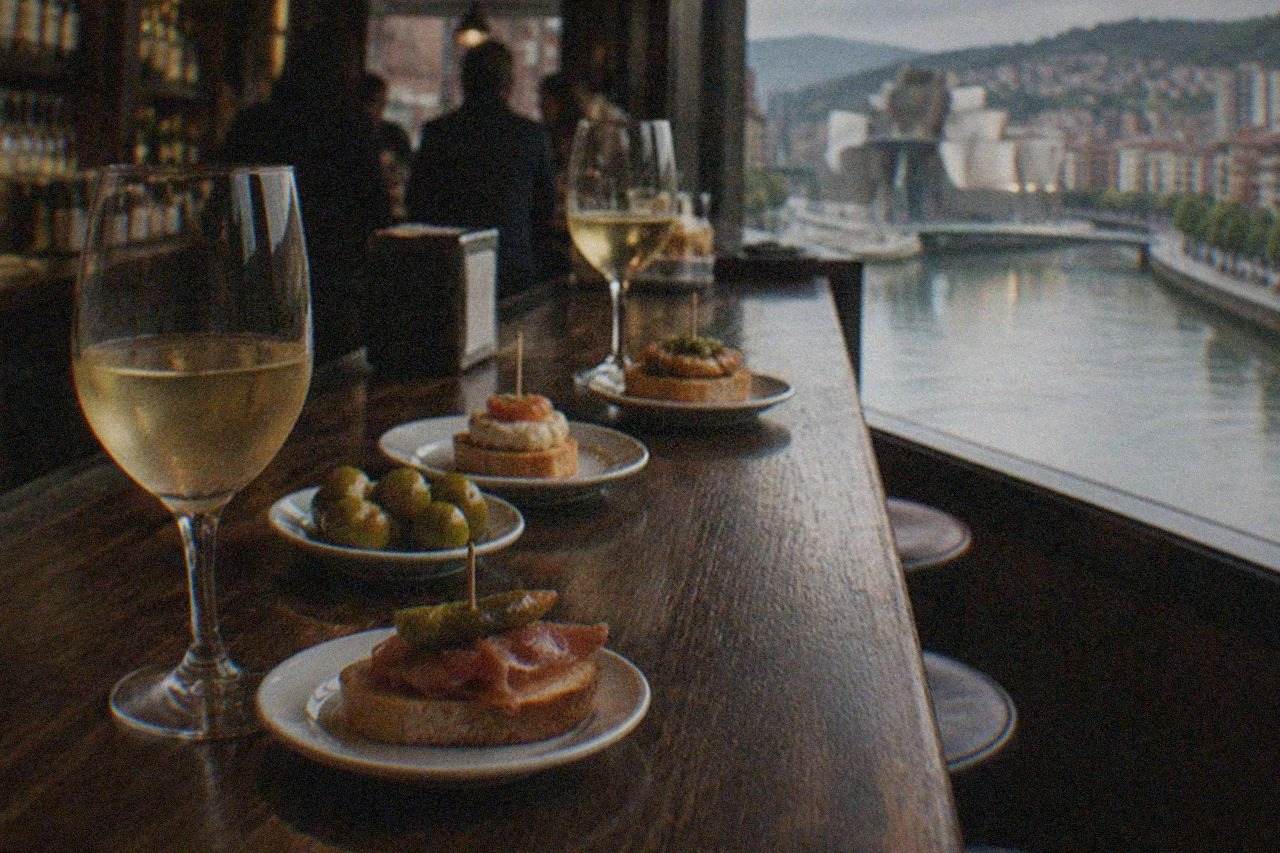
Bilbao, in Biscay (Bizkaia) province in the Basque Country of northern Spain, drinks its wine standing up, at the bar, with a small plate in the other hand. This guide covers the bars worth planning an evening around, what to order by the glass, and how a city with no vineyards of its own became one of Spain's best places to drink.
Short answer
The best wine bars in Bilbao cluster around Plaza Nueva in the Casco Viejo and the Ensanche's bar streets, with Gure Toki, El Globo, Sorginzulo, Víctor Montes and Café Bar Bilbao all pouring txakoli and Rioja by the glass alongside championship-level pintxos. A typical crawl of four to six stops with drinks runs about 25 to 45 euros per person.
Bilbao, in Biscay (Bizkaia) province in the Basque Country of northern Spain, has no vineyards inside the city limits, yet it drinks like a wine capital. The reason is geography: the Txakoli coastal whites of Getari and Bizkaia arrive from less than an hour away, Rioja's reds roll in over the hills to the south, and the city's pintxos culture demands that every glass come with something good on a plate. The result is a bar scene where wine is treated as food's partner rather than a standalone event, poured in small measures, often from young, high-acidity whites that cut through olive oil and salt like nothing else. This guide, from the Bilbao Travel Guide editorial desk, covers where to drink, what to order, what it costs, and how to extend a Bilbao wine evening into Rioja itself.
Where Are The Best Wine Bars In Bilbao?
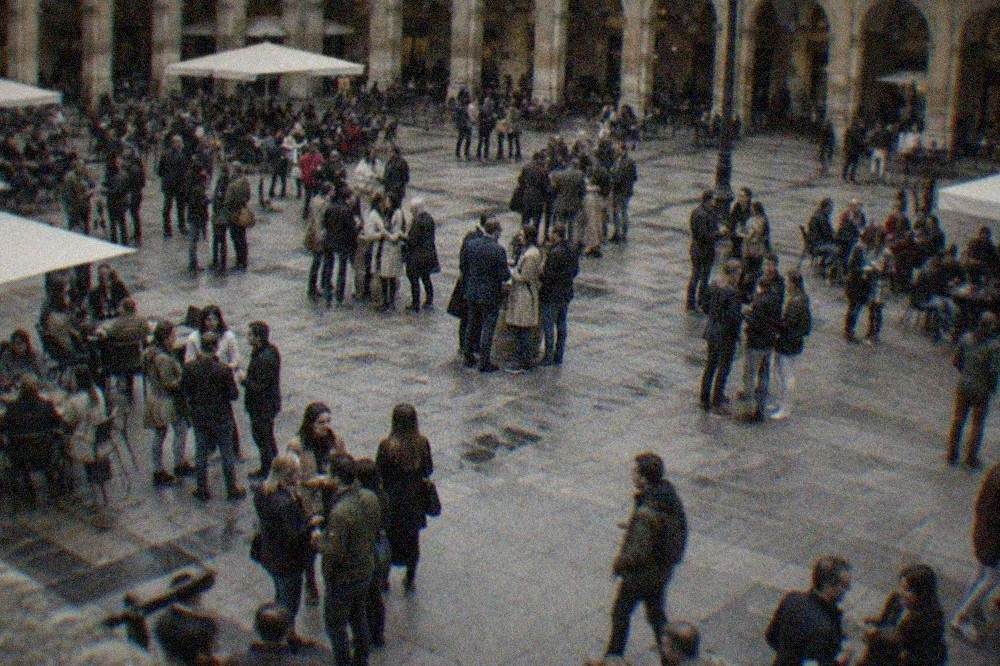
The best wine bars in Bilbao concentrate in two zones: the Casco Viejo around Plaza Nueva, where Gure Toki, Sorginzulo, Víctor Montes and Café Bar Bilbao all pour within a few steps of each other, and the Ensanche around Calle Diputación and Plaza Moyúa, where El Globo and La Viña del Ensanche anchor the scene. Plaza Nueva alone puts four serious wine-and-pintxos counters within one square, which makes it the single most efficient crawl start in the city.
Plaza Nueva is the traditional heart of the txikiteo, the Basque bar crawl, and it has not lost that role. Gure Toki, at Plaza Nueva 12, is a family-run spot dating from 1982, repeatedly cited in the Best Pintxos & Gastro Euskadi rankings as one of the most emblematic bars in the Old Town, known for creative, product-driven pintxos that sit comfortably beside a glass of Rioja. Its neighbour at the same address, Sorginzulo, takes a more urban, inventive line, and its tortilla de patatas took the Bizkaia championship in 2024. Víctor Montes, also on the square, is the classic stop: a historic counter where staples like chorizo al vino and tortilla are the point, and the wine list runs deep. Café Bar Bilbao, traditional since 1911, and Antxoa Taberna, seafood-focused, complete the square.
Across the estuary in the Ensanche, El Globo on Diputación 8 has been an icon since 1997 and is consistently ranked at the top of Bilbao's pintxos bars, praised for its visual bar display and its gratins, txangurro (spider crab) among them. La Viña del Ensanche, historic since 1927, is the old-school wine-and-food anchor of the Abando district, and La Bodeguita del 12 on Juan Ajuriaguerra Kalea won the 2025 Bizkaia traditional pintxo championship with its black pudding, cornbread and Idiazabal creation. That Ensanche cluster is smaller but the individual bars are heavier hitters on the plate.
| Bar | Location | Known for | Wine angle |
|---|---|---|---|
| Gure Toki | Plaza Nueva 12, Casco Viejo | Creative, product-driven pintxos since 1982 | Rioja by the glass beside modern bites |
| Sorginzulo | Plaza Nueva 12, Casco Viejo | Bizkaia champion tortilla, inventive pintxos | Young txakoli pours |
| Víctor Montes | Plaza Nueva, Casco Viejo | Historic counter, chorizo al vino | Deep traditional wine list |
| Café Bar Bilbao | Plaza Nueva, Casco Viejo | Traditional pintxos since 1911 | House txakoli and Rioja |
| El Globo | Diputación 8, Ensanche | Txangurro gratin, visual bar display | Wines matched to seafood pintxos |
| La Viña del Ensanche | Abando, Ensanche | Old-school bar food since 1927 | Long Rioja selection |
| La Bodeguita del 12 | Juan Ajuriaguerra 12, Abando | 2025 Bizkaia champion traditional pintxo | Wine pairings with award-winning bites |
For a structured introduction rather than a self-guided crawl, the chef-led gastronomical walking tour below is built around exactly this scene: it moves through the Casco Viejo and Ensanche counters with the pours chosen for you.
Read more about the wider bar scene in the best pintxos in Bilbao guide, which covers the food side of the same counters.
What Should You Drink In Bilbao's Wine Bars?
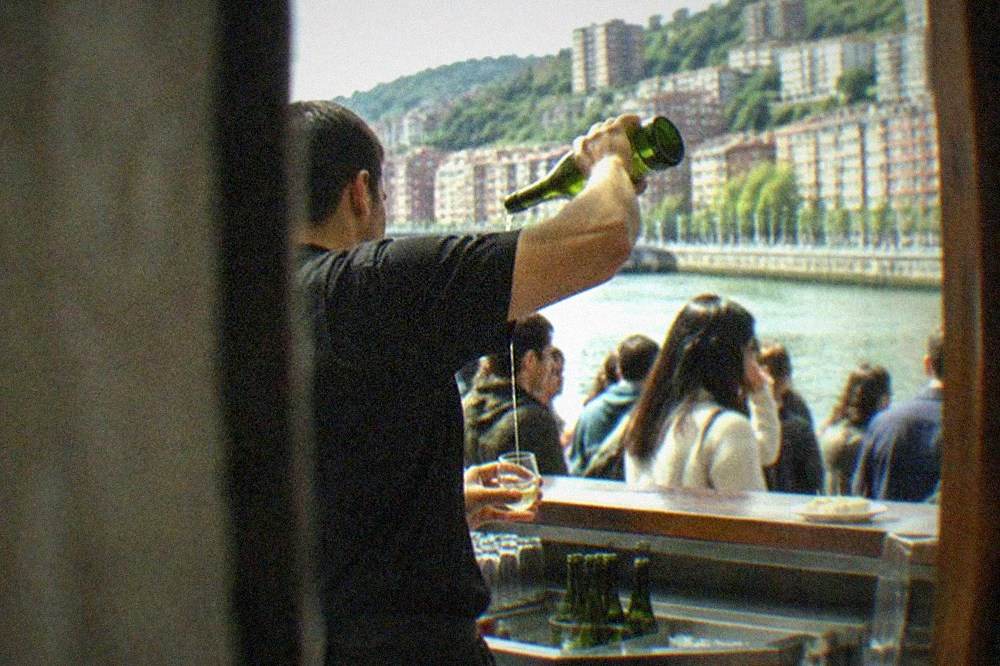
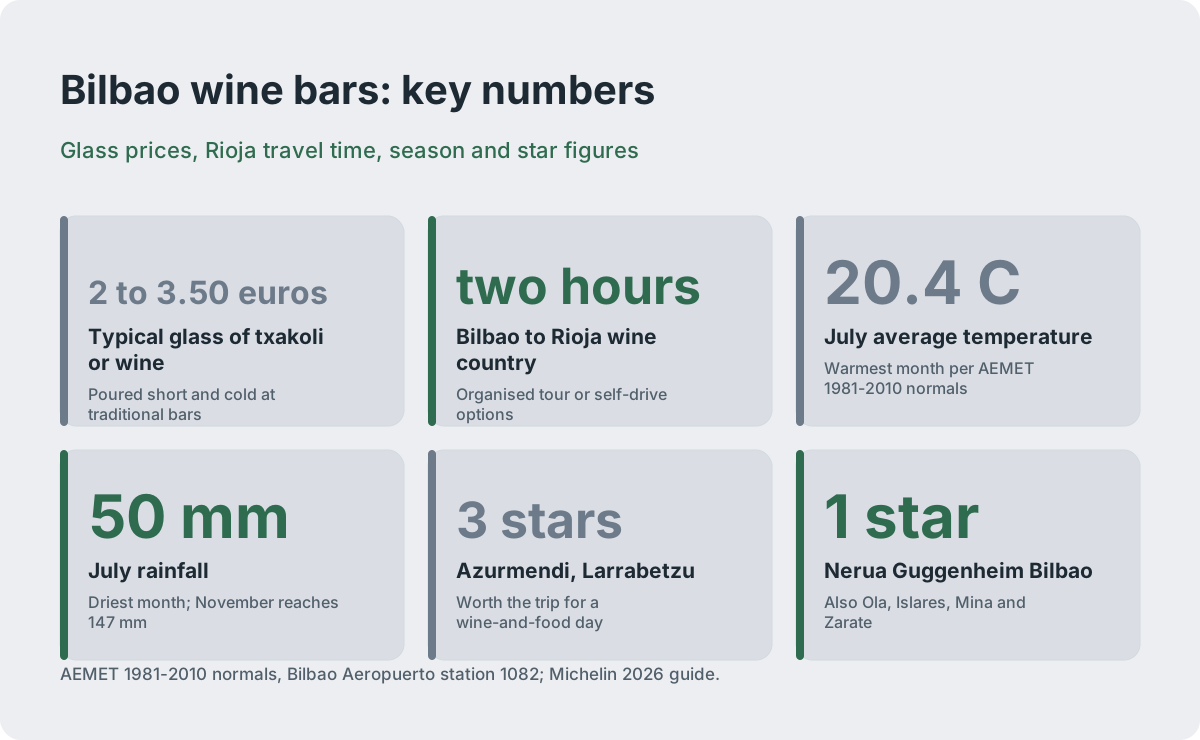
The three drinks that define a Bilbao wine bar are txakoli, the lightly sparkling, high-acidity white of the Basque coast; Rioja, the red (and some white) from the region two hours south; and cider, poured in the txotx season from January to late spring. A typical glass of txakoli or wine at a traditional bar runs about 2 to 3.50 euros, poured short and cold, and often served from the height as a small theatrical pour for the txakoli.
Txakoli is the local default. It is young, barely fizzy, sharply acidic and low in alcohol, made in the coastal denominations of Getariako Txakolina, Bizkaiko Txakolina and Arabako Txakolina, the first two within easy reach of Bilbao. It exists to accompany fish, salt and oil, which is to say it exists to accompany pintxos. Order it by name rather than by grape: most bar lists carry a house txakoli and nothing more granular.
Rioja is the other pillar. Because Bilbao sits closer to Rioja than almost any other major Spanish city, the wine lists here skew toward Rioja reds, from inexpensive joven (young) bottles to gran reservas, and bars will often open a good one for by-the-glass service at pintxos prices. The Basque cider tradition rounds things out: from January into spring, cider houses around the province hold txotx season, where cider is poured straight from the barrel, and Bilbao bars pour bottled Basque cider year-round as the default accompaniment to cod omelette and txistorra.
| Drink | What it is | Where it comes from | How it is served in Bilbao |
|---|---|---|---|
| Txakoli | Young, lightly sparkling, high-acidity white | Getariako and Bizkaiko Txakolina, Basque coast | Short cold pour, often from height |
| Rioja tinto | Tempranillo-based red, joven to gran reserva | Rioja, south of Bilbao | By the glass at pintxos bars, by the bottle at tables |
| Rioja blanco | Barrel-aged or fresh white | Rioja | Less common but on deeper lists |
| Basque cider (sagardoa) | Still, dry apple cider, low alcohol | Basque Country orchards | Bottled at bars; barrel-poured in txotx season |
| Zurito | Small beer, the pintxos-bar beer measure | Local | The non-wine default at every counter |
The pouring culture matters as much as the liquid. Measures are short, prices are per glass rather than per bottle on most counters, and nobody expects you to nurse one drink through three stops. For the etiquette around paying, tipping and ordering at the bar, the do you tip in pintxos bars answer page covers the details, and the Bilbao food guide covers what to eat alongside.
Which Bilbao Wine Bars Are Worth An Evening For The Food Alone?
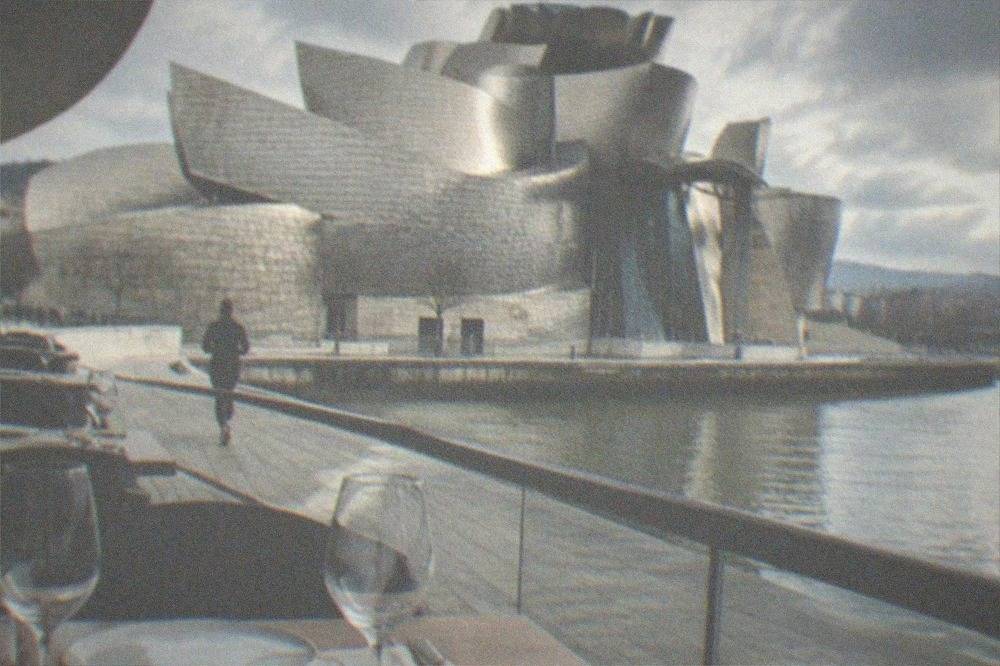
For an evening where the food matches the wine list, the strongest addresses are the Michelin-starred restaurants clustered near the Guggenheim: Nerua inside the museum itself, Ola Martín Berasategui in the Old Town, the newly starred Islares on Alameda Mazarredo, plus Mina and Zarate, all in central Bilbao. Each carries a serious Basque-focused wine program, and Islares earned its first star in the 2026 Michelin Guide, announced in late 2025.
Bilbao's fine-dining layer is unusually strong for a city of its size, and it is wine-first in a way few visitors expect. Nerua Guggenheim Bilbao, the museum's minimalist one-star restaurant, runs a wine program built around the same coastal-and-Rioja axis as the pintxos bars, at a completely different level of precision. Ola Martín Berasategui holds one star in the Old Town. Islares, a small room on Alameda Mazarredo 65 bis near the Guggenheim from chef Julen Bergantiños, focuses on Cantabrian and northern Spanish produce and was the city's new one-star addition in the 2026 guide, with tasting menus reported around 98 to 135 euros. Mina and Zarate complete the central one-star set.
| Restaurant | Area | Michelin status (2026 guide) | Wine character |
|---|---|---|---|
| Nerua Guggenheim Bilbao | Abandoibarra | 1 star | Minimalist pairing-led list, coastal whites |
| Ola Martín Berasategui | Casco Viejo | 1 star | Modern Basque with classic Rioja depth |
| Islares | Alameda Mazarredo, near Guggenheim | 1 star, new for 2026 | Northern Spanish producers, Cantabrian focus |
| Mina | Central Bilbao | 1 star | Contemporary tasting menus with regional pours |
| Zarate | Central Bilbao | 1 star | Refined Basque, fish-forward wine matches |
| Azurmendi | Larrabetzu, outside the city | 3 stars | Worth the trip for a full Basque wine-and-food day |
The practical bridge between the bar crawl and the starred table is a guided walk that treats wine as the through-line. The chef-led tour below is the one to book for that, and the operator's live listing carries the current price and availability.
Can You Visit Rioja Wine Country From Bilbao?
Yes, Rioja wine country is a realistic day trip from Bilbao, with the Haro and Laguardia wine towns roughly two hours' drive south, and organised day tours from the city cover winery visits and tastings in both without needing a rental car. The Rioja Alavesa village of Laguardia and the bodegas around Haro are the two standard anchors, and several verified tours run the route with tastings included.
Driving gives the most freedom, and the Rioja wine day trip guide covers the route in detail, including the Laguardia hilltown and the Haro bodega district. But a tour removes the designated-driver problem entirely, which matters more in Rioja than in most wine regions because tastings are generous and the roads are rural. The day trip below, with winery visits in Haro and Laguardia and tastings included, is the most direct option; its price, rating and duration render from the live listing rather than being quoted here.
| Wine area | Character | Nearest anchor town | Day-trip style from Bilbao |
|---|---|---|---|
| Rioja Alavesa | Walled hilltowns, family bodegas, limestone soils | Laguardia | Organised tour or self-drive, tastings in ancient cellars |
| Rioja Alta | Grand old bodegas, the classic railway-station district | Haro | Tour with two or more winery stops |
| Bizkaiko Txakolina | Coastal white, closest vineyards to the city | Getxo and the Bizkaia hills | Half-day, combinable with the coast |
| Getariako Txakolina | The most famous txakoli, sea-facing slopes | Getaria | Combine with a San Sebastián or Basque coast excursion |
The txakoli option deserves more attention than it gets: the vineyards of Bizkaia and Gipuzkoa are closer than Rioja, and a coastal excursion that pairs Getaria's txakoli cellars with the Bay of Biscay is a genuinely different day out. The full Rioja wine day trip page covers the practicalities, and the broader things to do in Bilbao roundup places both options in context.
When Is The Best Season For Wine Bar Crawling In Bilbao?
The best months for a Bilbao wine bar crawl are July and August, the warmest and driest in AEMET's 1981-2010 normals for Bilbao Aeropuerto (station 1082), with July averaging 20.4 C and only 50 mm of rain, though the bars themselves run all year and the November wettest month (147 mm) simply pushes the crawl indoors. June and September are the sweet spot for combining bar evenings with day trips, at 60 and 73 mm of rain respectively.
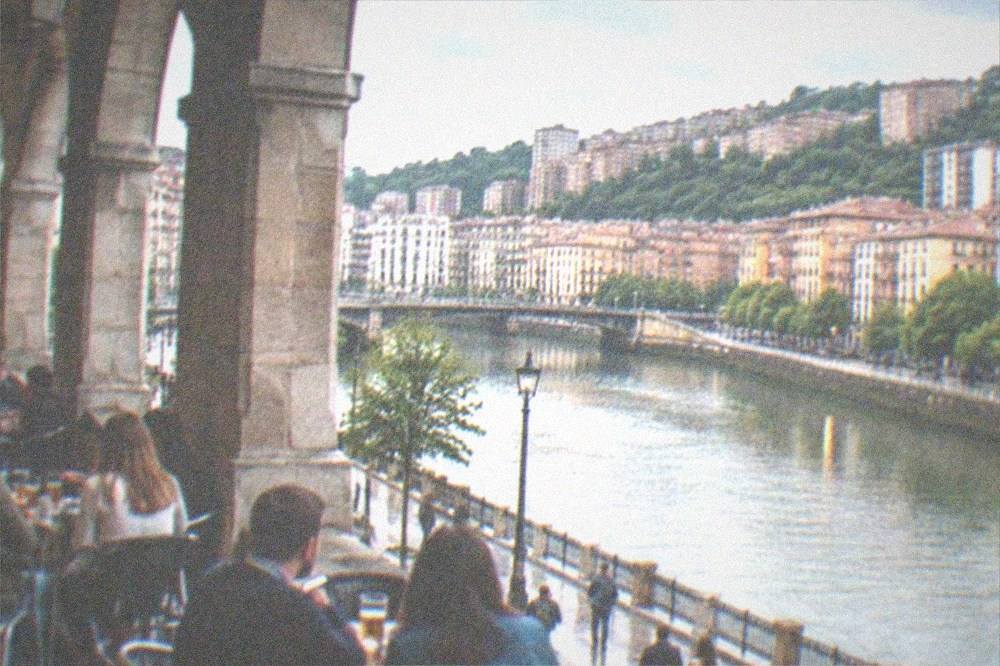
Bilbao's climate is temperate oceanic, Atlantic-influenced, never Mediterranean: the rain is spread across the year, totalling 1,134 mm annually, and the air stays mild rather than hot. What that means for wine bar plans is simple. The crawl does not have a closed season. In summer, the Plaza Nueva tables spill under the arcades and the evening starts late. In November, the wettest month, the same bars are standing-room-only indoors by 20:00, which is arguably closer to how the txikiteo was always meant to feel.
| Month | Mean temp (C) | Rain (mm) | Wine-bar evening character |
|---|---|---|---|
| March | 11.5 | 90 | Indoor counters, spring txakoli arrivals |
| June | 18.4 | 60 | Terrace season begins, txotx cider ending |
| July | 20.4 | 50 | Peak terrace weather, late starts |
| August | 20.9 | 76 | Aste Nagusia overlaps, bars at their fullest |
| September | 19.2 | 73 | Quieter squares, harvest-season Rioja talk |
| November | 12.4 | 147 | Wettest month, fully indoor and convivial |
One scheduling note worth planning around: Aste Nagusia, the city's great nine-day festival, ran 22 to 30 August in 2026, and during those days the bar scene swells to something between a crawl and a street party. If you want the bars at their normal volume, avoid the festival window; if you want Bilbao at maximum noise, aim for it. The Aste Nagusia festival guide covers it, and the Bilbao weather guide has the full monthly picture.
How Much Does A Wine Night In Bilbao Cost?
A typical Bilbao wine crawl costs about 25 to 45 euros per person for four to six pintxos with a drink at each stop, based on 2026 reporting: individual pintxos run roughly 2 to 5 euros at traditional bars (up to 6 to 8 in premium spots) and a glass of txakoli, zurito or wine runs about 2 to 3.50 euros. A full restaurant evening at a Michelin-starred room is a different budget, with Islares's tasting menus reported around 98 to 135 euros.
The crawl economics are the reason the format works. Because every stop is pay-per-item and the measures are short, you control the spend stop by stop. Four stops with one pintxo and one drink each lands near the low end of that range; six stops with a couple of glasses at the last bar lands near the top. One 2025 report noted a neighbourhood bar holding its tortilla at 2.60 euros despite rising costs, which tells you the floor of the market is still genuinely low.
| Item | Typical 2026 price | Notes |
|---|---|---|
| Simple counter pintxo (gilda, tortilla, jamon) | 2-4 EUR | Cold bar items, cheaper end |
| Elaborate hot pintxo (seafood gratin, creative bites) | 3-6 EUR | Premium Plaza Nueva spots can reach 6-8 EUR |
| Glass of txakoli, wine or zurito | 2-3.50 EUR | Short measures, per glass |
| Full crawl, 4-6 items plus drinks | 25-45 EUR per person | The standard evening budget |
| Starred tasting menu (Islares, reported) | 98-135 EUR | Fine-dining tier, reservation needed |
For context on the wider budget, the is Bilbao expensive guide breaks down accommodation and transport, and the where to stay in Bilbao guide helps you pick a base within crawling distance of Plaza Nueva. If you would rather have the crawl organised, with the bars and pours pre-selected, the food-and-wine walk below covers the same ground with a local leading.
Should You Book A Guided Wine Experience Or Crawl Alone?
You should crawl alone if you want the cheapest, most flexible evening, and book a guided wine experience if you want the bars' back stories, the right pour at each counter, or a bridge into Rioja itself, since the verified options include a chef-led city walk, a Rioja wineries day trip with tastings in Haro and Laguardia, and a coastal excursion that pairs Basque towns with the region's other drinking traditions. The guided options cost more than a solo crawl but remove every guess.
The honest comparison is about information, not access. Every bar on this page can be walked into without a booking. What a guide adds is curation: knowing that the txakoli at one counter comes from a specific Getaria cellar, that the Rioja by the glass at another is the one worth ordering, and that the tortilla at Sorginzulo has a championship pedigree. The chef-led walk below is the strongest of the city options, and the two day trips extend the same logic to Rioja and the Basque coast.
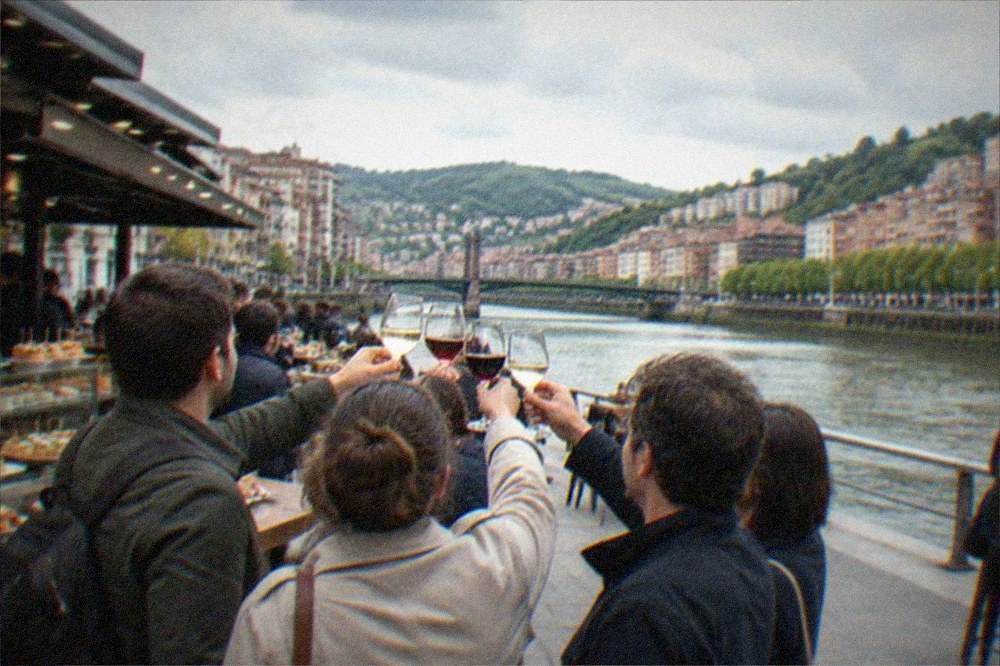
The Basque coast option deserves a word because it is not obviously a wine tour: the excursion to Biarritz, Saint-Jean-de-Luz and San Sebastián passes through Getaria, the txakoli capital, and San Sebastián's old town holds some of the best wine-and-pintxos bars in the entire Basque Country. If your Bilbao evenings are already spoken for, it converts a day into an extension of the same theme. The Bilbao versus San Sebastian comparison covers the two cities' food scenes side by side, and the Bilbao nightlife guide covers where the evening goes after the wine bars close.
Common Questions About Wine Bars In Bilbao
What wine is Bilbao known for?
Bilbao is known as a drinking city for txakoli, the young, lightly sparkling, high-acidity white of the Basque coast, and for Rioja reds, given the city's proximity to the Rioja region. Basque cider is the third pillar, poured bottled year-round and straight from the barrel during txotx season from January into spring.
Where are the best wine bars in Bilbao?
The best wine bars in Bilbao cluster around Plaza Nueva in the Casco Viejo, where Gure Toki, Sorginzulo, Víctor Montes, Café Bar Bilbao and Antxoa Taberna all pour within one arcaded square, and in the Ensanche around Diputación and Abando, where El Globo, La Viña del Ensanche and La Bodeguita del 12 anchor the scene.
How much does a wine bar crawl in Bilbao cost?
A typical crawl of four to six pintxos with a drink at each stop runs about 25 to 45 euros per person in 2026, with individual pintxos at roughly 2 to 5 euros at traditional bars and a glass of txakoli or wine at about 2 to 3.50 euros. Premium preparations at upscale spots can reach 6 to 8 euros.
Can you visit Rioja from Bilbao in one day?
Yes. Rioja wine country sits roughly two hours south of Bilbao by road, and organised day tours cover winery visits and tastings in Haro and Laguardia, so no rental car or overnight stay is required. The Rioja Alavesa hilltown of Laguardia and the Haro bodega district are the standard anchors.
Do you need a reservation for Bilbao wine bars?
No. The pintxos and wine bars around Plaza Nueva and the Ensanche operate on a walk-in, stand-at-the-counter basis, and payment is per item at the bar. Reservations only matter at the Michelin-starred restaurant tier, such as Nerua, Islares, Mina and Zarate, where tables should be booked ahead.
Is there a tourist tax on a Bilbao wine bar trip?
No tourist tax applies to 2026 visitors. The Bizkaia regional tourist tax under Norma Foral 3/2026 takes effect on 1 January 2027, with Bilbao's approved municipal rates running from 1 euro per night in pensions to 5 euros in 5-star hotels and 6.50 euros for tourist apartments, so trips from 2027 onward will carry a small nightly charge at accommodation.
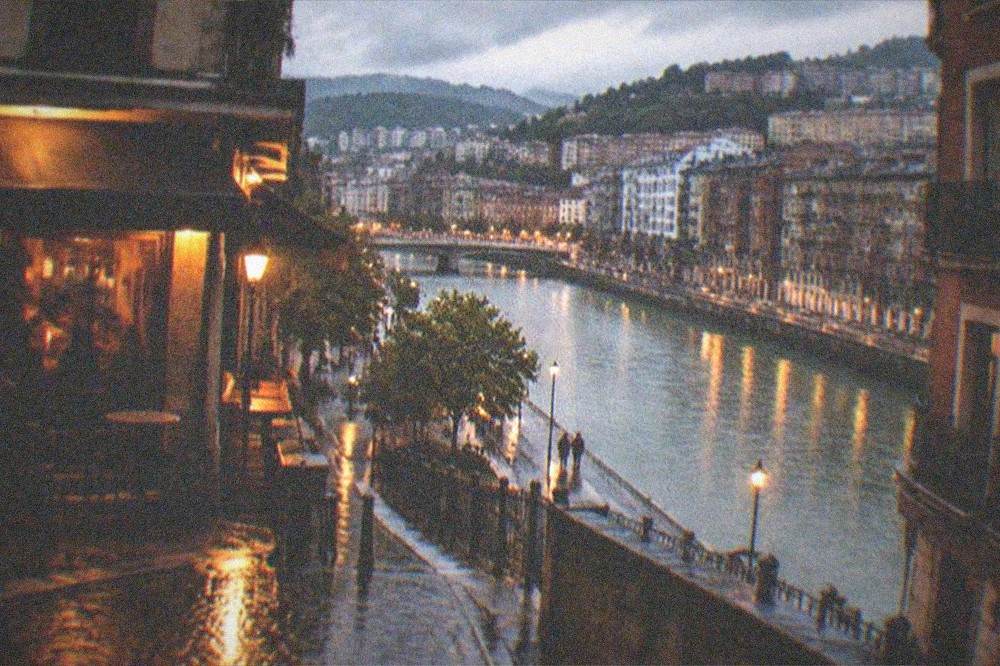
Bilbao's wine bar scene rewards exactly the kind of evening it was built for: short glasses, small plates, and a slow drift between counters that are, on the Plaza Nueva circuit, never more than a few steps apart. Start on the square with a txakoli, finish in the Ensanche with a Rioja, and if a free day opens up, point it south toward Haro and Laguardia, where the same region's wine waits at its source.