What To Eat In Bilbao
Bilbao, in the Basque Country of northern Spain, eats standing up more than almost any city in Europe. This guide covers the dishes, bars, prices and ordering customs that define the city's food scene.
Short answer
Eat pintxos in the Casco Viejo and Ensanche bars, order bacalao al pil pil and txangurro when you see them, drink txakoli with seafood, and budget roughly 2 to 5 EUR per pintxo at traditional bars.
Bilbao, in Biscay (Bizkaia) province, Basque Country, northern Spain, is a city where the food scene outgrew the guidebooks years ago. The municipal population of 346,933 (Eustat, 1 January 2025) supports one of the densest concentrations of pintxos bars in Spain, and the province around it, Bizkaia, holds more Michelin stars per capita than anywhere else in the country. Eating here is not a single restaurant meal: it is a moving sequence of small bars, standing counters, one or two bites per stop, and a short glass of something cold between each. This guide lays out what to eat, where, at what price, and how to order without feeling like an outsider.
What Should You Eat First In Bilbao?
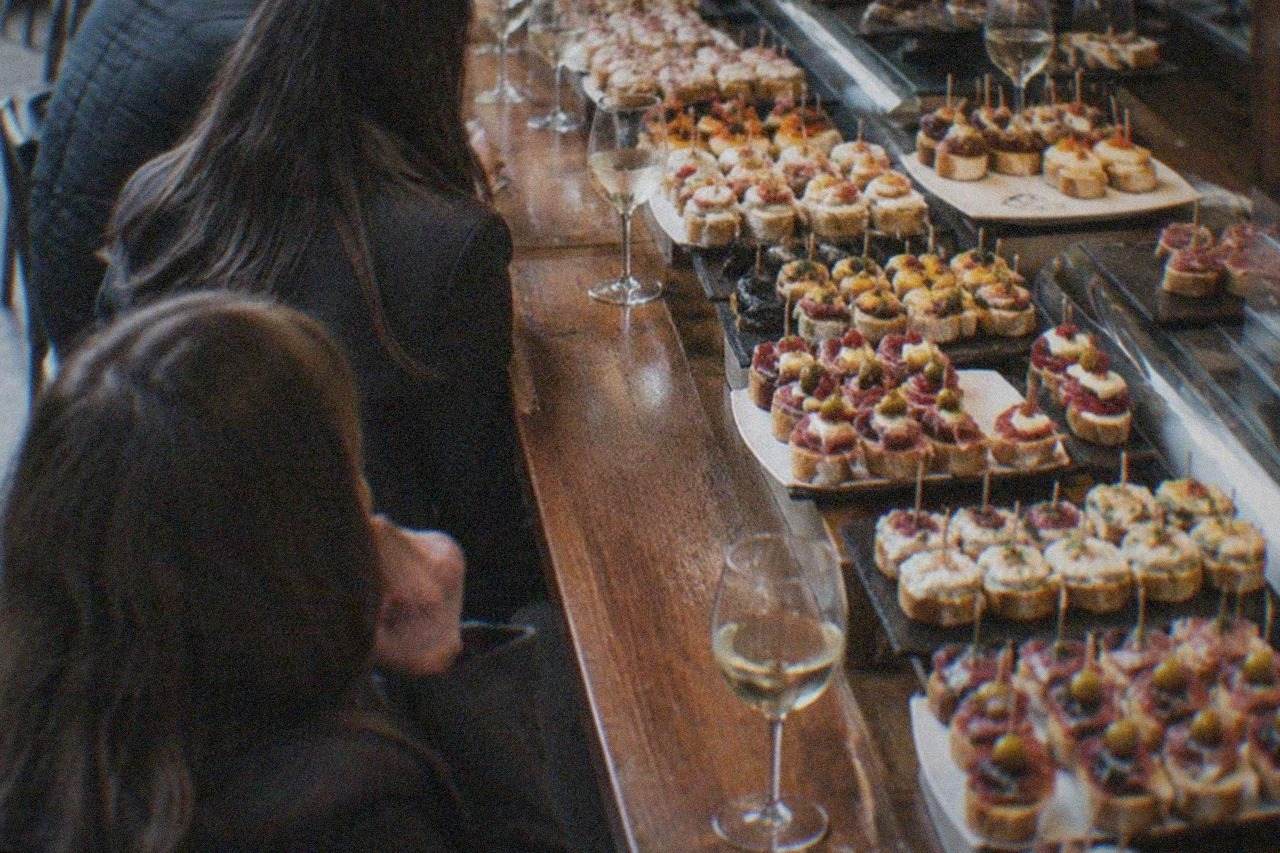
Start with pintxos, the Basque version of tapas served on bread slices or skewers, because they are the city's default way of eating: bacalao al pil pil (salt cod in garlic emulsion), txangurro (spider crab gratin), gildas (olive, anchovy and guindilla pepper skewers) and tortilla de patatas appear on almost every serious counter in the Casco Viejo and the Ensanche. A crawl of four to six pintxos with drinks typically runs 25 to 45 EUR per person at traditional bars.
Pintxos are not appetisers here. They are the meal. The custom, txikiteo, means walking from bar to bar, taking one or two bites and a small drink at each, and the whole exercise is social: locals move in small groups, and the bar you pick says as much as the wine you order. The Casco Viejo, the seven-street old quarter, holds the densest cluster of historic counters around Plaza Nueva, while the Ensanche, the newer business district, carries the more contemporary gastro-bars. Our best pintxos in Bilbao guide breaks the individual bars down street by street.
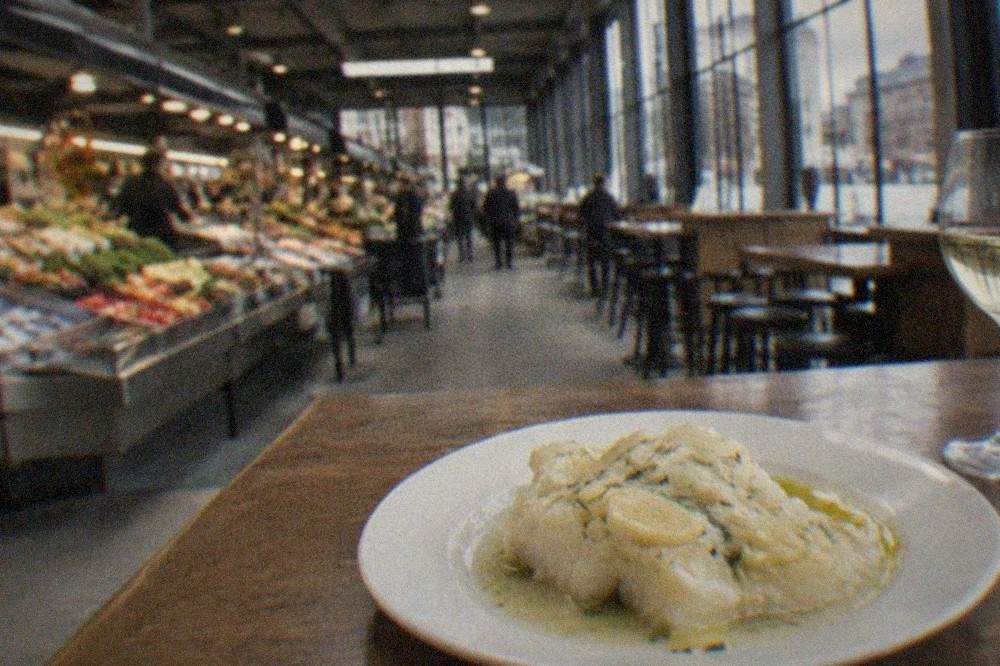
Beyond pintxos, the city has a short list of dishes that belong specifically to Bilbao and Bizkaia rather than to Spain generally. Bacalao al pil pil is the one locals will judge a kitchen by: the emulsion of olive oil, garlic and gelatin from the salt cod has to be worked slowly in the pan, and a runny or split sauce ends the argument. Txangurro, spider crab taken from its shell, mixed and returned gratinated, is the other signature. Both appear as raciones, larger plates to share, in the same bars that serve pintxos.
| Dish | What it is | Where it is strongest |
|---|---|---|
| Bacalao al pil pil | Salt cod emulsified with garlic and olive oil | Old Town bars, traditional restaurants |
| Txangurro | Spider crab gratinated in its own shell | Seafood-focused counters, Plaza Nueva |
| Gilda | Skewer of olive, anchovy and guindilla pepper | Every serious pintxos bar |
| Tortilla de patatas | Thick potato and egg omelette, often runny | Traditional bars citywide |
| Talo con txistorra | Corn flatbread with Basque fresh sausage | Rural-style and festival stalls |
| Marmitako | Tuna and potato stew from the fishing coast | Coastal towns such as Bermeo and Mundaka |
Where Are The Best Pintxos Bars In Bilbao?
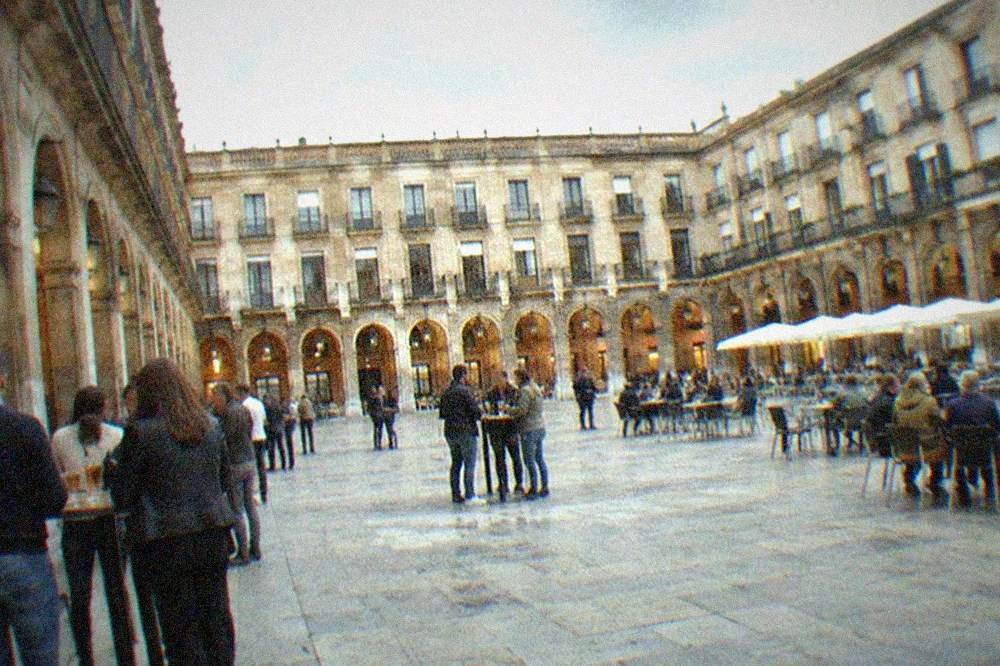
The centre of gravity is Plaza Nueva in the Casco Viejo, where Gure Toki, Sorginzulo, Víctor Montes, Café Bar Bilbao and Antxoa Taberna all face the same arcaded square, with El Glovo's original bar and La Viña del Ensanche a short walk away in the Ensanche district. These bars appear repeatedly in the 2025 and 2026 editions of the Best Pintxos & Gastro Euskadi rankings and in the local press.
Plaza Nueva works because the bars compete within a hundred metres of each other, and the crawl between them takes minutes rather than taxi rides. Gure Toki, family-run since 1982, is the one most often named as the Old Town's emblem, leaning creative while staying product-driven. Sorginzulo, on the same square, took the Bizkaia tortilla championship in 2024 and pairs the classics with a modern foie bite. Víctor Montes and Café Bar Bilbao, the latter going back to 1911, are the traditional anchors: chorizo al vino, tortilla, and a bar top that has not changed style in decades.
Across the estuary-side streets of the Ensanche, El Glovo (since 1997) is known for its visual counter display and its txangurro gratin, and La Viña del Ensanche, historic since 1927, is the neighbourhood's old-school standard. La Bodeguita del 12, on Juan Ajuriaguerra Kalea, won the 2025 Bizkaia traditional pintxo championship with "Delicia de Tierra Roja", a black pudding and cornbread bite with Idiazabal cheese and green apple. That is the level of competition a square kilometre of Bilbao holds.
A guided crawl removes the guesswork from the first night, and the food-tour options below cover the main schools: the local-hosted pintxos and drinks walk, plus two day trips that carry the same food logic out into the wine country beyond the city.
How Much Does Eating Out In Bilbao Cost?
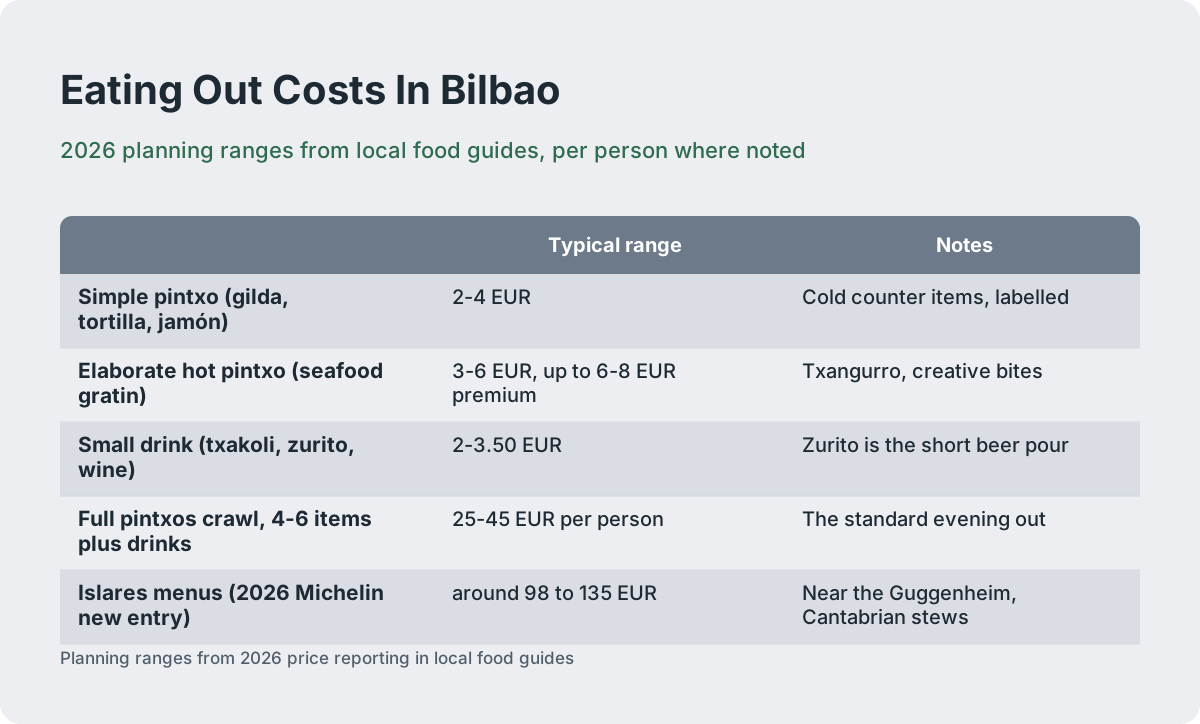
Expect roughly 2 to 5 EUR per pintxo at traditional bars, with simpler counter items such as gildas and tortilla at the low end and elaborate hot seafood bites reaching 6 to 8 EUR in premium spots; drinks typically run 2 to 3.50 EUR, so a full crawl of four to six pintxos with drinks lands around 25 to 45 EUR per person, while a seated restaurant main in the mid-range sits well above that.
These are planning ranges drawn from 2026 price reporting in local food guides, not fixed tariffs: bars post their prices, and the counter display is usually labelled. The habit that keeps costs honest is eating where the prices are written. One 2025 report noted a neighbourhood bar still holding its tortilla at 2.60 EUR while acknowledging it "should" be nearer 3 EUR, which tells you both that inflation is real and that plenty of counters still undercut the tourist strips. The bars around Plaza Nueva and the Ensanche are not dramatically more expensive than side-street equivalents, but the premium preparations, hot seafood gratins especially, do carry the top of the range.
For a full picture of the city's cost base beyond food, including accommodation and transport, our is Bilbao expensive guide runs the numbers. One dated planning note belongs here because it touches restaurant and hotel bills: a Bizkaia-wide regional tourist tax takes effect on 1 January 2027, with Bilbao's approved municipal rates running from 1 EUR per night at pensions to 5 EUR at 5-star hotels and 6.50 EUR for tourist apartments. Visitors in 2026 pay no tourist tax, and reservations made before early February 2026 are generally exempt.
| Item | Typical planning range | Notes |
|---|---|---|
| Simple pintxo (gilda, tortilla, jamón) | 2-4 EUR | Cold counter items, labelled |
| Elaborate hot pintxo (seafood gratin) | 3-6 EUR, up to 6-8 EUR premium | Txangurro, creative bites |
| Small drink (txakoli, zurito, wine) | 2-3.50 EUR | Zurito is the short beer pour |
| Full pintxos crawl, 4-6 items plus drinks | 25-45 EUR per person | The standard evening out |
| Cider house season meal (txotx) | Set house menu | Flat-rate house style, see festivals section |
If the first night's planning feels heavy, a guided option covers the ordering and the route in one booking, with drinks included and free cancellation on the operator's live listing.
What Is Txakoli And Why Does It Matter In Bilbao?
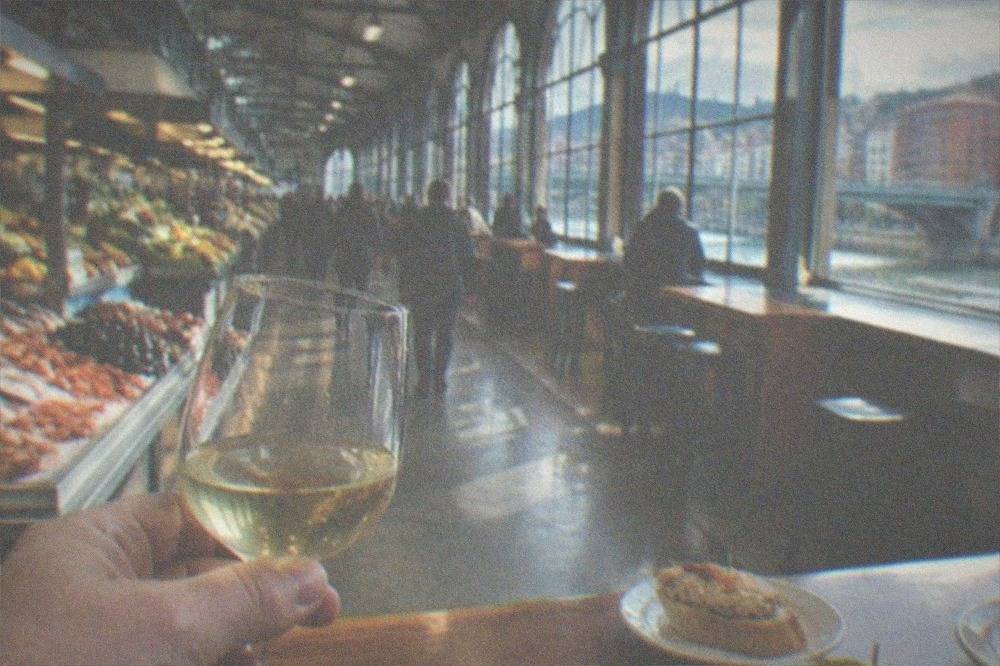
Txakoli is the lightly sparkling, high-acidity white wine of the Basque coast, poured from a height into short glasses to aerate it, and it is the default drink beside pintxos and seafood in Bilbao; the Bizkaiko Txakolina denomination covers vineyards within this same province, so the glass in front of you was almost certainly grown within an hour of the city.
The pouring ritual matters as much as the wine. The bottle is held high and the thin stream falls into the glass, which wakes the wine up and is half the reason it pairs so cleanly with anchovy, crab and cod. It is a wine built for food, not for contemplation: low-ish alcohol, bracing acidity, and a saline edge that matches the Cantabrian fish kitchen. Red and rosé txakoli exist, but the white is what the bars pour by default.
The drink also connects the city to its coast. The Urdaibai biosphere and the cliffs around Bermeo and Bakio hold much of the Bizkaiko Txakolina vineyard area, and several day trips out of Bilbao, including the Gaztelugatxe coastal loops, fold a txakoli tasting into the itinerary. The wine tour below, a chef-led walk through the city, treats txakoli as one thread in the full Basque glass alongside Rioja.
Which Restaurants In Bilbao Have Michelin Stars?
The 2026 Michelin Guide, announced in late 2025, gives Bizkaia more stars per capita than any other province in Spain: Azurmendi in nearby Larrabetzu holds three stars, and Bilbao itself carries one star each at Ola Martín Berasategui, Nerua inside the Guggenheim, Mina, Zarate and the newly starred Islares on Alameda Mazarredo, with no reported losses across the province.
Islares is the notable new entry: a small room near the Guggenheim where chef Julen Bergantiños works Cantabrian and northern Spanish stews and producer-led cooking, with reported menus around 98 to 135 EUR. Nerua, inside the museum, is the minimalist counterpoint, and Ola brings Martín Berasategui's formal technique to the Old Town edge. Mina and Zarate round out the city list. Beyond the city limits, Bakea in Mungia and La Revelía in Amorebieta-Etxano joined the 2026 list as new one-stars, with Bakea also taking a green star for sustainability. More of these guides are collected on Bilbao Travel Guide.
None of these are pintxos bars, and that is the point: Bilbao runs a two-speed food economy. The starred rooms take reservations and tasting menus, while the bar counters take walk-ins and small bills. A sensible trip uses both, the way locals do, and our best restaurants in Bilbao guide maps the full mid-range and splurge field between the two.
| Restaurant | Stars (2026 guide) | Style |
|---|---|---|
| Azurmendi (Larrabetzu) | 3 | Eneko Atxa, avant-garde Basque |
| Ola Martín Berasategui | 1 | Formal Basque, Old Town edge |
| Nerua Guggenheim Bilbao | 1 | Contemporary, minimalist, in-museum |
| Mina | 1 | Modern tasting menus |
| Zarate | 1 | Fish-focused Basque |
| Islares | 1 (new) | Cantabrian guisos, producer-led, near the Guggenheim |
What Food Day Trips From Bilbao Are Worth The Journey?
The strongest food-driven day trips from Bilbao are the Rioja wine region around Haro and Laguardia, roughly an hour and a half inland, and the Bizkaia coast through Bermeo, Mundaka and the Urdaibai estuary, where txakoli bodegas, fishing-port marmitako and cider-house cooking sit within an hour's train or bus ride of the city centre.
Rioja is the big one. The vineyards of the Rioja Alavesa around Laguardia and the classic bodega district of Haro put Spain's most famous red wine within day-trip range, and the guided options run from standard group coaches to semi-private visits across three premium wineries. The coastal route is the other pillar: Bermeo is a working fishing port with the best marmitako and fresh fish in the province, Mundaka sits opposite it with the surf and the txakoli, and several tours thread both together with the Gaztelugatxe hermitage viewpoint between them. The Rioja wine day trip guide and the Urdaibai biosphere guide cover both routes in detail.
The two day trips below carry the same logic out of the city: one combines Vitoria-Gasteiz with a working Rioja winery, the other pairs Pamplona and Vitoria for a broader taste of the region's two most underrated food towns.
When Are Bilbao's Food Festivals And Seasonal Specialities?
The two dates that change how the city eats are the txotx cider-house season, running through the winter and spring months, and Aste Nagusia, Bilbao's nine-day main festival from 22 to 30 August 2026, when txosnas (festival kiosks run by neighbourhood konpartsak) take over the food and drink scene; the txupin opening is on 22 August at 19:00 in Plaza Arriaga.
The cider house, sagardotegi, is a winter institution across Bizkaia and neighbouring Gipuzkoa: a set house menu of salt cod omelette, fried cod, a huge txuleta steak with peppers, and quince with walnuts, washed down with cider poured straight from the barrel at the txotx call. It is flat-rate, loud, and the single most social eating format in the Basque Country. The season runs from midwinter into spring, and the cider houses cluster in the hills around the region rather than in the city centre, so it pairs naturally with a rental car, which our renting a car in Bilbao guide covers.
Aste Nagusia inverts the whole food economy for nine days: the konpartsak's txosnas along the river and in the Casco Viejo serve cheap beer and simple food all night, and the Michelin rooms empty out. Our Aste Nagusia festival guide has the full programme. Beyond the two anchors, the calendar carries the Noche de San Juan bonfires around 23-24 June and the street-theatre Kalealdia festival from 29 June to 4 July 2026, both of which push eating outdoors.
How Do You Order Like A Local In A Bilbao Pintxos Bar?
Point at the cold pintxos on the counter display and order hot ones verbally from the board, keep a mental tally rather than paying per item, and settle the whole bill in one go when you leave, called la cuenta; eat standing at the bar or at the tall barrels rather than sitting, since tables in some Old Town bars cost more and mark you as a visitor.
The mechanics are simple but unforgiving of hesitation. Cold pintxos, the gildas, tortilla wedges and mounted bread slices, sit on the counter in full view: you take a plate, help yourself or point, and the barkeep counts what you took when you ask for the bill. Hot pintxos, the fried, gratinated and griddled items, are cooked to order and must be asked for at the bar. Nobody pays per item; the count happens at the end, and honesty is assumed. The zurito, a short pour of beer roughly a third of a pint, is the standard pairing when wine is not on the plan, and it is priced accordingly.
Two habits mark the difference between a smooth crawl and a clumsy one. First, move: one bar holds a group for twenty minutes, not an evening, and the txikiteo rhythm of a bite, a drink and a walk is the whole point. Second, watch the local convention on tipping, which is small and informal rather than percentage-based; the Bilbao currency, tipping and money guide covers the current norms in detail. And if the ordering still feels opaque, the guided walks below are built precisely to solve it on the first evening.
Common Questions About Eating In Bilbao
What To Eat In Bilbao For A First Visit?
Start with pintxos at Plaza Nueva bars such as Gure Toki, Sorginzulo and Víctor Montes, order bacalao al pil pil and txangurro as larger plates, drink txakoli with the seafood, and add one cider-house or coastal day trip if time allows. That sequence covers every signature Basque preparation the city is judged on.
How Much Does A Pintxos Crawl In Bilbao Cost?
Plan on 2 to 5 EUR per pintxo at traditional bars, 2 to 3.50 EUR per drink, and roughly 25 to 45 EUR per person for a full crawl of four to six bites with drinks. Premium hot preparations can reach 6 to 8 EUR at the top bars, so the range depends mostly on how much hot seafood you order.
What Is The Difference Between Pintxos And Tapas?
Pintxos are the Basque form: often mounted on bread with a skewer, displayed on the counter, and typically paid for in a single tally at the end rather than ordered per plate from a menu. Tapas in the rest of Spain are usually ordered from the kitchen and served at the table.
Where Can You Eat Late At Night In Bilbao?
The Casco Viejo bars around Plaza Nueva and the Calle Somera strip stay open latest, and during Aste Nagusia the txosnas serve until the early hours. The city's late eating culture is bar-based rather than restaurant-based; the Bilbao nightlife guide maps the districts that eat and drink latest.
Is Bilbao Good For Vegetarians?
Traditional counters lean heavily on fish, but tortilla, setas, pisto, talo with cheese and the vegetable pintxos at creative bars such as Gure Toki cover vegetarians well. Vegans have a thinner but real set of options; the dedicated vegetarian and vegan guide lists the specific kitchens.
Do You Need To Book Bilbao Restaurants In Advance?
Pintxos bars never take bookings; you walk in and stand. The Michelin-starred rooms, Nerua, Ola, Mina, Zarate and Islares among them, do need advance reservations, and the popular mid-range restaurants are worth booking for weekend evenings.
What Should A Full Food Day In Bilbao Look Like?
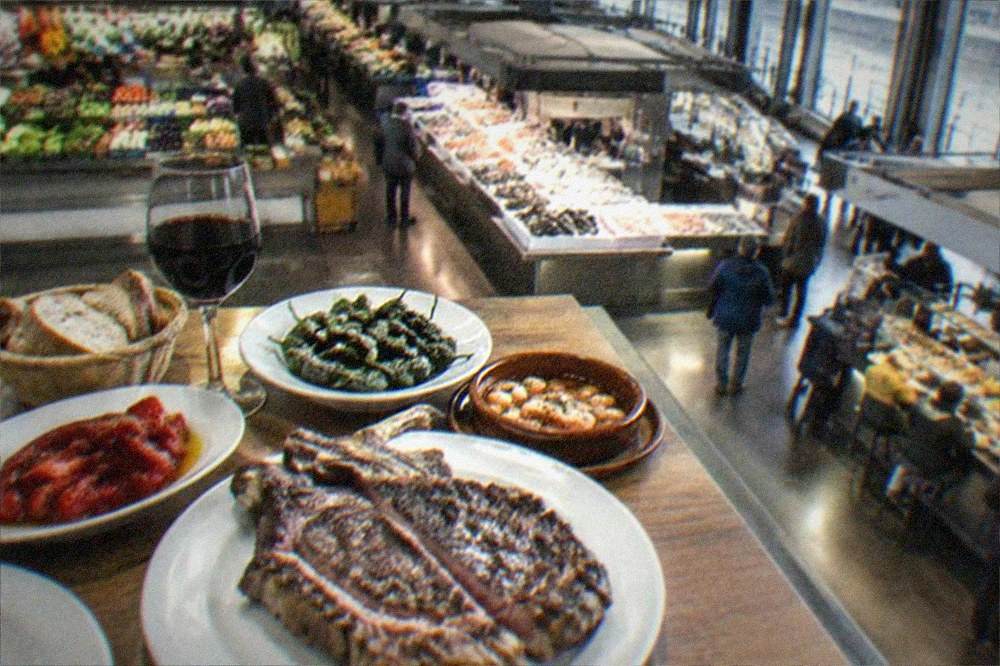
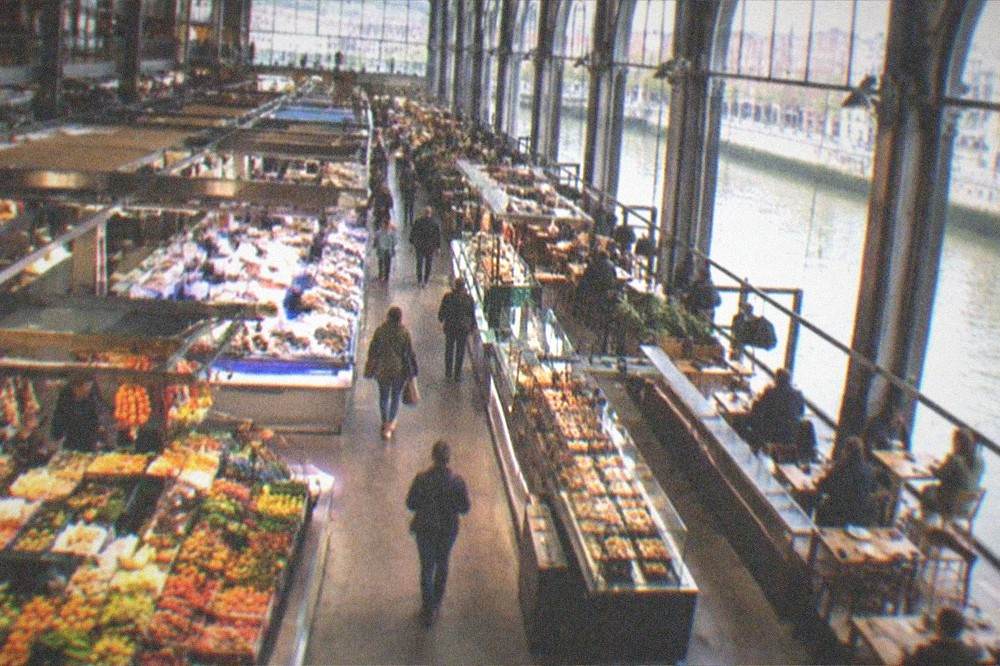
Anchor the morning at Mercado de la Ribera, Europe's largest covered market by floor area on its reopening, then eat pintxos through the Casco Viejo at lunch, take a txakoli or coffee pause mid-afternoon, and finish with either a Plaza Nueva crawl or a seated dinner in the Ensanche, which is exactly the rhythm the city's own bars are built around.
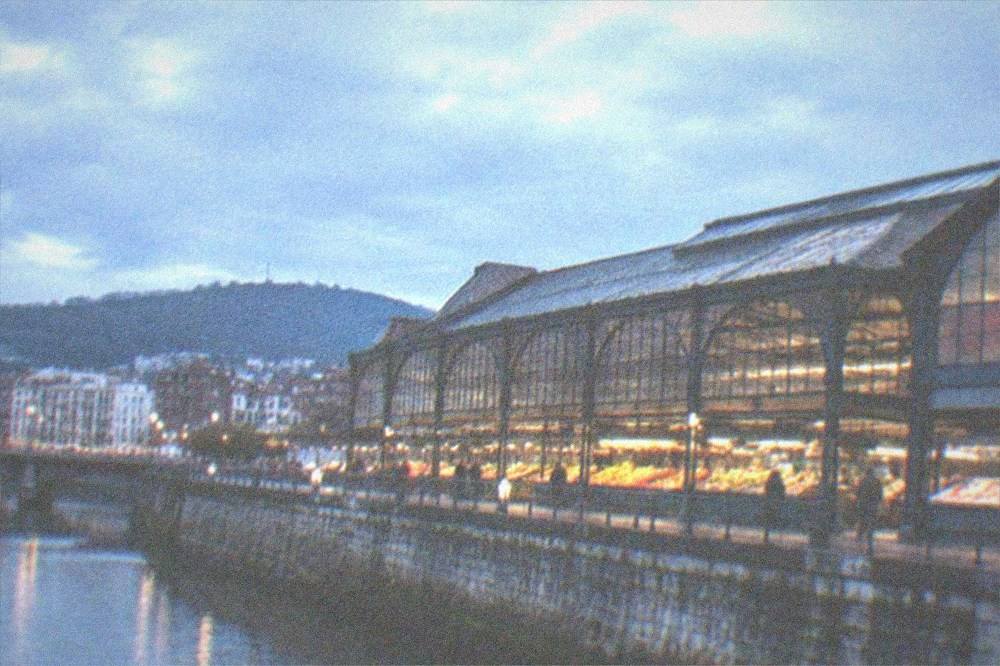
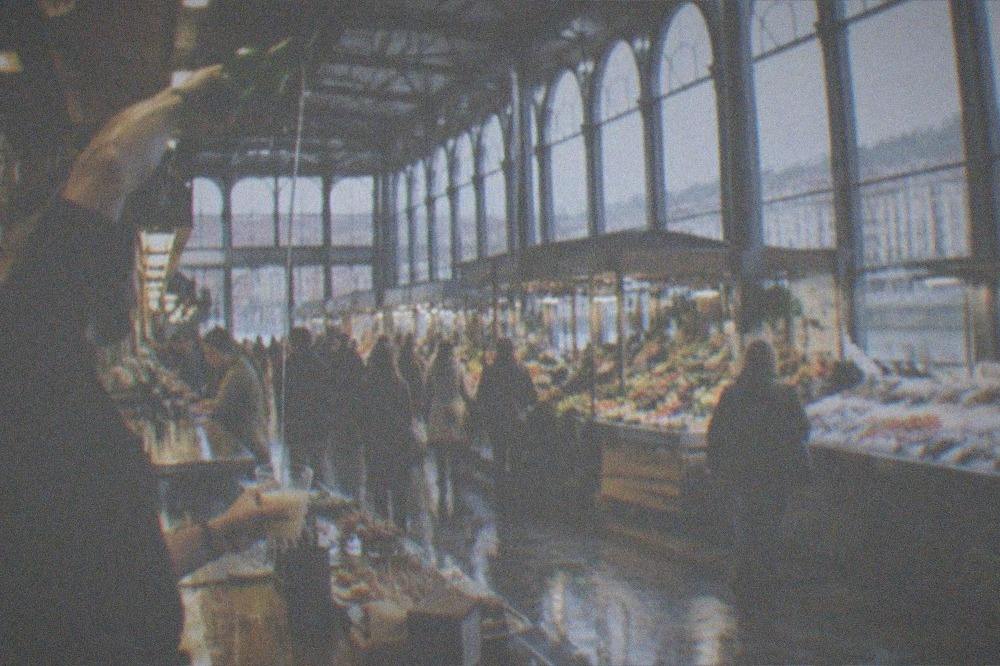
The Ribera market, on the estuary edge of the Casco Viejo, is the natural opening act: produce stalls, a food court and the river terrace, all a two-minute walk from the Siete Calles. Lunch in the Old Town is pintxos rather than a sit-down plate, and the afternoon gap is where the city's coffee and brunch culture has grown in recent years. Evenings split by district: the Old Town crawls, the Ensanche sits.
For travellers who want the structure handled, the local-hosted walk below is the one most first-time visitors book: it moves through the same bars this guide names, with the ordering, the tally system and the txakoli pour explained as you go, and the operator's live listing carries the current price and availability.
The simplest summary of eating in Bilbao is that the city rewards movement and punishes sitting still: take a bite, take a drink, and walk to the next counter, and by the end of the evening you will have eaten better than most restaurant menus in Spain could manage in one sitting.