Do You Tip In Pintxos Bars?
No, tipping is not expected in Bilbao's pintxos bars. Here is how locals actually handle the bill, when a small tip makes sense, and what pintxos cost in the Basque Country.
Bilbao, in the Basque Country of northern Spain, does not run on tips. The pintxo bars that line Plaza Nueva and the Siete Calles of Casco Viejo operate on a simple, cash-friendly rhythm: you order at the bar, you eat standing up, you ask for the bill, and you pay roughly what it says. Nobody waits for a gratuity, nobody performs one, and no waiter's income depends on it. That is the short version. The longer version involves understanding how the txikiteo crawl actually works, what a pintxo costs, and the handful of situations where leaving a little extra is a genuine gesture rather than an imported habit.
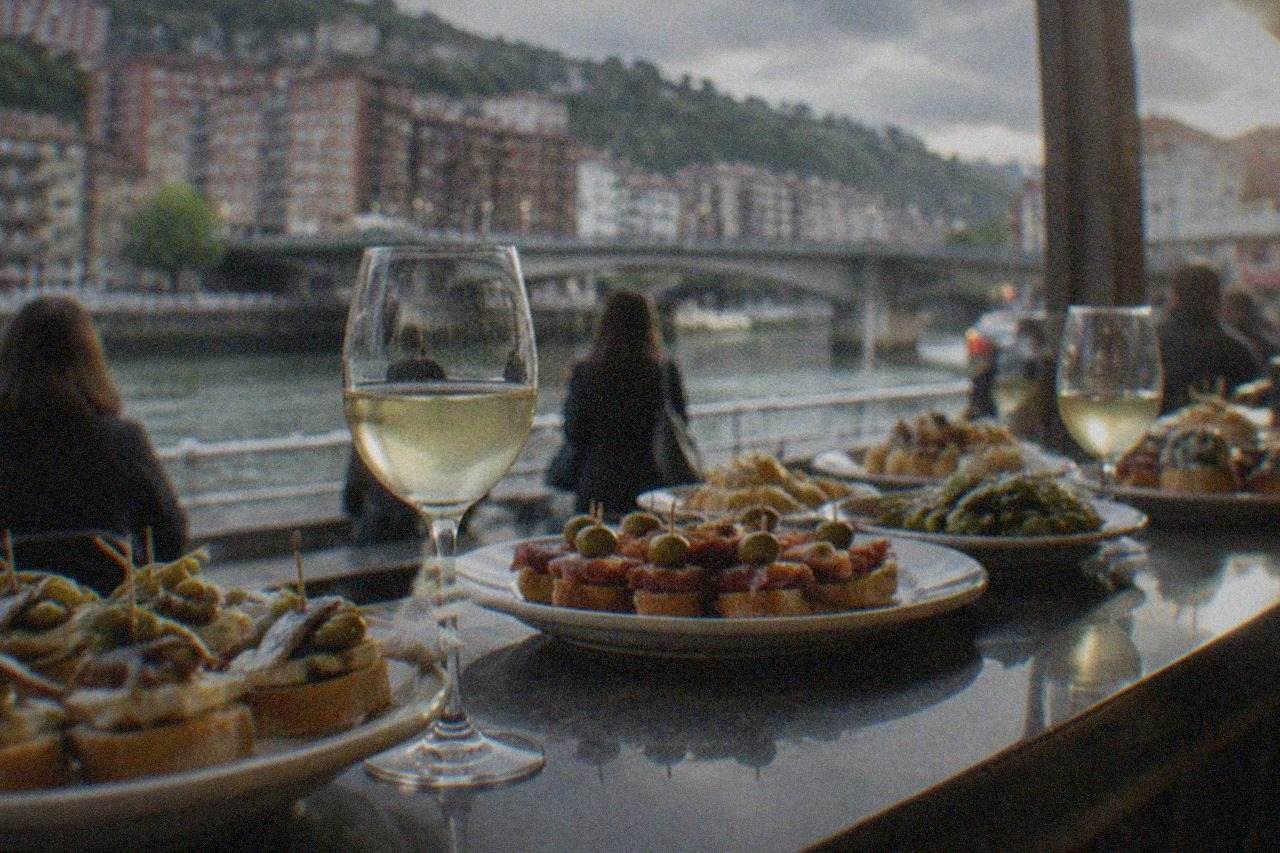
Do You Tip In Pintxos Bars?
No, tipping is not expected in pintxos bars in Bilbao or anywhere in the Basque Country. Bar staff in Spain earn a fixed wage rather than relying on gratuities, so a pintxo bill is normally settled to the euro with no rounding and no offence taken. If service was exceptional, leaving a euro or the small coins from your change is a welcome gesture, but it is entirely optional and most locals simply do not do it.
That answer surprises visitors from the United States, where a tip is treated as part of the price. In Spain the economics are different. Waiting staff are paid a proper hourly wage by law, and service is never added as a separate line on a bar bill. A local who orders a couple of pintxos and a zurito of beer, receives the bill, pays it exactly, pockets the change and walks to the next bar has done everything correctly. Nothing about that transaction is rude, cheap or incomplete.
It also matters that pintxos culture is fast, standing-room culture. You are often at the bar for ten minutes, not an hour. There is no table service to reward, no lingering relationship with one server, and no expectation built into the interaction. The whole system, from the toothpick-and-paper-napkin presentation to the tally-by-memory billing, is designed for speed and volume. A tip would almost slow it down.
If you want the deeper background on what a pintxo actually is and how it differs from a tapa, the companion page on the difference between tapas and pintxos breaks down the vocabulary, and the guide to the best pintxos in Bilbao names the bars that locals actually rate.
How Does Tipping Work In Bilbao Bars And Restaurants?
In Bilbao's sit-down restaurants a tip remains optional, but rounding up a few euros on a table bill is far more common than in a bar, and 5 to 10 percent is the ceiling anyone would consider for genuinely good table service. In pintxos bars, by contrast, the norm is to pay the exact amount, and any tip at all is a small bonus rather than a social requirement.
The distinction is one of service style. A restaurant meal in Bilbao involves a server who takes your order, courses you through dinner and manages the table for a couple of hours. There, leaving the change or adding a few euros is a normal, appreciated gesture, the same as in Madrid or San Sebastián. Nobody will chase you if you do not, and a service charge is never automatically added, but the expectation of "maybe something" exists in a way it simply does not at a bar counter.
At the bar, the transaction is different in kind. You point at what you want, you receive it within a minute, and the running total is often kept in the server's head or chalked up in front of you. Paying that total exactly is the complete and correct ending. A 2025-26 pricing context helps explain why: typical pintxos at traditional bars run roughly 2 to 5 euros each, with simpler counter items like gildas or tortilla at the lower end and elaborate hot bites near the top, and drinks such as txakoli or a small beer typically 2 to 3.50 euros. A full crawl of four to six bites with drinks commonly lands around 25 to 45 euros per person. On a bill of that size, in a bar that turned you around in fifteen minutes, the local move is to pay and move on.
| Situation in Bilbao | Local norm | If you do tip |
|---|---|---|
| Pintxos bar, standing at the counter | Pay the exact bill | Leave the small coins, at most |
| Pintxos bar with a table inside | Exact bill, maybe round up | One or two euros is plenty |
| Casual sit-down restaurant | Round up a few euros | 5 percent is generous |
| Upscale restaurant, full table service | Optional, appreciated | Up to 10 percent, never more |
| Cafe or bakery | Exact payment | Not done |
| Taxi across the city centre | Round up to the euro | The change, nothing more |
One practical note on payment: smaller and older pintxos bars still prefer cash, and some of the most traditional spots in Casco Viejo are cash-only at busy hours, so carrying a handful of small notes matters more than any tipping strategy. Larger bars and the Ensanche gastro spots take cards without fuss. If you are planning a full evening of bar-hopping, the Bilbao food crawl itinerary lays out a route through the Old Town and Abando with the pacing locals use.
What Do Pintxos Actually Cost In Bilbao?
A typical pintxo at a traditional Bilbao bar costs roughly 2 to 5 euros, with simple cold counter items at the lower end and elaborate hot preparations reaching 6 to 8 euros at premium spots, and drinks typically run 2 to 3.50 euros. A satisfying crawl of four to six pintxos with drinks usually totals somewhere around 25 to 45 euros per person, which is why the exact bill matters more than any tip.
Those figures come from 2026 pricing guides for the city's traditional bars, and they explain the psychology of the tip here. When the whole evening costs less than a main course in many northern European capitals, and when each individual transaction is small, tipping per bar would feel absurd. You would be handing over coins five times in an evening. The local logic is that the price on the board is the price, and it is already a fair one.
There is also a transparency norm worth knowing. In most Bilbao pintxos bars, hot pintxos are listed on a chalkboard with prices, and cold items on the counter are priced by type. The occasional complaint from visitors about tourist overcharging in the Old Town is real but rare, and it is solved by the same habit locals use: glance at the board before you order, and ask "cuanto es?" if anything is unclear. The bill in a pintxos bar is short enough that a mistake is obvious in two seconds.
| Typical pintxo or drink | Usual price range in Bilbao bars |
|---|---|
| Gilda, banderilla or simple cold skewer | 2 to 4 euros |
| Tortilla de patatas portion | 2 to 4 euros |
| Hot pintxo, meat or fish | 3 to 6 euros |
| Elaborate or championship-level bite | 5 to 8 euros |
| Txakoli, small beer (zurito) or wine | 2 to 3.50 euros |
A guided food walk is the fastest way to learn this system from the inside, because a local guide handles the ordering, the vocabulary and the settling-up while you watch how it is done. The Gourmet Tapas and Pintxos Tour pairs several Old Town bars with a local host; details and current pricing are on the operator's live listing at Check availability, and the tour's own page here explains what the evening covers.
How Do Locals Order And Pay In A Pintxos Bar?
Locals in a Bilbao pintxos bar order verbally at the counter, keep a running tab that the barman tracks, and pay the exact total when they leave, with no tip added. The ritual is called txikiteo or poteo: moving from bar to bar, having one or two pintxos and a small drink at each, and repeating across the evening.
The mechanics are simple once you have seen them. You catch the barman's eye, you name what you want, and it arrives. Cold pintxos on the counter are usually taken by hand or pointed at, hot ones are ordered and cooked to order. The barman remembers your tally, or chalks it, or in some places hands you the bill immediately. When you leave, you say "la cuenta, por favor", pay what it says, and go. That is the entire payment etiquette.
The txikiteo rhythm is the reason the no-tip norm is so firm. An evening might involve four bars. Each stop is short and the interaction is with whoever is behind the counter at that moment. There is no single server whose evening you are closing out with a gesture. The custom is so established that attempting to tip can genuinely confuse a younger barman, who may assume you have miscounted your change and hand the coins back. If you want to show appreciation, the local way is different: say "eskerrik asko" (thank you in Basque) or "muchas gracias", mean it, and come back. Regulars are the currency of these bars, not tips.
For visitors who want the txikiteo experience without the language puzzle, a guided walk solves it in one evening. The options below cover the food-led route, a compact history walk and a bike tour that connects the Old Town with the riverside.
When Is A Tip Actually Expected In The Basque Country?
A tip is never strictly expected anywhere in the Basque Country, but the situations where locals do leave something are specific: rounding up at a proper restaurant, leaving the coins from a bar bill when the service was memorable, and tipping hotel staff a euro or two per bag. In none of these cases is there a percentage obligation, and in a pintxos bar the default remains zero.
The pattern holds across the region, from Bilbao to San Sebastián to the coastal towns of Bizkaia. The Basque Country has some of the most celebrated food in Spain, including a dense concentration of Michelin-starred restaurants in the province, yet even at the top end a service charge is never automatically added and a gratuity is a choice, not a surcharge. What visitors sometimes read as coldness, the absence of an effusive goodbye or a hovering server, is simply a different service culture: staff are paid properly, do their job well, and expect no performance around the bill.
The one genuinely local gesture worth copying is the round-up. If you hand over a note and the change is small, saying "queda asi" (keep it) is understood and appreciated. That small rounding is the realistic ceiling of pintxos-bar tipping, and even that is optional. Anything larger can create awkwardness, because it signals you have imported a foreign norm rather than learned the local one.
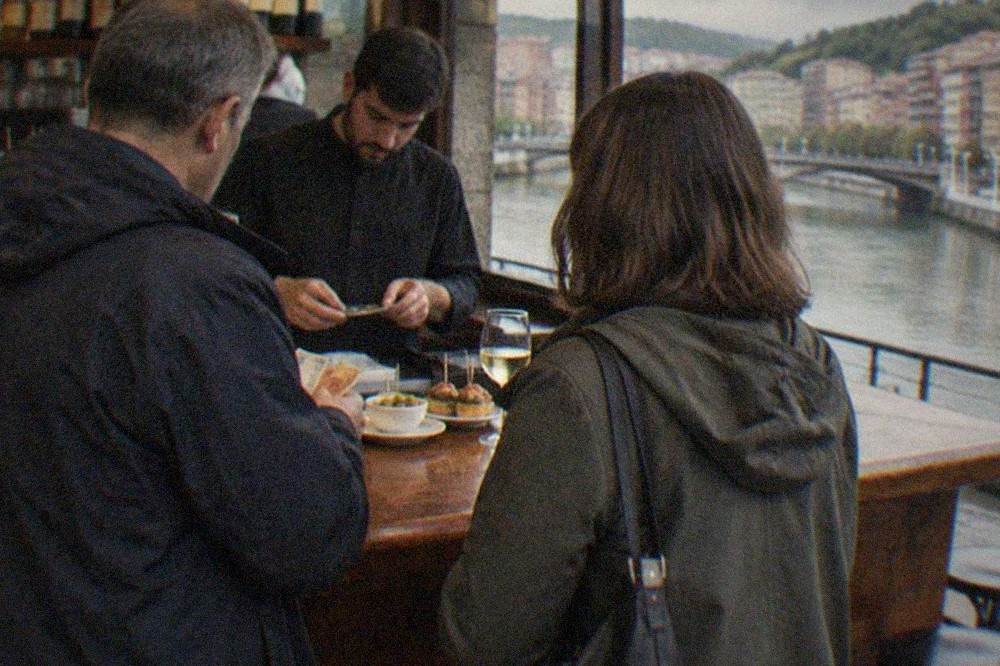
If a full evening of guided eating sounds like the right way to absorb all of this, the food-focused walks below are the ones that fit the pintxos theme, alongside two shorter city tours for the rest of your stay.
For a deeper run through the city's bar culture beyond the pintxos counters, the guide to Bilbao's wine bars covers where the txakoli and Rioja pours are taken seriously, and the wider Bilbao Travel Guide has the full planning picture, from transport to neighbourhoods.
Common Questions About Tipping In Pintxos Bars
Do you tip in pintxos bars?
No. Tipping is not expected in pintxos bars in Bilbao or elsewhere in the Basque Country. Bar staff earn a fixed wage, bills are paid to the exact amount, and most locals add nothing. Leaving the small coins from your change is a fine gesture but never an obligation.
Is service included in the bill in Bilbao?
Yes, in the sense that no separate service charge is ever added in Spain. The price on the board or the menu is the full price, and no gratuity is automatically appended to a bar or restaurant bill anywhere in the city.
How much do you tip in a Bilbao restaurant?
Nothing is required. Rounding up a few euros on a table bill is the common local gesture, and 5 percent would be considered generous for good table service. In a proper upscale restaurant, up to 10 percent is the absolute ceiling anyone would consider.
Do you tip taxi drivers in Bilbao?
Rounding up to the nearest euro is the norm. A taxi driver does not expect a percentage, and handing over the exact fare is completely normal and unremarkable.
Is it rude to pay the exact bill with no tip?
Not at all. Paying the exact amount is what most locals do in pintxos bars every evening. No server will judge it, chase you, or treat you differently on a return visit.
Should I tip more during Aste Nagusia or festival weeks?
No. Festival crowds do not change the etiquette. Bars are busier during Aste Nagusia in late August, but the payment norm stays the same: exact bill, maybe the small change, and that is all.