What's The Difference Between Tapas And Pintxos?
The real difference between tapas and pintxos in Bilbao, Basque Country, Spain - origins, portion style, how to order, and what a pintxos crawl costs.
Tapas and pintxos are both small plates from Spain, but they are not the same thing, and in Bilbao, in the Basque Country of northern Spain, the word you will see on every bar counter is pintxo. The distinction matters here more than anywhere else in the country, because Bilbao is one of the heartlands of pintxo culture, a city whose Old Town bars stack their counters with bites that have been engineered, skewered and priced as individual works rather than shared dishes. Understanding the difference changes how you order, how much you pay and how you spend an evening.
What's The Difference Between Tapas And Pintxos?
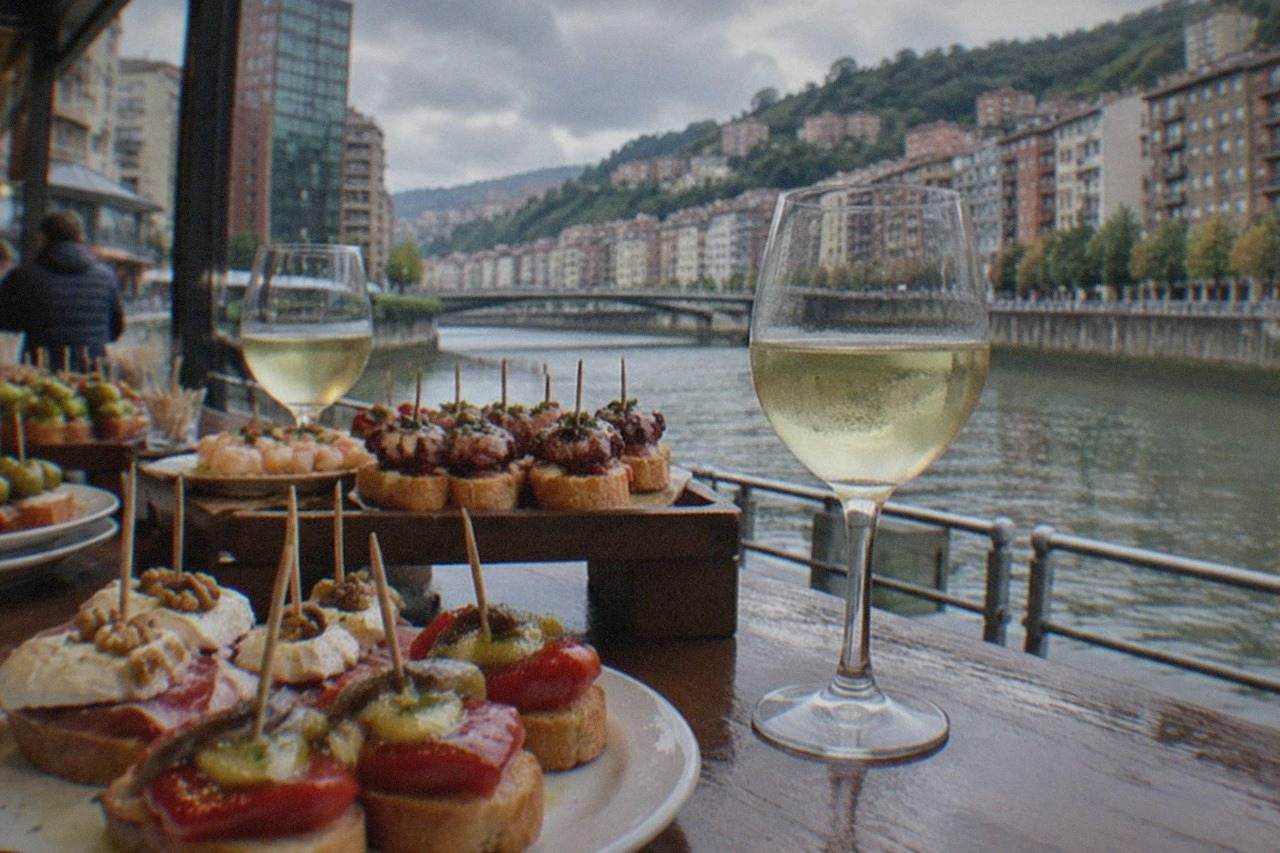
The core difference is origin and construction: tapas are a broader Spanish tradition of small shared plates, often served free or ordered as a ración, while pintxos are the Basque Country's version, individual portions usually assembled on bread and held with a skewer, displayed on the bar counter and priced one by one. In Bilbao you order a pintxo by pointing at the counter, not by asking for a plate to share, and you pay per piece as you go. The two words even describe different eating styles: tapas culture is a sit-down, shared-plate affair across much of Spain, while pintxo culture in Bilbao is a standing, bar-hopping ritual called txikiteo.
The word itself tells the story. Pintxo (spelled pincho in Spanish) literally means "spike" or "skewer", from the toothpick that holds the typical bite together. Not every pintxo physically carries a skewer, but the logic of the skewer, one piece, one price, one hand, defines the format. A slice of bread topped with spider crab gratin and pinned with a pick is a pintxo. A bowl of olives set down beside your drink in Andalusia is a tapa. Same country, two entirely different dining grammars.
There is a second difference that matters to your wallet. In much of southern Spain a tapa traditionally arrives free with a drink, or is ordered as a larger ración for the table. In Bilbao, pintxos are almost always paid for individually, whether you take them from the counter display or order a hot one off the menu. Nothing is free, but nothing obliges you to commit to a full meal either.
Where Does The Pintxo Come From, And Why Does Bilbao Care?
The pintxo belongs to the Basque Country, and Bilbao, together with San Sebastián, is one of its two great capitals; the format grew out of the txikiteo bar-crawl tradition, in which groups move from bar to bar drinking small glasses of wine, called txikitos, and eating one or two bites standing at each counter. The habit is social before it is culinary. The point was never a meal, it was movement: a whole evening spent across six bars rather than one table, with each bar judged on its signature piece.
Bilbao's Old Town, the Casco Viejo, is where that ritual is most concentrated in the city. Plaza Nueva alone holds several of the most storied counters, including Gure Toki, running since 1982, Sorginzulo, whose tortilla de patatas took a Bizkaia championship in 2024, and Café Bar Bilbao, a traditional spot going back to 1911. A few streets over, El Glovo, no, El Globo on Diputación street, has been turning out its txangurro gratin since 1997 and regularly tops local rankings.
The competitive streak is real and it is institutional. Bizkaia runs an official traditional pintxo championship, and bars across the province compete in it annually. That is why the standard in Bilbao is so visibly higher than the plate of mixed olives you might get elsewhere: the pintxo here is a small dish with a name, a maker and, in the best cases, a title.
A guided crawl is the fastest way to read a Bilbao counter with confidence, and the pintxos and drinks tour with a local is built exactly around that skill: a local walks a small group through the bar circuit, orders for the group and explains what each piece is. Check availability if you would rather learn the rules on night one than by trial and error.
How Do You Order And Pay For Pintxos In Bilbao?
In a Bilbao pintxos bar you either point at the counter display and take the piece yourself, or order a hot pintxo from the menu and wait for it to arrive; you keep a mental tally of everything, and you pay at the end when you return your used skewers and napkins to the bar, which is how the staff count what you ate. The system runs on trust and toothpicks. Do not pay as you take, and do not clear your skewers off the bar, they are the bill.
The flow, in practice, looks like this:
| Step | What you do | What locals watch for |
|---|---|---|
| Enter | Stand at the counter, not a table, if you want the full pintxo experience | Locals rarely sit for a first round |
| Choose | Point at cold pieces on the counter, or order hot ones verbally | Hot off-menu pieces are often the best |
| Drink | Order a txakoli, a zurito (small beer) or a txikito of wine | A zurito is deliberately small, it is made for crawling |
| Eat | One or two bites per bar, standing | Linguing too long marks you as a visitor |
| Pay | Hand over your skewers and napkins at the till | The count is done from the picks |
Drinks deserve a word. Txakoli, the lightly fizzy white wine of the Basque coast, is the classic pairing, and it is poured from a height to aerate it, a small theatre you will see in every serious bar. A zurito is not a full beer but a short one, roughly a third of a litre, sized so that a group can keep moving. Prices for drinks in traditional bars typically sit around EUR 2 to 3.50 a glass, though every bar sets its own list, so treat that as a planning range rather than a promise.
Tipping in pintxos bars is its own small question, and the short answer is that it is nothing like the American habit. The tipping customs in pintxos bars are covered in detail elsewhere on this site, but rounding up a euro or leaving loose change is the ceiling of expectation. Nobody will chase you for more.
What Do Pintxos Cost In Bilbao, And How Does That Compare With Tapas?
Typical counter pintxos in Bilbao's traditional bars run about EUR 2 to 5 per piece, with simpler cold bites like gildas and tortilla at the low end and elaborate hot creations such as seafood gratins climbing toward EUR 6 to 8 in premium spots; a satisfying crawl of four to six bites plus drinks generally lands around EUR 25 to 45 per person, always confirm the chalkboard or ask, since every bar prices its own pieces. Those figures are Bilbao's own, drawn from current 2026 local reporting, and belong to this city alone.
What the money buys differs from tapas economics too. A tapa elsewhere in Spain is often a shareable plate that arrives at the table and gets divided by the group. A pintxo in Bilbao is a single unit priced for one person, which means a couple can order different pieces at the same bar, swap opinions and move on. It is a tasting-menu logic applied to a pub crawl.
| Pintxo type | Typical Bilbao price range | Examples |
|---|---|---|
| Cold counter bites | EUR 2-4 | Gildas, anchovies, simple tortilla, jamón on bread |
| Hot kitchen pieces | EUR 3-6 | Txangurro gratin, bacalao al pil pil, foie |
| Premium or championship-level | EUR 6-8 | Creative seafood and game bites in top bars |
| Drinks to pair | EUR 2-3.50 | Txakoli, zurito, txikito of house wine |
The quality ceiling is the part that surprises people. The Basque Country holds more Michelin stars per head than anywhere else in Spain, and that ambition filters all the way down to the counters. Islares, a new one-star restaurant in central Bilbao announced in the 2026 guide, focuses on Cantabrian stews and small-scale producers, the same sourcing instincts you find in a good pintxo kitchen. The distance between a two-euro gilda and a tasting menu in this city is shorter than the price gap suggests.
Is A Pintxos Crawl In Bilbao Better Than Sitting Down For Tapas?
For a first visit to Bilbao the crawl is the better choice, because the city's pintxo culture is built around movement: six short stops standing at counters will show you more of Bilbao's food, its bars and its social rhythm in one evening than a single seated restaurant can, and the standing format keeps the bill lower and the pace in your control. The seated ración dinner is not wrong, it is simply a different tradition, and in this city it is the second choice rather than the first.
The practical case is strong. Plaza Nueva and the surrounding Siete Calles put a dozen serious counters within a few minutes' walk of each other, so the crawl costs nothing in transit. Weather rarely blocks it either: Bilbao's climate is temperate oceanic, with AEMET's normals for the airport station showing monthly means from 9.3 C in January to 20.9 C in August and rain distributed across the year, 1,134 mm annually, which is exactly why so much of the city's social life happens indoors at a bar counter in the first place.
The crawl also fits the festival calendar. During Aste Nagusia, Bilbao's nine-day August festival, the txosna street bars and the Old Town counters together form one continuous open-air party, and knowing how to order a pintxo becomes a survival skill. The Aste Nagusia festival guide covers the programme; the eating strategy is the same one this page teaches.
For planning a full route rather than one evening, the Bilbao food crawl itinerary lays out a complete eating day across the city, and the best pintxos in Bilbao guide names the bars worth crossing town for. Between them and this page, the counter holds no mysteries.
Common Questions About Tapas And Pintxos In Bilbao
What's the difference between tapas and pintxos?
Tapas are a broader Spanish tradition of small shared plates, often served with drinks or ordered as a larger ración, while pintxos are the Basque Country's version: individual, usually skewered portions displayed on the bar counter and priced one by one. In Bilbao, you eat pintxos standing, pay per piece and move from bar to bar.
Are pintxos only found in the Basque Country?
Pintxos are Basque in origin and the Basque Country remains their heartland, with Bilbao and San Sebastián as the two great pintxo cities. The format has spread across Spain, but the counter culture, the skewer-based billing and the txikiteo bar crawl are at their most developed in Bilbao's Old Town.
Do you eat pintxos with your hands?
Largely yes. Cold counter pintxos are picked up with the toothpick or by the bread base and eaten in one or two bites. Hot pintxos served on a plate may call for a small fork, but the standing, one-hand format is the norm, and napkins are part of the ritual.
How many pintxos make a meal in Bilbao?
Most locals treat four to six pintxos across several bars as a full dinner, with a drink at each stop. At typical Bilbao counter prices of EUR 2 to 5 a piece, that lands around EUR 25 to 45 per person for the whole evening including drinks, though every bar sets its own prices, so check the display or ask.
Is txikito the same as txakoli?
No. A txikito is a small glass of everyday wine, the classic crawl drink. Txakoli is a specific young, lightly fizzy white wine from the Basque coast, usually poured from a height, and it is the most photogenic pairing on a Bilbao counter. A zurito, a short beer of roughly a third of a litre, is the third classic option.
Can you do a pintxos crawl if you are vegetarian?
Yes, though the classic counter leans heavily on seafood, jamón and cheese. Most Bilbao bars now keep at least one or two vegetable-based pieces, tortilla, grilled peppers, mushroom bites, and hot kitchens will usually adapt, so ask rather than relying on the cold display alone.
The difference between tapas and pintxos, in the end, is the difference between a plate and a city. Order by the skewer, keep your picks, drink in small glasses and let Bilbao Travel Guide point you at the next counter.