Best Photo Spots In Bilbao
Bilbao, in the Basque Country of northern Spain, is one of Europe's most photogenic mid-sized cities: titanium architecture on a tidal estuary, a medieval Old Town of seven streets, and hilltop viewpoints minutes from the centre.
Short answer
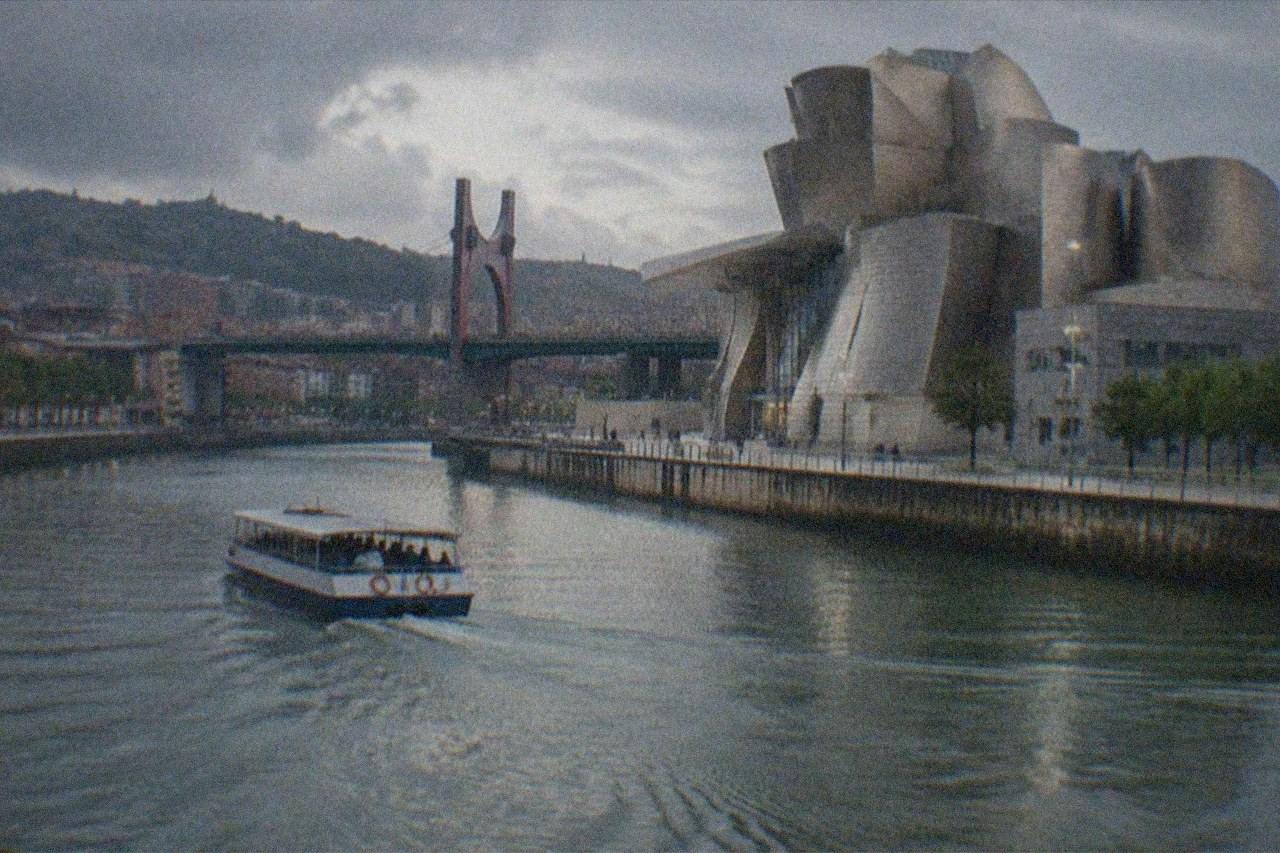
The best photo spots in Bilbao cluster along the Nervion riverfront: the Guggenheim Museum from the Puente de La Salve side and the riverside walk, the seven streets of Casco Viejo, the zigzag of Zubizuri and the La Salve bridge, and the skyline from the Artxanda funicular viewpoint.
Bilbao, in Biscay (Bizkaia) province, Basque Country (Euskadi), northern Spain, is a city built for cameras without ever trying to be. It sits on the tidal Nervion/Ibaizabal estuary about 15 km from the Bay of Biscay, which means water, bridges and shifting light are part of the street plan, not a bonus. A titanium museum curls beside the river, a medieval quarter of seven streets climbs away from it, and funiculars lift you to viewpoints within minutes of the centre. This guide from Bilbao Travel Guide maps the frames that actually work, at the hours that work, with the transport that gets you there.
What Are The Best Photo Spots In Bilbao?
The best photo spots in Bilbao are the Guggenheim Museum Bilbao from its riverside walk and the Puente de La Salve approach, the seven streets of Casco Viejo, Plaza Nueva, the Zubizuri and La Salve bridges over the Nervion, the Artxanda viewpoint above the city, and the estuary itself from the Abandoibarra promenade. Each one rewards a different lens, and all of them sit within a walk or a short Metro ride of each other, so a single well-planned day can cover most of the list.
The city divides photographically into three bands. The riverfront band, from Abandoibarra past the Guggenheim to the Euskalduna Palace, is where the contemporary architecture lives. The Old Town band, Casco Viejo and its seven streets, is where the medieval Bilbao lives. The viewpoint band, up the Artxanda hill by funicular, is where the whole estuary composes itself into one frame.
A few practical notes shape everything else. The Guggenheim's own site lists opening hours of Tuesday to Sunday 10:00 to 19:00, extended to 20:00 from 15 June to 13 September, which matters because the building is an exterior subject: you shoot it from outside, and evening light in summer lasts well past closing. AEMET's Bilbao Aeropuerto/Loiu station (1082) normals show an annual mean of 14.7 C and 1,134 mm of rain a year, so pack a lens cloth in every month, including July, the driest at about 50 mm.
| Photo spot | Neighbourhood | Signature shot | Best light |
|---|---|---|---|
| Guggenheim riverside | Abandoibarra | Titanium reflections in the water | Late afternoon |
| Puente de La Salve | Abando / Bilbao La Vieja | Bridge arch with museum behind | Morning |
| Zubizuri bridge | Abando | White footbridge against glass towers | Blue hour |
| Casco Viejo seven streets | Old Town | Narrow street with laundry lines | Mid-morning |
| Plaza Nueva | Old Town | Symmetric arcades and bar life | Any daylight |
| Artxanda viewpoint | Artxanda hill | Full skyline over the estuary | Sunset |
| Mercado de la Ribera | Old Town | Riverside market facade | Morning |
| Azkuna Zentroa | Abando | Patterned facade and glass floor | Afternoon |
Where Can You Photograph The Guggenheim Museum Bilbao?
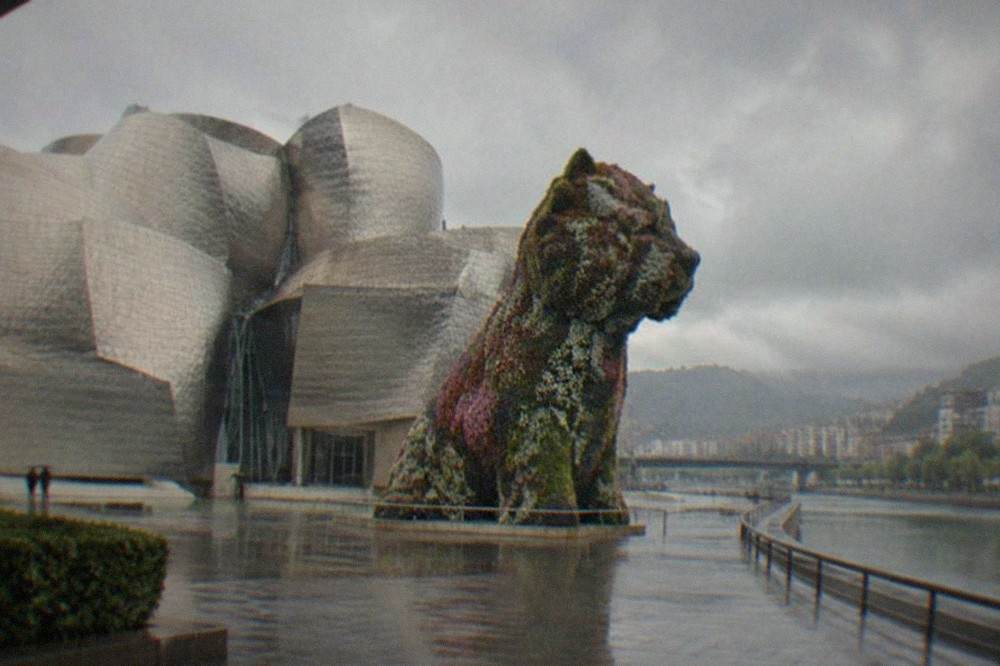
The four angles that work are the riverside walk along the Nervion directly in front of the museum, the Puente de La Salve bridge looking down the water, the pond-level plaza beside Jeff Koons' Puppy, and the opposite bank from the Abandoibarra promenade at dusk, when the titanium panels catch the low sun. The museum's own site lists adult admission at 18 EUR and hours of Tuesday to Sunday 10:00 to 19:00, extended to 20:00 during Easter week and again from 15 June to 13 September, but photographing the exterior costs nothing and never closes.
The riverside walk is the workhorse angle. Frank Gehry's titanium scales reflect whatever the sky is doing, so the same frame changes character between a grey Atlantic morning and a gold summer evening. The Koons Puppy flower sculpture at the main entrance gives a second, warmer subject, and the museum's own accessibility pages confirm the whole exterior route is step-free, with a ramped riverside facade, which matters for anyone shooting with a wheelchair or heavy gear.
The La Salve angle is the one that goes unnoticed. From the bridge's walkway, the museum sits downstream with the estuary leading the eye to it, and the bridge's red arch frames the composition. It is a ten-minute walk from the museum itself and it changes the scale of the building entirely.
If you want the building explained while you shoot, a guided option exists. The VIP Guggenheim experience runs in small groups with an expert guide, and the standard guided tour covers the highlights in about ninety minutes; details and live pricing are on the operator's listing.
For planning the museum around the rest of your trip, see our Guggenheim Museum Bilbao guide and the wider Bilbao museums guide.
Which Old Town Streets Give The Classic Bilbao Shot?
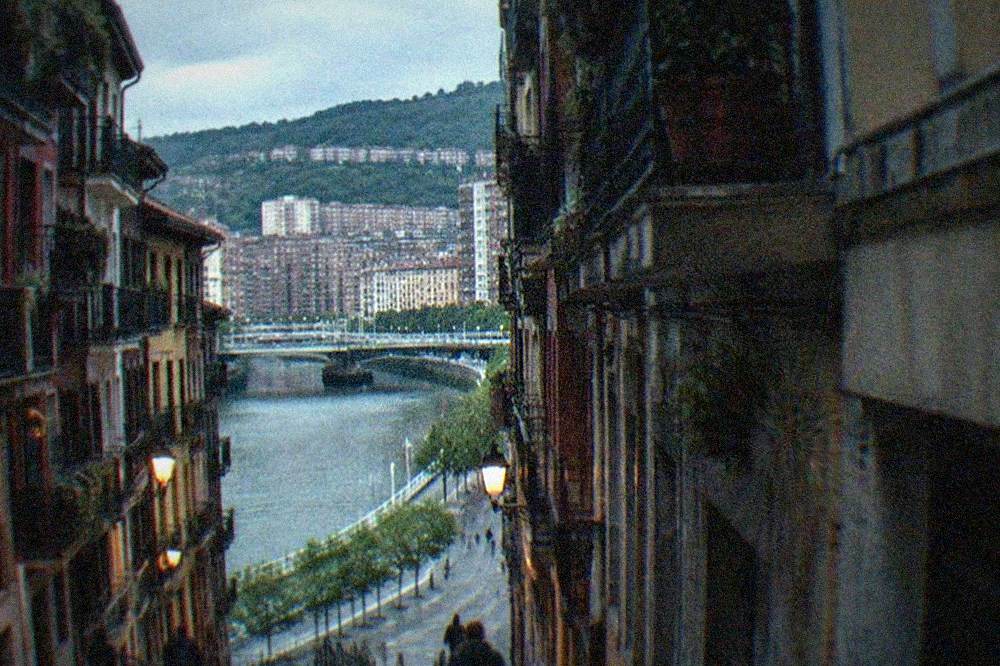
The classic Bilbao Old Town shot comes from the Siete Calles, the seven parallel streets of Casco Viejo, especially Somera and Tenderia, where narrow lanes, overhanging balconies and bar signage compress into layered frames, with Plaza Nueva's arcades and the Santiago Cathedral facade as the two anchor compositions. The quarter sits on the east bank of the estuary, a short walk across the river from the museum district, and it photographs best in mid-morning light before the bar crowds thicken.
Plaza Nueva is the most reliable frame in the neighbourhood. A perfect rectangle of arcades, it gives symmetrical compositions at any hour, and the pintxos bars under the arches add human scale. The streets around it, Plaza Nueva 12 in particular, hold some of the most photographed bar fronts in the city. The cathedral, dedicated to Santiago, is the oldest building in Bilbao and its Gothic interior is dim but shootable without flash.
Mercado de la Ribera, at the southern edge of the Old Town on the river, is one of the largest covered markets in Europe and its colourful riverside facade is a strong morning subject. The riverside walk behind it lines up the market against the water.
A local guide changes what you notice here. The small-group Old Town walk covers the historical core with a photographer's eye, and the free GuruWalk option, the Basque Free Tour of historic Bilbao, is tip-based with no fixed price.
The Old Town is also where Bilbao eats, and eating in Bilbao is a visual subject in itself. Our best pintxos in Bilbao guide lists the bars worth photographing before you order, and the Bilbao food guide goes deeper into the cuisine.
Where Are The Best Views Over The Bilbao Skyline?
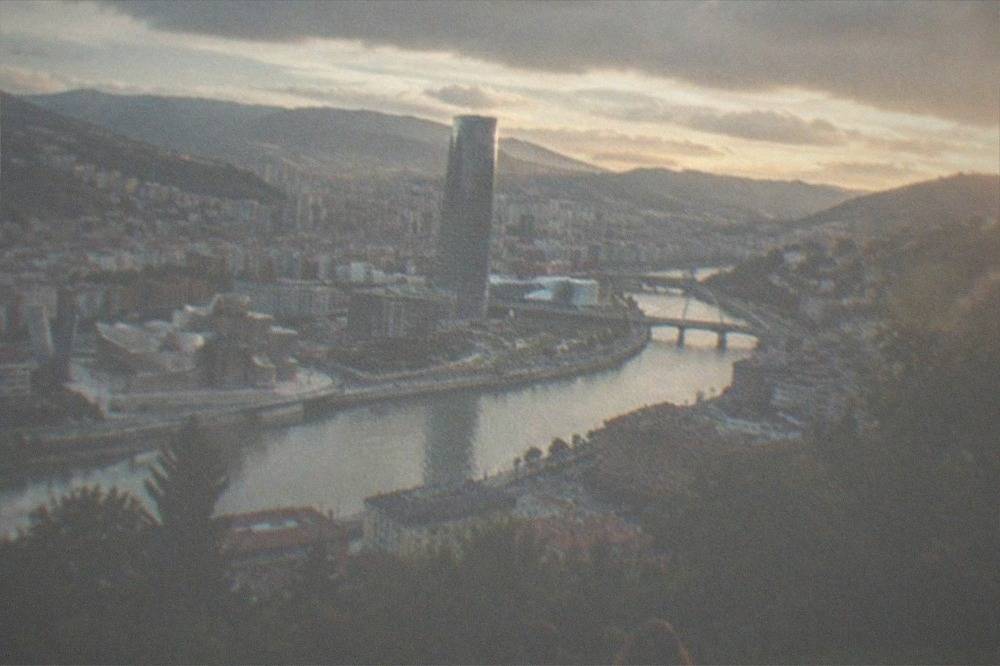
The best skyline view in Bilbao is the Artxanda viewpoint, reached by the Funicular de Artxanda from the Kamporumbe station near the Old Town, which lifts you high above the estuary in roughly three minutes; the secondary views are from the Zubizuri and La Salve bridges at river level and the Euskalduna Palace terrace. The funicular runs every 10 minutes at peak times and every 15 minutes otherwise, and its commonly reported fare is 3.50 EUR one-way or 6.00 EUR round-trip, with lower social and Barik tariffs and children under 6 free; treat those fares as reported, as the operator's fares page was not independently checked.
From the top, the whole city composes itself: the estuary curving through the centre, the Guggenheim's silver form, the tower cluster of Abando, and the hills beyond. Sunset is the hour that matters, and in summer the light lasts late. The visitbiscay.eus accessible-tourism pages confirm the funicular is wheelchair accessible, with ramped lower station, step-free first carriage and a lift at the top, and one companion of a wheelchair user travels free.
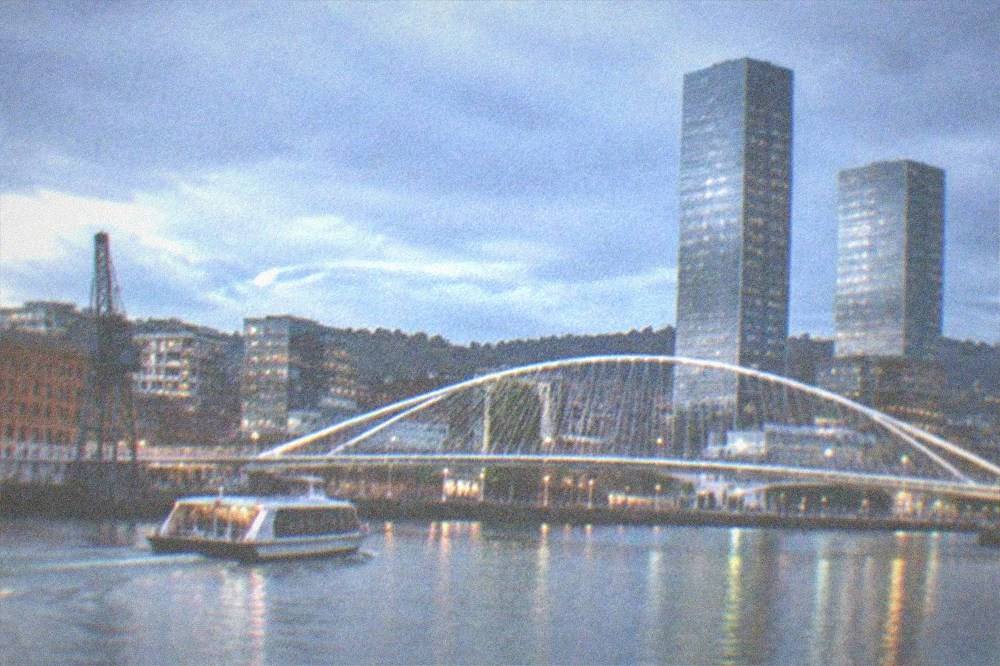
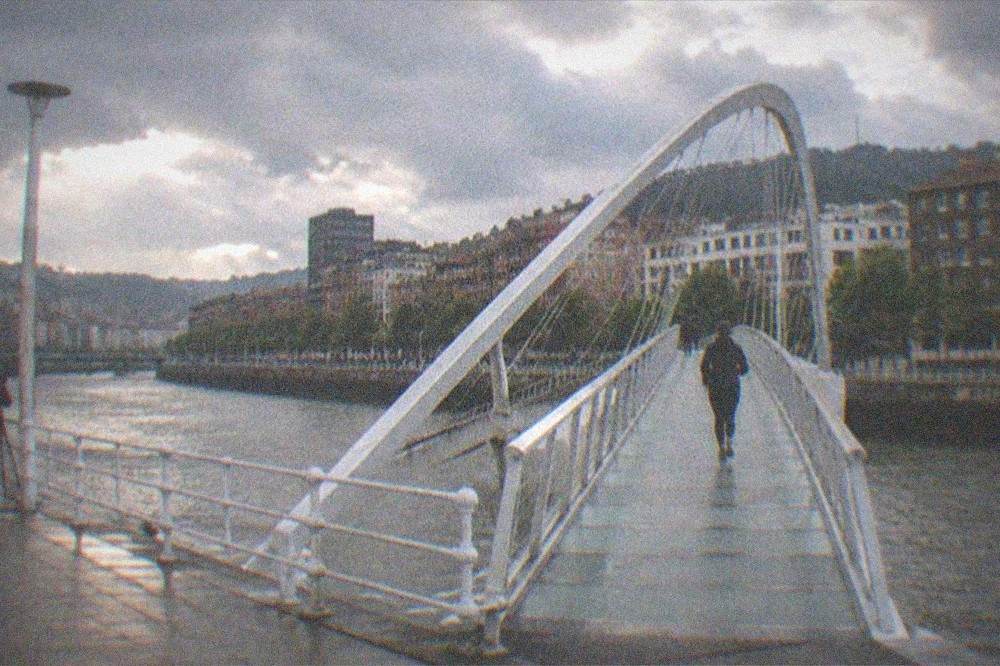
Back at river level, the two bridges give the alternative skyline. Zubizuri, Santiago Calatrava's white footbridge, works at blue hour when its glass deck lights against the towers behind it. La Salve, the red-arched road bridge, frames the Guggenheim downstream. The Zubizuri bridge, La Salve bridge and Artxanda funicular each have their own guide pages here with more detail.
For photographers who prefer wheels to hills, the guided e-bike highlights tour covers the riverfront and viewpoints in a small group or private format.
What River And Bridge Shots Define Bilbao?
The defining river shots in Bilbao are the Guggenheim reflected in the Nervion from the Abandoibarra promenade, the Zubizuri footbridge against the Isozaki towers, the Puente de La Salve red arch, the stone Puente del Arenal framing the Old Town, and the transporter Vizcaya Bridge downstream at Portugalete, a UNESCO World Heritage Site inscribed in 2006. The estuary is tidal, so the water level itself changes the picture from morning to afternoon.
The Abandoibarra promenade is the connective spine. Running from the Euskalduna Palace past the Guggenheim, it lines up water, architecture and hills in almost every direction, and the tram runs alongside it, adding a modern red-and-white element to street frames. The Euskalduna Palace, a conference centre built to resemble a ship under construction, is an underrated subject with its rusted steel and terraces over the water.
The Vizcaya Bridge, the Puente Colgante, is the one river shot that needs a trip. It hangs between Getxo and Portugalete downstream, about 15 minutes by Metro from the centre, and it is the first industrial heritage site in Spain on the UNESCO list. The gondola that carries passengers across costs 0.60 EUR one-way in daytime hours, and the walkway ticket across the top is reported at 11 EUR adult round-trip, 9 EUR reduced, though that figure comes from a single source and should be treated as provisional. Our Vizcaya Bridge guide covers the visit in full.
When Is The Best Light For Photographing Bilbao?
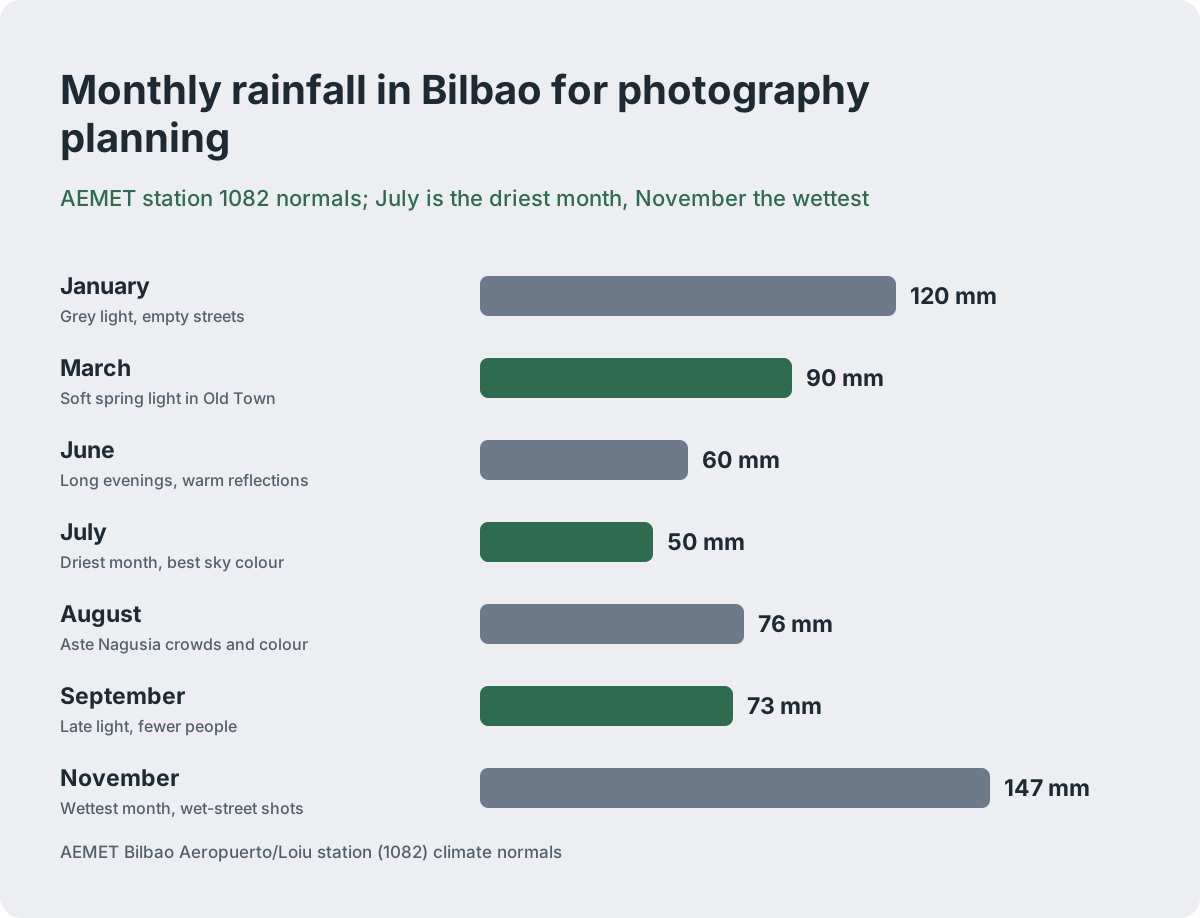
The best light for photographing Bilbao runs from late June through September, when AEMET's station 1082 normals show monthly means of 18.4 C in June, 20.4 C in July and 20.9 C in August with rainfall of only 50 to 76 mm a month, and the Guggenheim's summer hours extend to 20:00, so evening shoots get warm titanium light; November is the worst month, with about 147 mm of rain. Bilbao's climate is temperate oceanic, Atlantic-influenced, never Mediterranean, and that means soft grey light is as much a part of the city's look as sunshine.
The rain is not the enemy it sounds like. Wet titanium reflects more than dry titanium, and the Old Town's narrow streets glow after a shower. What the rain does punish is tripod work in exposed spots, and the Artxanda viewpoint in particular, so check the forecast and keep the hill for clear evenings.
| Month | Mean temperature (C) | Rainfall (mm) | Photography notes |
|---|---|---|---|
| January | 9.3 | 120 | Grey light, empty streets |
| March | 11.5 | 90 | Soft spring light in Old Town |
| June | 18.4 | 60 | Long evenings, warm reflections |
| July | 20.4 | 50 | Driest month, best sky colour |
| August | 20.9 | 76 | Aste Nagusia crowds and colour |
| September | 19.2 | 73 | Late light, fewer people |
| November | 12.4 | 147 | Wettest month, wet-street shots |
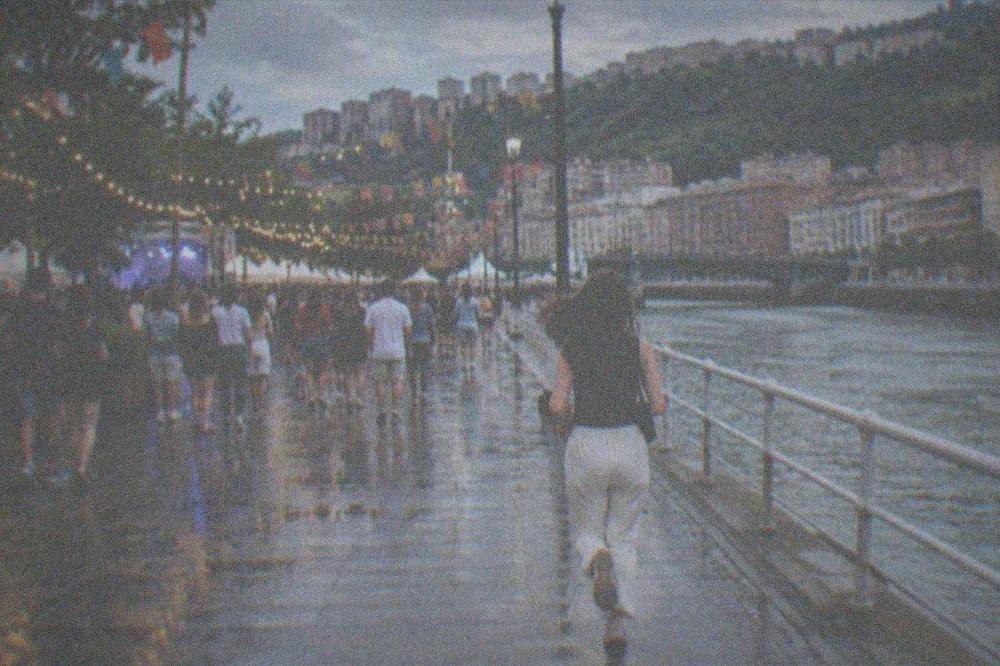
Aste Nagusia, Bilbao's main festival, runs 22 to 30 August 2026, with the txupin opening on 22 August at 19:00 in Plaza Arriaga, fireworks at 22:30 and street bands daily. For a photographer it is the most crowded and most colourful week of the year; our Aste Nagusia festival guide and the Bilbao weather guide cover the planning in detail.
Which Day Trip From Bilbao Is Worth The Camera?
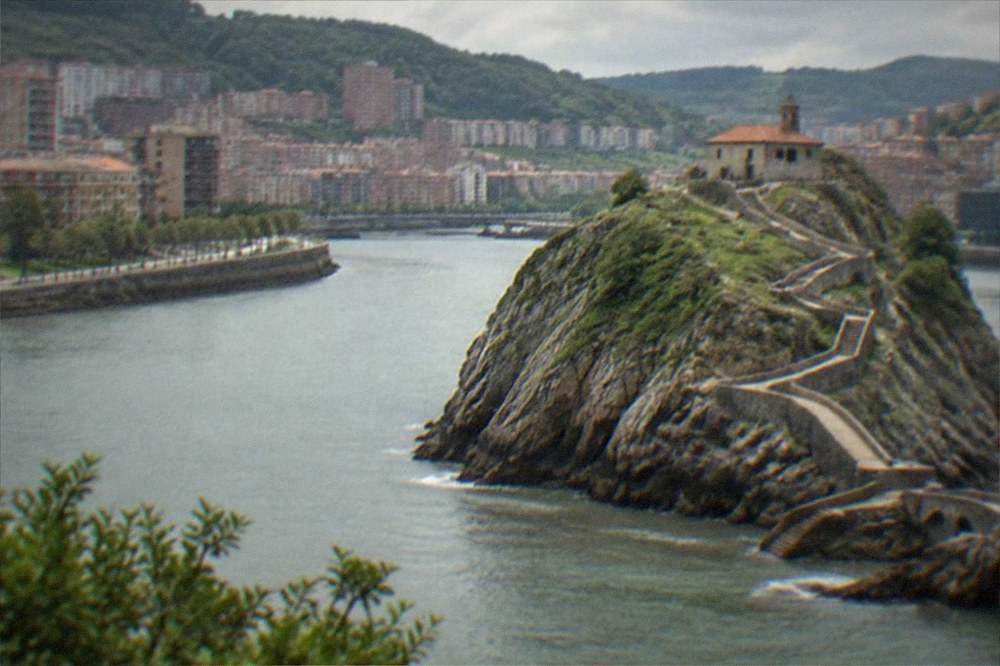
The day trip from Bilbao that rewards a camera most is San Juan de Gaztelugatxe, the rocky hermitage islet reached by a stone causeway and a long staircase of steps cut into the rock, roughly 30 to 45 minutes from the city by road and a Game of Thrones filming location, followed by the fishing port of Bermeo and the surf town of Mundaka on the same coast. On official controlled-access days, roughly mid-June to about 20 September plus Easter and holiday weekends, a free timed reservation is required through tiketa.eus, with a daily cap of 1,462 visitors; on all other days access is free without a reservation.
The hermitage is the single most dramatic frame in the province. The causeway zigzags up the rock, and the best compositions come from the surrounding headlands rather than the steps themselves. Bermeo adds a working harbour, coloured houses and a medieval gate, and Mundaka sits above one of the most photographed river mouths in Europe. The Euskotren train from Casco Viejo reaches Bermeo in about an hour and twenty minutes, and Bizkaibus lines serve the coast too.
Organised options remove the logistics. The coastal walk tour pairs Gaztelugatxe with a walk along the Basque coast in about three and a half hours, and the full-day version adds Bermeo, Mundaka, Gernika and a txakoli wine tasting. Our Gaztelugatxe guide and the Urdaibai biosphere reserve guide cover the self-guided route.
What Should Every Photographer Know Before Shooting In Bilbao?
Every photographer in Bilbao should know three things: the city's transport is cheap and camera-friendly with a Barik card cutting a Zone 1 Metro ride to 1.02 EUR, the streets are safe by Spanish big-city standards with pickpocketing the main risk in crowded spots, and the light changes fast because the Atlantic weather moves through quickly, so plan two passes at any important frame. The practical infrastructure is better than expected.
Transport shapes the shooting day. The CTB Barik fares page gives Zone 1 Metro rides at 1.02 EUR with a Barik card against 2.00 EUR without, the tram at 0.74 EUR flat with Barik, and the Bilbao Bizkaia Card, at 10 EUR for 24 hours, 15 for 48 and 20 for 72, bundles unlimited transport with attraction discounts. The getting around Bilbao transport guide and the Bilbao Bizkaia Card guide have the full fare tables.
| Journey | Mode | Fare with Barik | Fare without |
|---|---|---|---|
| City centre to Abandoibarra | Tram | 0.74 EUR | about 2.00 EUR |
| Centre to Getxo (Vizcaya Bridge) | Metro, 2 zones | 1.19 EUR | 2.20 EUR |
| Centre to Portugalete | Metro | 1.19 EUR | 2.20 EUR |
| Casco Viejo to Bermeo | Euskotren | about 2.45 EUR | higher occasional fare |
| Old Town to Artxanda | Funicular | lower social tariff | 3.50 EUR one-way, as reported |
Safety and access are straightforward. Bilbao's 2025 municipal crime balance showed presential crimes down slightly year on year, with thefts the largest category and robbery with violence falling about 8.85 percent, and the standard advice is ordinary urban care around the Guggenheim, Ribera Market and festival crowds. The safety in Bilbao guide and the accessibility guide cover both topics properly, including the fact that the entire Bilbobus fleet is low-floor and wheelchair accessible and Metro stations carry elevators throughout.
Finally, budget the days. Two days cover the riverfront, Old Town and one viewpoint; three days add the Vizcaya Bridge and a coastal day trip, and that is the frame most photographers should aim for. The how many days in Bilbao guide and where to stay in Bilbao guide finish the plan.
Common Questions About Photographing Bilbao
What are the best photo spots in Bilbao?
The Guggenheim riverside walk, the Puente de La Salve angle on the museum, the seven streets of Casco Viejo, Plaza Nueva, the Zubizuri bridge at blue hour, the Artxanda viewpoint at sunset, and the Vizcaya Bridge downstream at Portugalete.
Where is the best view over the Bilbao skyline?
The Artxanda viewpoint, reached by the Funicular de Artxanda in roughly three minutes from the station near the Old Town. The funicular runs every 10 to 15 minutes, and the viewpoint is best at sunset, especially between June and September.
Can you photograph the Guggenheim Museum Bilbao from outside for free?
Yes. The exterior, including the riverside walk, the Puppy sculpture and the La Salve bridge angle, is public space with no ticket and no closing time. Only the interior requires the 18 EUR adult admission the museum's own site lists.
When is the best light for photographing Bilbao?
July and August, when AEMET's station 1082 normals show the warmest, driest months at 20.4 and 20.9 C mean with 50 to 76 mm of rain, and summer museum hours extend to 20:00. November is the wettest month at about 147 mm.
Is San Juan de Gaztelugatxe worth photographing on a day trip from Bilbao?
Yes, it is the most dramatic coastal frame in Biscay, roughly 30 to 45 minutes from the city by road. On controlled-access days a free timed reservation is required through tiketa.eus, capped at 1,462 visitors a day; on other days access is free without a reservation.
Do you need a car to reach the photo spots in Bilbao?
No. The Metro, tram, Euskotren trains and funicular cover the city spots and the coast, with Barik fares from 1.02 EUR for a Zone 1 Metro ride. A car only helps for flexible coastal stops such as Bakio or the back roads above Gaztelugatxe.