Athletic Club And Bilbao Football Culture
Football in Bilbao is not a pastime bolted onto the city, it is one of the institutions that explains it. This guide covers San Mames tours, ticket prices, match-day routines and the Basque-only signing policy that makes Athletic Club unlike any other big club in Spain.
Short answer
Athletic Club, Bilbao's football club, plays at San Mames and signs only Basque-trained players, a policy no other major European club shares. Stadium tours run Tuesday to Sunday with self-guided adult tickets at 15 EUR and guided Museum plus Tour tickets at 22 EUR.
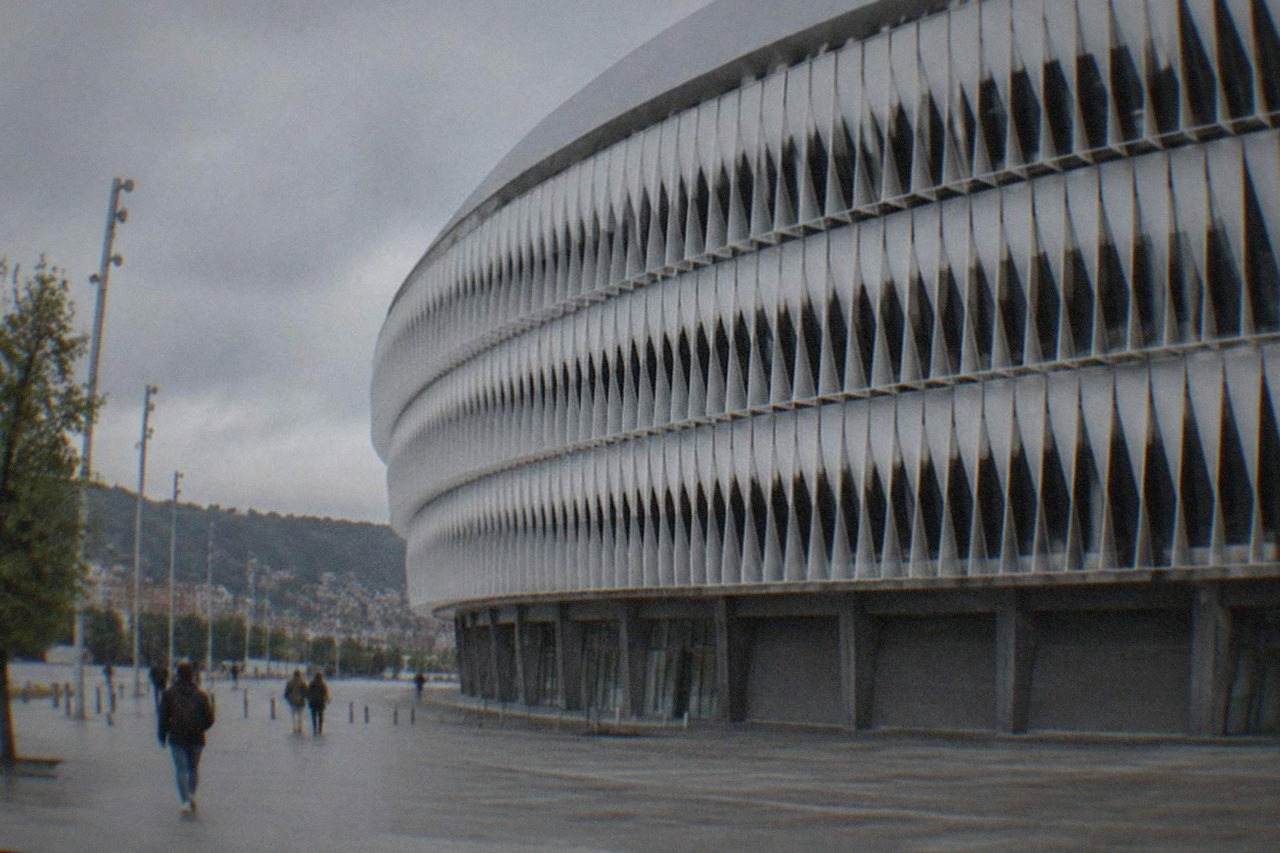
Football in Bilbao, in the Basque Country (Euskadi) of northern Spain, is less a sport and more a civic institution. Athletic Club, the city's team for well over a century, plays at San Mames, a stadium locals still call "La Catedral" in honour of the old ground it replaced, and it competes in La Liga under a signing policy no other major club in Europe uses: only players trained in the Basque Country, or who came up through Basque youth academies, are eligible to wear the red-and-white stripes. The result is a club that functions as an expression of regional identity, in a city of 346,933 residents (Eustat, 1 January 2025) that treats match weekends as a collective event rather than a night out. This guide walks through how to see it: tickets, stadium tours, the museum, the pre-match pintxos circuit, and the history behind a policy that has survived generations of football economics.
What Makes Athletic Club Bilbao Different From Every Other Big Club In Spain?
Athletic Club is the only major club in Spain that restricts its squad to Basque-trained players, a policy known as the cantera, and it has kept that restriction for well over a century while still competing at the top of the Spanish game. Where rivals recruit globally, Athletic signs players with Basque heritage or Basque youth-club formation, which ties the team's fortunes directly to the region's academies and makes every transfer window a local story rather than an international auction.
The policy is the single most important thing to understand before watching football here, because it explains the mood inside and around San Mames. A club that cannot simply buy a ready-made star depends on its youth system, so supporters track teenage debuts the way other cities track marquee signings. It also means the squad is unusually local in origin, and the bond between players and stands is correspondingly tighter. Bilbao's football identity is inseparable from the Basque language and culture that surround it, a context covered in more depth on the Basque language and Spanish in Bilbao page.
The club's history reaches back to the earliest days of organised football in Spain, making it one of the oldest institutions in the Spanish game, and its early English connections left a mark you can still hear: locals say "Athletic" with the English pronunciation rather than the Spanish "Atletico". San Mames itself, built on the site of the original cathedral-like ground beside the Nervion estuary, is one of the larger grounds in La Liga and regularly sells out for league matches. None of that is museum trivia, it is the operating reality of a club that has never been relegated from the top flight and treats that record as part of the regional story.
Where Can You Watch A Match At San Mames In Bilbao?
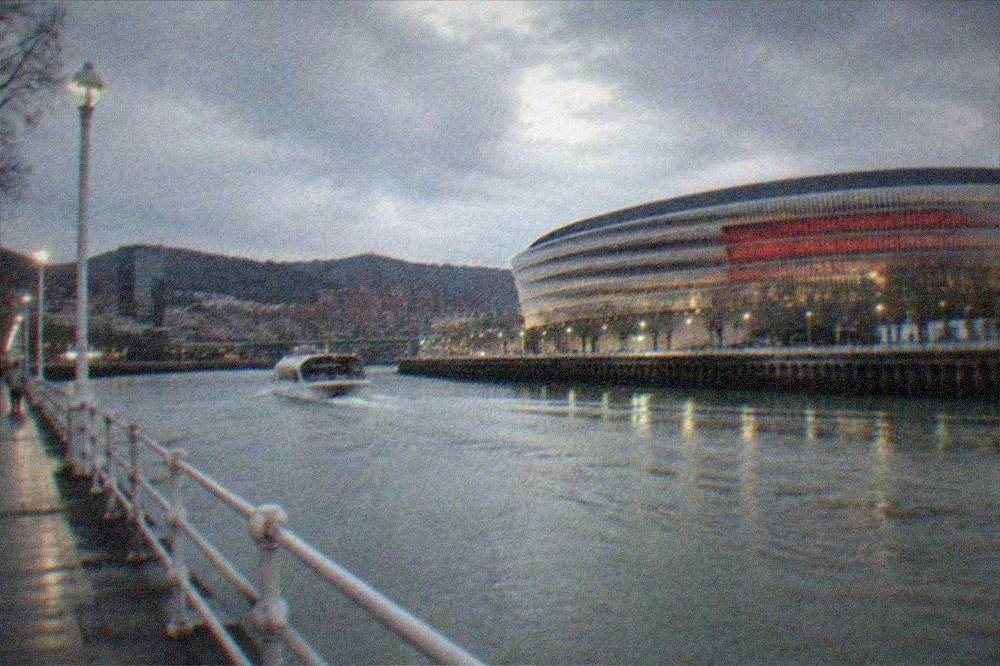
The only way to see Athletic Club play at home is at San Mames, on the north bank of the Nervion river across from the Euskalduna conference centre, and tickets go on sale through the club's own channels with members and season-ticket holders taking priority. Away fans are allocated a section in one corner, and the atmosphere is intense, family-friendly and almost entirely local, with chants in Basque. High-demand fixtures, especially against the two Madrid giants and Real Sociedad, sell out quickly.
For visitors, the practical question is timing. La Liga runs from August to May, so a summer visit will not include a league match, though pre-season friendlies sometimes fill the gap. The fixture list is published in summer, and Bilbao's weather guide is worth reading alongside it: AEMET's Bilbao Aeropuerto/Loiu station (1082) normals show August means of 20.9 C against January's 9.3 C, and the stadium roof covers the stands but not the concourses.
If your trip lands on a non-match weekend, a stadium visit is still the best football experience in the city, and it pairs naturally with other Bilbao plans. Many visitors combine a San Mames tour with a look at the wider things to do in Bilbao, and a growing number build a full weekend around it, taking in the Guggenheim on Saturday morning and the stadium on Sunday. Others use match-free days to get out of the city entirely.
A pattern worth copying: keep one day for the coast and one evening for the stadium district. The Gaztelugatxe, Mundaka and Guernica day trip covers the most photogenic stretch of the Bizkaian coast and returns to Bilbao in time for dinner, and the Gernika and Guernica guide explains why that small town carries so much weight in Basque memory, a history that also echoes in the stands at San Mames.
How Much Do San Mames Stadium Tours And Museum Tickets Cost In Bilbao?
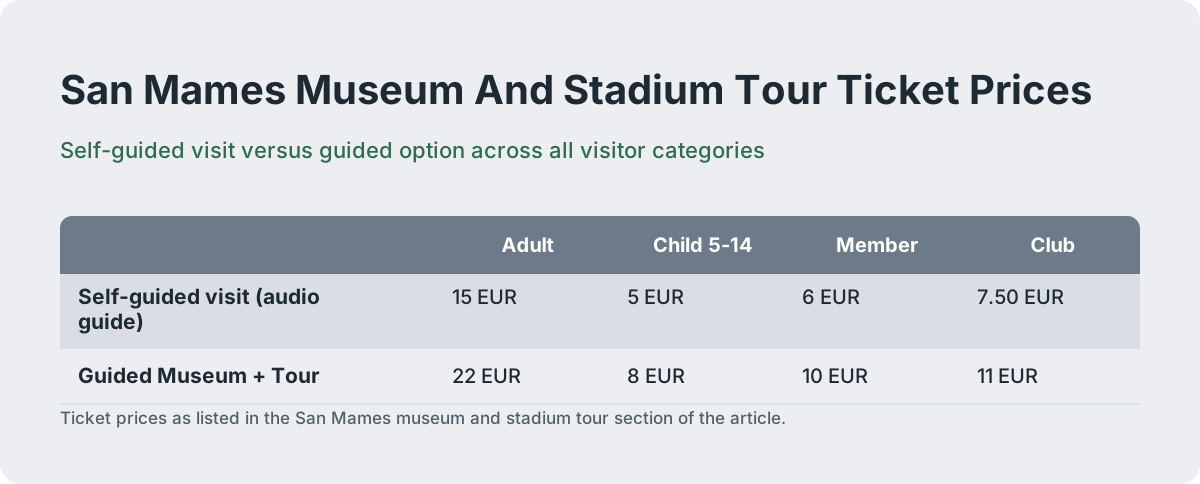
Self-guided visits of the San Mames museum and stadium, with an audio guide in Spanish, Basque, English or French, cost 15 EUR for adults and 5 EUR for children aged 5 to 14, while the guided Museum plus Tour option costs 22 EUR for adults and 8 EUR for children. Hours run 10:00 to 20:00 Tuesday to Sunday from March to October, and 10:00 to 19:00 Tuesday to Sunday from November to February, with the museum closed on Mondays in the winter window.
Those figures come from the club's own official information page, and they are the only prices you should trust for this visit: resellers mark tours up, and the box office at the stadium sells the same tickets at the list price. The full price structure, including the member and Athletic Club cardholder rates, is set out below.
| Ticket type | Adult | Child 5-14 | Member | Club cardholder |
|---|---|---|---|---|
| Self-guided visit (audio guide) | 15 EUR | 5 EUR | 6 EUR | 7.50 EUR |
| Guided Museum + Tour | 22 EUR | 8 EUR | 10 EUR | 11 EUR |
Two practical notes. First, on match days the museum closes hours before kick-off and stadium access is restricted, so check the fixture list before planning a tour day. Second, the guided option is the one that takes you into areas self-guided visits do not always reach, and it runs roughly 90 minutes as a combined visit. The seasonal hours break down like this:
| Period | Days | Hours |
|---|---|---|
| March to October | Tuesday to Sunday | 10:00 to 20:00 |
| July and August | Daily | 10:00 to 20:00 |
| November to February | Tuesday to Sunday | 10:00 to 19:00 |
| Mondays, November to February | Closed | Closed |
The stadium district rewards a slower pass. The walk between San Mames and the Guggenheim along the river takes you past the Zubizuri bridge and the Euskalduna Centre, and the whole stretch is flat, well-signed and busy even on non-match days. If you want the neighbourhood context rather than just the stadium, a small-group walking tour with a local guide covers the streets around the ground and the riverside that football built up, and you can Check availability for your dates.
What Is The San Mames Museum Experience Actually Like?
The San Mames museum is a full single-floor exhibition inside the stadium covering the club's long history, from its founding documents to the move to the new ground, and every self-guided ticket includes an audio guide in Spanish, Basque, English or French. The guided Museum plus Tour adds the dressing rooms, the players' tunnel, the pitch-side area and the press room, which self-guided visits do not include.
The museum's tone is archival rather than theme-park. Glass cases hold shirts from every era, and the emphasis falls on the club's relationship with the Basque Country: the cantera policy, the youth academies, and the way the team's identity was shaped by the region rather than by foreign investment. For visitors who know nothing about Spanish football this is a genuinely useful primer, and for those who do it is one of the better club museums in the country precisely because the story is unusual.
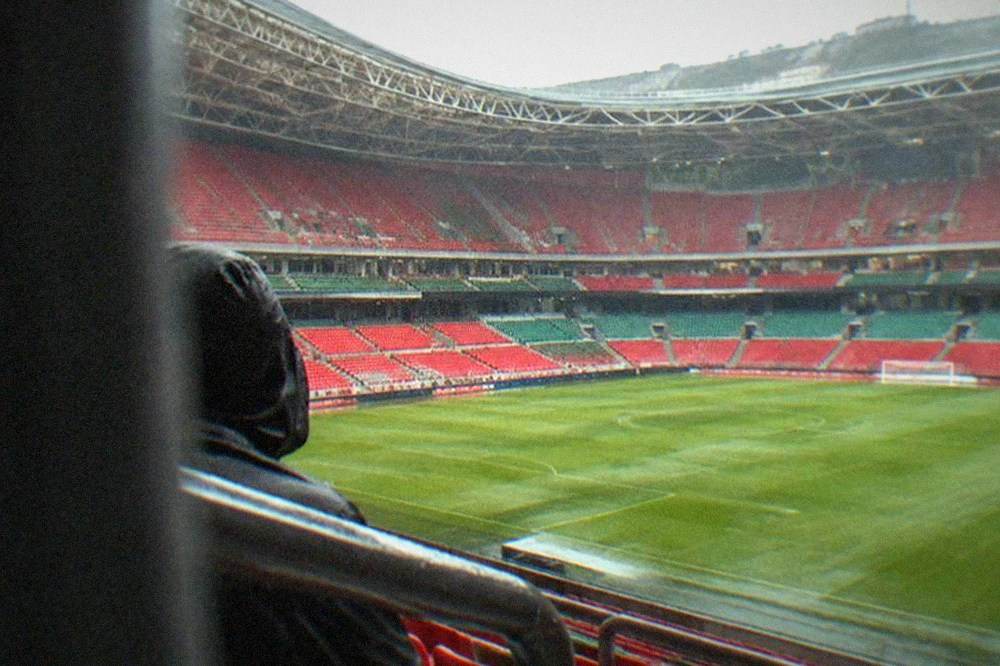
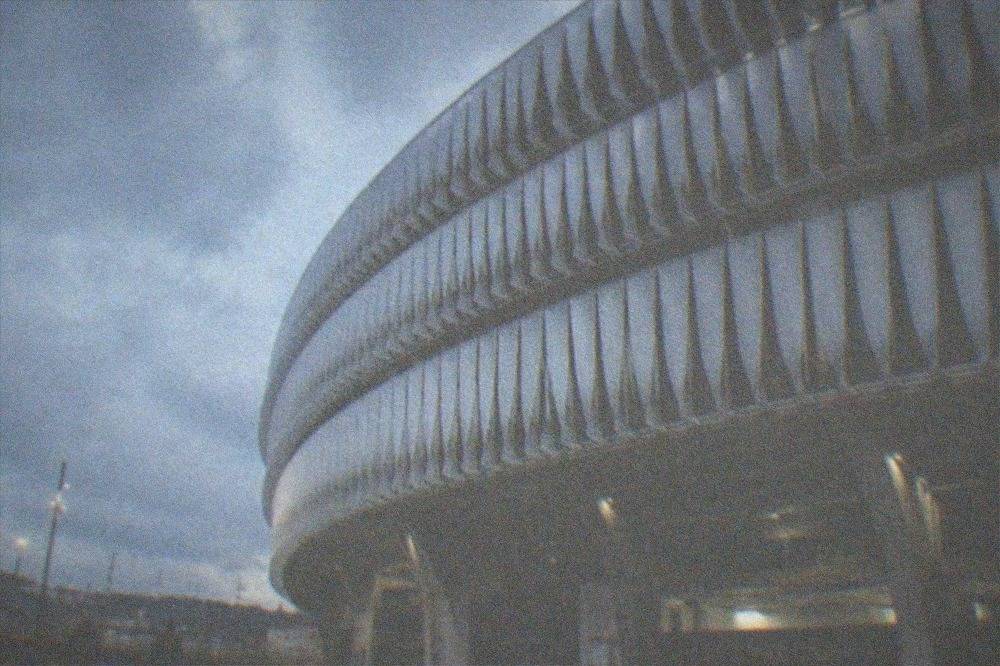
The tour route is what most people remember. Walking out of the tunnel to the empty bowl of San Mames, with the San Mames stand rising opposite, gives a real sense of scale, and the pitch-side area lets you see how close the stands sit to the action. Photography is generally permitted in the museum and on the route, though flash photography near the display cases is discouraged.
How Deep Does Football Run Through Daily Life In Bilbao?
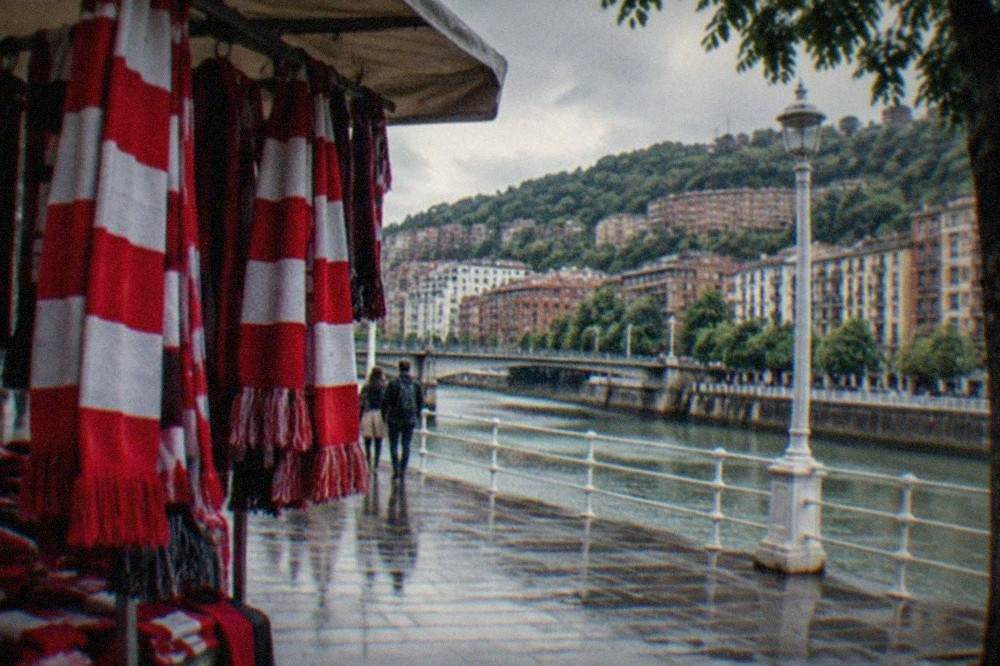
Football runs through Bilbao's daily life to a degree that surprises visitors: the club's red-and-white stripes appear on balconies, bars and shop windows year-round, not just on match days, and the city's identity politics, its language and its sporting culture all intersect at San Mames. Athletic Club is one of only a handful of European clubs never relegated from its country's top division, a fact locals cite the way other cities cite their cathedrals.
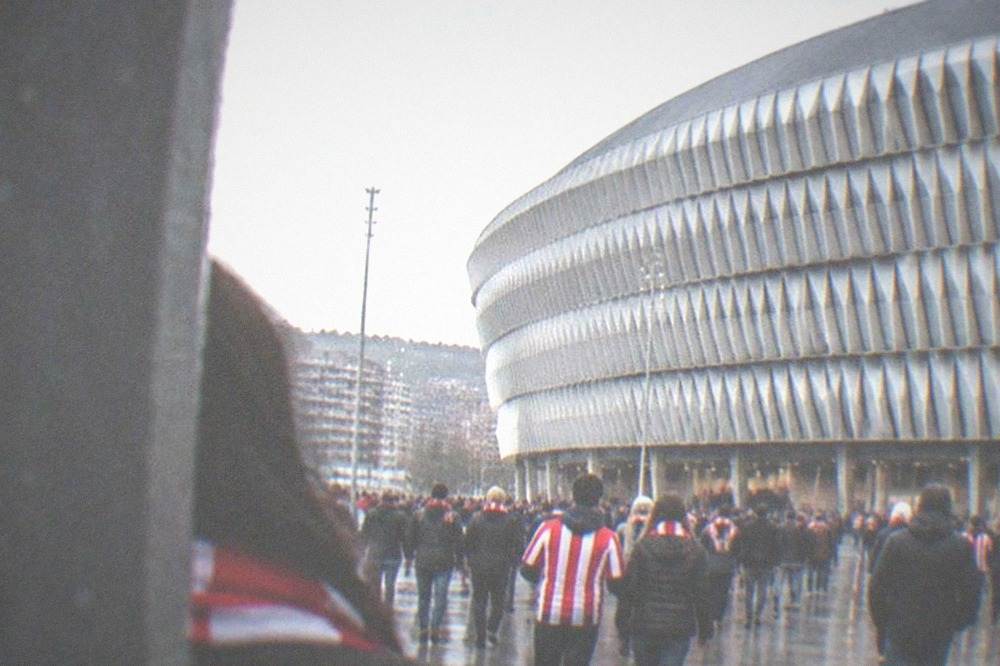
The visibility is constant. On any walk through the Ensanche district you will pass Athletic flags hanging from apartment windows, and around the old town the club's crest sits alongside Basque flags on bar walls. The connection is generational: families hold season tickets that pass down, and children in the region grow up knowing which academy players are close to a first-team debut.
The rivalry with Real Sociedad, the club from San Sebastián 100 kilometres along the coast, is the region's defining fixture. It is a Basque derby, played between the only two first-division clubs that share a cantera-style regional identity, and it splits workplaces and families across Euskadi. The broader Bilbao-versus-San Sebastián comparison, which extends well beyond football into food, beaches and cost, is covered on the Bilbao vs San Sebastian page.
Where Do Bilbao Fans Drink And Eat Before Kick-Off?
Bilbao fans drink and eat before matches the way Bilbao always drinks and eats: standing up, bar to bar, on pintxos. The streets around San Mames and along the Gran Via fill from roughly two hours before kick-off, and the classic routine is a txikiteo, a moving crawl of small bars before walking to the ground. Pintxos at traditional bars typically run 2 to 5 EUR each, with a full crawl of four to six items plus drinks landing around 25 to 45 EUR per person.
The pre-match pintxo culture is not a tourist invention, it is how the city eats on any given evening, and match days simply concentrate it. Expect crowds, expect to eat standing, and expect the bars closest to the stadium to be the fullest and loudest. The full landscape of the city's best bars, from the Plaza Nueva institutions to the Ensanche classics, is mapped on the best pintxos in Bilbao page, and the broader food culture is covered in the Bilbao food guide.
| Match-day item | Typical planning range |
|---|---|
| Pintxo at a traditional bar | 2 to 5 EUR each |
| Drink (txakoli, zurito or wine) | 2 to 3.50 EUR |
| Full crawl, 4 to 6 pintxos plus drinks | 25 to 45 EUR per person |
Ranges like these are planning figures, not promises: prices vary by bar and by dish, and premium preparations run higher. Check the chalkboards or the counter, which in most Bilbao bars displays every pintxo with its price. If you would rather have the bar scene decoded for you, a guided food walk is the efficient option, and the pintxos, drinks and tapas tour with a local is built around exactly this kind of standing-room gastronomy.
What Is The History Behind Athletic Club's Cantera Policy?
The cantera policy, under which Athletic Club signs only players who are Basque by training or formation, dates to the club's earliest decades and survived the professionalisation of Spanish football, the Franco era and the modern transfer market. It began as a matter of geography and pride, hardened into a formal rule over time, and was later refined to admit players formed in Basque youth academies regardless of birthplace, which is the version in force today.
The word cantera means quarry, and the metaphor is exact: the club digs its players out of the region's own ground. In practice the modern policy covers players born in the Basque Country and those who came through Basque academy football, a definition that has produced generations of home-grown squads while keeping the club competitive in a league dominated by global spending.
What makes the policy remarkable is not that it exists but that it has never been abandoned for commercial reasons. Every other club that tried something similar, in Spain or elsewhere, eventually gave up. Athletic's boards have treated the restriction as non-negotiable, and the supporters would have it no other way: the argument, often made in Bilbao, is that a club is not a franchise but an institution, and that losing the policy would mean losing the club itself.
The derby with Real Sociedad sharpens the point. San Sebastián's club once held a similar regional-only stance and has since loosened it, which makes Athletic the last major standard-bearer of the idea. When the two meet, the fixture is billed as the Basque derby, and the atmosphere at San Mames for that game is widely regarded as the loudest of the league season.
Can You Visit San Mames Without A Match Ticket In Bilbao?
Yes, San Mames is fully visitable without a match ticket: the museum and stadium tours run on non-match days year-round, Tuesday to Sunday, and the self-guided visit at 15 EUR or the guided Museum plus Tour at 22 EUR gets you inside the bowl, the dressing rooms and the players' tunnel. On match days the museum closes hours before kick-off and tours are suspended, so the non-match visit is in some ways the more complete one.
Getting there is simple. The stadium sits on the river's north bank, a short walk from the Abando area and the Moyua axis, and the city's transport guide covers the full network. Fares are zonal and cheap with a Barik card: the CTB Barik fares page gives Metro Zone 1 at 1.02 EUR with the card against 2.00 EUR without it, Bilbobus at 1.70 EUR single or roughly 0.73 EUR base with Barik, and the tram at 0.74 EUR flat with Barik. The Bilbao Bizkaia Card bundles unlimited transport with attraction discounts if you are doing the city in 24 to 72 hours.
| Transport mode | With Barik Creditrans | Without Barik |
|---|---|---|
| Metro, Zone 1 | 1.02 EUR | 2.00 EUR |
| Bilbobus city bus | ~0.73 EUR base | 1.70 EUR |
| Bilbao tram | 0.74 EUR flat | ~2.00 EUR |
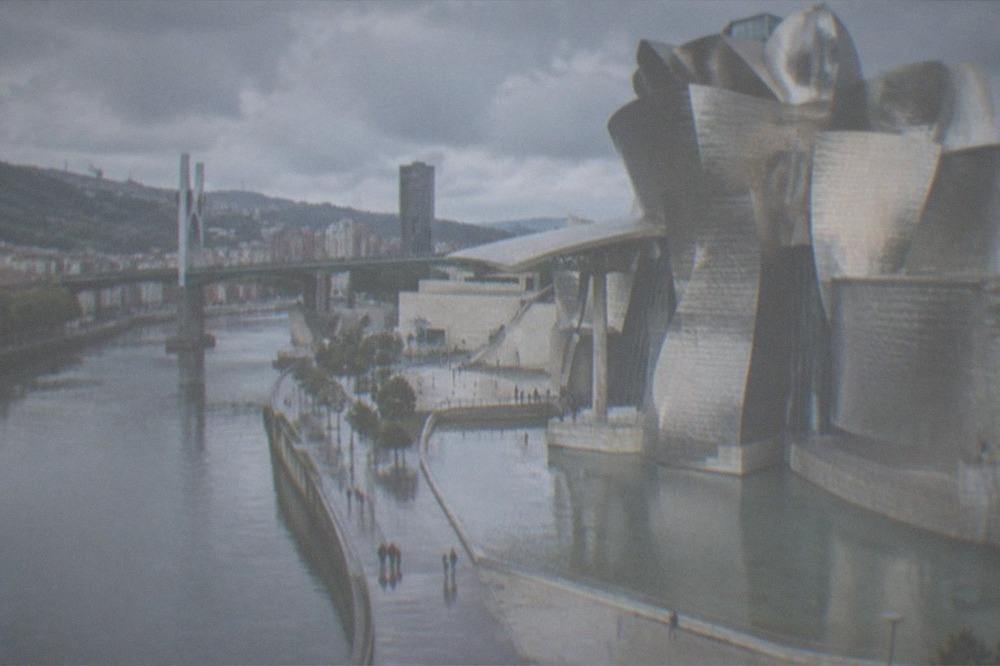
The stadium's immediate surroundings are worth an hour on their own. The riverside walk toward the Guggenheim, the Zubizuri footbridge and the Euskalduna Centre makes a natural circuit, and the Bilbao museums guide helps you sequence the art stops around the football one. For visitors with mobility needs, the accessibility in Bilbao page details the city's step-free transport and attraction access.
What Should First-Time Visitors Know About Bilbao Football Culture?
First-time visitors should know three things: that match weekends change the city's rhythm and hotel availability, that tickets for big fixtures need to be pursued through the club's own channels well in advance, and that the football experience is family-oriented and safe by the standards of any major European city. Bilbao's 2025 crime balance showed a slight decline in street crime year on year, with thefts dominating the statistics and violent incidents rare.
Standard urban precautions apply everywhere in the city, and the safety in Bilbao page covers them in detail. Timing matters more here than in most football cities. Because Athletic's support is intensely local and season tickets dominate, the casual visitor's best route into a big match is planning ahead, and the highest-demand games are the Basque derby and the visits of the Madrid clubs. If your dates are fixed and no match falls within them, the stadium tour plus museum is a genuinely satisfying substitute, and the atmosphere in the surrounding bars on any evening gives a fair sample of the culture.
Budget the trip around the rest of the city too. The is Bilbao expensive page breaks down costs, and the where to stay in Bilbao page maps the neighbourhoods, with the stadium's own district among the most convenient for a football-focused stay. A word on timing your wardrobe: Bilbao's climate is temperate oceanic, Atlantic-influenced, and AEMET's normals for station 1082 show rain in every month of the year, so the packing guide is not optional reading.
| Month | Mean temperature | Mean precipitation |
|---|---|---|
| January | 9.3 C | 120 mm |
| April | 12.6 C | 107 mm |
| August | 20.9 C | 76 mm |
| November | 12.4 C | 147 mm |
The table above, drawn from AEMET's 1981-2010 normals for Bilbao Aeropuerto/Loiu, explains the local match-day uniform: layers and a rain shell, in every season. November is the wettest month at 147 mm, and August the warmest at a mean of 20.9 C, which is worth knowing whether you are booking an evening kick-off or a stadium tour at midday.
How Do You Combine A Football Weekend With The Rest Of Bilbao?
A well-built football weekend in Bilbao gives the stadium one half-day, the Guggenheim and the old town the other, and a coast day trip in between, because the city's compactness makes the mix easy: the stadium, the museum district and the Casco Viejo are all within a short walk or a single metro hop of each other, and the coast is under an hour away by tour bus. The how many days in Bilbao page covers the sequencing in detail.
A typical shape looks like this. Friday evening, arrive and eat standing up in the old town. Saturday morning, the Guggenheim or the Fine Arts Museum, keeping in mind that the Fine Arts Museum reopened on 6 October 2026 after its expansion with a free entry week from 6 to 13 October, as reported by the museum. Saturday afternoon, the San Mames tour. Sunday, a day trip to the coast, or if the fixture list cooperates, the match itself.
The coast option deserves its own paragraph because it is the most popular pairing with a football weekend. The Gaztelugatxe hermitage, the Mundaka surf coast and Gernika sit along the Urdaibai biosphere stretch east of the city, and the Gaztelugatxe guide covers the free timed-ticket system that applies only on official controlled-access days, roughly mid-June to 20 September plus Easter and holiday weekends, with a daily cap of 1,462 visitors on those days. Booking, when required, is always free through tiketa.eus.
Back in the city, the evening culture around football extends into the nightlife guide territory: the bars around the Ensanche and the old town stay loud after matches, and the txosnas and street energy of Aste Nagusia, the nine-day festival running 22 to 30 August 2026, show the same crowd in full festival mode. If your visit overlaps with the festival's opening weekend, expect the football talk to share airtime with fireworks.
Common Questions About Bilbao Football Culture
What makes Athletic Club Bilbao different from other Spanish clubs?
Athletic Club signs only Basque-trained players under its cantera policy, a restriction no other major European club maintains. The policy ties the squad to the region and makes the club an institution of Basque identity rather than a global transfer-market team.
How much do San Mames stadium tours cost?
Self-guided visits with an audio guide in Spanish, Basque, English or French cost 15 EUR for adults and 5 EUR for children aged 5 to 14. The guided Museum plus Tour option costs 22 EUR for adults and 8 EUR for children. Member and Athletic Club cardholder rates are lower, per the club's official information.
When is the San Mames museum open?
From March to October the museum runs 10:00 to 20:00 Tuesday to Sunday, daily in July and August. From November to February it runs 10:00 to 19:00 Tuesday to Sunday and closes on Mondays. On match days the museum closes hours before kick-off and stadium access is limited.
Can away fans attend Athletic Club matches at San Mames?
Yes, away supporters are allocated a section in one corner of the stadium, and tickets for high-demand fixtures such as the Basque derby and the Madrid clubs' visits should be pursued well in advance through the club's own channels.
Where do Bilbao fans drink before matches?
The streets around San Mames and along the Gran Via fill from about two hours before kick-off with fans doing a txikiteo, a standing bar crawl of pintxos and drinks. Pintxos at traditional bars typically run 2 to 5 EUR each, with a full crawl of four to six items plus drinks around 25 to 45 EUR per person.
Is Bilbao safe on football match days?
Yes. Bilbao's 2025 crime balance showed a slight decline in street crime year on year, thefts dominate the statistics, and match-day crowds around San Mames are family-oriented. Standard urban precautions apply, as covered on the city's safety page.
Football gives Bilbao a rhythm you can set your trip by, and Bilbao Travel Guide exists to help you catch it at the right tempo: check the fixture list first, book the stadium tour for a non-match day if you want the full route, and leave an evening free for the bars that fill up two hours before kick-off.