Ensanche District, Bilbao: What To See, Eat And Do In The Modern Centre
Today it is the city's commercial and financial heart, and the neighbourhood many people walk through without realising it has a name.
Short answer
The Ensanche is Bilbao's modern centre, the planned district around Gran Via Don Diego Lopez de Haro, built when the city outgrew the medieval Casco Viejo. It holds the main shopping streets, many of the best pintxos bars, Moyua square, the Chavarri palace and the Alhondiga, and it sits between the Old Town and the Guggenheim-era riverfront of Abandoibarra.
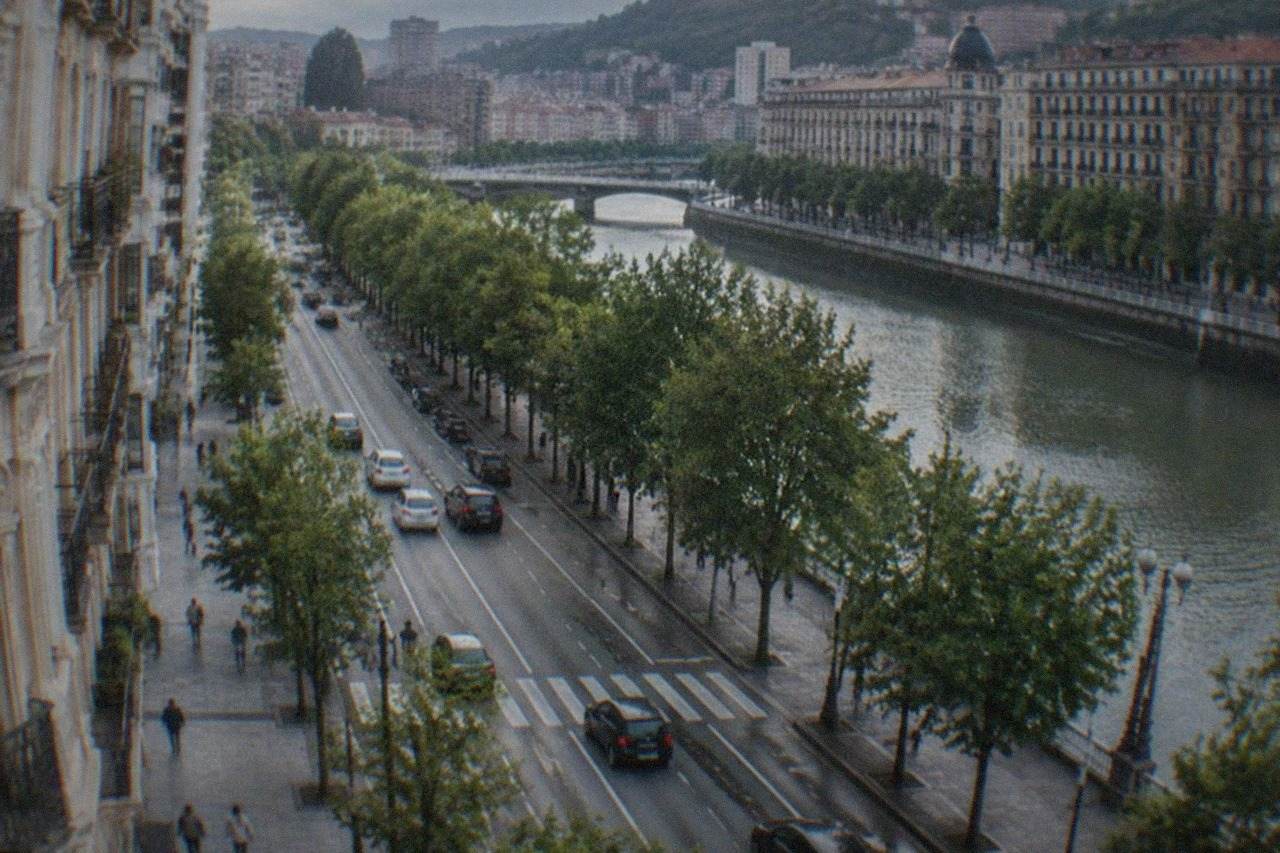
The Ensanche is Bilbao's planned modern district, the grid of straight, tree-lined streets that the city built across the Abando plain once the medieval walled town could no longer hold it. In Bilbao, in Biscay (Bizkaia) province, Basque Country, northern Spain, the word "Ensanche" literally means "widening", and that is what the district was: a municipal plan that gave industrial-era Bilbao a modern centre to match its booming port trade. The result is the neighbourhood a visitor almost certainly walks through, because Gran Via Don Diego Lopez de Haro, the city's main shopping axis, runs straight through it from the Circular plaza to the Sacred Heart church at Moyua and beyond.
This page covers what the district is, what to do in it, where to eat, what a day costs, how to get there and where its borders actually sit. It is written from primary sources: operator fare pages, museum admission pages and the municipal record, not from a single visit. For the wider city picture, start with the Bilbao overview of things to do on Bilbao Travel Guide.
What Is The Ensanche District In Bilbao?
The Ensanche is Bilbao's modern centre: a planned grid laid out across the annexed Abando plain, anchored by Gran Via Don Diego Lopez de Haro, and built to give the overcrowded medieval town room to expand. Its original municipal plan is the reason central Bilbao has wide, straight streets, regular blocks and grand facades instead of the crooked lanes of the Casco Viejo, and its character, commerce first, monumentality second, has never changed.
The plan was annexation as much as architecture. Bilbao absorbed the neighbouring municipality of Abando, and the new district took the growth that the old walled town physically could not. Industry paid for it. The banks, shipping offices and trading houses of the era wanted facades that announced wealth, and the Ensanche gave them plots to do it on.
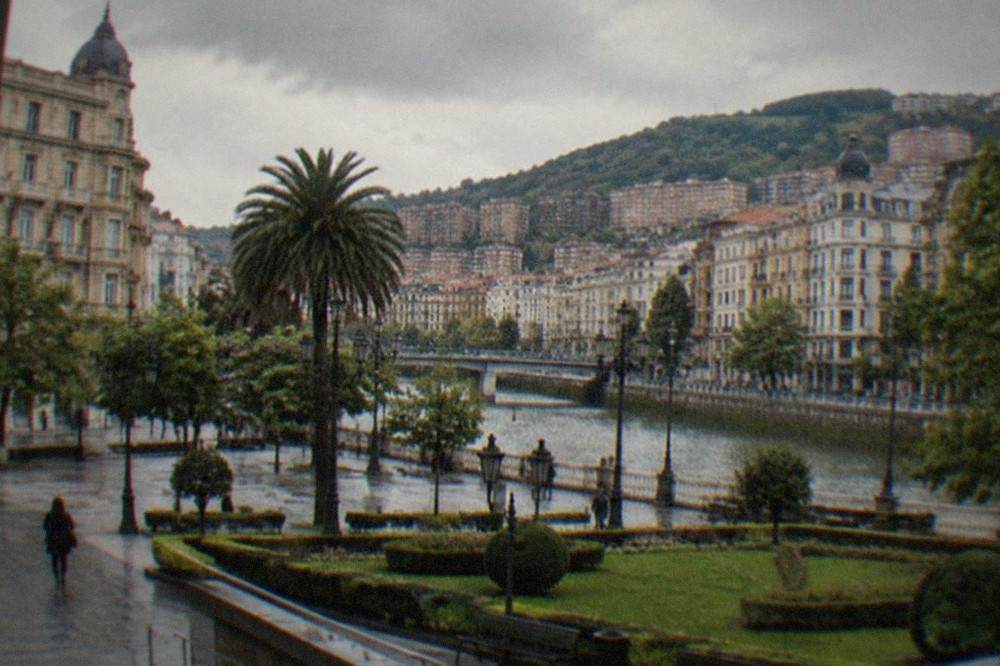
Three landmarks define the grid. Gran Via, the broad central axis, is the shopping spine. Moyua plaza, formally Plaza Federico Moyua, is the elliptical heart halfway along it, laid out with gardens and ringed by buildings including the Chavarri palace, the regional government's seat, whose mirrored twin-towered facade is the district's most photographed frontage. And the Alhondiga, the grand former wine warehouse, was reborn as Azkuna Zentroa, a cultural centre whose columned hall made it one of Bilbao's most recognisable interiors.
The district's relationship to the rest of the city is simple geography. The Casco Viejo sits across the estuary to the east, Abandoibarra and the Guggenheim sit along the river to the north, and Indautxu continues the grid westward. A visitor who walks from the Old Town to the Guggenheim crosses the Ensanche whether or not they notice.
What Are The Best Things To Do In The Ensanche District Of Bilbao?
The best things to do in the Ensanche district of Bilbao are walking Gran Via from Plaza Circular to the Sacred Heart church, visiting Azkuna Zentroa's columned hall, browsing the Mercado del Ensanche, drinking and eating pintxos around Plaza Moyua and Calle Diputacion, and looking up at the Chavarri palace and the district's bank architecture. Everything sits within a short walk of everything else, so the district works as a half-day or as a string of stops between other sights.
Gran Via itself is the main attraction. The street runs between Plaza Circular and Moyua and continues toward the Basilica of Begona's direction beyond, and its pavements carry Bilbao's densest run of shops, from the international chains at the Moyua end to older local retailers nearer the Circular. The facades are the point: grand office buildings, the BBVA's former headquarters and the layered stone fronts that made the street a showcase of Basque industrial money.
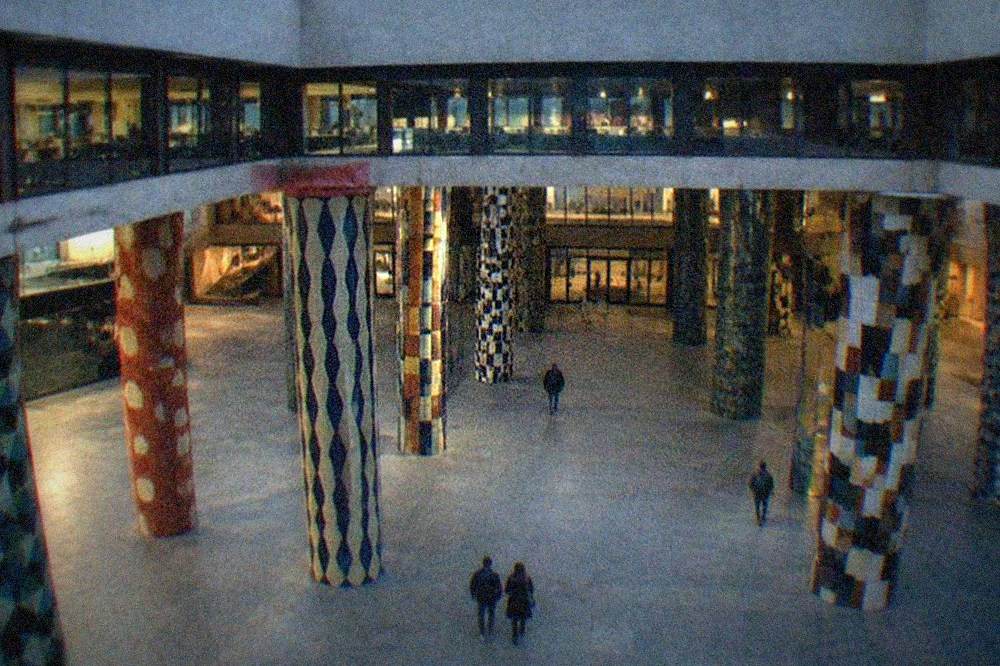
Azkuna Zentroa is the district's single best indoor stop. The old Bastida warehouse, saved from demolition and reopened as a cultural centre, holds a swimming pool suspended over the ground-floor hall, a fitness centre, exhibition spaces, a media library and a cinema. Entry to the building is free, and the columned atrium alone justifies the stop. The full profile is on the Azkuna Zentroa attraction page.
The Mercado del Ensanche is the district's food anchor, a covered market hall where the surrounding bars and restaurants source much of what they serve. The Museum of Fine Arts and Doña Casilda park sit just beyond the district's south-western edge, and the Guggenheim is a straight riverside walk north through Abandoibarra, so the Ensanche functions as the hinge between the Old Town and the museum district.
Two guided formats cover the district efficiently. A small-group old town and centre walk traces the grid's history, and an e-bike highlights tour covers the Ensanche, the river and the Guggenheim.
The district also photographs well. The Gran Via and Moyua views are the standard shots, but the side streets, Calle Licenciado Poza and Calle Simon Bolivar, give the grid's rhythm without the crowds, and the tower of the Basilica of Begona closes the vista along the Gran Via axis.
Where To Eat In The Ensanche: Pintxos Bars And Restaurants
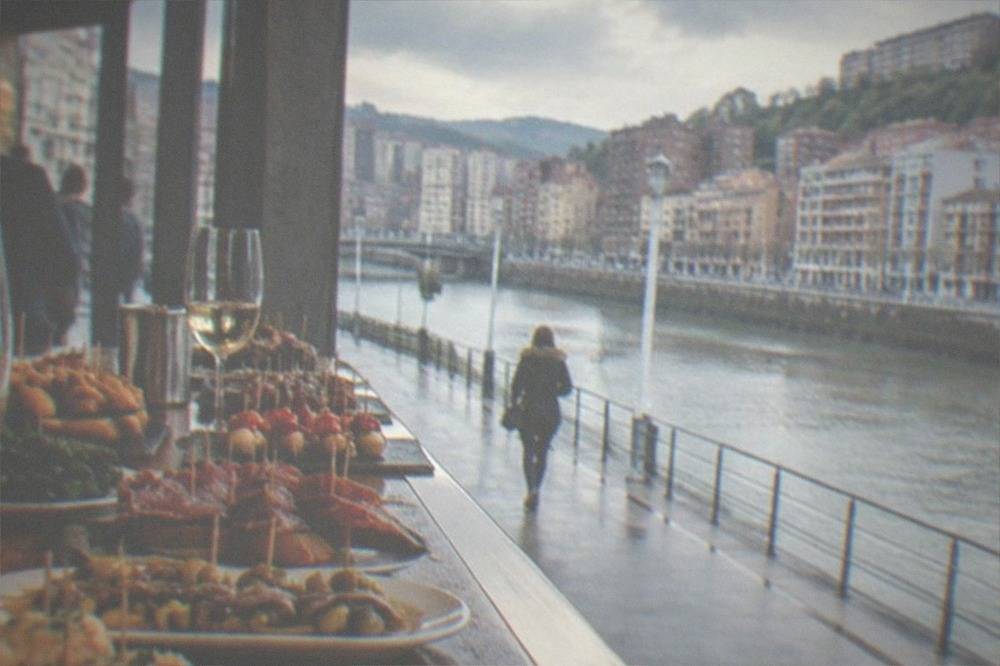
The Ensanche is where Bilbao's pintxos culture meets its banking district: the bars around Calle Diputacion, Calle Simon Bolivar and Plaza Moyua serve some of the most consistently rated pintxos in the city, with counter items typically running 2 to 6 euro each and drinks around 2 to 3.50 euro, so a crawl of four to six stops lands near 25 to 45 euro per person.
Names that recur across recent rankings include El Globo, La Viña del Ensanche and La Bodeguita del 12, whose black-pudding pintxo took the 2025 Bizkaia championship.
El Globo on Calle Diputacion has been a fixture since 1997 and is known for its gratinated spider crab, txangurro, displayed on the counter. La Viña del Ensanche, operating since 1927, anchors the western end of the bar scene and doubles as a sit-down restaurant. Gure Toki and Sorginzulo sit on Plaza Nueva, technically just across the boundary in the Old Town but part of the same crawl, and the 2025 Bizkaia traditional pintxo championship went to La Bodeguita del 12 on Calle Juan Ajuriaguerra in Abando, inside the wider Ensanche grid.
| Bar | Street | Known for |
|---|---|---|
| El Globo | Calle Diputacion 8 | Txangurro gratin, counter display, operating since 1997 |
| La Viña del Ensanche | Calle Simon Bolivar 2 | Historic bar-restaurant since 1927, sit-down dining |
| La Bodeguita del 12 | Calle Juan Ajuriaguerra 12 | 2025 Bizkaia championship pintxo, black pudding on cornbread |
| Gure Toki | Plaza Nueva 12 | Creative traditional pintxos, family-run since 1982 |
| Sorginzulo | Plaza Nueva 12 | Bacalao al pil pil, award-winning tortilla |
A guided crawl removes the guesswork. The district's bars are easier to read with someone who knows which counter does what, and the Original Bilbao Food Tour with wine pairings covers the ground. Check availability
For restaurant dining rather than counter standing, the Ensanche and its immediate edge carry Michelin-starred options: Ola Martin Berasategui and the newer one-star Islares near the Guggenheim, plus Nerua inside the museum itself. The full restaurant picture, including where the stars sit relative to the district, is on the best restaurants in Bilbao page.
How Much Does A Day In The Ensanche Cost?
A day in the Ensanche can run from about 30 to 40 euro per person at the modest end, covering a Barik-day of transport, counter pintxos and a coffee, to 100 euro or more once a museum ticket, a guided food tour and restaurant dining stack up. The district itself charges nothing: Gran Via, Moyua and Azkuna Zentroa's atrium are free, so the budget is decided by food, tickets and how much guided help you want.
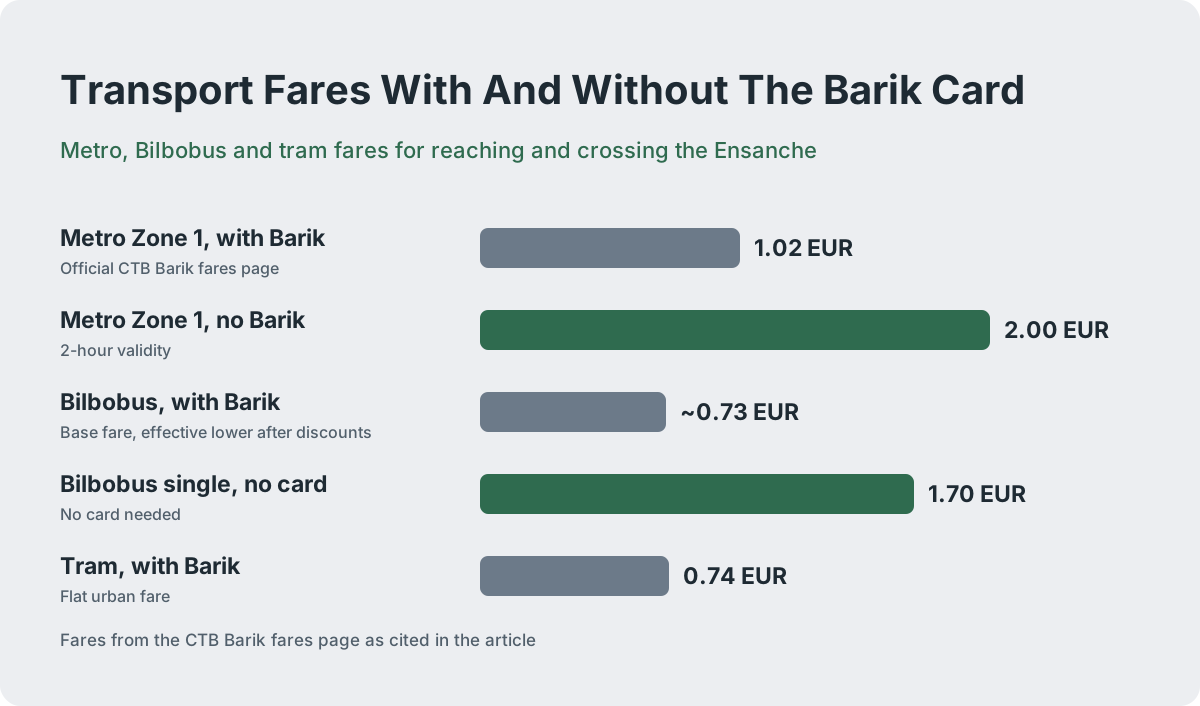
The transport maths favours the Barik card. The CTB Barik fares page gives Metro Zone 1 at 1.02 euro with Barik against 2.00 euro without, and Bilbobus at roughly 0.73 euro base with Barik against 1.70 euro single without. The card itself is commonly reported at 3 euro to buy, though that purchase price comes from a secondary source rather than an official CTB page, so treat it as indicative and confirm at the machine. For a short stay, the Bilbao Bizkaia Card, at 10 euro for 24 hours, 15 for 48 and 20 for 72 per its official site, bundles unlimited transport with attraction discounts.
| Item | Typical cost | Notes |
|---|---|---|
| Metro Zone 1, with Barik | 1.02 EUR | Official CTB Barik fares page |
| Metro Zone 1, no Barik | 2.00 EUR | 2-hour validity |
| Bilbobus, with Barik | ~0.73 EUR base | Effective lower after discounts |
| Bilbobus single | 1.70 EUR | No card needed |
| Tram, with Barik | 0.74 EUR | Flat urban fare |
| Pintxo, counter item | 2-6 EUR | Traditional bars, planning range |
| Drink (txakoli, zurito) | 2-3.50 EUR | Planning range, check the bar |
Museum tickets are the biggest single line. The Guggenheim's own site lists adult admission at 18 euro, open Tuesday to Sunday 10:00 to 19:00, extended to 20:00 from 15 June to 13 September and during Easter week. The Bilbao Fine Arts Museum, closed for its final renovation phase from 31 August to 5 October 2026, is reported to reopen on 6 October 2026 with a free entry week through 13 October, then charge 12 euro general admission from 14 October; that reopening detail is a single-source report, so confirm before planning around it. A joint Artean pass covering both museums is reported at 16 euro general.
Accommodation in the district carries no tourist tax in 2026. The Bizkaia regional tax, Norma Foral 3/2026, takes effect on 1 January 2027, with Bilbao's approved municipal rates running from 1 euro per night for pensions to 5 euro for five-star hotels and 6.50 euro for tourist apartments. Visitors in 2026 pay nothing; visitors in 2027 should budget for it.
How Do You Get To The Ensanche District?
The Ensanche is Bilbao's most connected district: Moyua and Abando sit on Metro Lines 1 and 2, Abando is the city's main Renfe and Cercanias rail interchange, the tram runs along its northern river edge, and Bizkaibus and Bilbobus lines cross the grid from every direction. From the airport, the Bizkaibus A3247 runs every 15 minutes, takes 15 to 25 minutes and costs 5 euro without a Barik card, with stops including Gran Via and Moyua inside the district itself.
The airport bus is a detail worth knowing: its route passes through the Ensanche, stopping at Gran Via and Plaza Moyua, before reaching the Termibus interchange at Abando. A taxi from the airport to the centre runs approximately 24 to 29 euro by day and more on nights and holidays, with no airport supplement, per the airport's own guidance. There is no metro or train link to the airport, and the city council's position is that none arrives before 2035, so the bus, a taxi or a pre-booked transfer are the only options.
| From | To Ensanche (Moyua/Abando) | Mode | Fare |
|---|---|---|---|
| Bilbao Airport | Moyua / Gran Via | Bizkaibus A3247, every 15 min | 5 EUR without Barik |
| Bilbao Airport | District centre | Taxi, 10-15 min | ~24-29 EUR day band |
| Casco Viejo | Abando | Metro L2, 2 stops | 1.02 EUR with Barik |
| Abandoibarra / Guggenheim | Moyua | Tram, short hop | 0.74 EUR with Barik |
| Bilbao Intermodal (Termibus) | Gran Via | On foot | Free |
The full fare and ticketing picture, including the Barik card's discounts and the Bilbao Bizkaia Card's bundled transport, is on the getting around Bilbao transport guide, and the airport transfer options are detailed on the Bilbao airport guide.
Walking matters more here than in most districts. The grid is flat by Bilbao standards, the Casco Viejo is a short walk east, and the Guggenheim is a short walk north-west through Abandoibarra. Visitors rarely need transit inside the district.
Where Does The Ensanche End And Abandoibarra Begin?
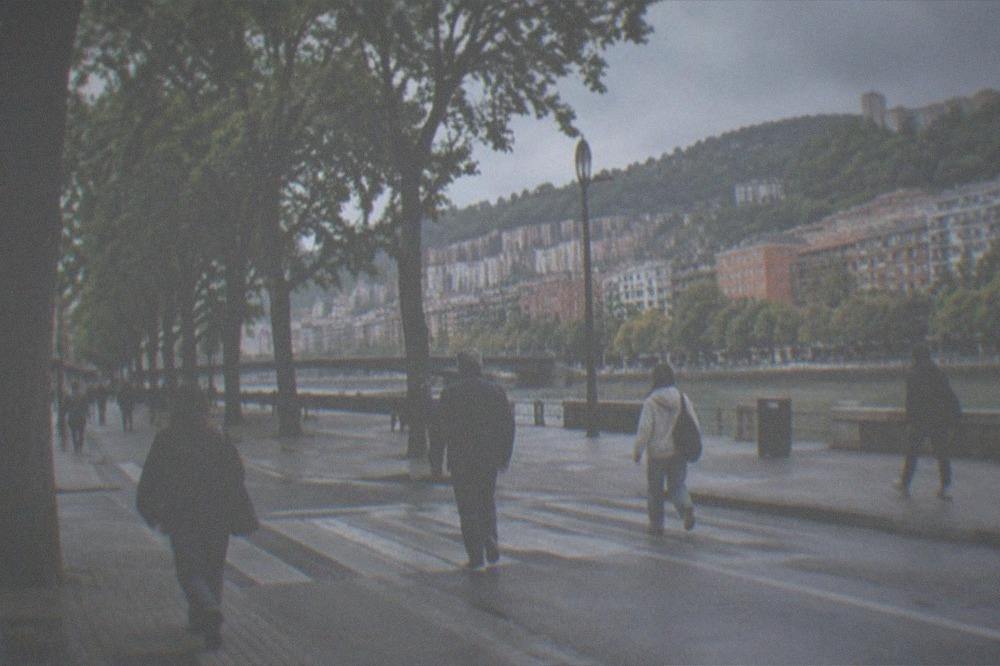
The Ensanche's borders are administrative as much as visual: the district corresponds broadly to the Abando ward, bounded by the estuary and Abandoibarra to the north, the Casco Viejo and the railway approaches to the east, Indautxu and the Doña Casilda park area to the west and south. Abandoibarra, the Guggenheim-era riverfront, is functionally a separate district, a redevelopment zone between the Ensanche grid and the river, even though the two read as one continuous walk.
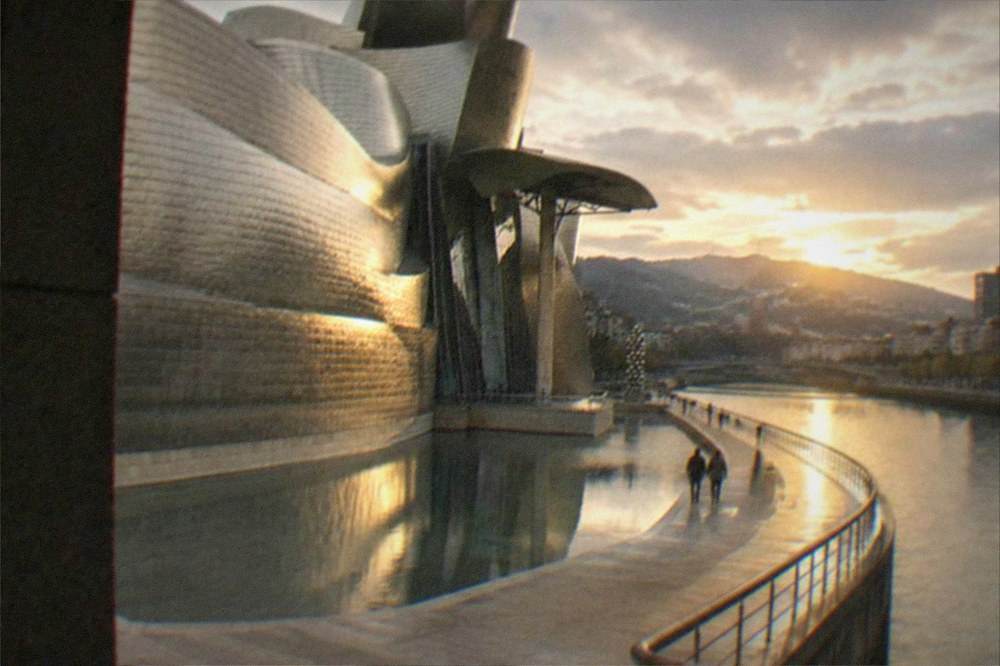
The distinction matters for planning. Abandoibarra holds the Guggenheim, the Euskalduna conference centre and the riverside promenades, and it reads as contemporary: lawns, curved paths, titanium. The Ensanche reads as old commerce: straight streets, stone, banks. Walking from Moyua to the Guggenheim, the transition happens around the Alhondiga and the Euskalduna bridge area, roughly where the grid gives out and the landscaped riverfront begins.
| District | Character | Key sights | Relation to Moyua |
|---|---|---|---|
| Ensanche | Historic grid, shopping, banks | Gran Via, Moyua, Azkuna Zentroa | It is the district |
| Abandoibarra | Modern riverfront redevelopment | Guggenheim, Euskalduna, promenades | Short walk north-west |
| Casco Viejo | Medieval seven streets | Ribera Market, Cathedral, Plaza Nueva | Short walk east |
| Indautxu | Continuation of the grid, residential | Doña Casilda park, Fine Arts Museum | Short walk south-west |
The neighbouring district profiles cover each in depth: Abandoibarra, the Casco Viejo and Indautxu. The Guggenheim Museum has its own attraction page with full admission and hours detail.
When Is The Best Time To Visit The Ensanche District?
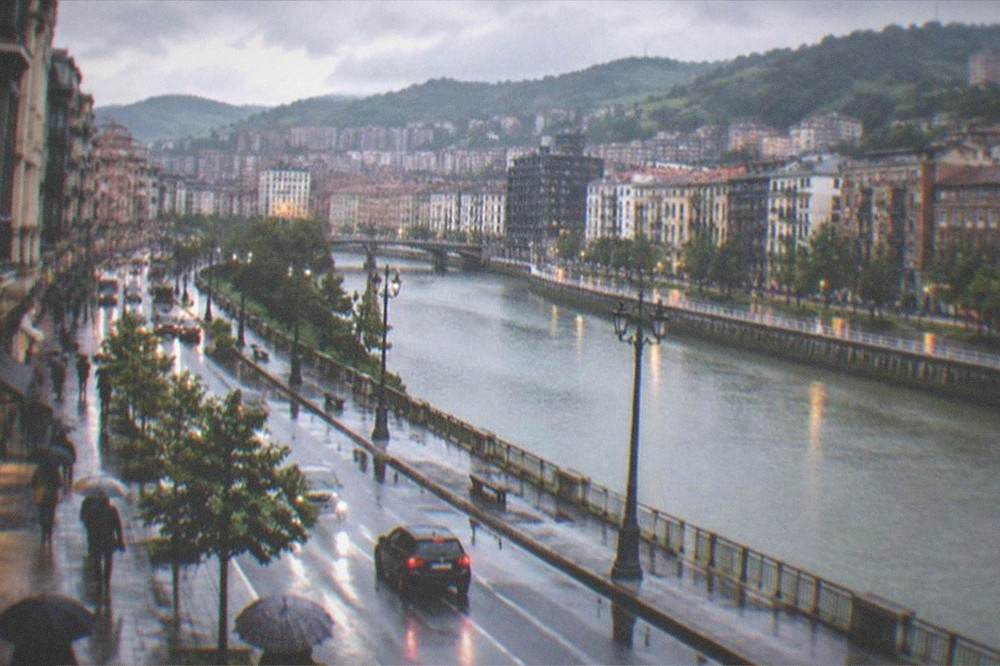
The best months to visit the Ensanche are July and August, when AEMET's Bilbao Aeropuerto/Loiu station (1082) normals show the warmest and driest conditions, 20.4 and 20.9 degree mean temperatures with 50 and 76 mm of rain, though June and September run close behind with fewer crowds. November is the wettest month at 147 mm, and the district's outdoor pleasures, the Gran Via walk, Moyua's gardens, the terrace bars, all lose their appeal in it.
Bilbao's climate is temperate oceanic, Atlantic-influenced, never Mediterranean or continental. AEMET's 1981-2010 normals for station 1082 put the annual mean at 14.7 degrees and annual rainfall at 1,134 mm spread across every month, so the question is never whether it rains but how much. The district's advantage is that its two headline indoor attractions, Azkuna Zentroa and the Mercado del Ensanche, plus the pintxos bars, make it one of the city's better rainy-day neighbourhoods.
| Month | Mean temp (C) | Rain (mm) | District verdict |
|---|---|---|---|
| January | 9.3 | 120 | Quiet, damp, indoor days |
| April | 12.6 | 107 | Spring showers, green Moyua gardens |
| July | 20.4 | 50 | Warmest, driest, peak terraces |
| August | 20.9 | 76 | Aste Nagusia festival crowds, 22-30 Aug 2026 |
| September | 19.2 | 73 | Best balance of weather and space |
| November | 12.4 | 147 | Wettest month, plan indoor-heavy days |
One date overrides the weather calculus: Aste Nagusia, Bilbao's nine-day festival, runs 22 to 30 August 2026, opening with the txupin rocket at 19:00 on 22 August at Plaza Arriaga. The festival's concerts and crowds spill across the city centre, and the Ensanche's bars and squares are fully part of it. The full programme and context sit on the Aste Nagusia festival guide.
Common Questions About The Ensanche District In Bilbao
What Is The Ensanche District In Bilbao?
The Ensanche is Bilbao's planned modern district, a grid laid out across the annexed Abando plain, anchored by Gran Via Don Diego Lopez de Haro and Plaza Moyua. It was built as the "widening" the overcrowded medieval town needed, and it remains the city's commercial centre.
Is The Ensanche The Same As Abando?
Not quite. The Ensanche was built across the annexed municipality of Abando, and the Abando ward is the administrative area that contains the district's core today. In everyday use, "Ensanche" refers to the historic grid around Gran Via, while Abando also covers the station quarter and surrounding blocks.
What Are The Best Things To Do In The Ensanche District Of Bilbao?
Walk Gran Via from Plaza Circular to Moyua, visit the columned atrium of Azkuna Zentroa, browse the Mercado del Ensanche, eat pintxos around Calle Diputacion and Plaza Moyua, and look at the Chavarri palace and the district's bank architecture. All of it sits within a short walk.
Where Should You Eat Pintxos In The Ensanche?
The bars around Calle Diputacion and Calle Simon Bolivar are the core: El Globo for txangurro gratin, La Viña del Ensanche for a historic sit-down option, and La Bodeguita del 12 on Calle Juan Ajuriaguerra, winner of the 2025 Bizkaia traditional pintxo championship. Counter items typically run 2 to 6 euro; check each bar's board.
How Do You Get From Bilbao Airport To The Ensanche?
The Bizkaibus A3247 runs every 15 minutes from the airport, takes 15 to 25 minutes and costs 5 euro without a Barik card, and its route stops at Gran Via and Plaza Moyua inside the district before terminating at Abando. A taxi costs roughly 24 to 29 euro in the daytime band. There is no metro or train link to the airport.
Is The Ensanche District In Bilbao Expensive?
A modest day, transport, counter pintxos and coffee, runs about 30 to 40 euro per person, while a day with a Guggenheim ticket at 18 euro, a guided food tour and restaurant dining passes 100 euro. The district's streets, gardens and Azkuna Zentroa's atrium cost nothing, and 2026 visitors pay no tourist tax.
The Ensanche rewards exactly the kind of visit it was designed for: unhurried walking between grand facades, with a counter stop whenever the mood strikes. Give it half a day, eat in it at least once, and use its transport hub, Abando, as the base for everything from a Gaztelugatxe day trip to a San Sebastian excursion, and the grid will have done its job as Bilbao's front room.