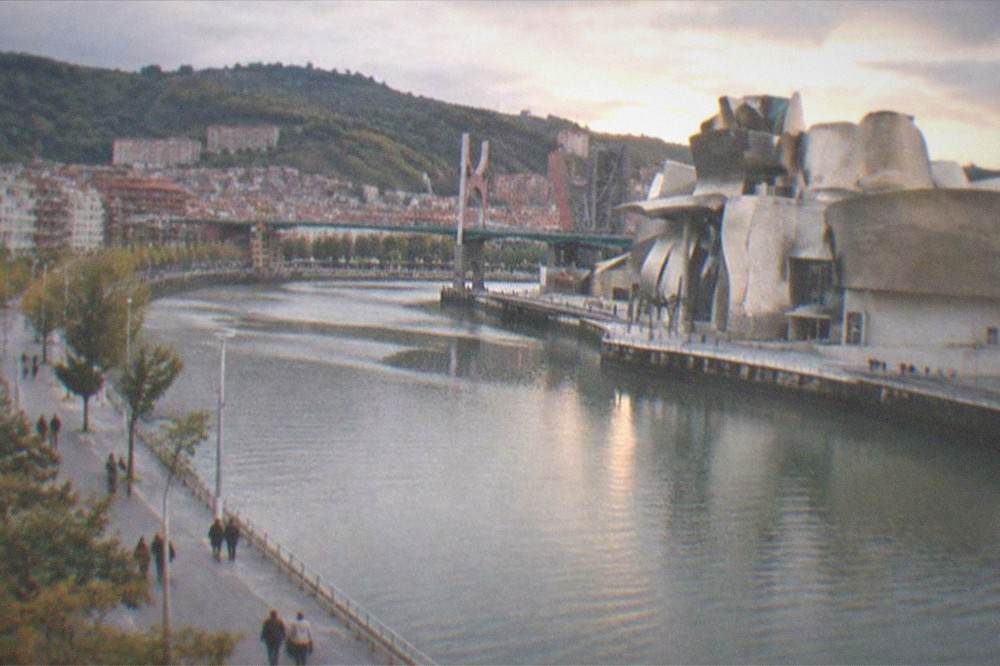
Taxis And Uber In Bilbao
Bilbao is compact, hilly in places and served by one of Spain's best public transport networks, so taxis and ride-hailing apps fill a narrower role here than in most Spanish cities. This guide explains what the regulated taxi system offers, what Uber and Cabify actually are in Bilbao, what the airport transfer costs, and when a cab is genuinely the better call.
Short answer
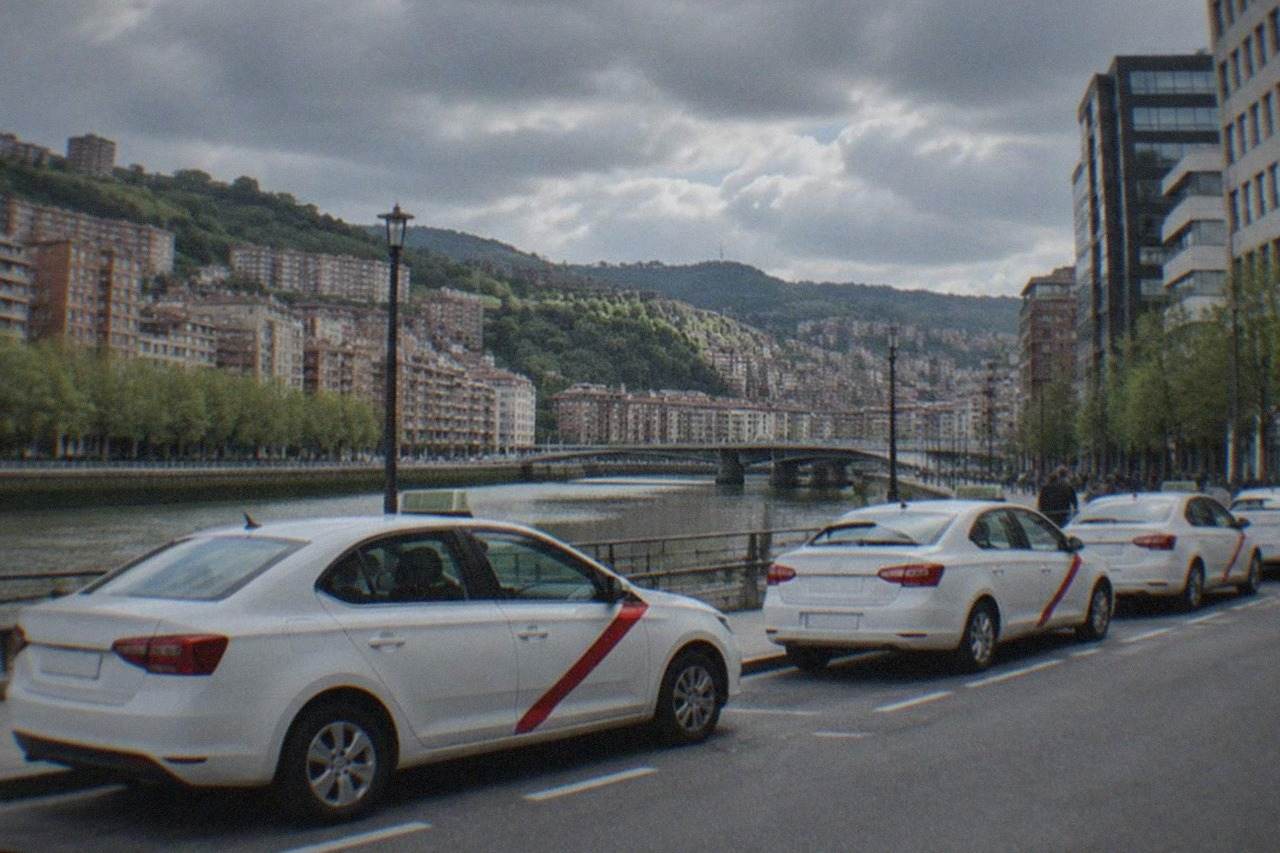
Bilbao taxis are white with a red stripe, metered and officially regulated, and a taxi from Bilbao Airport to the centre costs roughly 24-29 euro with no airport supplement. Uber does not operate its own fleet in Bilbao; ride-hailing requests are served by licensed taxi drivers through the app, so the car, driver and fare structure are the same as a street taxi.
Bilbao, in Biscay (Bizkaia) province in the Basque Country of northern Spain, is small enough that visitors can walk between the Casco Viejo, the Guggenheim and the Abando station district in under half an hour. That geography shapes the whole taxi question here: the city has a fully regulated, metered taxi fleet, ride-hailing apps exist but work differently from what many visitors expect, and the single journey where a taxi genuinely matters is the one from Bilbao Airport (BIO) to your hotel. This Bilbao Travel Guide page lays out what the official sources say about each of those, with the verified fare figures, so a first-time visitor can decide street hail, app or metro before stepping outside.
How Do Taxis Work In Bilbao?
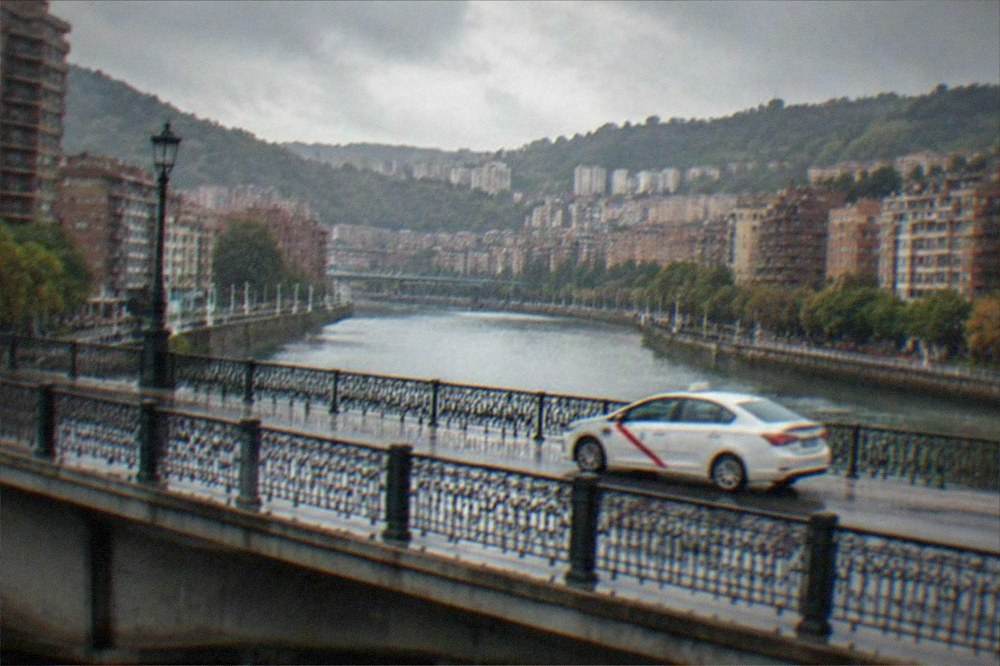
Bilbao taxis are white with a red stripe, officially licensed by the city, metered under regulated tariffs, and can be hailed on the street, picked up at a rank, or booked by phone or app. There is no negotiation culture: the meter price is the price, and drivers are not permitted to agree fixed off-meter fares for ordinary urban journeys, which puts Bilbao in line with the rest of Spain's regulated taxi systems.
The fleet is run by licensed taxi holders under municipal regulation, and the visual identifier is consistent: white bodywork with the red horizontal stripe that Biscay's taxis carry. Ranks sit at the obvious demand points: the airport, Abando's intermodal station area, the Termibus intercity bus station, around the Gran Vía and Plaza Moyúa in the Ensanche, and at the edges of the Casco Viejo near Plaza Arriaga and the Ribera Market. At a rank you take the front car of the queue; hailing on the street works in the central districts where taxis circulate, though on a rainy November evening the rank is the more reliable option.
Payment is normally by card or cash, and the metered tariff structure is set by the municipal fare bands rather than by the driver. The one fare figure this site's research verified directly is the airport run, covered in its own section below, because that is the journey where visitors most need a number in advance. For everything inside the city, the honest answer is that Bilbao's urban footprint rarely produces a long enough taxi ride for the fare to matter much against the alternatives, a point developed in the comparison section later in this guide.
One practical note that recurs across the site's transport coverage: the Bilbao metro and transport network is integrated through the Barik card, and the Bilbao Bizkaia Card bundles unlimited transport with attraction discounts. A visitor holding either of those has already paid for most of the journeys a taxi would otherwise cover.
Does Uber Work In Bilbao?
Uber does not run its own private-hire fleet in Bilbao; the app operates as a booking channel for the city's licensed taxis, so the vehicle that arrives is a regulated white-and-red Bilbao taxi, the driver holds a taxi licence, and the fare follows the official metered tariffs rather than Uber's dynamic pricing. Cabify and other Spanish ride-hailing apps work on the same basis in the city.
This is the single most misunderstood point about ride-hailing in the Basque Country. Visitors arriving from Madrid or Barcelona, or from countries where Uber fields private drivers, sometimes expect a separate class of vehicle. In Bilbao the app request is dispatched to the licensed taxi fleet, which means the experience is functionally identical to hailing a cab with a phone instead of an arm. The practical consequences are worth spelling out.
First, surge pricing as Uber deploys it elsewhere largely disappears, because the fare is the regulated tariff. Second, the car you board is the same taxi you could have taken from the rank, with the same licence visible. Third, payment through the app is possible, but the underlying price is the metered one. The distinction matters most at the airport and late at night: an app booking at BIO simply puts you in the airport taxi queue's equivalent, and a late-night booking carries the same night tariff band a street taxi would.
For visitors, the honest framing is that the app is a convenience layer, not a different service. If a taxi is hard to find, the app widens the net. If taxis are plentiful, the app adds little. What the app never gives you in Bilbao is a cheaper category of ride, and any guide that tells you otherwise is describing a different city.
Where a booked experience beats improvising transport entirely is on the coast. The day trips out of the city are where guided options earn their keep, and the trio below covers the three most-booked styles from this site's roster: a guided Gaztelugatxe access tour, a pintxos and drinks walk with a local, and the estuary boat tour.
How Much Does A Taxi From Bilbao Airport Cost?
A taxi from Bilbao Airport (BIO) to central Bilbao costs approximately 24 to 29 euro depending on the fare band, with no airport supplement and the Artxanda tunnel toll already included in the guidance price. The journey takes roughly 10 to 15 minutes, taxis are white with a red stripe from the rank outside Arrivals Level 1, and the metered bands are Fare 3 for daytime weekdays and Fare 4 for nights, weekends and holidays.
Those figures come from the airport's own transport guidance, and the two details worth underlining are the ones visitors most often get wrong elsewhere in Spain. There is no airport surcharge in Bilbao, and the tunnel toll is inside the quoted range, so the number on the meter at your hotel should not surprise you. The range exists because the tariff band switches: a Tuesday afternoon ride sits at the lower end, a Saturday night arrival at the upper end.
The alternative is the Bizkaibus A3247, which the airport operator runs every 15 minutes. From the airport it operates roughly 06:10 to 23:40, and from Bilbao roughly 05:00 to 22:00, with a journey time of 15 to 25 minutes depending on traffic. The occasional ticket costs 5 euro without a Barik card, payable in cash or by card at the driver or the Bizkaibus desk in arrivals, and significantly less with a Barik card. There is no metro or train link to BIO, and the city council's own position is that none arrives before 2035, so the choice at the airport is genuinely between the bus, the taxi and a pre-booked private transfer.
| Option | Cost to central Bilbao | Typical journey time | Notes |
|---|---|---|---|
| Airport taxi (rank, Arrivals Level 1) | approx. 24-29 EUR by fare band | 10-15 min | No airport supplement; Artxanda tunnel toll included |
| Bizkaibus A3247 | 5 EUR without Barik (less with Barik) | 15-25 min | Every 15 min; airport approx. 06:10-23:40 |
| Metro or train | Not available | Not available | No rail link to BIO; council position is none before 2035 |
| Pre-booked private transfer | Fixed price, set at booking | Similar to taxi | Higher cost; door-to-door |
For a full arrival walkthrough, see the dedicated Bilbao airport guide, which covers the terminal layout, the bus stops in the centre and the transfer options in more depth than this page can.
How Do Bilbao Taxi Fares Compare With Public Transport?
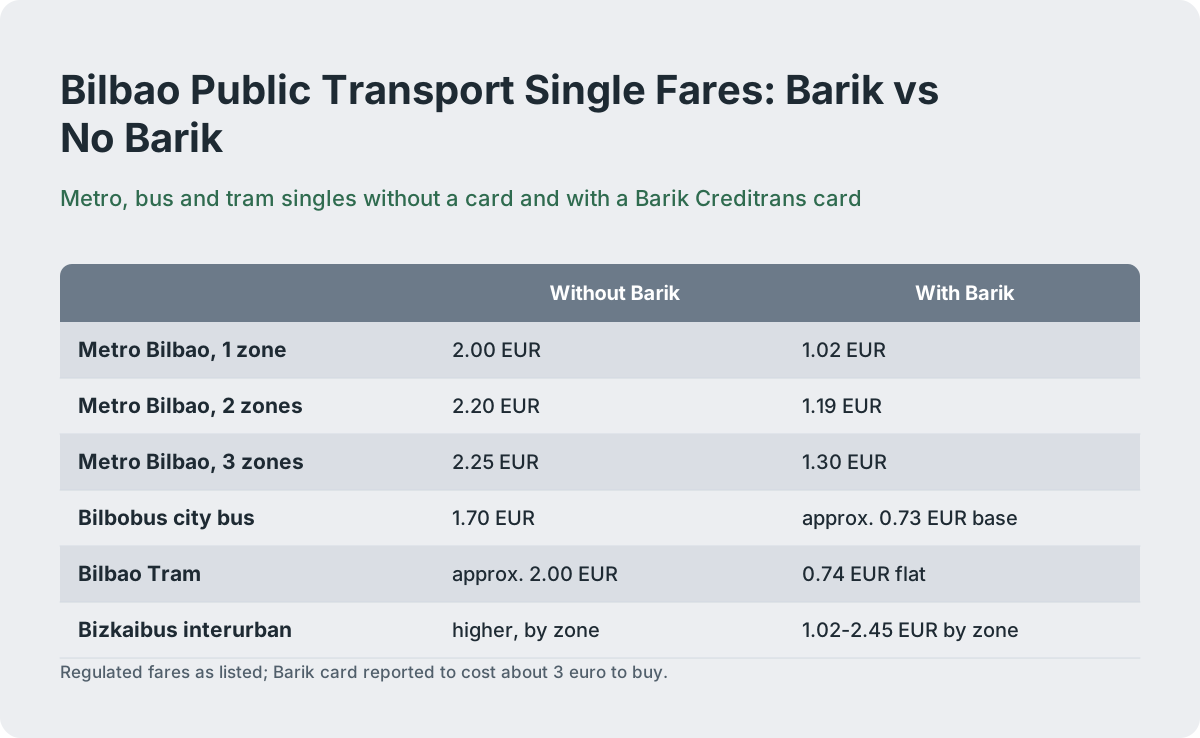
Inside Bilbao the regulated public transport fares are far below any taxi journey: a Metro Bilbao single without a Barik card costs 2.00 euro for one zone, a Bilbobus city bus single costs 1.70 euro, and with a Barik Creditrans card the same metro journey drops to 1.02 euro and the bus to roughly 0.73 euro base, so a taxi only makes financial sense for groups, luggage-heavy moves, or late-night trips when waiting at a rank is unattractive.
Those figures come from CTB's own tariff pages and the Bilbao city fare notices, and they are the numbers that decide most journeys. The full verified fare set for the network is worth having in one place, because the comparison is what turns "should I take a taxi?" into an answer.
| Mode | Single without Barik | With Barik Creditrans | Validity / notes |
|---|---|---|---|
| Metro Bilbao, 1 zone | 2.00 EUR | 1.02 EUR | 2-hour validity on the single |
| Metro Bilbao, 2 zones | 2.20 EUR | 1.19 EUR | Covers cross-city and near-coast trips |
| Metro Bilbao, 3 zones | 2.25 EUR | 1.30 EUR | Longer regional journeys |
| Bilbobus city bus | 1.70 EUR | approx. 0.73 EUR base | Whole urban network |
| Bilbao Tram | approx. 2.00 EUR | 0.74 EUR flat | Euskotren Tranbia |
| Bizkaibus interurban | higher, by zone | 1.02-2.45 EUR by zone | Airport line A3247 fixed at 5 EUR without Barik |
The Barik card itself is commonly reported to cost about 3 euro to buy, non-refundable, though that purchase price comes from secondary sources rather than an official CTB page, so treat it as reported rather than confirmed. Even at that, a couple making four metro trips recovers the card price on the first day.
The taxi case is not zero, though. Bilbao sits on a tidal estuary and its central districts climb quickly: the route from the riverside at Abandoibarra up to the Basilica de Begoña or the shops of the Ensanche can be steep, and with suitcases, with small children, or in the rain that the city's oceanic climate delivers year-round, a taxi earns its fare. The weather table below shows why: this is a city where November averages 147 mm of rain.
| Month | Mean temperature (C) | Mean rainfall (mm) | Taxi-worthiness |
|---|---|---|---|
| January | 9.3 | 120 | High: cold and wet |
| April | 12.6 | 107 | Moderate: showers common |
| July | 20.4 | 50 | Low: dry and warm |
| August | 20.9 | 76 | Low: best walking weather |
| October | 16.4 | 111 | High: autumn rain returns |
| November | 12.4 | 147 | Highest: the wettest month |
Those climate figures are AEMET's official 1981-2010 normals for the Bilbao Aeropuerto/Loiu station (1082), and they describe a temperate oceanic, Atlantic-influenced climate: never Mediterranean, never continental, and wet in every season, with July and August the driest, warmest months. The Bilbao weather guide unpacks the seasonal picture in full.
Where Are The Taxi Ranks And When Do You Actually Need One?
The main Bilbao taxi ranks cluster at Bilbao Airport, the Abando intermodal station, the Termibus bus station, Plaza Moyúa and the Gran Vía in the Ensanche, and around Plaza Arriaga at the edge of the Casco Viejo, and the moments a taxi is genuinely the right tool are airport arrivals, late-night returns, luggage moves between stations and hotels, and rain-soaked evenings when the walking distances of the Old Town lose their charm.
Bilbao's centre is compact enough that the rank map is short. The Ensanche's grid around Moyúa puts a rank within a few blocks of most hotels in Abando, and the Casco Viejo's Siete Calles drain toward Arriaga and the Ribera Market, where cabs wait at the edge of the pedestrian zone because the medieval street plan does not admit them inside it. That last point matters: in the Old Town your taxi journey ends at the district's edge, and the final stretch is on foot regardless.
Late night is the other honest use case. The Bilbao nightlife guide covers where the evening runs latest, and metro and tram services thin out before the bars do, so the rank at Arriaga or a phone-booked taxi closes the gap. During Aste Nagusia in late August, when the city's nine-day festival runs fireworks at 22:30 and street parties well past that, demand at the central ranks spikes hard; the Aste Nagusia festival guide has the 2026 dates of 22-30 August and the practical crowd notes.
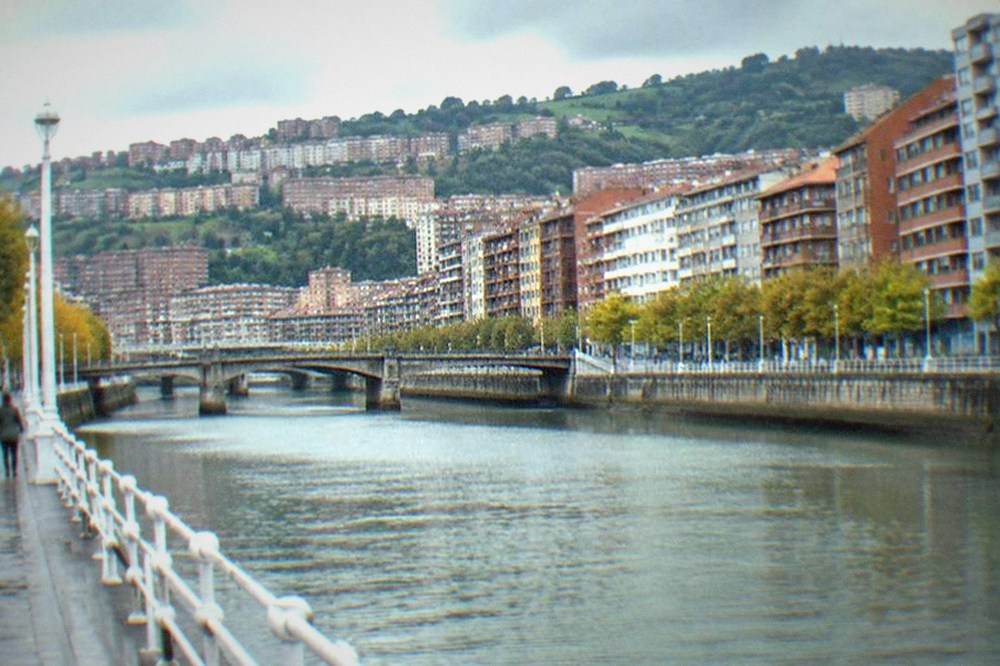
For daytime sightseeing, a taxi between the Guggenheim and, say, the Fine Arts Museum would be paying money to save a walk of minutes along the riverside. The Bilbao museums guide shows how tightly the main museums cluster, and the how many days in Bilbao planning pages assume walking between them. A guided walking tour makes the same point more pleasantly, and the small-group old town walk below is the roster's most popular version.
Do You Tip Taxi Drivers In Bilbao?
Tipping Bilbao taxi drivers is optional and modest: there is no expected percentage, locals typically round the metered fare up to the nearest euro or leave the small change, and nothing more is expected of a visitor, which matches Basque tipping culture generally, where service charges are included in bar and restaurant bills and tipping is a rounding gesture rather than an obligation.
The detail worth knowing is what the meter already includes. Because the tariff is regulated and the airport guidance prices already fold in the tunnel toll, there is no sense that the driver is waiting for a top-up to make the fare whole. A visitor who rounds up on a 13 euro fare to 15 euro has been generous by local standards; a visitor who pays the exact meter amount has done nothing wrong.
The same logic runs through the rest of the city's service economy, and the tipping and money guide covers the full picture, from pintxos bars to restaurant service. If you are heading out on the pintxos crawl after your taxi ride, the same rounding habit applies at the bar counter.
Are Bilbao Taxis Safe, And Are They Accessible?
Bilbao ranks among Spain's safer major cities, its taxis are licensed and metered under municipal regulation, and the city's transport network is strongly accessible, with the metro's stations equipped with elevators and tactile paving, the entire Bilbobus fleet low-floor and wheelchair-adapted, and the Funicular de Artxanda offering step-free access with free travel for a wheelchair user's companion, so visitors with reduced mobility have real alternatives to relying on a taxi.
The safety picture comes from the municipal crime-balance reporting: presential street crimes in Bilbao declined slightly in 2025, thefts dominate the statistics rather than violent crime, and home-burglary rates sit below the average for large Spanish cities. The safety in Bilbao guide carries the fuller breakdown, including the standard urban precautions that apply around the Casco Viejo's crowds and the Guggenheim's forecourt. Licensed taxis sit comfortably inside that picture: the licence, the meter and the vehicle identification are the protections, and a rank pickup late at night is a safer choice than a long walk through unfamiliar streets.
Accessibility is where Bilbao genuinely outperforms expectations. The metro's own accessibility documentation details elevators from street to platform, wide validators, reserved wheelchair spaces in the first and last cars, and audio announcements; the Bilbobus fleet is fully low-floor with ramps and anchored wheelchair spaces; and the Guggenheim itself is fully wheelchair accessible with two dedicated entrances, loaner wheelchairs at the coatroom and adapted restrooms. The accessibility in Bilbao guide covers all of it, including the funicular's step-free carriage and the free companion travel the operator extends to wheelchair users.
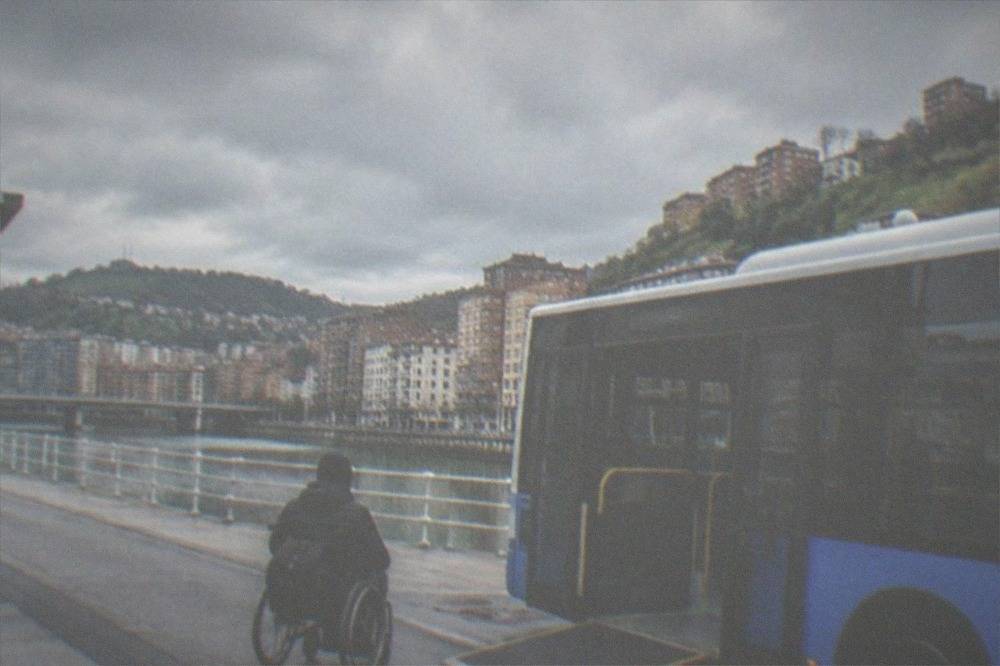
For taxi users specifically, the practical advice is to request an adapted vehicle by phone or app when you need one rather than relying on the next rank car, and to treat the metro as the default accessible option for the journeys it covers, since every station on the network is equipped.
When Is A Taxi Or Rideshare Worth It In Bilbao?
A taxi in Bilbao earns its fare in four situations: the airport transfer at roughly 24-29 euro, late-night returns when metro and tram service has thinned, luggage-heavy moves between the station and your hotel, and wet-weather dashes in a city that averages 1,134 mm of rain a year; for everything else, the metro, bus and tram at 1.02 to 1.30 euro with a Barik card, or plain walking in the compact centre, does the job faster and cheaper.
That is the whole decision framework in one sentence, and it holds for a weekend or a week. The is Bilbao expensive guide puts transport in the context of a full budget, and the short answer there is that getting around is one of the cheapest parts of visiting this city. Even the tourist tax that dominates 2027 planning conversations does not touch transport: the Bizkaia regional tax takes effect on 1 January 2027, with Bilbao's approved rates running from 1 euro per night at pensions to 5 euro at five-star hotels and 6.50 euro for tourist apartments, but visitors in 2026 pay no tourist tax at all.
The one place taxis and rideshares cannot help is the coast. San Juan de Gaztelugatxe, Bermeo, Mundaka and the Urdaibai estuary are beyond any sensible urban taxi ride, and the guided day trips that serve them include the access logistics that a self-drive visitor has to arrange alone. The Gaztelugatxe access tour below is this page's related pick for exactly that reason.
A note on Gaztelugatxe access, since it changes how the day trip works: a free timed reservation is required only on official controlled-access days, roughly mid-June to about 20 September daily plus Easter and holiday weekends per the yearly calendar, with a daily cap of 1,462 visitors on controlled days and booking always free through the official platform. On all other days entry is free without any reservation, and as of the most recent reporting access reverted to free, no-reservation from 21 September 2026 through the end of that month.
Taxi Or Public Transport For Day Trips Around Bilbao?
For the classic day trips out of Bilbao, a taxi is the wrong tool and public transport or a guided tour is the right one: the metro reaches Getxo and the Vizcaya Bridge area in under half an hour, Euskotren and Bizkaibus serve Bermeo, Mundaka and Gernika, and the guided day-trip tours bundle the coastal access, the timings and the stops into one booking, which matters at Gaztelugatxe where controlled-access days require a free timed reservation.
The coastal destinations are the ones visitors most often price up as taxi journeys, and the arithmetic never works: a round-trip cab to the Biscay coast costs multiples of the metro fare to Areeta for the Vizcaya Bridge, where the gondola crossing itself is 0.60 euro one-way and the UNESCO-listed walkway ticket is reported at 11 euro adult round-trip. The Vizcaya Bridge guide and the Gaztelugatxe guide cover both sites in depth.
| Destination | Best transport from Bilbao | Guided alternative |
|---|---|---|
| Getxo and the Vizcaya Bridge | Metro Line 1, under 30 min | Estuary boat cruise option |
| Bermeo and Mundaka | Euskotren or Bizkaibus | Coastal day trips with Gaztelugatxe |
| San Juan de Gaztelugatxe | Guided tour or car plus free timed ticket on controlled days | Access-included guided tours |
| Gernika | Euskotren or Bizkaibus | Combined coast-and-Gernika tours |
| San Sebastián | Intercity bus, about 1h 20m | Full-day guided excursions |
The bus to San Sebastián runs roughly every 30 minutes with multiple daily departures and takes about an hour and twenty minutes, which is why the San Sebastián day trip page treats it as the default. For visitors weighing the two cities against each other, the Bilbao vs San Sebastián comparison covers the trade-offs.
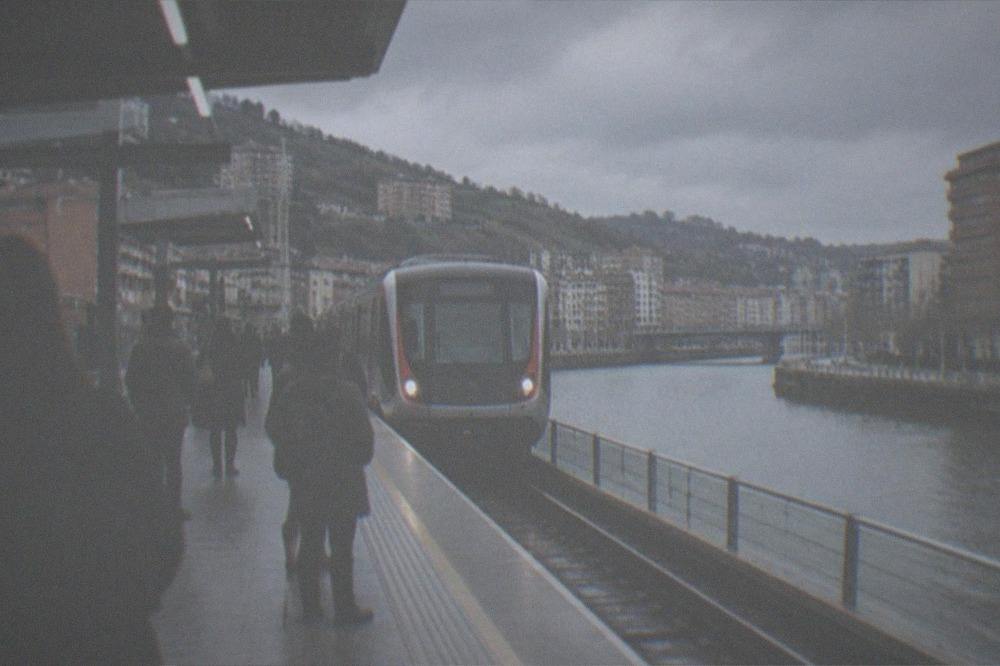
The estuary itself offers a middle option between taxi and metro: the boat tour below runs the Nervión from the city centre, and its Portugalete cruise variant lands you within walking distance of the Vizcaya Bridge, combining the river view with the UNESCO site in one ticket.
Common Questions About Taxis And Uber In Bilbao
Does Uber work in Bilbao?
Uber operates in Bilbao as a booking channel for the city's licensed taxis, not as a separate private-hire fleet. The car that arrives is a regulated white-and-red Bilbao taxi, the driver holds a taxi licence, and the fare follows the official metered tariffs rather than Uber's dynamic pricing. Cabify works on the same basis.
How much is a taxi from Bilbao Airport to the city centre?
Approximately 24 to 29 euro depending on the fare band: Fare 3 for daytime weekdays, Fare 4 for nights, weekends and holidays. There is no airport supplement and the Artxanda tunnel toll is included in the guidance price. The journey takes roughly 10 to 15 minutes.
Is there a cheaper way from Bilbao Airport than a taxi?
Yes. The Bizkaibus A3247 runs every 15 minutes, roughly 06:10 to 23:40 from the airport, takes 15 to 25 minutes and costs 5 euro without a Barik card, less with one. There is no metro or train link to BIO, and the city council's own position is that none arrives before 2035.
Do you tip taxi drivers in Bilbao?
Tipping is optional and modest. Locals typically round the metered fare up to the nearest euro or leave the small change; nothing more is expected, and paying the exact metered amount is entirely normal.
Are taxis in Bilbao safe?
Yes. Bilbao ranks among Spain's safer major cities, with 2025 street-crime figures slightly down and thefts dominating rather than violent crime. Licensed taxis are metered, identified and regulated by the municipality, and rank pickups late at night are a sensible standard practice.
Can a taxi replace public transport for sightseeing in Bilbao?
Rarely. The centre is compact and the metro, bus and tram fares run from 1.02 to 1.30 euro with a Barik card, so taxis only earn their fare for airport transfers, late-night returns, luggage moves and rainy dashes in a city that sees 1,134 mm of rain a year.
The closing thought is the one this page opened with: Bilbao rewards visitors who walk, and the taxi fleet exists for the handful of moments when walking stops being sensible. The airport run at 24 to 29 euro, the late-night rank at Arriaga, the suitcase shuffle to Abando: those are the taxi's territory. Everything else belongs to your feet, the metro at just over a euro with a Barik card, and the estuary that ties the whole city together. For the wider planning picture, start with the first-timers overview and the site's full things to do in Bilbao round-up.