Learning Spanish Or Basque In Bilbao
Bilbao is one of the few European cities where a language student can study Spanish and Basque side by side, in a region that runs its schools, signage and daily life in both.
Short answer
Bilbao, in the Basque Country of northern Spain, offers language schools teaching both Spanish and Basque (Euskara). Spanish is the language most visitors study, but Basque is visible everywhere in the city, and several academies and cultural programmes teach it. This guide compares the two languages, explains school types, costs and daily-life practicalities, and shows how to practise outside class.
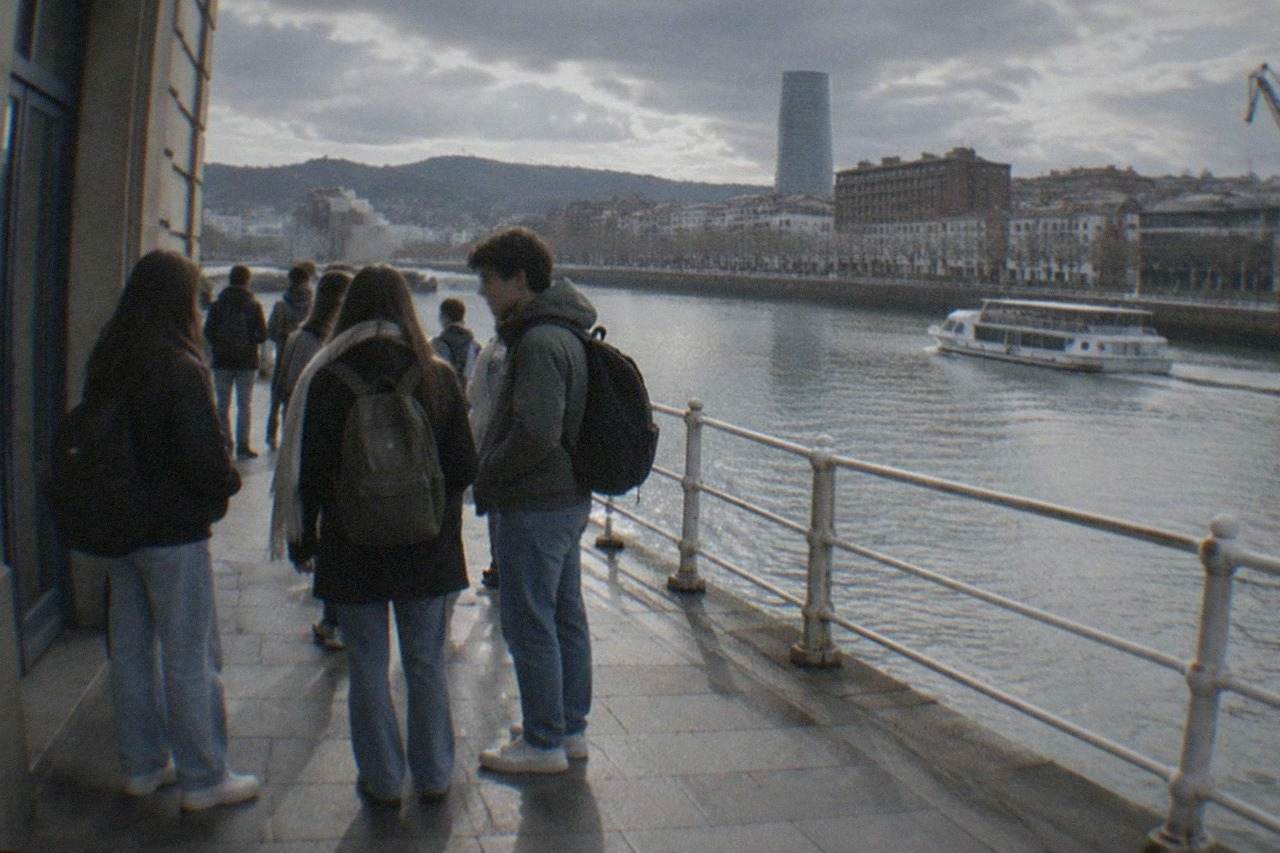
Bilbao, the largest city in Biscay (Bizkaia) province in the Basque Country (Euskadi) of northern Spain, is one of the few mid-sized European cities where two languages share the street on equal legal footing. Spanish is what most international students come to learn, and the city's academies teach it year round. Basque, or Euskara, is the region's own language, co-official with Spanish, and it appears on every metro sign, bus destination and municipal notice. A student who chooses Bilbao over Madrid or Salamanca is choosing a city where the language question itself is part of daily life, on a tidal estuary about 15 km from the Bay of Biscay.
Why Learn A Language In Bilbao, Spain?
Bilbao suits language students because it is a genuinely bilingual city with a compact, walkable centre, affordable public transport, and a cultural calendar dense enough to fill every free afternoon. The city's population of 346,933 (Eustat, 1 January 2025) is large enough to host year-round academies yet small enough that a student is not lost in a capital-sized crowd, and its temperate oceanic climate keeps the streets usable in every season.
The case for Bilbao over the classic Spanish study cities is the second language. In Madrid, Barcelona or Salamanca, a Spanish student sees one language everywhere. In Bilbao, the metro announces stations in Basque first, street names carry Basque spellings, and the municipal government publishes in both. That constant low-level exposure to Euskara is something no southern Spanish city can offer, and it makes Bilbao the natural choice for anyone curious about how a minority European language survives and thrives in a modern city.
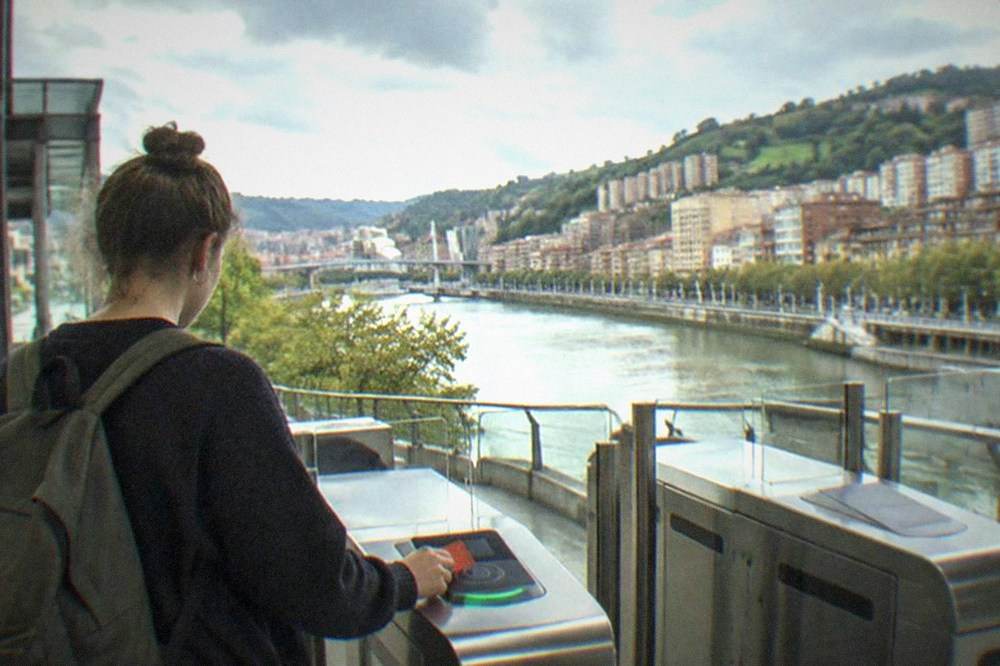
The practical side also favours study here. The city's transport network is integrated under the Barik card, with a Metro Zone 1 fare of EUR1.02 when using the card (the CTB Barik fares page gives EUR1.19 for Zone 2 and EUR1.30 for Zone 3), so commuting between a homestay and a classroom is cheap. The Bilbao Travel Guide covers the city's neighbourhoods in depth, and this page stays focused on the language-student angle.
There is also the calendar. Aste Nagusia, the city's nine-day festival, runs 22-30 August 2026 with the txupin opening at 19:00 in Plaza Arriaga, and the street-theatre festival Bilboko Kalealdia fills the first week of July. A student enrolled through either window gets an immersion experience no classroom can simulate. The Aste Nagusia festival guide details the programme.
Spanish Or Basque: Which Language Should You Learn In Bilbao?
Learn Spanish if your goal is general communication, since nearly everyone in Bilbao speaks it and it is the default language of shops, most pintxos bars and casual conversation; learn Basque if your goal is cultural depth, since Euskara is the region's identity language, spoken actively in the fishing towns and rural Bizkaia around the city, and studying it connects you to a community that rewards the effort visibly. Most long-stay students choose Spanish first and pick up survival Basque alongside it.
The two languages are not dialects of each other. Basque is a language isolate, unrelated to Spanish or any other Indo-European language, with its own grammar, vocabulary and standardised written form. Spanish, by contrast, is one of the world's most spoken languages, and a student who learns it in Bilbao can use it across Spain and Latin America. That asymmetry drives most enrolment decisions.
| Dimension | Spanish (Castellano) | Basque (Euskara) |
|---|---|---|
| Language family | Romance (Indo-European) | Language isolate, no known relatives |
| Where usable in Bilbao | Nearly everywhere | Official settings, signage, some bars and neighbourhoods |
| Where usable beyond Bilbao | All of Spain, Latin America, Equatorial Guinea | Basque Country and diaspora communities |
| Difficulty for English speakers | Moderate, familiar alphabet and structures | High, agglutinative grammar and unfamiliar vocabulary |
| Typical student goal | Work, travel, general fluency | Cultural connection, local integration, research |
| Visibility on the street | Dominant in speech | Dominant on signage and official notices |
The honest middle path is to study Spanish formally while treating Basque as a parallel adventure. The Basque or Spanish primer unpacks the politics and history of the co-official arrangement, and the Basque Country primer gives the wider regional context. A student who understands why both languages matter here will read the city differently from day one.
For practice outside class, the guided walks are the most language-dense hours a student can buy. A small-group walk with a local guide, such as the Small-Group Old Town Walk, is effectively graded listening comprehension with a patient native speaker. Check availability
What Types Of Language Schools Operate In Bilbao?
Bilbao's language-teaching landscape falls into four broad categories: private Spanish academies aimed at international students, Basque-language schools and euskaltegiak serving residents who want to learn or improve Euskara, university-linked programmes, and informal exchange meetups that cost nothing. A visiting student typically enrols in a private Spanish academy for structured classes, then layers on a free exchange group and museum visits for immersion.
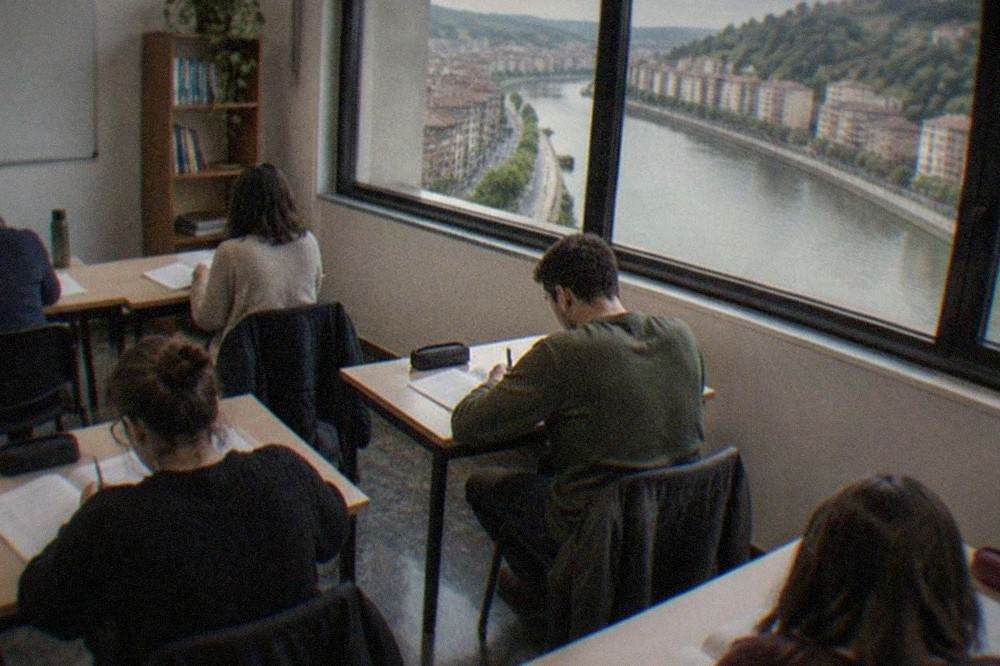
Private Spanish academies run the model most international students expect: small groups, weekly intakes, levels from beginner upward, and cultural activities bolted on. They cluster in the central districts of Abando and the Ensanche, within walking distance of the main accommodation options. Class sizes, hours per week and enrolment terms vary by school, so request the current syllabus and timetable before paying anything, and confirm the cancellation terms in writing.
Euskaltegiak are the distinctive Bilbao institution. These are schools, partly supported by the Basque Government, that teach Euskara to adults, and they exist because the region committed decades ago to normalising the language. Some welcome visiting learners into beginner groups even for short stays, though Basque-taught-through-Basque methods assume motivation. Ask whether the group is taught through Spanish or through Basque before enrolling.
| School type | Who it serves | Typical commitment | Best for |
|---|---|---|---|
| Private Spanish academy | International visitors and residents | Weekly or monthly enrolment | Structured Spanish progress |
| Euskaltegi (Basque adult school) | Residents, some visitors | Term-based, often subsidised | Serious Basque study |
| University language centre | Students and researchers | Semester courses | Academic credit, longer stays |
| Free exchange meetup | Everyone | Drop-in, evenings | Speaking practice, no cost |
The university and cultural-institution layer matters too. The reopened Euskal Museoa, which reopened on 10 June 2026 after a EUR20.3 million renovation adding more than 5,000 square metres of exhibition space, is the single best place in the city to see the material culture behind the language, from prehistory to the modern standardisation movement. The museums guide maps the rest of the institutional landscape.
How Much Does Studying In Bilbao Cost?
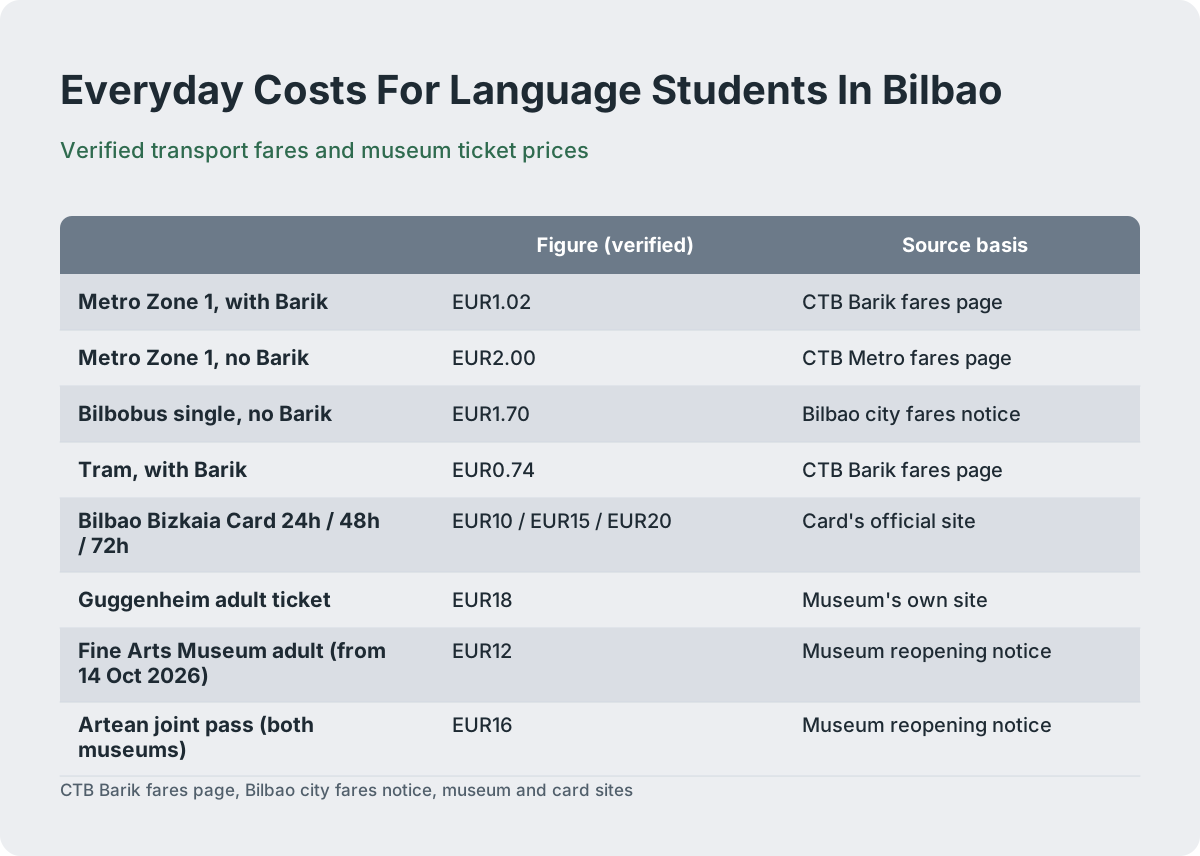
A student in Bilbao faces two cost layers: tuition, which varies by school and must always be confirmed with the academy directly, and daily living, which the verified public figures make predictable: a Barik Metro Zone 1 journey costs EUR1.02, a Bilbobus city bus ride with Barik works out near EUR0.44 after the discount, and the Bilbao Bizkaia Card runs EUR10 for 24 hours or EUR20 for 72 hours. Budget the living layer from those anchors and treat tuition as the one open variable.
The transport math is the easiest to state precisely because the CTB Barik fares page publishes it. Without a Barik card, a Metro single in one zone costs EUR2.00 with two hours of validity; with the card it drops to EUR1.02. The tram is EUR0.74 flat with Barik. A student commuting daily should get a Barik card on day one, and the transport guide explains the whole integrated system.
| Everyday cost | Figure (verified) | Source basis |
|---|---|---|
| Metro Zone 1, with Barik | EUR1.02 | CTB Barik fares page |
| Metro Zone 1, no Barik | EUR2.00 | CTB Metro fares page |
| Bilbobus single, no Barik | EUR1.70 | Bilbao city fares notice |
| Tram, with Barik | EUR0.74 | CTB Barik fares page |
| Bilbao Bizkaia Card 24h / 48h / 72h | EUR10 / EUR15 / EUR20 | Card's official site |
| Guggenheim adult ticket | EUR18 | Museum's own site |
| Fine Arts Museum adult (from 14 Oct 2026) | EUR12 | Museum reopening notice |
| Artean joint pass (both museums) | EUR16 | Museum reopening notice |
Note the museum dates carefully. The Bilbao Fine Arts Museum is closed from 31 August to 5 October 2026 for final renovation works and reopens on 6 October 2026, with a free entry week from 6 to 13 October. A student arriving in September 2026 will find it shut; one arriving in mid-October gets the new building. The Fine Arts Museum guide tracks the reopening.
One cost that does not exist yet: the tourist tax. A Bizkaia-wide regional tourist tax (Norma Foral 3/2026) takes effect on 1 January 2027, with Bilbao's approved municipal rates running from EUR1 per night in pensions up to EUR5 in five-star hotels and EUR6.50 for tourist apartments. Visitors in 2026 pay no tourist tax, and reservations made before early February 2026 are generally exempt even once it starts. A long-stay student budgeting into 2027 should date the tax correctly rather than treat it as a current fee.
Where Do Language Students Live And Hang Out In Bilbao?
Most language students base themselves in Abando, Indautxu or the Casco Viejo, because all three sit on or near the Metro and tram spine that connects the classroom districts, and each offers a different immersion profile: Abando is the commercial heart where standard Spanish dominates, Indautxu mixes students and families, and the Casco Viejo is the densest zone for pintxos bars, evening conversation and Basque street signage. The choice matters more in Bilbao than in most cities because the neighbourhood sets your evening practice hours.
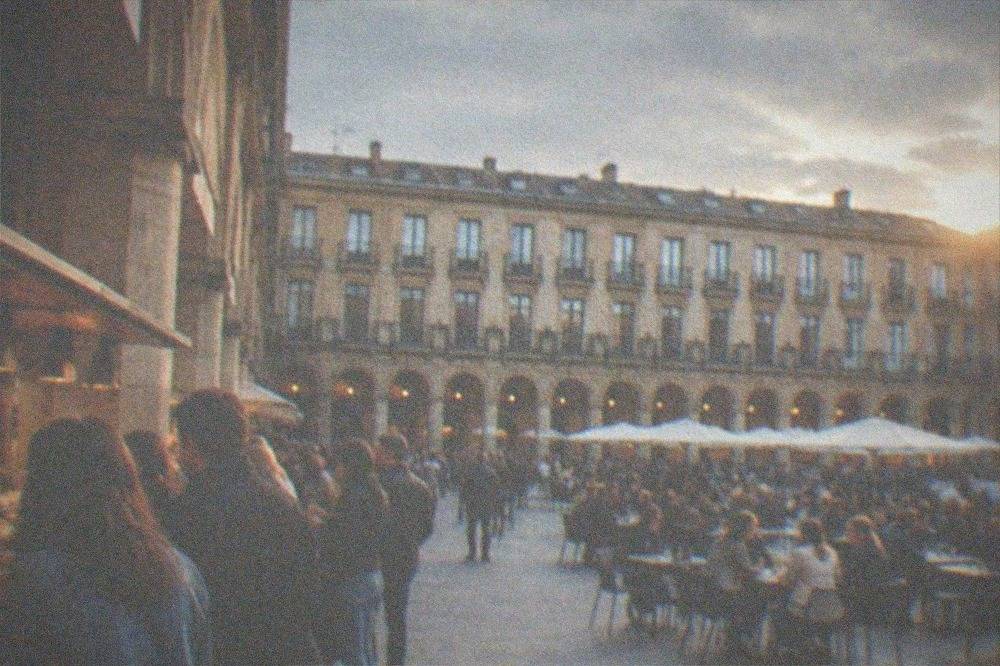
The Casco Viejo, the Old Town of the Seven Streets, is where the txikiteo tradition, moving bar to bar with a small drink and a pintxo in each, turns language practice into a social habit. Bar counters are standing-room conversations, and the pace of a crawl is slow enough for a learner to keep up. The best pintxos guide names the bars worth building a route around.
For accommodation strategy, the where to stay guide compares the districts for every budget, and the cost guide sets expectations for the city overall. A useful rule from the student side: live where you can walk to class, because the Barik savings are real but the walking commute is where the free listening practice happens.
Evening life deserves a language note of its own. The nightlife guide covers the late districts, and the practical point for a learner is that Basque tends to be more audible in neighbourhood bars than in the tourist centre, so a student hunting Euskara conversation should follow locals a few streets off the main drags.
Can You Practise Basque Outside The Classroom In Bilbao?
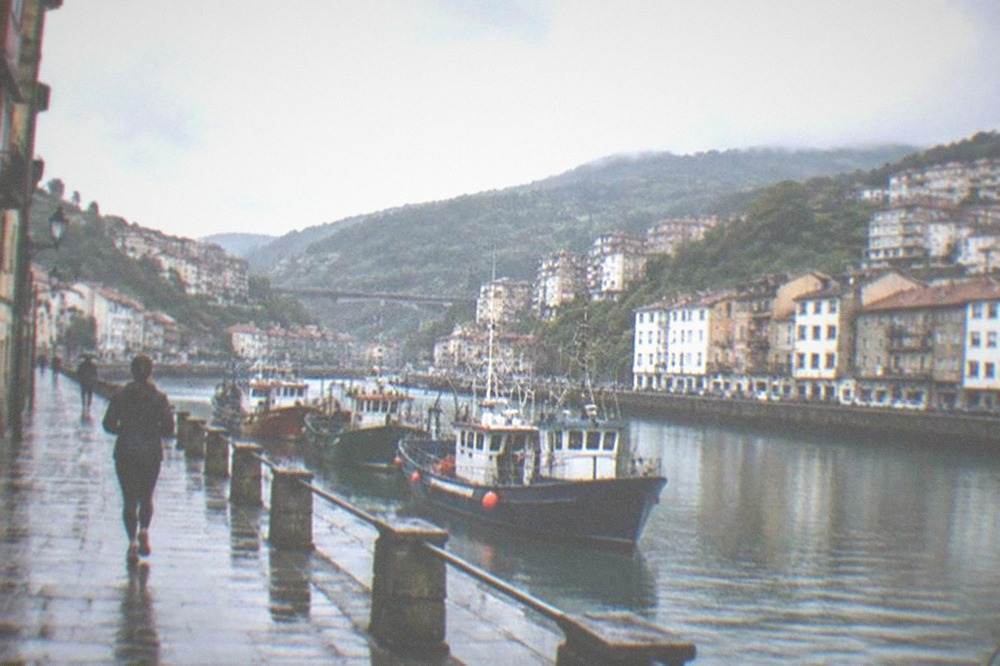
Yes, but with realistic expectations: inside Bilbao most spontaneous conversation happens in Spanish, so out-of-class Basque practice comes from structured settings, museum and cultural programming, and trips to the towns and villages of Bizkaia where Euskara is the first language of daily life, especially along the coast at Bermeo and Mundaka and inland at Gernika, whose history is inseparable from Basque identity. The city gives you the classroom; the province gives you the immersion.
The cultural programming is genuinely strong. The Euskal Museoa's post-renovation galleries present Basque culture and history with new museography across more than 5,000 new square metres, and its initial reopening period included free entry, so check current admission before visiting. The Gernika tree and Basque history guide explains the symbols a language learner will meet in every museum caption.
| Practice setting | Language you will hear | Why it works for a learner |
|---|---|---|
| Pintxos bar counter, Old Town | Mostly Spanish, some Basque | Short, repeated, formulaic exchanges |
| Euskal Museoa galleries | Basque and Spanish captions | Reading practice with context |
| Coastal towns (Bermeo, Mundaka) | Basque-first daily life | Highest-density immersion near the city |
| Gernika and inland Bizkaia | Basque and Spanish | History and language together |
| Rowing regattas and local sport | Basque commentary and crowd | Passionate, repetitive, memorable input |
The sporting calendar is an underrated immersion channel. The rowing regattas guide covers the trainera season, where town rivalries play out with Basque commentary and chants, and the cider txotx season guide describes the winter cellar ritual, a fixed script a learner can memorise and then hear repeated all evening.
For the coast itself, a guided day trip solves the transport problem and adds interpretation. The Gaztelugatxe, Coast Walk trip from the roster is built around the same coastline where Basque is strongest, and the tour's own listing carries the current price and availability.
What Is The Best Time Of Year To Study In Bilbao?
The best study window in Bilbao is June through September, when AEMET's normals for Bilbao Aeropuerto/Loiu (station 1082) show monthly means of 18.4 C in June, 20.4 C in July and 20.9 C in August, with rainfall at its annual low of 50 mm in July, and the city is at its most social; the hardest window is November, the wettest month at 147 mm, though the rain matters less to a student indoors in class than to a tourist on a sightseeing schedule.
The climate is temperate oceanic, Atlantic-influenced, never Mediterranean, and the rain is a year-round feature rather than a seasonal surprise: the annual total is 1,134 mm spread across every month. The weather guide gives the full picture, and the packing guide translates it into a suitcase.
| Month | Mean temp (C) | Precip (mm) | Study-life note |
|---|---|---|---|
| January | 9.3 | 120 | Quiet, cheap, indoor-heavy |
| March | 11.5 | 90 | Spring semester in full swing |
| June | 18.4 | 60 | Kalealdia street festival, 29 Jun-4 Jul 2026 |
| July | 20.4 | 50 | Driest month, peak social calendar |
| August | 20.9 | 76 | Aste Nagusia, 22-30 Aug 2026 |
| September | 19.2 | 73 | Local life resumes, good balance |
| November | 12.4 | 147 | Wettest month, lowest prices |
Two timing traps deserve a flag. First, Aste Nagusia week is the city's most exciting nine days and its least productive for homework: the txosnas, concerts and fireworks run late, and a student mid-course should either embrace it or book around it. Second, the museum calendar shifts: the Fine Arts Museum's October 2026 reopening means a September arrival misses it entirely. The summer itinerary and the off-season itinerary cover both ends of the year in detail.
How To Combine Language Study With Sightseeing In Bilbao
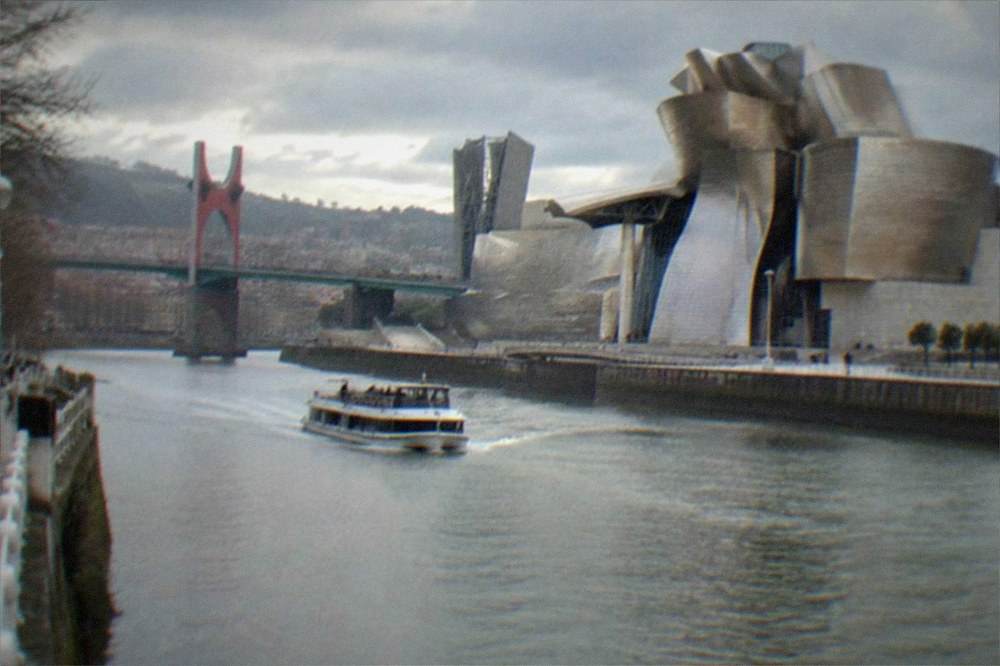
The most efficient study-plus-sightseeing plan treats the city's major sights as graded language input: the Guggenheim (adult EUR18, open Tuesday to Sunday 10:00-19:00, extended to 20:00 from 15 June to 13 September) for Spanish audio guides and wall texts, the Fine Arts Museum (EUR12 from 14 October 2026, or EUR16 as a joint Artean pass with the Guggenheim) for calmer reading practice, and San Mames (self-guided adult EUR15, guided tour EUR22) for the football vocabulary that unlocks half of all Basque bar conversation.
The Guggenheim deserves its own note because its hours shape a student's week. The museum's own site lists Tuesday-Sunday opening with the summer extension, and the specific Monday openings in the summer weeks mean a student can build museum visits into the timetable gaps a school leaves. The Guggenheim guide carries the full current hours and admission detail.
| Sight | Verified figure | Language-learning angle |
|---|---|---|
| Guggenheim Museum Bilbao | EUR18 adult | Audio guide included with every ticket |
| Fine Arts Museum | EUR12 adult from 14 Oct 2026 | Bilingual wall texts, quiet galleries |
| Artean joint pass | EUR16 general | Both museums, one purchase |
| San Mames museum and tour | EUR15 self-guided / EUR22 guided | Football history in four languages |
| Euskal Museoa | Reopened 10 Jun 2026 | The language's own story, told on site |
Weekend travel is where the study stay becomes a regional education. The San Sebastián day trip guide covers the bus connection to the other great Basque city, the Gaztelugatxe guide explains the free timed reservation system for the hermitage (required only on official controlled-access days, with a daily cap of 1,462 visitors on those days, booked free via tiketa.eus), and the Rioja wine day trip guide heads south into wine country where Spanish is unchallenged.
A food tour is the single highest-density listening environment in the roster, because a guide narrates every dish and every bar. The Original Food Tour with Wine Pairings is the strongest fit for a student who wants vocabulary with dinner, and its live listing carries the current price and availability.
For a deeper museum morning, the VIP Guggenheim small-group experience pairs an expert guide with the collection, which is essentially a private lecture in accessible Spanish; the operator's live listing has the current price and times.
Practical Arrival Notes For Language Students Flying Into Bilbao
Students arriving at Bilbao Airport (BIO) should take the Bizkaibus A3247 into the centre: it runs every 15 minutes, roughly 06:10-23:40 from the airport and 05:00-22:00 from the city, takes 15-25 minutes, and costs EUR5 without a Barik card, while a taxi to the centre runs approximately EUR24-29 with no airport supplement. There is no metro or train link to the airport, and the city council's own position is that none arrives before 2035, so plan around the bus.
That airport reality is worth internalising early because it settles the first-day logistics. The airport guide and the airport-to-centre guide cover the same ground in more detail, including the taxi fare bands and where to buy a Barik card on arrival.
The wider regional question, whether Bilbao is the right base at all, has a dedicated answer: the best base in the Basque Country guide compares Bilbao with San Sebastián and Vitoria-Gasteiz for language learners and everyone else, and the Bilbao vs San Sebastián comparison is the head-to-head version. For most students the answer lands on Bilbao for cost and transport, with San Sebastián as a weekend destination rather than a base.
Common Questions About Learning Spanish Or Basque In Bilbao
Can I Learn Basque In Bilbao As A Short-Term Visitor?
Yes, in a limited way. Euskaltegiak and cultural programmes teach Basque to adults, and some accept short-term learners into beginner groups, but term-based enrolment is the norm and many groups teach through Basque rather than Spanish. A short-term visitor is more realistically served by survival-Basque self-study plus immersion in the Basque-speaking coastal towns.
Is Spanish Or Basque More Useful In Bilbao?
Spanish is far more useful for daily communication, since nearly everyone in the city speaks it and most casual conversation happens in it. Basque is the region's identity language and is co-official, but a visitor cannot rely on it for everyday interaction. Most students study Spanish and learn Basque greetings and signage as a cultural layer.
How Many Hours A Week Do Bilbao Language Schools Teach?
Hours vary by school and course type, and no verified universal figure exists, so treat any number a school quotes as that school's own offer. The practical approach is to request the weekly timetable before enrolling and to balance classroom hours against the free immersion hours the city provides, from pintxos bars to guided walks.
Do I Need A Visa To Study Spanish In Bilbao?
Spain is a founding-era Schengen member, so travellers from other Schengen countries face no visa gate for short stays. Non-Schengen visitors, including those from the United States and the United Kingdom, can stay visa-free within the Schengen 90/180-day limit, which covers most short language courses; longer enrolments require checking the current national rules before committing.
Where Can I Hear Basque Spoken Around Bilbao?
Basque is most audible in the province rather than the city centre: the fishing towns of Bermeo and Mundaka, inland Gernika, and local sporting events such as trainera rowing regattas. Inside Bilbao itself, neighbourhood bars away from the tourist drags, the Euskal Museoa's programming and municipal cultural events are the best places to hear it.
Is Bilbao A Good City For Learning Spanish Compared To Madrid Or Salamanca?
Bilbao trades the classic Spanish-study-city experience for something extra: a bilingual environment where Basque surrounds the Spanish, a compact walkable centre, cheap integrated transport with a EUR1.02 Zone 1 Metro fare on Barik, and a strong cultural calendar. A student who wants pure Spanish immersion in the largest possible pool of speakers may prefer Madrid; one who wants a distinctive, affordable, culturally layered city should choose Bilbao.
A final planning note on money and daily practicalities: the currency, tipping and money guide and the SIM card guide close the remaining gaps, and the safety guide confirms what the crime data suggests, that Bilbao ranks among Spain's safer major cities when standard precautions are taken. Choose the school, buy the Barik card, and let the city do the rest.