Basque Cider And Txotx Season
Txotx season is the Basque Country's great winter-to-spring cider ritual, and Bilbao, in Biscay province in northern Spain, is one of the best bases in Europe to take part in it.

Short answer
Txotx season in the Basque Country runs roughly from January to late April each year: cider houses around Bilbao and San Sebastián throw open their barrel doors, and visitors drink natural cider poured straight from the chest-high barrels alongside a fixed traditional menu.
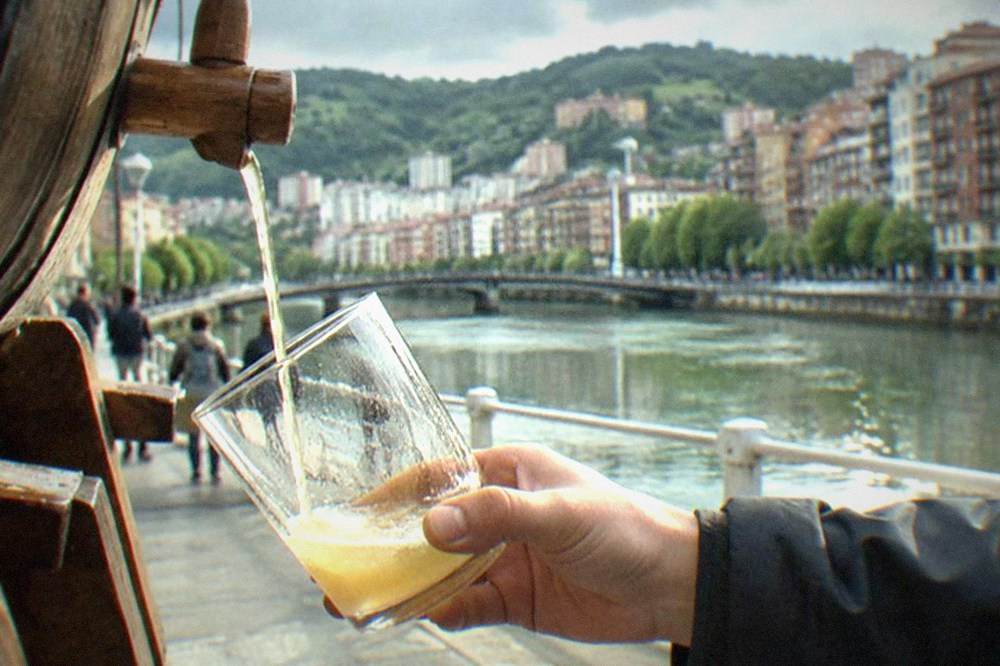
Txotx season is the Basque Country's great communal drinking ritual, and Bilbao, in Biscay (Bizkaia) province in the Basque Country of northern Spain, is one of the best places in Europe to plan a trip around it. From roughly January until the end of April, cider houses called sagardotegiak pull the wooden tap, the txotx, out of their enormous chestnut barrels and invite anyone who has paid for the meal to drink natural, lightly sparkling cider straight from the barrel, catching it in a glass from a metre away while it sprays and froths. It is loud, communal, seasonal and entirely unlike anything on a normal Spanish food-and-drink itinerary, and this Bilbao Travel Guide page explains how it works, when to go, and how to build it into a Bilbao trip.
What Is Txotx Season In Bilbao And The Basque Country?
Txotx season is the winter-to-spring window, roughly January through late April, when Basque cider houses open their barrel rooms and serve an all-inclusive traditional meal with unlimited cider poured directly from the barrels. The word txotx (pronounced roughly "choch") names the wooden peg pulled from the barrel to start the flow, and the same shout announces each new barrel opening. It is a regional ritual rooted in Biscay and Gipuzkoa, the coastal provinces around Bilbao, not a tourist invention.
Basque cider, sagardoa, is a still-or-barely-sparkling apple cider made from native Basque apple varieties, naturally fermented and served cool but not chilled. Unlike the carbonated ciders many people know, it is poured from a height so that it aerates in the glass, which is the entire point of the txotx ritual: the cider hits the glass with a hiss, you drink it fast while the bubbles are alive, and then you go back to the barrel for more whenever you like. Nobody sips sagardoa slowly.
The ritual is genuinely local. Families, work groups, sports clubs and birthday parties fill the barrel rooms, everyone standing around the barrels with their glasses raised, moving between barrel and long wooden tables for each course. It is one of the few European food traditions where the drink is unlimited, self-served and included in a single fixed price for the meal, and where getting up mid-dinner to queue at a barrel is not just allowed but expected. For a fuller picture of the culture behind it, see the Basque Country primer for Bilbao visitors.
When Does Txotx Season Run, And What Is The Weather Like?
Txotx season traditionally opens in January and runs through late April, with the busiest weeks around March and April, when the cider houses fill with local groups and the season winds down before summer. The Basque cider calendar is anchored to the apple harvest and fermentation cycle, so the barrels tapped in January hold cider made the previous autumn. Visitors planning a Bilbao trip around txotx should target January to April, and expect cool, damp, Atlantic weather rather than beach conditions.
The climate matters here more than many would expect. Bilbao sits on a tidal estuary about 15 km from the Bay of Biscay, and its climate is temperate oceanic, Atlantic-influenced, never Mediterranean. AEMET's normals for Bilbao Aeropuerto/Loiu (station 1082, 1981-2010) show exactly the weather a txotx visitor faces month by month: cool and wet in the heart of the season, drying and warming toward its end.
| Month | Mean temperature (C) | Mean rainfall (mm) | Txotx season note |
|---|---|---|---|
| January | 9.3 | 120 | Season opening month, quietest barrels |
| February | 9.7 | 86 | Local groups fill the cider houses |
| March | 11.5 | 90 | Peak txotx month for weekend visits |
| April | 12.6 | 107 | Final month, season closes late April |
| May | 15.7 | 78 | Off-season for txotx, cider by the bottle |
That is the honest weather picture: January averages 9.3 C with 120 mm of rain, and even April, the last month of the season, averages 12.6 C with 107 mm. This is a rain-jacket, wood-smoke, warm-meal kind of experience, which is precisely why it exists in winter. The full detail is in the Bilbao weather guide, and the season's off-peak character is exactly what makes it appealing for anyone following an off-season Bilbao itinerary.
How Does A Txotx Meal At A Basque Cider House Actually Work?
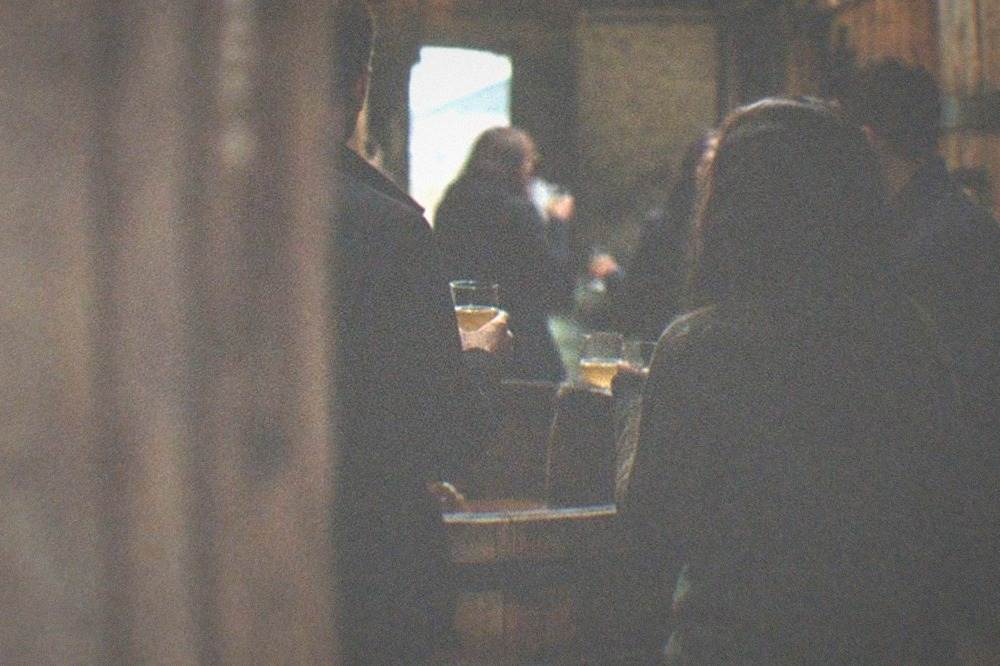
A txotx meal is a fixed-price, fixed-menu, eat-what-everyone-eats affair: you reserve a table, sit at long communal tables, and are brought the traditional courses one by one, with unlimited cider from the barrels included in the price. Between courses, diners stand up, walk to the open barrels, and fill their own glasses. The pace is set by the kitchen, not the customer, and most cider houses expect the whole table to arrive together and eat together.
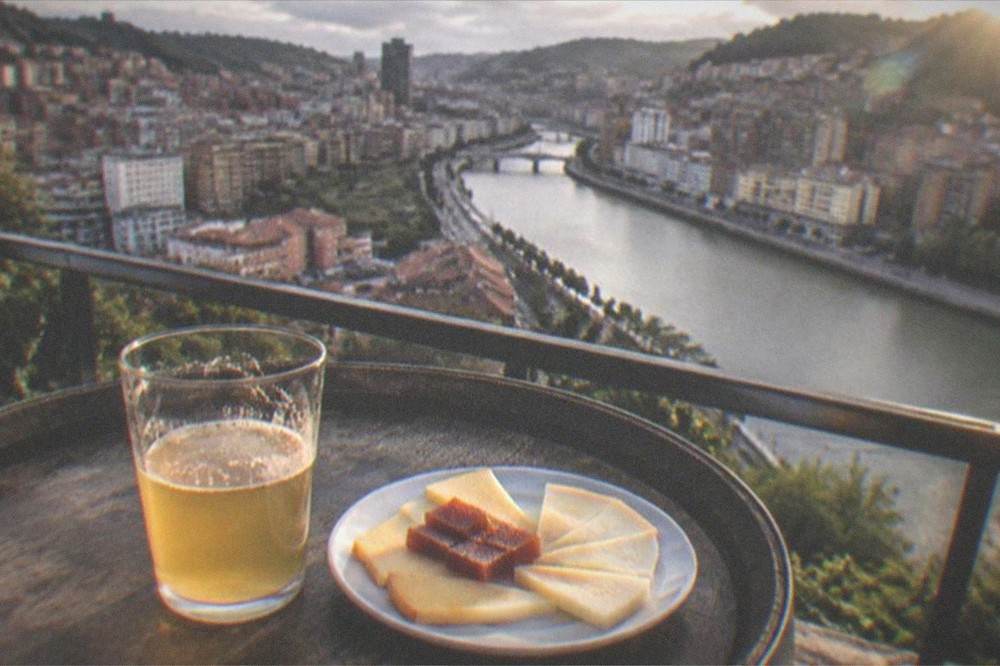
The sequence is standard across the region. The meal opens with bread, and the first hot course is the salt cod omelette, tortilla de bacalao, a thick omelette loaded with shredded salt cod. Next comes fried or roasted salt cod, often bacalao a la vizcaína or cod with red peppers, and then the centrepiece: a thick grilled beef chop, the chuleta, cooked over a wood fire and carved at the table, served rare and enormous. Dessert is simple and fixed too: Idiazabal sheep's cheese with quince paste and walnuts, all local staples, and cider is the only drink on the table from start to finish.
The barrels are the theatre. When the shout of "txotx!" goes up, everyone drifts toward the barrel room, glass in hand. The pourer opens the tap for a few seconds, the cider arcs out, and each diner holds their glass at an angle to catch the spray, taking just a finger or two at a time so it stays aerated. You drink it immediately, return to your table, and repeat whenever you feel like it. Nobody monitors how much you drink; the system works on the assumption that cider this light, drunk this fast, alongside this much food, behaves differently from stronger drinks.
Reservations matter. Weekend tables at well-known sagardotegiak fill with local parties weeks ahead, and many houses only seat complete parties at fixed seatings. Book directly with the cider house, arrive on time, and expect the meal to be a leisurely affair. Vegetarian alternatives exist at some houses but are not universal, so ask when booking rather than on arrival. For travellers who want Basque food culture in Bilbao itself before or after the txotx day, a guided tasting walk is the easiest introduction: the Basque Food and Wine Tasting tour covers the city's pintxos bars and txakoli pours with a local guide, and Check availability on the operator's live listing for current times.
That in-city tasting walk is the natural companion piece to a txotx lunch: one shows the barrel-room ritual out in the countryside, the other shows how the same cider-and-pintxos culture lives in Bilbao's bars the rest of the year. Anyone with room for both in a long weekend gets the full arc of Basque drinking culture, from the rural barrel to the urban counter.
Where Are The Main Cider House Areas Near Bilbao?
The two great cider house concentrations near Bilbao are the hills just east of Bilbao along the Gipuzkoa border, including the Astigarraga area on the outskirts of San Sebastián, and the cider houses of Biscay itself, scattered through the countryside east and southeast of the city toward Gernika and the interior valleys. Astigarraga is the single densest cluster of sagardotegiak in the Basque Country, while Biscay's houses are fewer, quieter and closer to Bilbao for a half-day visit.
Astigarraga, a small town effectively attached to San Sebastián, is the spiritual capital of Basque cider, with dozens of cider houses within a few streets of each other and a cider museum devoted to the drink. From Bilbao it is a straightforward day trip: the region's intercity bus network connects Bilbao with San Sebastián in about an hour and twenty minutes, and from there local buses and taxis cover the short remaining hop to the cider houses. Combining a txotx lunch in Astigarraga with a walk around San Sebastián is the classic one-day version of the experience, and the San Sebastian day trip guide covers how the two cities split a visitor's time.
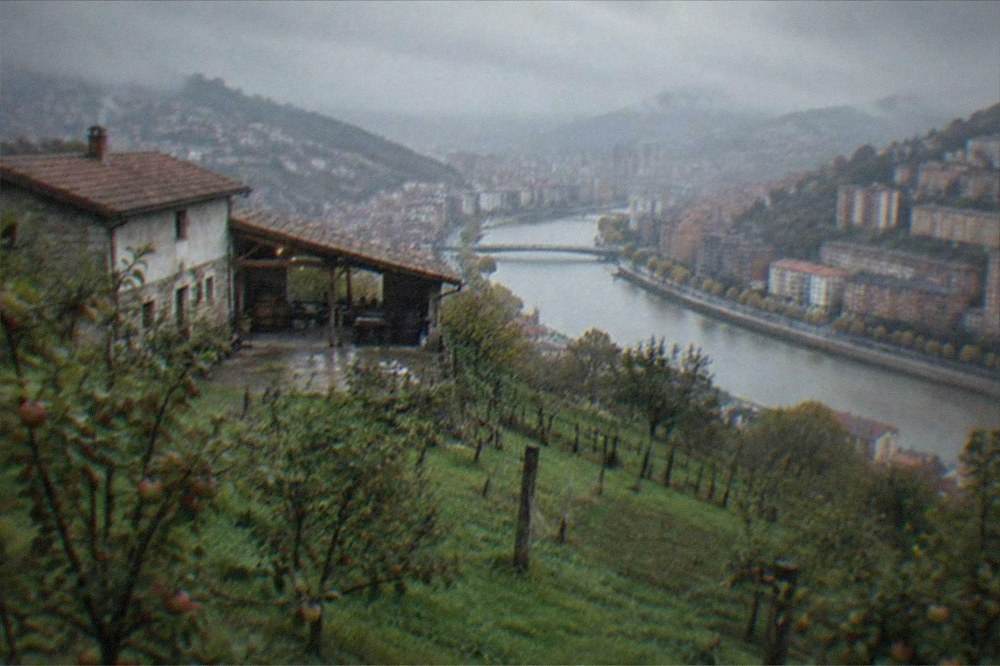
The Biscay option is less famous and often easier from Bilbao. Sagardotegiak in the hills around the province pour the same ritual for predominantly local crowds, and because txotx season sits outside the summer peak, a winter visit pairs naturally with the interior Basque Country: Gernika, with its Assembly House and the oak tree that anchors Basque political history, is a short drive from several cider houses, and the Gernika and Basque history guide explains why the town rewards the stop. A guided day trip is the simplest way to combine coast, history and cider logistics without a rental car; the Dragonstone, Mundaka and Guernica day trip runs the coastal route with lunch included.

What Do You Eat And Drink At A Sagardotegia?
The txotx menu is essentially the same everywhere: salt cod omelette, then salt cod with red peppers, then a wood-fired grilled beef chop, then Idiazabal cheese with quince paste and walnuts, with unlimited natural cider from the barrels throughout. Some houses add a first course of chorizo or blood sausage in cider, and a few offer a fish alternative to the chop, but the bones of the meal are fixed by tradition, and cider houses that improvise wildly are the exception, not the rule.
The dishes are deliberately hearty and salty, built to stand up to a drink that keeps flowing. Salt cod is the historical backbone of Basque home cooking, and its twice-appearance on the txotx menu reflects what preserved the region through its fishing winters. The chuleta, a bone-in beef rib chop, is the course people remember: it arrives still sizzling, carved for the whole table, and the wood fire in the dining room is part of the atmosphere as much as the kitchen. The cheese course closes things with the sharp sheep's cheese of the region, sweetened by quince paste.
| Course | Dish | What it is |
|---|---|---|
| Starter | Tortilla de bacalao | Thick omelette with shredded salt cod |
| First main | Bacalao with red peppers | Salt cod, often in the vizcaína pepper sauce |
| Second main | Chuleta (grilled beef chop) | Wood-fired bone-in rib chop, carved at the table |
| Dessert | Idiazabal cheese with membrillo | Sheep's cheese, quince paste, walnuts |
| Throughout | Sagardoa | Unlimited natural cider poured from the barrels |
Drinking is the other half of the education. Sagardoa is low in alcohol compared with wine, dry, cloudy and appley, and the txotx pour exists because the cider needs aeration to show its brief sparkle in the glass. The etiquette is simple: hold the glass low and angled, catch only a small amount, drink it at the barrel or within a few steps, and never carry a full glass back to the table. Spillage on the floor is part of the design; cider house floors are famously slick by the end of a Saturday night, and sensible visitors wear shoes that can take it.
Visitors who fall for Basque drinking culture in txotx season usually extend it into the pintxos bars back in Bilbao, where cider, txakoli and Rioja all appear by the glass. The best pintxos in Bilbao guide maps the bars worth the crawl, and for a sit-down alternative, the Michelin restaurants of the Basque Country show how far the region's food reputation runs beyond the barrel room.
How Do You Get To The Cider Houses From Bilbao Without A Car?
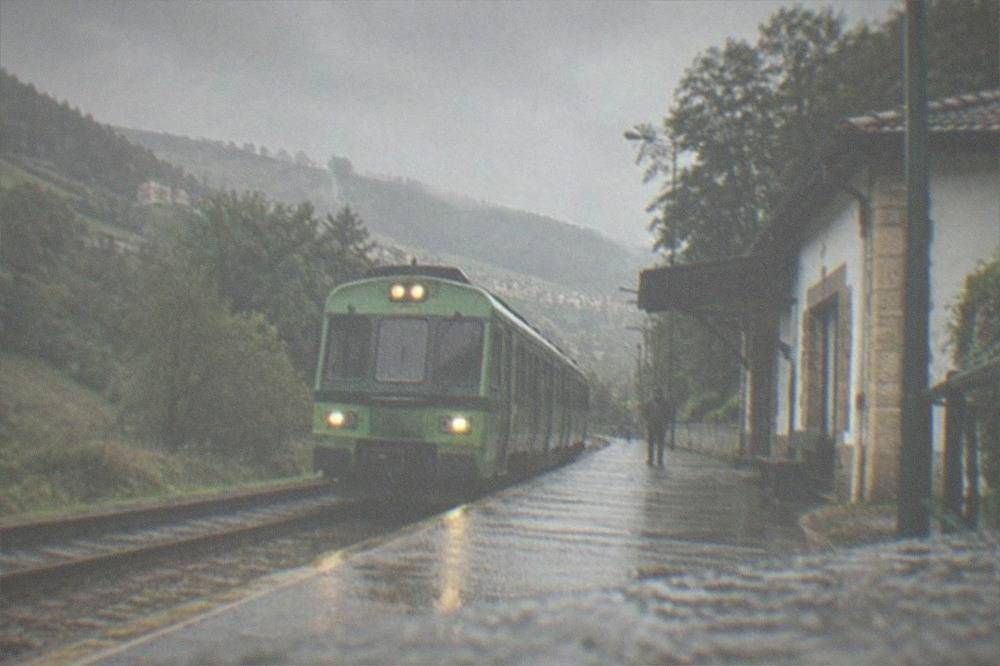
Bilbao is a strong car-free base for txotx because the cider regions hang off the same public transport spine: intercity buses run from Bilbao to San Sebastián in about an hour and twenty minutes for the Astigarraga cluster, Euskotren trains and Bizkaibus services cover the Biscay towns toward Gernika and Bermeo, and the whole network takes the Barik card. A rental car adds flexibility for the countryside houses, but it is not required for the classic txotx day trip.
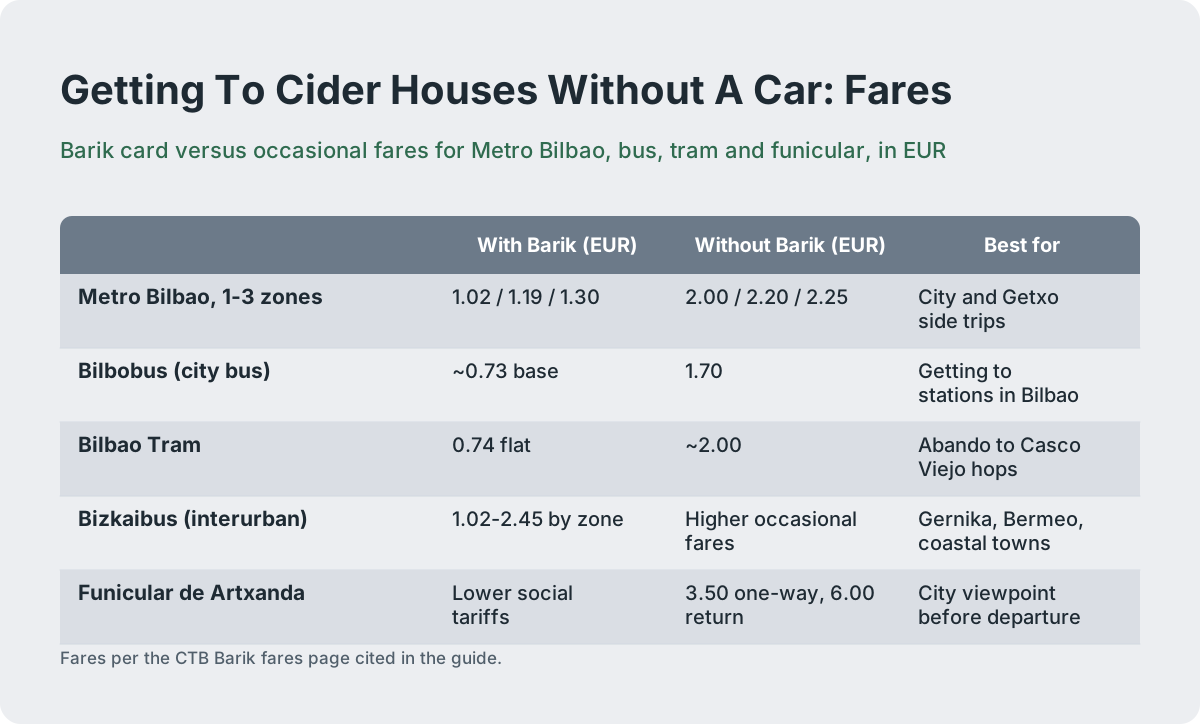
The fare side is straightforward and verified. The CTB Barik fares page gives Metro Bilbao Creditrans fares of EUR1.02 for one zone, EUR1.19 for two zones and EUR1.30 for three zones, with occasional tickets without a Barik card at EUR2.00, EUR2.20 and EUR2.25 respectively. Bilbobus city buses cost EUR1.70 for a single, around EUR0.73 with Barik before discounts. The tram charges EUR0.74 flat with Barik, around EUR2.00 for an occasional single. Bizkaibus interurban fares with Barik run from EUR1.02 to EUR2.45 depending on zones. The Barik card itself is commonly reported to cost EUR3 to buy, non-refundable, though that purchase price is not stated on the official CTB fares page and should be treated as provisional.
| Transport | With Barik (EUR) | Without Barik (EUR) | Best for |
|---|---|---|---|
| Metro Bilbao, 1-3 zones | 1.02 / 1.19 / 1.30 | 2.00 / 2.20 / 2.25 | City and Getxo side trips |
| Bilbobus (city bus) | ~0.73 base | 1.70 | Getting to stations in Bilbao |
| Bilbao Tram | 0.74 flat | ~2.00 | Abando to Casco Viejo hops |
| Bizkaibus (interurban) | 1.02-2.45 by zone | Higher occasional fares | Gernika, Bermeo, coastal towns |
| Funicular de Artxanda | Lower social tariffs | 3.50 one-way, 6.00 return | City viewpoint before departure |
Practically, the plan for a car-free txotx day is either a bus to San Sebastián and a short taxi to Astigarraga, or an Euskotren or Bizkaibus ride into Biscay cider country with a taxi booked for the last rural stretch, since individual sagardotegiak are often a kilometre or more from the nearest stop. The getting around Bilbao transport guide has the full network detail, and the Bilbao Bizkaia Card guide explains when the 24-hour (EUR10), 48-hour (EUR15) and 72-hour (EUR20) tourist card beats a plain Barik card for a visitor's stay. One warning worth repeating: nobody should drive away from a txotx lunch, because the cider is unlimited and the pour is self-served.
How Does Txotx Season Fit Into A Wider Bilbao Trip?
Txotx works best as the anchor of a two-to-four-day winter or spring Bilbao trip: one full day for the cider house, one day for the Guggenheim and the old town, and optionally a third for the coast or the Rioja wine country, which shares the same seasonal logic of eating and drinking indoors while Atlantic weather does its worst. Because txotx season runs January to April, it overlaps with the cheapest hotel weeks of the Bilbao year and with several of the city's calendar highlights.
The city days hold up well in this weather. The Guggenheim Museum Bilbao is open Tuesday to Sunday from 10:00 to 19:00, with hours extended to 20:00 during Easter week, which falls inside txotx season; adult admission is EUR18 and every ticket includes the audio guide, per the museum's own hours-and-admission page. The Bilbao Fine Arts Museum is closed from 31 August to 5 October 2026 for final renovation works and reopens on 6 October 2026 with a free entry week from 6 to 13 October, as reported; from 14 October adult general admission is EUR12, with a joint Artean pass with the Guggenheim at EUR16 general. The Bilbao museums guide tracks the rest.
The calendar around txotx season gives the trip shape. Later in the year, after the barrels close, the verified event dates worth planning around are Aste Nagusia 2026 from 22 to 30 August and BBK Live 2027 on 8 to 10 July at Kobetamendi, with no lineup announced yet. In the txotx months themselves the city is quieter, which is exactly the argument for going.
For travellers weighing the Basque Country against other Spanish regions for a food-focused trip, txotx season is one of the strongest arguments on the region's side, and is the Basque Country worth visiting answers the wider question. Those planning a multi-base trip can compare the options in the best base in the Basque Country guide.
What Should First-Time Visitors Know Before Booking A Txotx Lunch?
First-time txotx visitors should book ahead, arrive hungry, expect a fixed menu with no substitutions, wear shoes that can take a wet floor, and plan not to drive afterwards; the cider is unlimited and self-served, the meal runs two to three hours, and weekend sittings fill with local parties who book early. It is also worth knowing that the experience is family-friendly and intergenerational by local custom, not a late-night drinking event.
A few practical points make the difference between a good visit and a great one. Go at lunch rather than dinner if the schedule allows, because the meal is enormous and the barrel-room atmosphere is at its best in full daylight. Go with a group if you can, since long tables suit parties and the fixed menu rewards shared expectations. Tell the house about dietary needs when reserving, not at the door, because the kitchen plans by table count. And pace the cider the way locals do: small pours, drunk immediately, alongside constant food, which is how the ritual stays festive rather than punishing.
Language is rarely a barrier, but a few Basque words earn goodwill: sagardoa for cider, txotx for the barrel opening, and eskerrik asko for thank you. The Basque or Spanish language guide for Bilbao covers what is actually spoken where, and the Basque language schools guide is there for visitors who catch the bug. For anyone whose txotx trip doubles as a first Bilbao visit, the wider things to do in Bilbao roundup collects the city's essentials in one place.

Common Questions About Basque Cider And Txotx Season
What is txotx season in the Basque Country?
Txotx season is the roughly January-to-late-April window when Basque cider houses open their barrel rooms and serve a fixed traditional meal with unlimited cider poured straight from the barrels. The word txotx names the wooden tap pulled from the barrel to start each pour.
When does txotx season run in Bilbao?
Txotx season runs from about January through late April, with the busiest weekends in March and April. Outside those months the cider houses stay open in many cases, but the barrel-pouring ritual pauses and cider is served by the bottle.
What do you eat at a Basque cider house?
The fixed txotx menu is salt cod omelette, salt cod with red peppers, a wood-fired grilled beef chop carved at the table, and Idiazabal cheese with quince paste and walnuts, with unlimited natural cider from the barrels throughout the meal.
Can you do a txotx cider house visit from Bilbao without a car?
Yes. Intercity buses connect Bilbao with San Sebastián in about an hour and twenty minutes for the Astigarraga cider cluster, and Euskotren trains and Bizkaibus services reach the Biscay towns near the rural cider houses, with a short taxi for the final stretch to individual houses.
Is txotx season suitable for families and non-drinkers?
Yes, by local custom: txotx lunches are family affairs with children present, and the cider houses serve food to non-drinkers on the same fixed menu. Reserving ahead and telling the house about your group's needs is the main requirement.
How long does a txotx meal take?
Plan on two to three hours from seating to cheese course, with guests moving between the long tables and the barrels between courses. Weekend sittings are often booked in fixed seatings, so arriving on time matters.
Txotx season is the Basque Country at its most itself: communal, seasonal, unpolished and generous, and Bilbao is the practical base that makes it easy to reach. Book the barrel room early, take the bus or the train rather than the wheel, arrive hungry, and let the shout of txotx do the rest.