The Ría De Bilbao
The Ría de Bilbao is the tidal Nervión estuary that runs 15 km from the Bay of Biscay through the heart of Bilbao in northern Spain, and a boat tour on it is the single best way to read the city's transformation from industrial port to architectural showcase.
Short answer
The Ría de Bilbao is the tidal Nervión/Ibaizabal estuary flowing through Bilbao, Biscay, in the Basque Country of northern Spain. Boat tours depart from the city centre and pass the Guggenheim Museum, the Euskalduna Palace, the Vizcaya Bridge and the old industrial docks, with short cruises running daily in season.
Bilbao, in Biscay (Bizkaia) province in the Basque Country of northern Spain, grew up around one geographic fact: a tidal estuary. The Ría de Bilbao is the lower reach of the Nervión and Ibaizabal rivers, flowing roughly 15 km from the open Bay of Biscay inland to the city, and for two centuries it carried the iron ore, shipyards and docks that made this the industrial engine of Spain's Atlantic coast. Today the same water carries small cruise boats past the Guggenheim Museum, the Euskalduna Palace and the UNESCO-listed Vizcaya Bridge, and a trip along it is the fastest way to understand how the city changed. This guide from Bilbao Travel Guide covers what the ría is, what you actually see from a boat, what the realistic options and costs are, and how to plan a day around the water.
What Is The Ría De Bilbao And Why Does It Define The City?
The Ría de Bilbao is the tidal estuary of the Nervión and Ibaizabal rivers, running roughly 15 kilometres from the Bay of Biscay through Bilbao in Biscay province, Basque Country, northern Spain. It is genuinely tidal, it is the reason the city exists where it does, and its banks hold almost every landmark visitors come to see, from the Casco Viejo to the Guggenheim Museum.
The estuary is not decorative. Eustat's municipal register puts Bilbao's population at 346,933 as of 1 January 2025, and for most of those people the ría is the city's central axis: the two metro lines, the tram, the main bridges and the Abandoibarra regeneration district all track its course. Upstream, at the tidal limit, sits the old town, the Casco Viejo, founded where a ford and a bridge crossed the water. Downstream, the estuary widens past the former shipyard land that now holds the Guggenheim, then past the Euskalduna Palace and the Zorrozaurre loop, before reaching the ports at the mouth.
The water itself behaves like a slow river with a sea heartbeat. Because the estuary is tidal, the current reverses twice a day, and the water level at the Bilbao reaches visibly rises and falls. That single fact explains a lot of what a visitor notices: the salt smell near the mouth, the mudflats at low water in the outer bends, and the reason the riverside promenades are built high with steps down to the water. It also explains the city's weather, which AEMET's Bilbao Aeropuerto/Loiu station (1082) normals describe as temperate oceanic, never Mediterranean: 1,134 mm of rain a year and an annual mean of 14.7 C, with July and August the warmest, driest months at 20.4 C and 20.9 C mean.
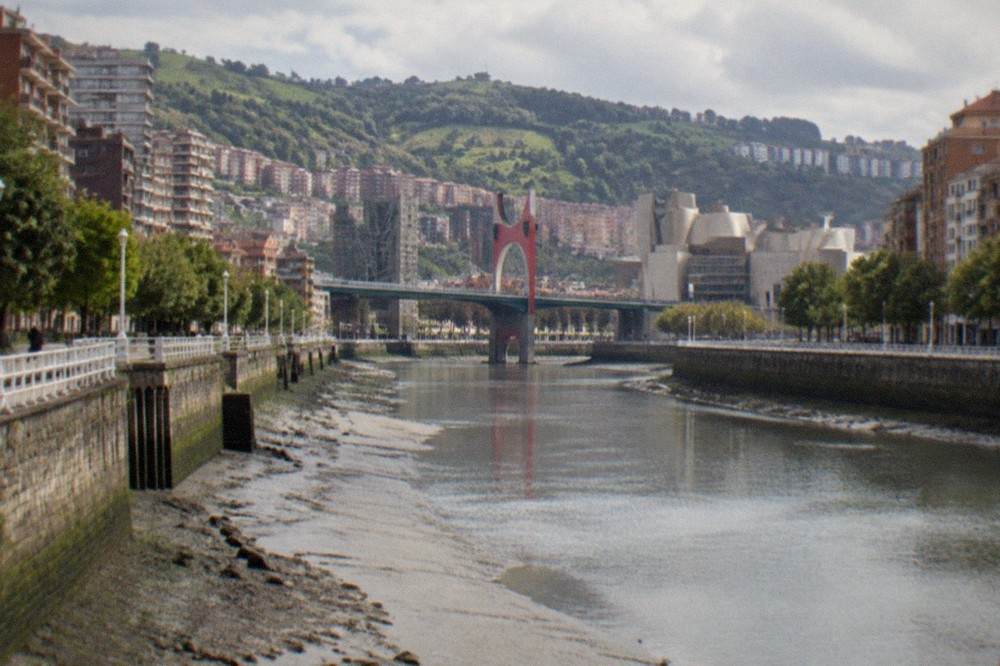
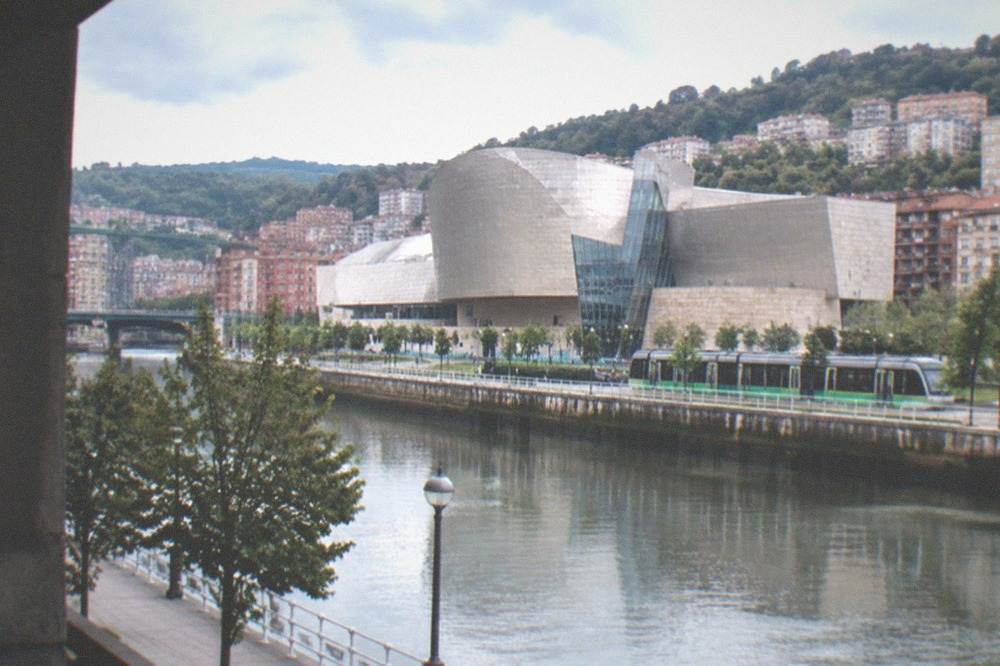
For orientation, think of the ría as one long corridor with three personalities. The upper reach, from the old town's cathedral down to the Zubizuri and the Puente de la Salve, is historic Bilbao: narrow quays, the Mercado de la Ribera right on the water, the Arriaga theatre and the city hall facing each other across the channel. The middle reach, Abandoibarra, is the regenerated Bilbao of the modern era: the Guggenheim, the Euskalduna, the tram line and Doña Casilda park a short walk inland. The lower reach, from Zorrozaure outward to Getxo and Portugalete, is working water: container terminals, dry docks and, at the very end, the Vizcaya Bridge.
What Landmarks Can You See From The Water On A Bilbao Boat Tour?
A Bilbao estuary cruise passes, in order, the Mercado de la Ribera and the Arriaga theatre, the Zubizuri and La Salve bridges, the Guggenheim Museum Bilbao, the Euskalduna Conference Centre, the Zorrozaure peninsula, the outer port installations, and, on the longer cruise option, the UNESCO-listed Vizcaya Bridge at Portugalete, the world's first transporter bridge still carrying passengers today.
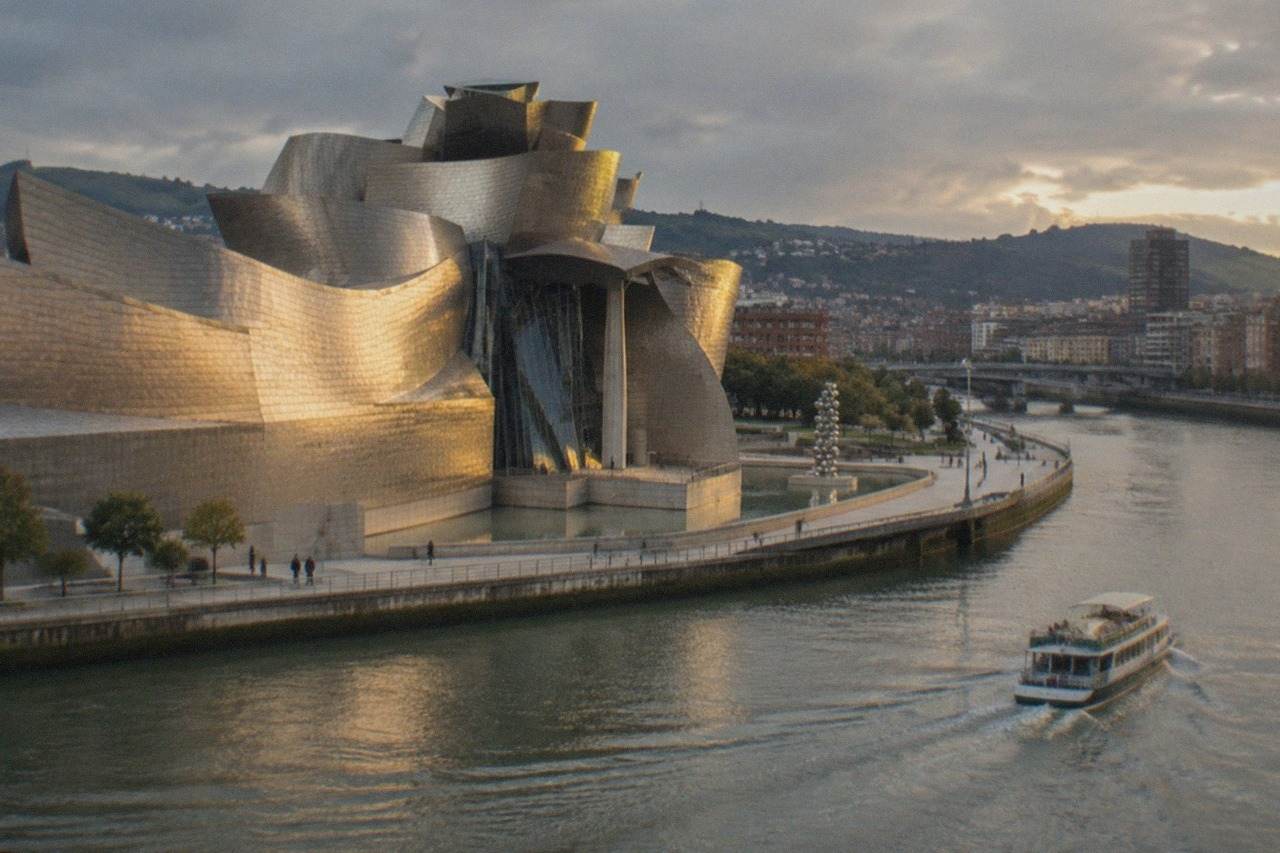
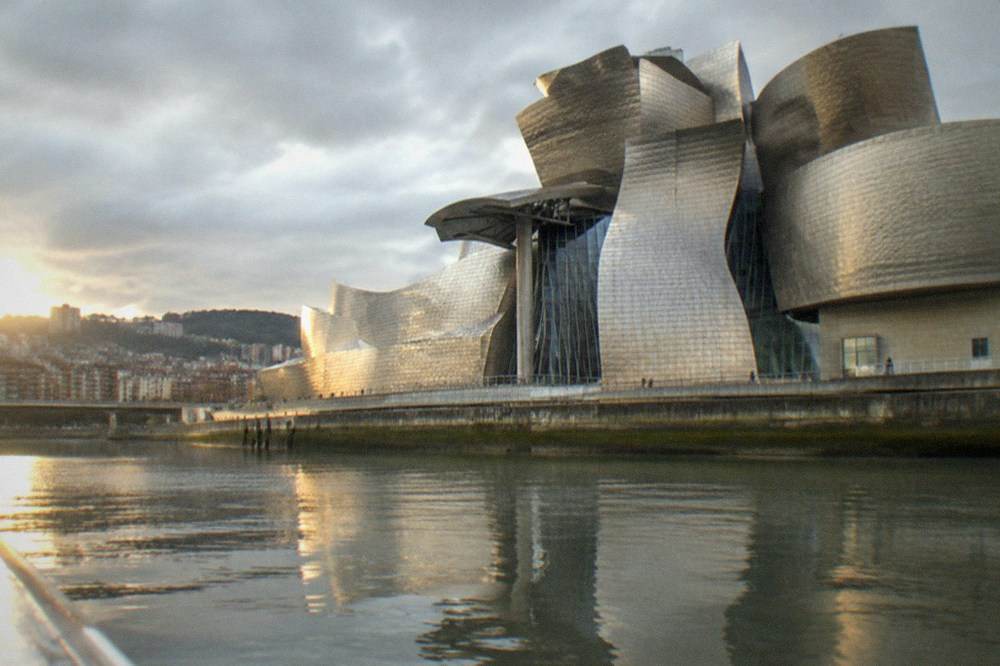
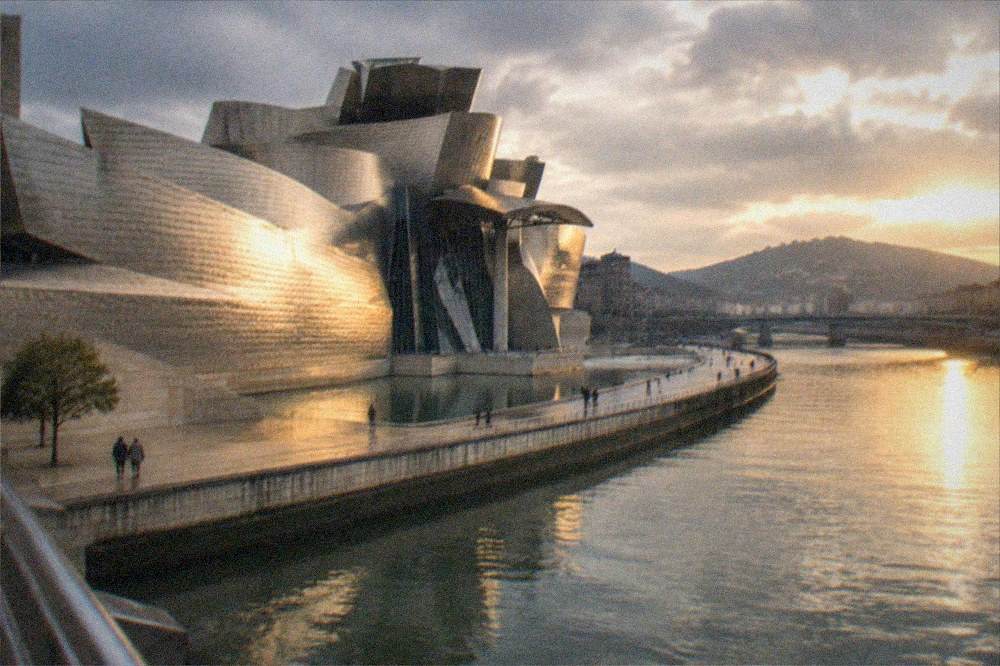
The middle stretch is the postcard section. The Guggenheim Museum Bilbao sits directly on the north bank at Abandoibarra, and the museum's own site lists its hours as Tuesday to Sunday 10:00 to 19:00, extended to 20:00 during Easter week and again from 15 June to 13 September, with adult admission at 18 EUR. From the water you get the one view of the building no street-level walker gets: the full titanium sweep from upstream, with the Salve Bridge carrying the red arch of its extension directly over the museum's flank. Jeff Koons' Puppy guards the approach on land; from a boat the eye goes instead to the building's reflection, which on a calm day doubles the whole volume.
Just downstream, the Euskalduna Palace marks the boundary between the new Bilbao and the old one. The conference centre stands on the footprint of the Euskalduna shipyard, and its rust-toned plates were designed as a deliberate echo of the hulls built there. This is the stretch where the boat tour becomes a history lesson without a single plaque: the estuary's banks alternate between contemporary architecture and the surviving bones of the port that paid for it.
On the cruise option to Portugalete, the landscape changes character completely. The city thins out, the channel widens, and the banks fill with dry docks, cranes and container stacks before the boat reaches the Vizcaya Bridge (Puente Colgante) between Getxo and Portugalete. The bridge is a UNESCO World Heritage Site, inscribed in 2006, and it holds two distinctions worth knowing before you go: it was the first industrial heritage site in Spain placed on the list, and its gondola has carried pedestrians and vehicles across the estuary since the bridge first opened. The gondola fare for pedestrians is 0.60 EUR one-way in regular daytime hours, and the operator's site also lists a walkway ticket at 11 EUR adult round-trip, with 9 EUR reduced for those 65 and over and students, under-5s free, and an audio guide for 3 EUR more; the walkway figure is a single-source claim, so treat it as reported rather than guaranteed.
Here is what the main riverside landmarks give you, in sailing order, with the figures that matter at each stop:
| Landmark on the estuary | Bank | What the pack verifies | Entry cost |
|---|---|---|---|
| Mercado de la Ribera | Right (old town) | Riverside market hall at the head of the tidal reach | Free to enter |
| Teatro Arriaga | Right | Opera house facing the quays beside the estuary | Tours vary; check the box office |
| Zubizuri Bridge | Centre | Calatrava footbridge linking the old town to Abandoibarra | Free to cross |
| Guggenheim Museum Bilbao | Left at Abandoibarra | Tue-Sun 10:00-19:00, to 20:00 Easter week and 15 Jun-13 Sep | 18 EUR adult |
| Euskalduna Palace | Left | Conference centre on the former Euskalduna shipyard site | Free to view outside |
| Vizcaya Bridge | Mouth, Getxo-Portugalete | UNESCO site since 2006, first industrial heritage site in Spain | Gondola 0.60 EUR one-way daytime |
Two practical notes about sightseeing from the water. First, the tide changes the picture: at low water the industrial archaeology of the lower banks, slipways, mooring rings and mud, is exposed, while high tide gives the cleanest reflections in the middle reach. Second, the light matters more here than in most Spanish cities because the estuary runs roughly east-west in its middle section, so late afternoon boats get the sun behind the Guggenheim and the Euskalduna, which is why many photographers book the last departure of the day.
Which Bilbao Boat Tour Option Fits Your Plans?
The main estuary product is a combined ticket offering either a one-hour city loop through the central reach or a longer cruise down to Portugalete and the Vizcaya Bridge, departing from the Bilbao city centre, and the right choice depends on one question: whether the UNESCO bridge is a must-see or a bonus. The one-hour loop covers the Guggenheim stretch; the longer cruise covers everything plus the lower estuary.
The short option suits visitors with half a day in Bilbao, cruise passengers on a tight schedule, or anyone who mainly wants the postcard angle on the Guggenheim and the Salve Bridge. The longer option suits anyone who wants the full story: the working port, the tidal lower reach, and a look at the Vizcaya Bridge from the water, which is the view its original designers had in mind. Both run from the same central departure point, and both are covered in detail on our ría de Bilbao boat tour page, where the operator's live listing carries the current price, rating and departure times.
If the estuary cruise is your anchor activity, build the day around the tide and the departure board rather than fighting them. A pattern that works well: a morning walk through the Casco Viejo, lunch at the Mercado de la Ribera, then the two-hour cruise in the afternoon, which lands you near Portugalete with time to cross the Vizcaya Bridge by gondola before heading back by metro. The Metro Bilbao connects the mouth of the estuary to the centre, so the boat out, metro back combination is the standard move and saves retracing the same water twice.
Beyond the boat itself, the estuary pairs naturally with three kinds of follow-on. A guided walk makes sense because the ría's stories are mostly on land: the shipyard history, the Plaza Nueva pintxos culture and the Siete Calles all sit within a few hundred metres of the water. A food tour makes sense because the market and the old town bars sit on the upper quays. And a coastal day trip makes sense because the estuary is, in the end, the first 15 km of a coastline that continues to Gaztelugatxe, Bermeo and Mundaka; the things to do in Bilbao roundup collects the full range of options.
How Does The Tidal Estuary Shape Bilbao's Weather And Light?
The estuary is the channel through which the Atlantic moderates Bilbao's climate, giving the city a temperate oceanic regime, not a Mediterranean one: AEMET's 1981-2010 normals for Bilbao Aeropuerto/Loiu (station 1082) show monthly means from 9.3 C in January to 20.9 C in August, an annual mean of 14.7 C, and 1,134 mm of rain spread across every month of the year.
What that means for a boat day is simple: the warmest, driest window is July and August, with means of 20.4 C and 20.9 C and 50 mm and 76 mm of rain respectively, while November is the wettest month at 147 mm and the deep winter months sit near 9-10 C with 120-122 mm each. June and September are the quiet-weather sweet spots, at 18.4 C and 19.2 C with 60 mm and 73 mm of rain. AEMET's normals show no month with zero rain, which is why every local boat operator runs covered vessels and why the riverside promenades are built for walking in drizzle as much as sunshine.
| Month | Mean temperature (C) | Mean precipitation (mm) | Boat-day verdict |
|---|---|---|---|
| January | 9.3 | 120 | Cold, damp; short cruises fine |
| March | 11.5 | 90 | Changeable; fewer crowds |
| May | 15.7 | 78 | Pleasant, green banks |
| July | 20.4 | 50 | Best all-round month |
| August | 20.9 | 76 | Warmest; busiest departures |
| September | 19.2 | 73 | Warm water, softer light |
| November | 12.4 | 147 | Wettest; indoor backups needed |
The estuary also does things to the light that photographers should plan around. Because the middle reach runs roughly westward, morning boats face upstream glare while afternoon boats get warm side-light on the north bank, where the Guggenheim and Euskalduna stand. After rain, the estuary's surface calms quickly inside the city because the quays shelter it, and that is when the museum's reflection photographs best. Fog is a genuine winter feature here, an Atlantic-valley effect rather than a rarity, and while it can soften a cruise into something atmospheric, it can also close the lower reach to small craft; on winter mornings it is worth checking the operator's status before walking to the pier.
What Does It Cost To Explore The Ría And Its Banks In Bilbao?
The estuary itself is free to walk along its entire urban length, the boat cruise prices render from the operator's live listing rather than any fixed published figure, the Vizcaya Bridge gondola costs 0.60 EUR one-way in daytime, the Artxanda funicular is reported at 3.50 EUR one-way and 6.00 EUR round-trip, and the Bilbao Bizkaia Card runs 10 EUR for 24 hours, 15 EUR for 48 hours and 20 EUR for 72 hours including unlimited transport.
The Bilbao Bizkaia Card site states those three tiers plainly, and the card is a genuinely good fit for an estuary day because the transport it unlocks is exactly the transport that follows the water: the metro along the lower reach to Getxo and Portugalete, the tram through Abandoibarra, and the funiculars up the valley walls. The card is personal and non-transferable, activates on first use, and also carries attraction discounts, which is why it appears in our full Bilbao Bizkaia Card breakdown.
For the individual pieces, the CTB Barik fares page gives the underlying numbers: Metro Zone 1 costs 1.02 EUR with a Barik card and 2.00 EUR without, Zone 2 is 1.19 EUR with Barik and 2.20 EUR without, and the tram is 0.74 EUR flat with Barik. The Barik card itself is commonly reported to cost 3 EUR to buy, but that figure comes from a secondary source rather than an official CTB page, so treat it as provisional. The funicular fares of 3.50 EUR one-way and 6.00 EUR round-trip are likewise single-source as reported, with lower social and Barik tariffs and under-6s free.
| Estuary-linked activity | Verified cost | Source basis |
|---|---|---|
| Walking the riverside promenades | Free | City layout |
| Metro Zone 1 (Barik / no Barik) | 1.02 EUR / 2.00 EUR | CTB Barik fares page |
| Metro Zone 2 (Barik / no Barik) | 1.19 EUR / 2.20 EUR | CTB Barik fares page |
| Tram, flat with Barik | 0.74 EUR | CTB Barik fares page |
| Vizcaya Bridge gondola, one-way daytime | 0.60 EUR | Operator listing |
| Artxanda funicular, one-way / round-trip | 3.50 EUR / 6.00 EUR | Single-source, as reported |
| Bilbao Bizkaia Card 24h / 48h / 72h | 10 / 15 / 20 EUR | Card site |
| Guggenheim adult admission | 18 EUR | Museum's own site |
One dated planning note that affects budgets for 2027 trips: Bilbao and the wider Bizkaia territory have approved a regional tourist tax under Norma Foral 3/2026 that takes effect on 1 January 2027, with Bilbao's municipal rates running from 1 EUR per night at pensions to 5 EUR at five-star hotels and 6.50 EUR for tourist apartments. Visitors travelling in 2026 pay no tourist tax at all; reservations made before early February 2026 are generally exempt even for later stays. This is reported and dated from the September 2026 municipal approval, not a fee in force today.
How Do You Get To The Bilbao Boat Departure Points?
The estuary cruise departs from the Bilbao city centre beside the Abandoibarra reach, a short walk from the tram and the Moyua area, and the whole riverside network is reachable by the tram along the north bank, Metro Bilbao under both banks, and the Bizkaibus A3247 airport line which runs every 15 minutes from Bilbao Airport for 5 EUR without a Barik card, with the 15-25 minute journey dropping passengers close to the Gran Vía.
The airport connection matters because visitors arrive through Bilbao Airport (BIO) and the A3247 is the only direct public transport: there is no metro or rail link to the airport, and the city council's own position is that none arrives before 2035. A taxi to the centre runs approximately 24-29 EUR by day/night fare bands with no airport supplement and the Artxanda tunnel toll included. Both options land you within a ten-minute walk of the central quays.
Inside the city, the tram is the estuary's own transit line: it shadows the north bank from the Azkuna Zentroa area through Abandoibarra past the Guggenheim and Euskalduna, which makes it the natural companion to any boat departure. The metro's Line 1 and Line 2 follow the lower estuary out toward Getxo and Portugalete, which is the return leg after a two-hour cruise. Our getting around Bilbao transport guide carries the full fare and route detail.
Accessibility along the water is better than many people assume. The Guggenheim's own accessibility page describes full wheelchair access with two dedicated entrances, loaner wheelchairs and step-free routes through the building, and the municipal transport network is documented as fully accessible: the entire Bilbobus fleet is low-floor with ramps, and Metro Bilbao's stations carry elevators from street to platform with reserved spaces on trains. The riverside promenades themselves are largely step-free in the middle reach, though the old town quays have cobbled sections and stepped access at several points, so wheelchair users planning a full riverside walk should favour the Abandoibarra bank.
What Else Should You Plan Around The Ría De Bilbao?
The estuary works best as the spine of a one- or two-day plan: pair the cruise with the Guggenheim on the Abandoibarra bank, the Mercado de la Ribera and Plaza Nueva in the old town, the Artxanda funicular for the aerial view of the whole waterway, and, with more time, a coastal day trip to Gaztelugatxe or the French Basque coast, all of which sit on or beyond the same estuary system.
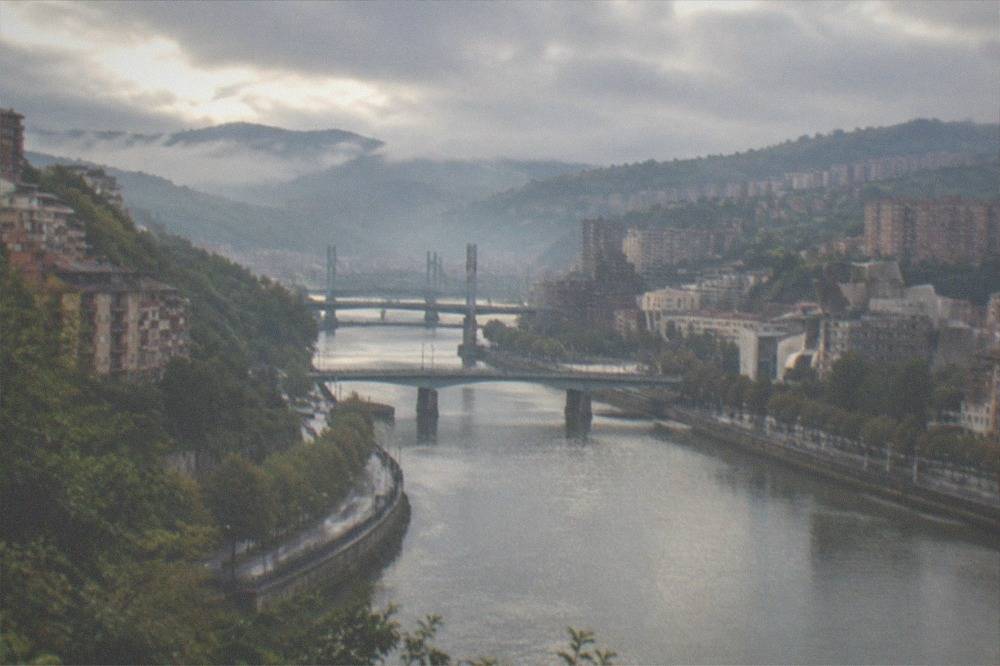
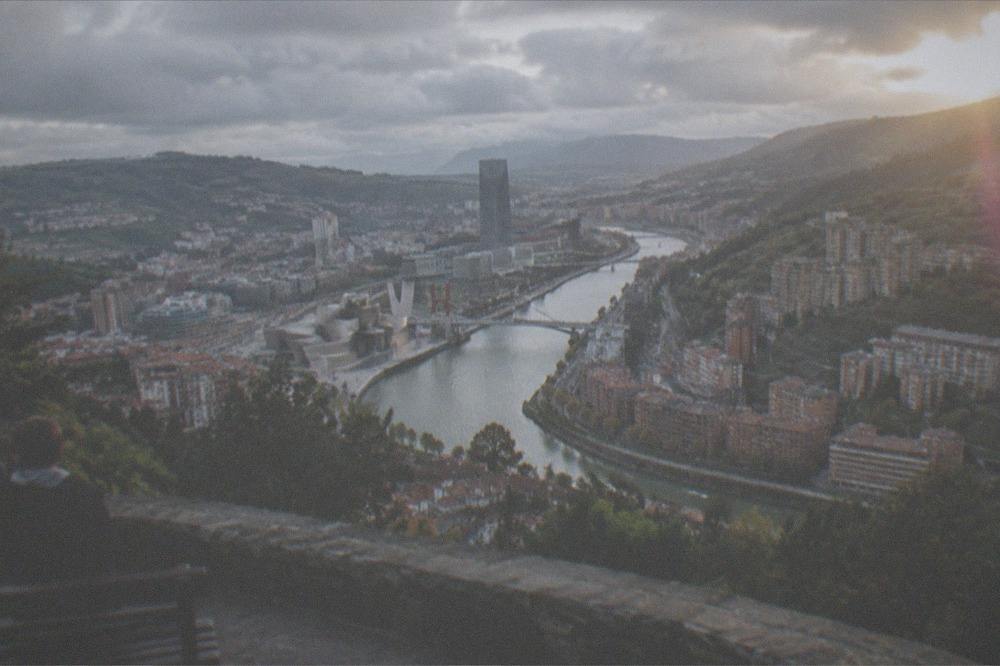
The aerial view is the one that shouldn't be skipped. The Artxanda funicular climbs the north valley wall to a viewpoint where the entire middle estuary reads at a glance: the Guggenheim, the Salve Bridge, the Zorrozaure loop and the port beyond. The funicular is reported to run every 10 minutes at peak times with a roughly 3-minute ride, and the upper station has lift access to street level, with a companion of a wheelchair user travelling free.
Museum pairing depends on your dates. The Bilbao Fine Arts Museum is closed from 31 August to 5 October 2026 for the final phase of its renovation and is reported to reopen on 6 October 2026 with a free entry week from 6 to 13 October, then adult admission of 12 EUR from 14 October and a joint Artean pass with the Guggenheim at 16 EUR general; that reopening schedule is a single-source claim, so verify before travelling in that window. The San Mamés stadium sits a short walk north of the estuary's middle reach and its museum runs self-guided visits at 15 EUR adult with guided tour-plus-museum visits at 22 EUR adult, per the club's own practical-information page.
For the coastal extension, the estuary literally continues into the destinations that make the best day trips. Gaztelugatxe, the hermitage on its tidal islet, requires a free timed reservation only on official controlled-access days, roughly mid-June to about 20 September daily plus Easter and holiday weekends, with a daily cap of 1,462 visitors on those days and booking always free through the official platform for up to 10 people per reservation; on all other days access is free without any ticket. Our Gaztelugatxe guide covers the calendar in detail.
If your estuary day leaves you wanting more of the Basque coast, the same departure infrastructure serves longer excursions, and a guided coach option removes the parking and reservation headaches entirely.
The related coastal loop below is the natural upgrade from an estuary afternoon: it follows the coast west of the ría's mouth into the French Basque Country and back through San Sebastián, all in one guided day.
When Is The Best Time Of Day For A Ría De Bilbao Boat Tour?
Late afternoon is the strongest single slot for the central-reach cruise because the west-facing light warms the Guggenheim and Euskalduna banks after about 17:00 in summer, while morning departures suit the two-hour Portugalete cruise since they leave the whole afternoon for the Vizcaya Bridge and a metro return, and winter visitors should simply take whatever midday departure the tide and weather allow.
The reasoning is geometric. The middle estuary runs close to east-west, so a morning boat faces into the sun with the north bank in shadow, while an afternoon boat gets full side-light on the museum quarter and the Salve Bridge, which is why the postcard shots almost all come from the second half of the day. In summer the Guggenheim's extended hours, to 20:00 from 15 June to 13 September per the museum's own site, mean an afternoon cruise can be followed by an evening museum visit without rushing, a combination that effectively fills one perfect day on the water.
Tide matters less for the central loop, where the channel is narrow enough that boats run regardless, but more for the lower estuary, where low water exposes the industrial banks and slightly lengthens the passage. If your cruise date is flexible and you care about the Vizcaya Bridge crossing, aim for a day when you can also walk the Getxo riverfront at high tide, when the old transporter bridge looks its most dramatic against full water. Winter brings the fog risk discussed earlier; a midday slot is the safe call from November through February, when the AEMET normals show means of 9.9 C to 12.4 C and 111 mm to 147 mm of rain per month.
Is The Ría De Bilbao Boat Tour Worth It Compared To Walking The Banks?
Yes, for one specific reason: the boat is the only position from which you can see the Guggenheim's full upstream elevation, the Euskalduna's shipyard form and the Vizcaya Bridge in a single continuous narrative, while walking the banks remains free, faster for the central reach, and better for pintxos, so the strongest plan uses both, boat for the perspective and the lower estuary, feet for the old town quays.
The honest comparison looks like this. Walking covers the upper and middle reaches well: the distance from the Mercado de la Ribera to the Guggenheim is a pleasant riverside stroll, and you can break it with Plaza Nueva bars or the fine arts museum along the way. What walking cannot do is cover the lower estuary, where the banks turn to port infrastructure and there is simply no riverside path for long stretches; that reach belongs to the boat. And no pavement gives you the mid-channel view of the Guggenheim, the one angle that shows the building the way its photographs are framed.
| Estuary experience | What it does best | Typical cost basis | Best for |
|---|---|---|---|
| Walking the central quays | Old town, pintxos, free | Free | Half-day visitors, food focus |
| One-hour city boat loop | Mid-channel Guggenheim angle | Renders from live listing | Photographers, tight schedules |
| Two-hour Portugalete cruise | Lower estuary and Vizcaya Bridge | Renders from live listing | Full-story day, UNESCO sight |
| Artxanda funicular | Aerial view of the whole ría | 3.50 EUR one-way, as reported | Skyline overview |
| Metro to Getxo | DIY lower-estuary return | 1.19 EUR Zone 2 with Barik | Independent travellers |
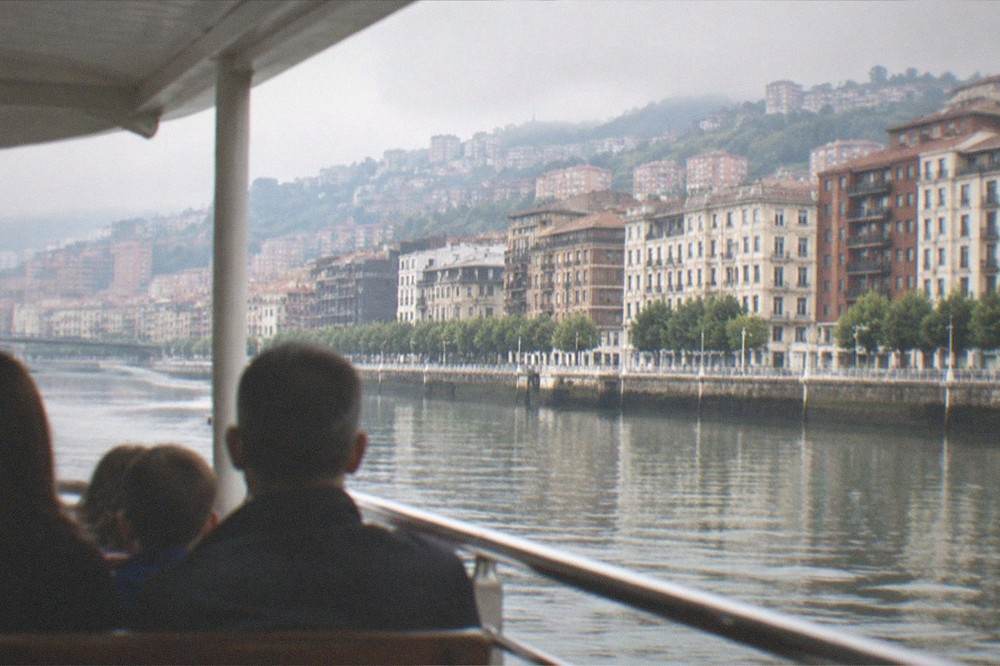
For families, the boat has a further advantage: children tolerate a cruise better than a two-kilometre promenade walk, and the two-hour option ends at a bridge whose moving gondola is itself an attraction. For cruise-ship passengers docking at the port, the estuary boat is the most efficient city overview available in a short call, which is why our Bilbao cruise port day itinerary puts it first. And for anyone whose mobility makes long walks difficult, the boat plus tram combination covers nearly everything the riverside walk would, without the cobblestones.
Common Questions About The Ría De Bilbao
What Is The Ría De Bilbao?
The Ría de Bilbao is the tidal estuary of the Nervión and Ibaizabal rivers, flowing roughly 15 km from the Bay of Biscay through Bilbao in Biscay province, Basque Country, northern Spain. It is genuinely tidal, it created the city's port economy, and its banks now hold the Guggenheim Museum, the Euskalduna Palace and the UNESCO-listed Vizcaya Bridge at its mouth.
How Long Is A Ría De Bilbao Boat Tour?
The main estuary product offers a one-hour city loop through the central reach or a two-hour cruise down to Portugalete and the Vizcaya Bridge. Exact durations, prices and ratings render from the operator's live listing, so check the current details before booking.
What Do You See On A Bilbao Estuary Cruise?
The central loop passes the Mercado de la Ribera, the Arriaga theatre, the Zubizuri and Salve bridges, the Guggenheim Museum Bilbao and the Euskalduna Palace. The two-hour cruise continues past the working port to the Vizcaya Bridge, a UNESCO World Heritage Site inscribed in 2006 and the first industrial heritage site in Spain on the list.
Is The Ría De Bilbao The Same As The Nervión River?
Effectively yes: the ría is the estuarine lower reach of the Nervión, joined by the Ibaizabal near Bilbao. Locals call the whole tidal stretch through the city the ría, and the name reflects its salt-water, tide-driven character rather than a separate river.
Can You Walk Along The Ría De Bilbao?
Yes, the upper and middle reaches have continuous riverside promenades from the Casco Viejo quays through Abandoibarra past the Guggenheim, and walking them is free. The lower estuary past Zorrozaure has no comparable riverside path through the port area, which is why the boat is the practical way to see that stretch.
When Is The Best Time For A Ría De Bilbao Boat Tour?
July and August are the warmest, driest months, with AEMET normals showing means of 20.4 C and 20.9 C and 50 mm and 76 mm of rain, while November is the wettest at 147 mm. Late afternoon gives the best light on the Guggenheim bank in summer; midday is the safer winter slot when valley fog can close the lower reach.
The ría made Bilbao, and a couple of hours on it will do more to explain the city than any number of museum panels: the shipyards that funded the skyline, the tide that still runs through it twice a day, and the titanium museum that turned an industrial waterway into one of northern Spain's most photographed stretches of water.