An Architecture Walking Itinerary
Bilbao, in the Basque Country of northern Spain, packs a century and a half of architecture into a walkable strip along the Nervion estuary. This itinerary strings the city's buildings into one coherent day on foot.
Short answer
Start at the Guggenheim in Abandoibarra, walk the riverside promenade past the Euskalduna Palace and Zubizuri bridge into the Ensanche grid, then cross into Casco Viejo's Seven Streets to finish among Gothic, Baroque and contemporary buildings. It is roughly a full day at a slow pace, with pintxos stops built in.
Bilbao, in Biscay province in the Basque Country of northern Spain, is one of Europe's most compact cities for architecture. The whole story, from medieval trading town to iron-and-steel port city to post-industrial design capital, unspools along the tidal Nervion estuary and the low hills on either side of it. You can walk the central chapters of that story in a single day without a bus ticket, a metro ride or a taxi, and this itinerary does exactly that. It is built around buildings you can see from the street for free, with a small number of paid interiors flagged where they are worth the detour. For the wider picture of who built what and when, the site's Bilbao architecture overview goes deeper than a walking route allows.
What Does This Bilbao Architecture Walk Cover, And How Long Does It Take?
This itinerary covers roughly two kilometres of central Bilbao in four stages: the Guggenheim and Abandoibarra waterfront, the Zubizuri and La Salve bridges, the planned Ensanche grid around Moyua, and the medieval Seven Streets of Casco Viejo. Walked straight through at a steady pace it takes far less time, but a realistic day with interiors, photographs and pintxos lasts considerably longer.
The route is deliberately linear. You start at the newest architecture, the titanium curves of the Guggenheim, and finish among the oldest, the Gothic and Baroque fabric of the Old Town. That reversal is the point: Bilbao's transformation reads most clearly when you walk it backwards, from the building that triggered the city's reinvention to the streets that came long before it. Everything on the route sits within walking distance of the estuary, and the whole walk is served by the tram line along Abandoibarra if your feet give out halfway.
Stage One: How Do You Walk The Guggenheim And Abandoibarra Waterfront?
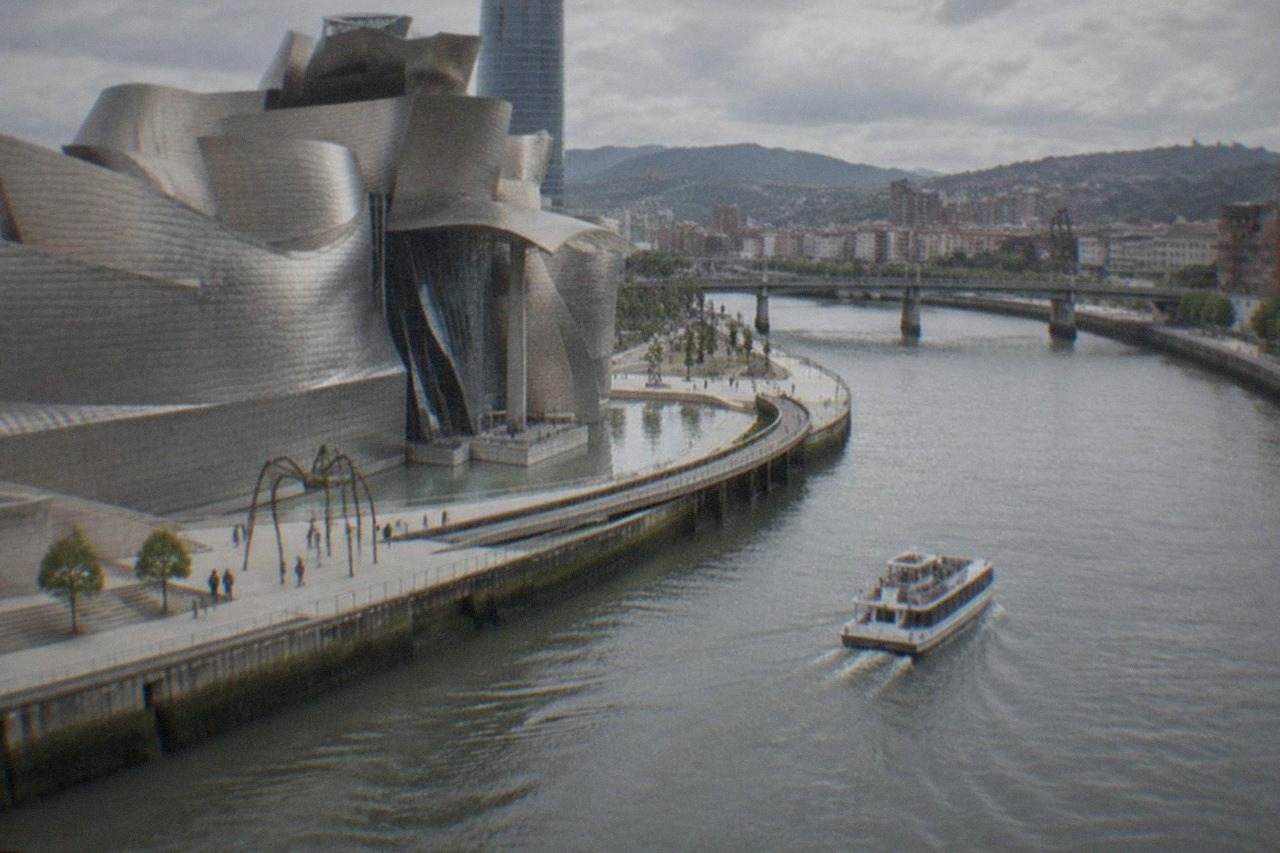
Open at the Guggenheim Museum Bilbao, the 1997 building on the Abandoibarra riverfront, and give its exterior a full circuit before you go in: the titanium scales read completely differently from the riverside, the Plaza Euskadi side and the Puente La Salve end, where the building's leg lifts to straddle the water. The museum opens Tuesday to Sunday from 10:00 to 19:00, extending to 20:00 from 15 June to 13 September and during Easter week, and an adult ticket costs EUR 18.
The Guggenheim's own site lists those hours and that admission price, and both matter for planning: a 10:00 start puts you outside before the queues build and inside by opening time. Walk the building anticlockwise from the riverside promenade. The Jeff Koons puppy of flowers guards the main entrance, Louise Bourgeois's spider stands by the water, and the building itself changes character with every step, which is precisely why a circuit beats a single photo spot. The Guggenheim visitor guide on this site covers the collection and the practicalities in detail.
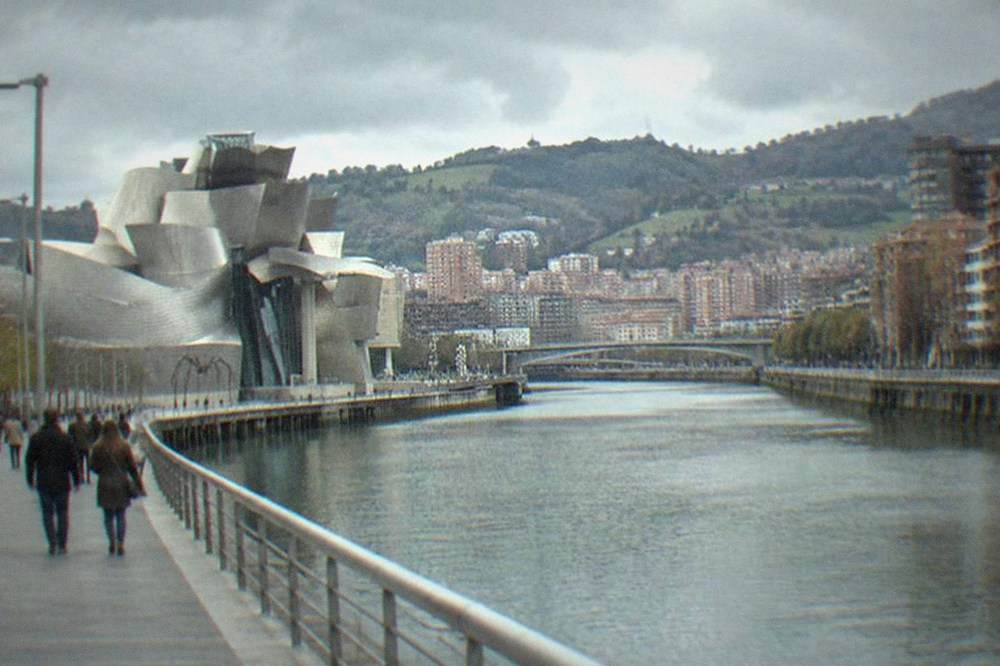
Once you are back outside, do not rush away from the district. Abandoibarra is the former shipyard land that the museum anchored, and the whole strip is an open-air lesson in how a city rebuilds itself. Head west along the promenade past the Iberdrola tower, the city's tallest building, toward the Euskalduna Conference Centre, a building whose rust-toned metal skin deliberately quotes the ship hulls once built on the site. The tram runs the length of this stretch, so the walk stays flat and escape-proof.
If you would rather have an expert decode the museum than parse Gehry on your own, a guided option exists:
Stage Two: Which Bridges And Riverfront Buildings Should You Not Miss In Bilbao?
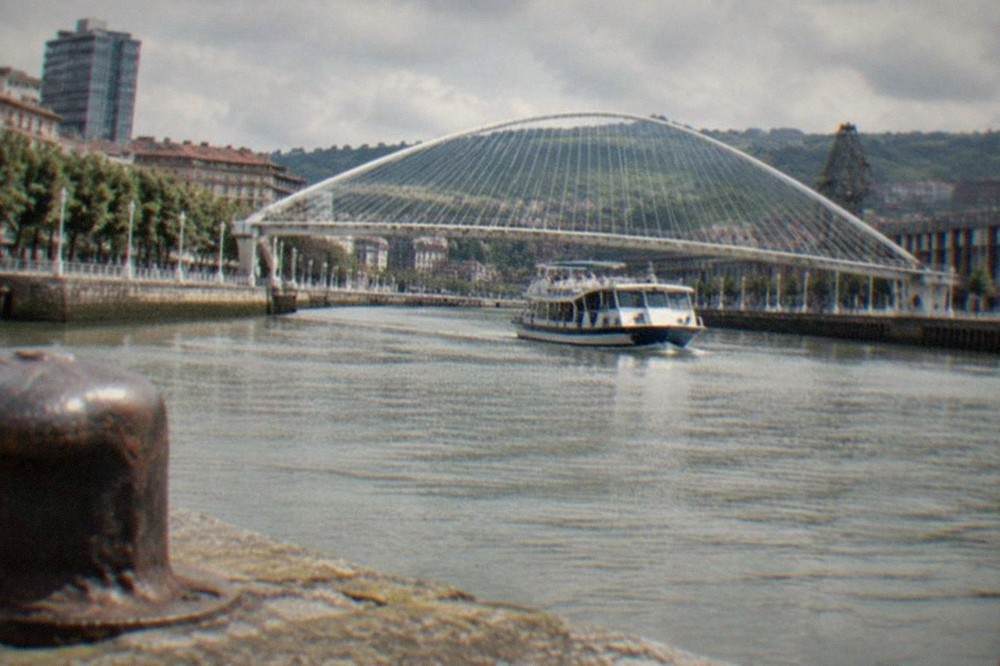
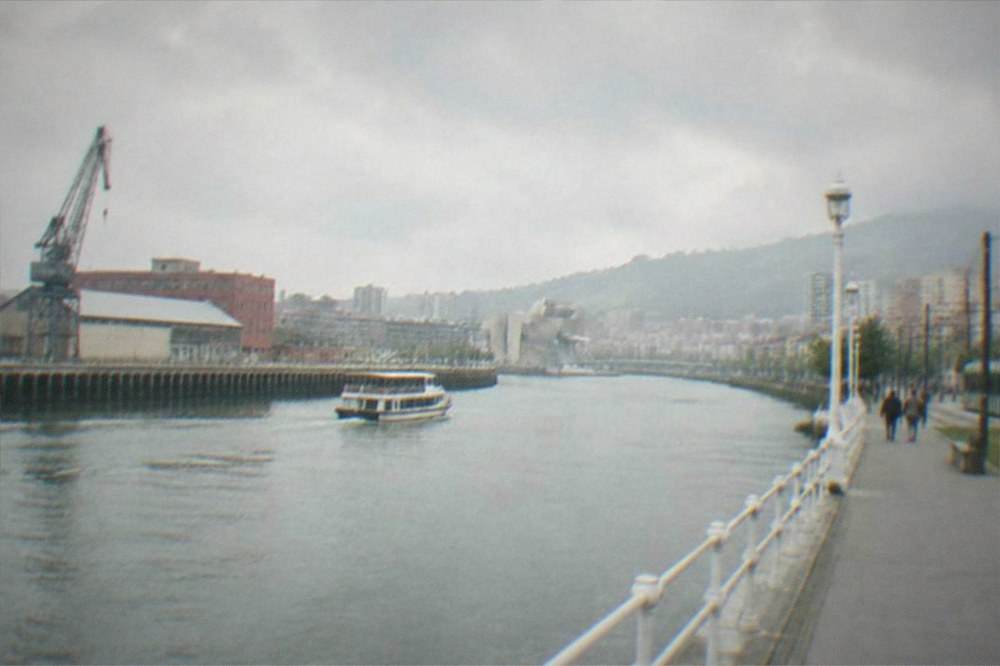
Cross the estuary twice: once over Santiago Calatrava's Zubizuri footbridge, a white tied-arch span with a glass deck, and once over the Puente de La Salve, the cantilever bridge that Gehry's museum deliberately incorporated into its own silhouette. Between the two, the riverside promenade past the Bilbao Fine Arts Museum and Doña Casilda park gives you the city's most photographed stretch of water, and every metre of it is free.
The Zubizuri is the purest piece of engineering-as-sculpture on the route. Its single arch and translucent deck photograph best from the Abando side in the morning, when the light comes up the estuary. A few hundred metres downstream, La Salve is the bridge locals treat as a gateway to the city; the Guggenheim's designers cut the building so that the bridge deck appears to pass through the museum complex, an intentional marriage of road infrastructure and icon.
| Stop | Architect or origin | What to look at |
|---|---|---|
| Guggenheim Museum Bilbao | Titanium cladding, the Puppy, the Salve incorporation | |
| Zubizuri footbridge | Santiago Calatrava | White tied arch, glass deck, river views |
| Euskalduna Conference Centre | Federico Soriano and Dolores Palacios | Rust-toned hull skin, shipyard references |
| Iberdrola tower | Cesar Pelli | Tapered glass form, tallest building in the city |
| Puente de La Salve | Cantilever road bridge | Cantilever structure, red arch addition |
| Bilbao Fine Arts Museum | Expanded original building | New atrium and park integration after reopening |
One dated note belongs here: the Bilbao Fine Arts Museum closed on 31 August 2026 for final renovation works and reopens on 6 October 2026, with a free entry week from 6 to 13 October as reported, and a general adult admission of EUR 12 from 14 October. If your walk falls in that reopening window, the museum's new atrium and its connection to Doña Casilda park are a genuine architecture event, not just an art stop.
Stage Three: Why Is The Ensanche Grid Worth An Architecture Detour In Bilbao?
The Ensanche, Bilbao's planned expansion across the river from the Old Town, is a regular grid of stone blocks, and its two great anchors are the Alhondiga, a former wine warehouse turned into the Azkuna Zentroa cultural centre by Philippe Starck, and the Gran Via, the wide commercial axis. Give this stage an hour and treat it as the city's most underrated architecture.
The Azkuna Zentroa is the headline. Starck kept the original warehouse brick shell and dropped a new public sports hall inside it, supported by forty-three columns each designed by a different artist, no two alike. It is free to enter the atrium, and the column hall alone justifies the detour; the site's Azkuna Zentroa guide covers what is inside. From there, walk up to Moyua plaza and along the Gran Via, where the facades run from Parisian-influenced apartment blocks to the domed headquarters buildings of the shipping banks that once financed the port.
Should You Take A Guided Architecture Walk Or Go Alone?
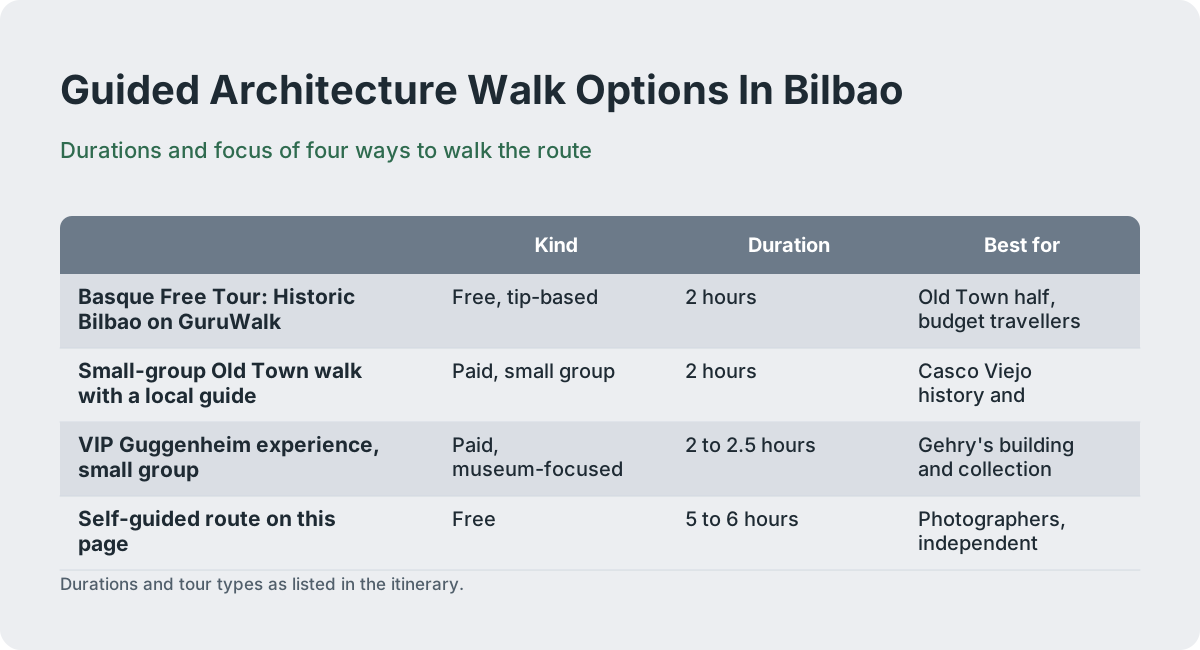
Going alone works well for this route because every building on it is visible from public streets and the geography is linear, but a small-group guided walk adds the history that facades do not carry, and the city's free GuruWalk option, the Basque Free Tour: Historic Bilbao led by a local guru, covers the Old Town end of the route on a tip-based basis if you want the story without a fixed price. A paid guided tour suits visitors who want the Guggenheim decoded in depth; a solo walk suits photographers and anyone who likes stopping at will.
The trade-off is time and depth. Guides compress centuries of history into two hours; a solo walker with the table below and a good map gets the same buildings at their own pace. Whichever you choose, the route's stops are identical.
| Guided option | Kind | Duration | Best for |
|---|---|---|---|
| Basque Free Tour: Historic Bilbao on GuruWalk | Free, tip-based | 2 hours | The Old Town half of the route, budget travellers |
| Small-group Old Town walk with a local guide | Paid, small group | 2 hours | Casco Viejo history and pintxos context |
| VIP Guggenheim experience, small group | Paid, museum-focused | 2 to 2.5 hours | Gehry's building and the collection in depth |
| Self-guided route on this page | Free | 5 to 6 hours | Photographers, independent walkers |
Stage Four: What Architectural Gems Wait In Casco Viejo, Bilbao's Old Town?
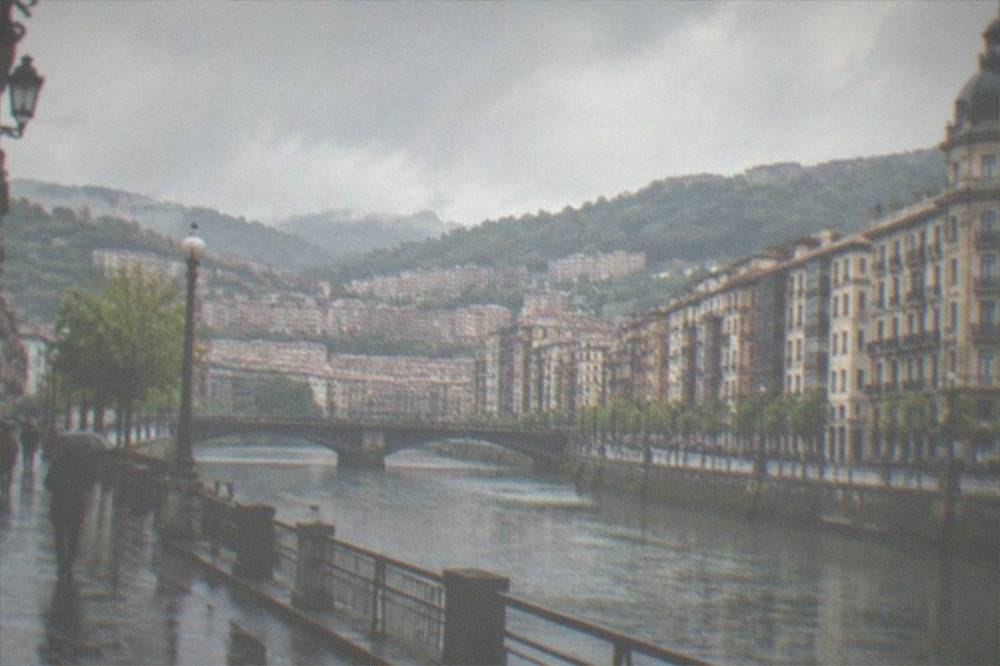
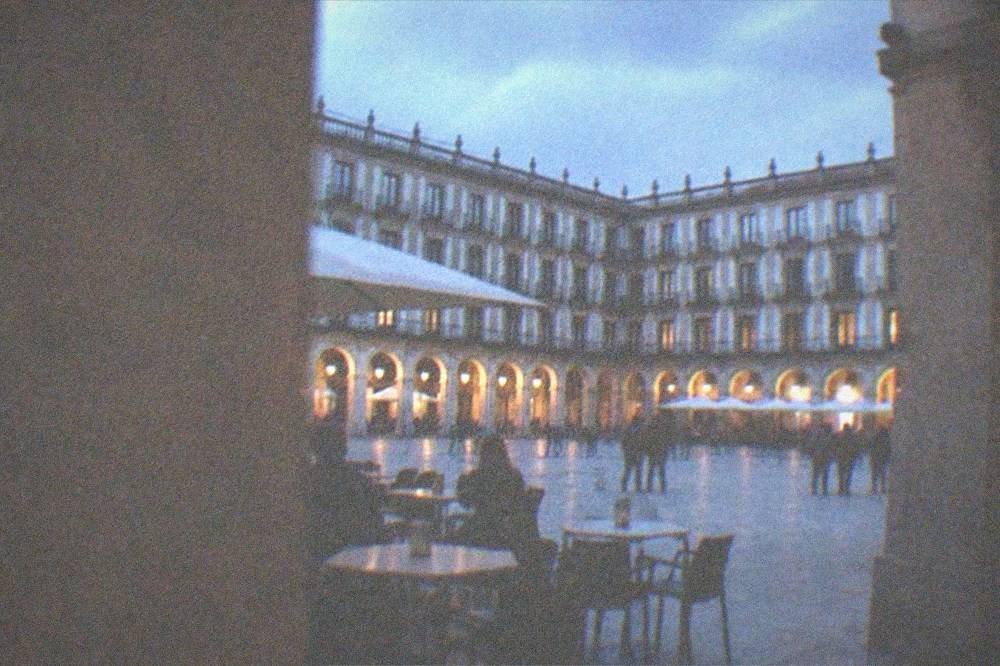
Casco Viejo, the Seven Streets of medieval Bilbao, holds the Gothic Cathedral of Santiago, the neo-Baroque Arriaga theatre, the Mercado de la Ribera with its riverside hall, and the Plaza Nueva, a perfectly square arcaded plaza that is the architectural heart of the neighbourhood. Cross the Arenal bridge from the Ensanche side and walk the streets in the order they were laid out, from the cathedral down to the river, and you cover centuries of building in under a kilometre.
The Cathedral of Santiago sits on the oldest street of the seven, and its Gothic interior is the one paid interior on this stage worth the ticket. The Arriaga theatre, named for the composer born a few streets away, anchors the Arenal end with its ornate Belle Epoque facade. The Mercado de la Ribera, once Europe's largest covered market, was rebuilt after a devastating flood and refurbished again more recently, and its riverside hall is as much architecture as food market. The Casco Viejo area guide maps all of this in detail.
Plaza Nueva is where the walk ends, and it ends well: the arcades hold some of the city's most storied pintxos bars, so the final architectural experience of the day is a historic square with a glass of txakoli under the arches. The site's Bilbao pintxos guide lists the specific bars worth queuing at.
Where Should You Stop To Eat And Drink On This Architecture Walk Of Bilbao?
Plan two food stops: one around the Ensanche or Moyua stretch at midday, where the Gran Via's historic cafes and the Mercado del Ensanche offer quick sit-down options, and one at the end of the walk in Plaza Nueva, where the arcades concentrate several of the city's most decorated pintxos bars.
Pintxos at traditional bars generally run from about EUR 2 to 5 each, with a typical crawl of four to six items plus drinks landing around EUR 25 to 45 per person, so check the board prices at each bar.
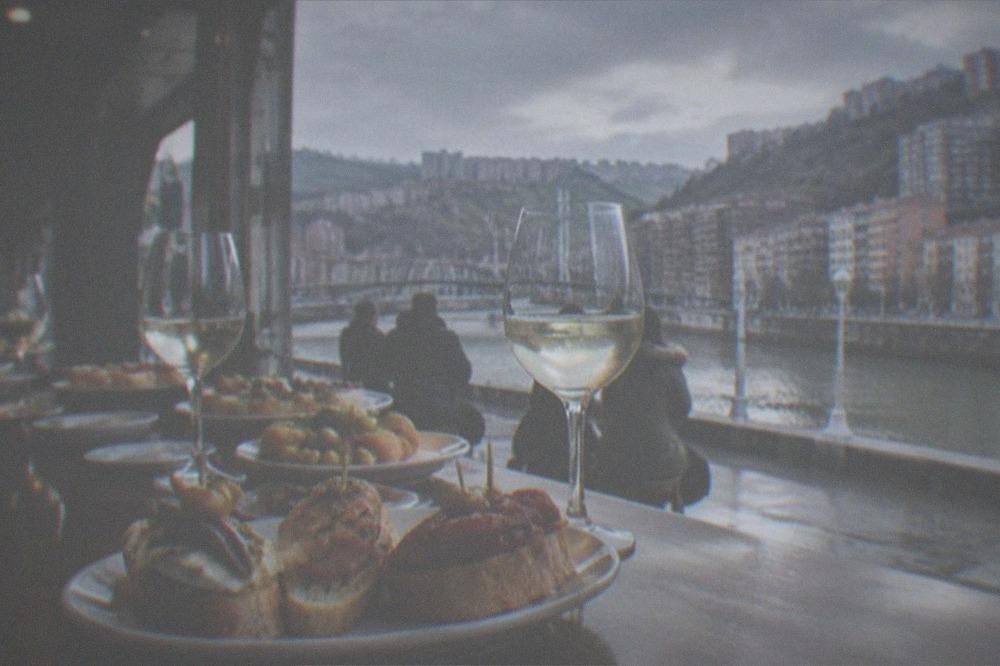
The Old Town end is the stronger of the two stops. Around Plaza Nueva, Gure Toki and Sorginzulo share a building at number 12, El Globo sits a short walk away on Diputacion, and Cafe Bar Bilbao has been pouring since long before the Guggenheim existed, which makes the bar itself part of the architecture itinerary. The Bilbao food crawl itinerary on this site turns that cluster into a full route if you would rather make eating the day's main event.
If you want the eating folded into the architecture day properly, a guided option pairs the two:
| Stop on the route | Nearest food cluster | Character |
|---|---|---|
| Abandoibarra waterfront | Museum cafes, Euskalduna area | Quick, modern, sit-down |
| Ensanche and Moyua | Gran Via cafes, Mercado del Ensanche | Historic cafes, classic Basque bars |
| Arenal and Arriaga | Riverside bars near the theatre | Pre-theatre, traditional |
| Plaza Nueva, Casco Viejo | Gure Toki, Sorginzulo, Cafe Bar Bilbao, El Globo | The city's densest pintxos concentration |
When Is The Best Time Of Day And Year To Walk Bilbao's Architecture?
Walk the route starting between 09:00 and 10:00, because the Guggenheim's riverside facade photographs best in morning light and the museum opens at 10:00, and finish in the Old Town in the early evening when Plaza Nueva's arcades come alive. For the season, aim for July or August, when AEMET's normals for Bilbao Aeropuerto show monthly means of 20.4 and 20.9 degrees and the lowest rainfall of the year at 50 and 76 mm.
June and September trade a degree or two for thinner crowds. The climate here is temperate oceanic, Atlantic-influenced, not Mediterranean, and it rains in every month: even July averages 50 mm. That is not a reason to stay away, it is a reason to check the forecast and keep the route's indoor escapes in mind. The Azkuna Zentroa, the Guggenheim and the Mercado de la Ribera are all covered, and the site's rainy day Bilbao itinerary reorders exactly these stops for wet weather. November is the wettest month at 147 mm in the AEMET table, so if you are visiting then, plan the outdoor stages tight and the interiors generous.
| Month | Mean temperature (C) | Mean rainfall (mm) | Verdict for the walk |
|---|---|---|---|
| January | 9.3 | 120 | Cold and damp; interiors first |
| April | 12.6 | 107 | Mild but wet; bring a shell |
| June | 18.4 | 60 | Good balance of warmth and crowds |
| July | 20.4 | 50 | Best month: warmest, driest |
| August | 20.9 | 76 | Warm; busiest at the Guggenheim |
| September | 19.2 | 73 | Quieter, still pleasant |
| November | 12.4 | 147 | Wettest month; indoor-heavy plan |
How Do You Extend The Walk Beyond Central Bilbao If You Have More Time?
Two extensions reward a second day or a long afternoon: take the Artxanda funicular up the hill behind the Old Town for the panorama over the whole estuary and the city's roofscape, a one-way ride that costs EUR 3.50 as commonly reported, and take the metro to the Vizcaya Bridge at Portugalete, the UNESCO World Heritage transporter bridge whose pedestrian gondola crossing costs EUR 0.60 one-way in daytime. Both are reachable with the same Barik card you may already hold for the metro.
The funicular is the closer of the two and pairs naturally with the end of this walk: its lower station sits a short walk uphill from Casco Viejo, and the viewing platforms at the top explain everything the route just showed you at street level. The Artxanda funicular guide covers the details. The Vizcaya Bridge is the bigger commitment, roughly half a day including travel, but it is the region's single most important piece of industrial architecture, inscribed on the UNESCO list in 2006 as the first industrial heritage site in Spain, and the gondola crossing is a genuinely rare experience; the site's Vizcaya Bridge guide covers fares and access.
For a fuller second-day plan, the three days in Bilbao itinerary slots both extensions into a wider route, and the one day in Bilbao itinerary is the tighter alternative if your time is shorter than this walk already assumes.
What Should You Know Before Setting Out On This Bilbao Architecture Walk?
Wear real walking shoes, carry a light rain layer in every season, start at the Guggenheim end no later than mid-morning, and buy museum tickets online rather than at the desk in July and August. Bilbao's streets are steep at the edges of the route, especially around Casco Viejo and the funicular approach, so the flat riverside spine of this itinerary is a deliberate choice: it keeps the day walkable for most fitness levels while the two hillside extras stay optional.
A few practical notes finish the planning. The tram runs the length of Abandoibarra and connects the Guggenheim to the Casco Viejo end, so a one-way bailout exists at every stage. The Guggenheim's own site lists its hours and prices, and the last ticket is sold well before closing, so an afternoon-only visit still gets you inside. The city's tourist infrastructure is concentrated exactly along this route, which is one more reason it works: information points, the tourist card sales desks and the main hotel district all sit within a few blocks of the estuary.
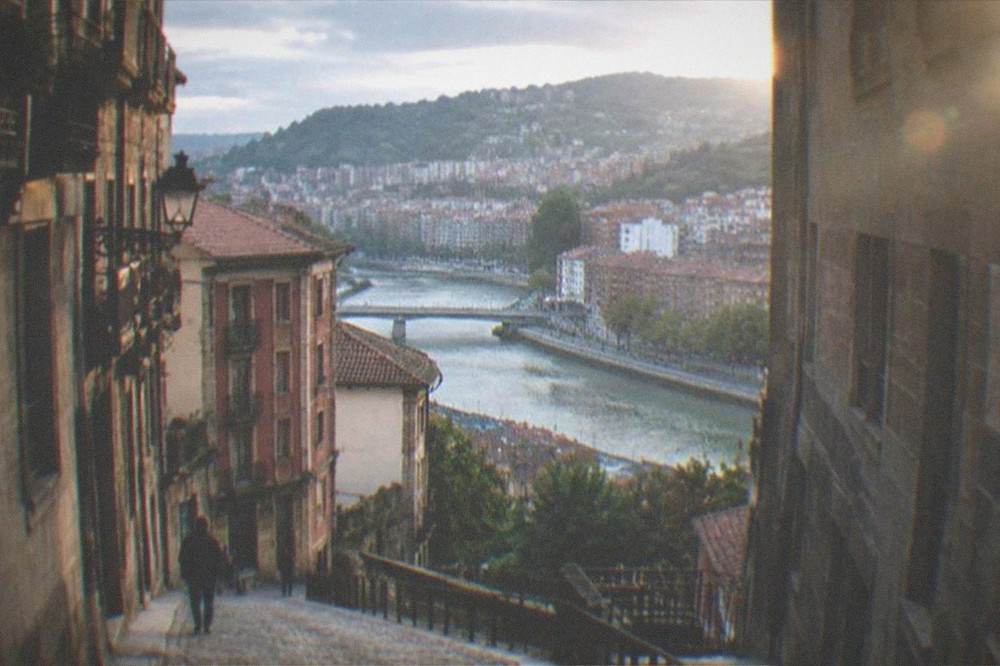
For photographers, the route has a natural order of light: the Guggenheim riverside in the morning, the Zubizuri and the estuary at midday, the Gran Via facades in the flat afternoon light, and Plaza Nueva's arcades as the evening lamps come on. The Bilbao photography itinerary expands that into a full shooting plan. Whatever your pace, this walk delivers the whole arc of the city, from a medieval port of seven streets to the titanium building that put Bilbao back on the world's map, and it does it on foot, which is exactly how the city should be read. For everything bookable around the route, from the museum tours to the coastal day trips that pair with it, start from Bilbao Travel Guide's main things to do in Bilbao round-up.
Common Questions About An Architecture Walking Itinerary In Bilbao
How long does an architecture walking itinerary in Bilbao take?
Walked straight through, the central route takes about three hours. A realistic day with museum interiors, photographs and pintxos stops runs five to six hours, spread from mid-morning to early evening.
Is the Bilbao architecture walk free?
Every building on the route is visible from public streets for free. The paid interiors are the Guggenheim at EUR 18 for an adult ticket, the cathedral, and optionally the Vizcaya Bridge gondola at EUR 0.60 one-way if you take the extension.
Where does the Bilbao architecture walk start and finish?
It starts at the Guggenheim Museum Bilbao in Abandoibarra and finishes in Plaza Nueva in the Old Town, running the estuary waterfront, the Zubizuri and La Salve bridges, the Ensanche grid and the Seven Streets in between.
What is the best month for an architecture walk in Bilbao?
July and August are the warmest and driest months in AEMET's normals for the city, at 20.4 and 20.9 degrees mean and 50 and 76 mm of rain. June and September are quieter and still pleasant, and the route's indoor stops make it workable year-round.
Can you do the Bilbao architecture walk in the rain?
Yes. The Guggenheim, the Azkuna Zentroa, the Bilbao Fine Arts Museum and the Mercado de la Ribera are all covered, and the tram connects the outdoor stretches. The site's rainy day itinerary reorders the same stops for wet weather.
Do you need a guide for the Bilbao architecture walk?
No, the route is linear and every stop is visible from the street. A guided small-group walk adds historical depth, and the free GuruWalk Basque Free Tour covers the Old Town end on a tip basis if you want the story without a fixed price.