Three Days In Bilbao
Three days is enough to see the Guggenheim, eat your way through the Old Town and still reach the Basque coast. Here is how to split the days, what each costs, and what to skip.
Short answer
Spend day one in Casco Viejo and Plaza Nueva, day two around the Guggenheim and Abandoibarra, and day three on a day trip to Gaztelugatxe, Getxo or San Sebastián. July and August are the warmest, driest months.
Bilbao, in Biscay (Bizkaia) province in the Basque Country of northern Spain, rewards exactly the kind of visit that three days allows: one day for the medieval Old Town, one for the riverside museum district that the Guggenheim built, and one for the coast that most first-time visitors never realise is barely half an hour away. This itinerary on Bilbao Travel Guide splits the city that way, and it sticks to figures that can actually be checked: the CTB Barik fares page for transport, the Guggenheim's own site for museum admission, AEMET's Bilbao Aeropuerto/Loiu station (1082) normals for weather. If you are weighing a shorter stay, the one-day and two-day versions cover the compressed trips, and the deeper question of trip length is unpacked in how many days you need in Bilbao.
Why Is Three Days In Bilbao The Right Amount Of Time?
Three days is the point at which Bilbao stops being a museum-with-a-city-attached and becomes a complete trip: day one covers the Old Town and the pintxos bars of the Siete Calles, day two covers the Guggenheim and the Abandoibarra riverside, and day three reaches the Basque coast or the Rioja wine country without rushing either. Two days force a choice between the city and the coast. Three days let you have both, plus a slower evening or two in Plaza Nueva, which is where the city actually spends its free time.
The geography argument is simple. Bilbao sits on the tidal Nervion estuary about 15 km from the Bay of Biscay, and the metro reaches the coast at Getxo in roughly half an hour. Euskotren reaches Bermeo in about an hour and twenty minutes. Almost every headline sight outside the city is a day-trip distance, so a third day is not padding, it is the day that unlocks Gaztelugatxe, Mundaka or San Sebastián.
The cost argument matters too. The Bilbao Bizkaia Card runs at EUR10 for 24 hours, EUR15 for 48 hours and EUR20 for 72 hours, so a three-day visit matches the top tier of the official tourist card exactly. The card site states it includes unlimited transport plus discounts at museums and attractions, and three days is the validity at which that math starts working in your favour.
What Should You Do On Day One In Bilbao?
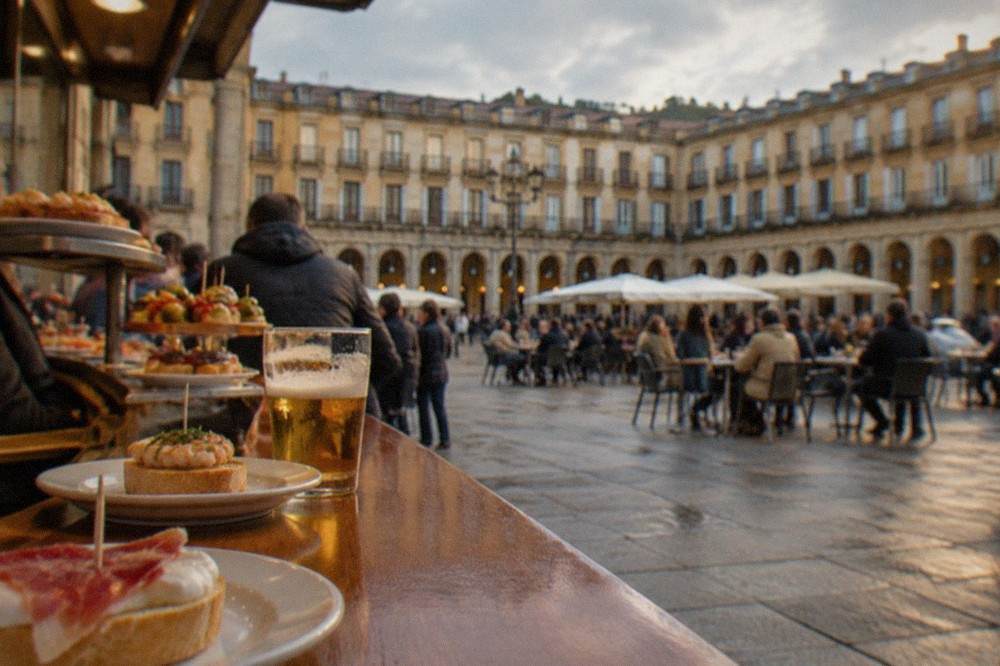
Day one belongs to Casco Viejo, the Old Town: start at Plaza Nueva for coffee, walk the Siete Calles from the Catedral de Santiago to Ribera Market, cross the estuary at the Zubizuri or the Puente de la Salve, and finish with a pintxos crawl through Plaza Nueva and Calle Somera, because the Old Town is compact enough that everything on this list is a short walk apart. The whole district is seven medieval streets, and a full day here is as much about eating as sightseeing.
Morning. The Catedral de Santiago, the Teatro Arriaga and the Ribera Market anchor the eastern half of the district. Ribera Market sits right on the estuary and is the largest covered market of its kind in the region, and the ground floor is where locals shop, which makes it a better morning visit than an afternoon one. Full background on the district is in the Casco Viejo guide.
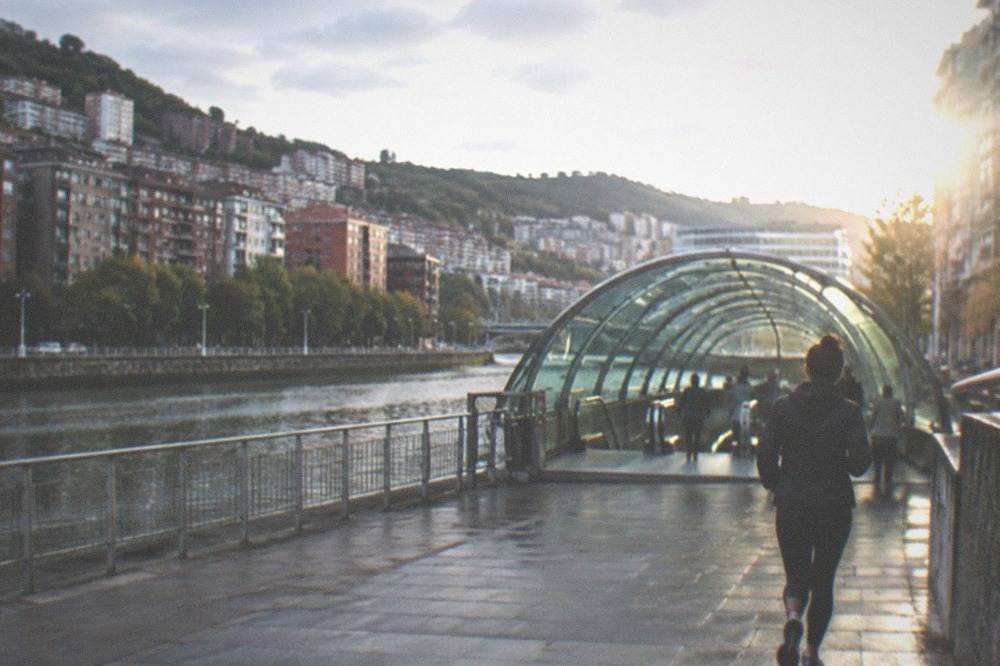
Afternoon. Cross the river. The Zubizuri footbridge and the Puente de la Salve both connect the Old Town toward the newer city, and the walk along the left bank toward the Guggenheim is a good rehearsal for day two, though you will want to save the museum itself for a full morning.
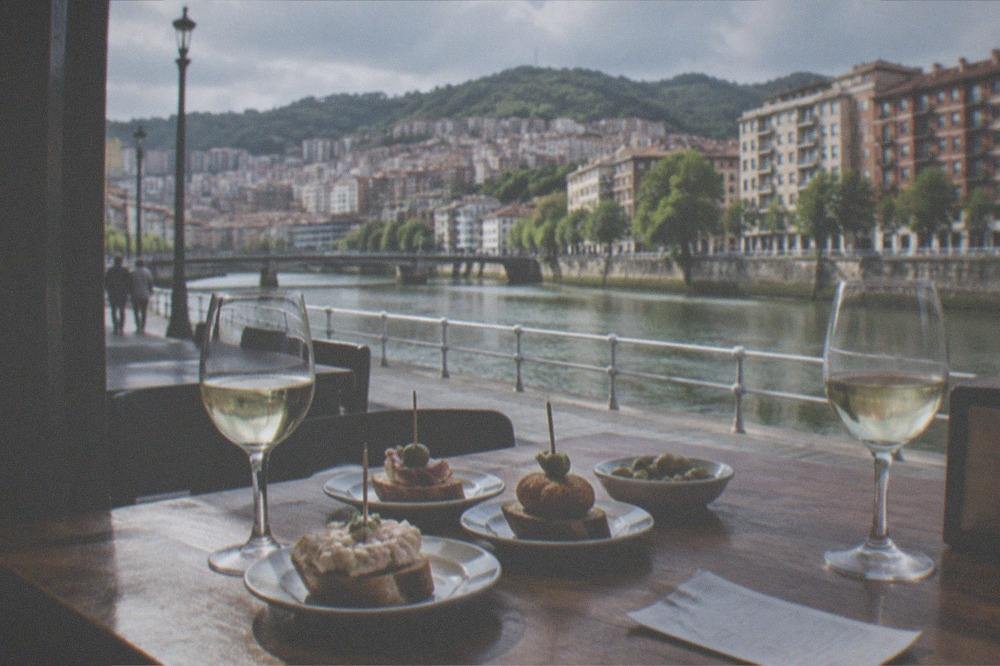
Evening. This is the pintxos crawl, and it is the single best argument for a guided start. A food tour that covers several bars with wine pairings removes the guesswork of ordering, and the Old Town's best-known rooms, Gure Toki, Sorginzulo and Café Bar Bilbao among them, all sit on or just off Plaza Nueva. The best pintxos in Bilbao guide maps the full route for anyone going independently.
If a guided crawl is not your style, the same evening works self-guided: two pintxos and a drink per bar, three or four bars, moving each round. Pintxos at traditional bars typically run a few euros each, so check the chalkboards rather than assuming, because a couple of Casco Viejo rooms are known to quote tourists higher prices than locals.
What Should You Do On Day Two In Bilbao?
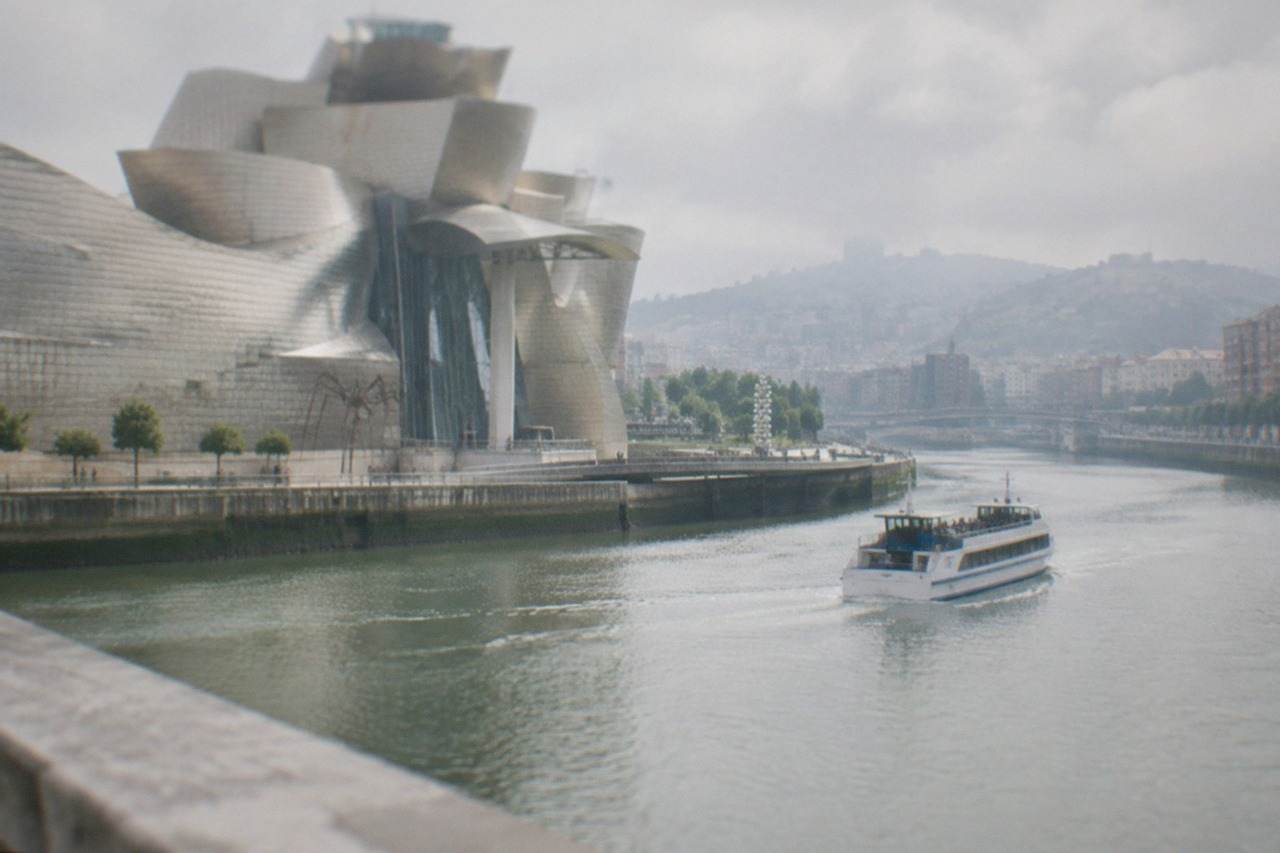
Day two is the museum day: book the Guggenheim for opening at 10:00, give it three hours, then walk the Abandoibarra riverside past the Zubizuri and the Euskalduna Palace toward the Azkuna Zentroa, and end with the Artxanda funicular for the city's best panorama, all within a day that stays almost entirely on foot along the estuary. The Guggenheim's own site lists adult admission at EUR18, with the museum open Tuesday through Sunday from 10:00 to 19:00, extended to 20:00 during Easter week and again from 15 June to 13 September.
Morning. The Guggenheim deserves the first slot because queues build by midday and because the light on the titanium cladding is best before noon. All tickets include the audio guide, and under-18s enter free. If you would rather have a guide decode the architecture and the collection, a guided option exists, and a basic entry-only ticket is also sold as a bookable product.
Afternoon. The Abandoibarra walk. From the museum, the riverside path runs past the Zubizuri bridge and the Euskalduna Palace conference centre and ends near the Azkuna Zentroa, the wine-warehouse-turned-cultural-centre with its famous columns. The Guggenheim page carries the detail on the museum itself.
One 2026 caveat: the Bilbao Fine Arts Museum, which normally makes a natural afternoon pairing here, is closed from 31 August to 5 October 2026 for final renovation works. It reopens 6 October 2026 with a free entry week through 13 October, and from 14 October adult general admission is EUR12, with a joint Artean pass covering both it and the Guggenheim at EUR16 general or EUR8 reduced. If your day two falls in that closed window, shift the time to the Euskal Museoa in the Old Town, which reopened 10 June 2026 after its own renovation.
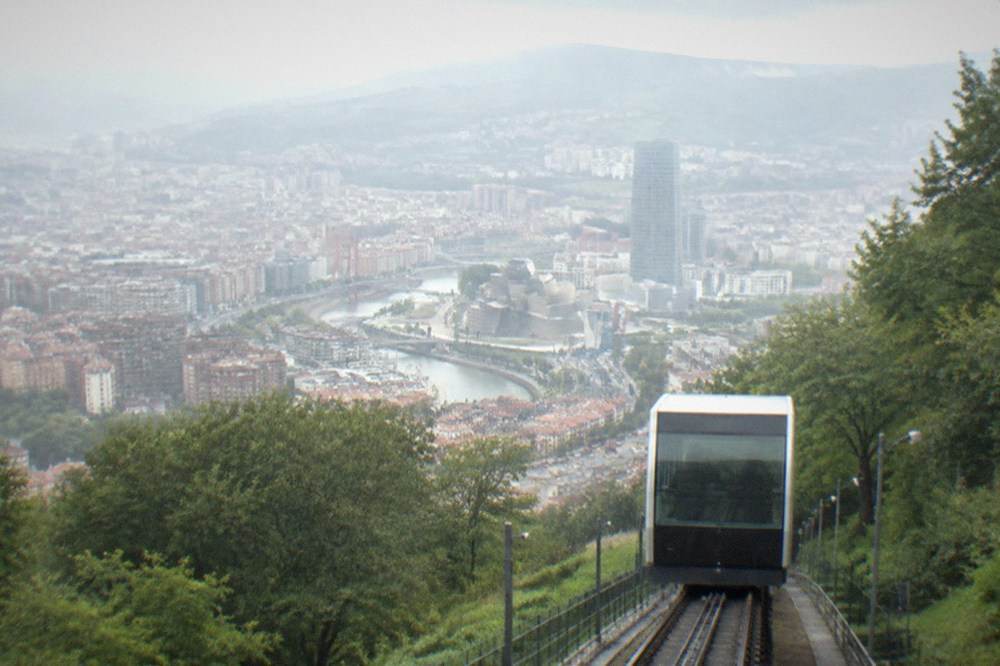
Evening. The Funicular de Artxanda climbs the hill behind the city, with the fare commonly reported at EUR3.50 one way or EUR6.00 round trip, though that fare page has not been independently content-checked, so confirm at the lower station. The viewpoint at the top looks down the estuary over the whole city grid, and the funicular is wheelchair accessible, with free travel for one companion of a wheelchair user.
What Should You Do On Day Three In Bilbao?
Day three should leave the city: the strongest options are the Gaztelugatxe hermitage on the coast, the UNESCO-listed Vizcaya Bridge at Portugalete, or a full-day excursion to San Sebastián, and the right choice depends on whether you want a half-day with an afternoon back in Bilbao or a full day on the road. All three are realistic from a Bilbao base, and none requires a car.
The coastal option. San Juan de Gaztelugatxe, the islet hermitage reached by a stone causeway and a long stairway, is the most photographed spot in Bizkaia. A free timed reservation is required only on official controlled-access days, roughly mid-June to about 20 September daily plus Easter and holiday weekends per the yearly calendar, and access is free without a reservation on all other days. As of the most recent reporting, access reverted to free and uncontrolled from 21 September 2026 through the end of September. On controlled days the daily cap is 1,462 visitors, booking is always free via tiketa.eus, and the maximum is 10 people per reservation. Note that certain romeria days, including 24 June, 31 July, 29 and 31 August and 30 December, are reserved for local events. The full picture is in the Gaztelugatxe day trip guide.
The easy option. Getxo and the Vizcaya Bridge. Metro Line 1 reaches the Getxo coast in roughly half an hour, and the Vizcaya Bridge, the UNESCO-listed transporter bridge spanning the estuary at Portugalete, crosses to Getxo by gondola. The gondola crossing costs EUR0.60 one way in daytime hours, and the elevated walkway ticket is reported at EUR11 adult round trip or EUR9 reduced, though that walkway figure is a single-source claim, so treat it as indicative until you are at the ticket window.
The full-day option. San Sebastián. Direct buses run from Bilbao's intermodal station in about an hour and twenty minutes, and the San Sebastian day trip guide covers the trade-offs. A guided excursion that strings together Pamplona and Vitoria-Gasteiz is a third full-day shape, and it is the one to pick if you have already seen the coast on an earlier trip.
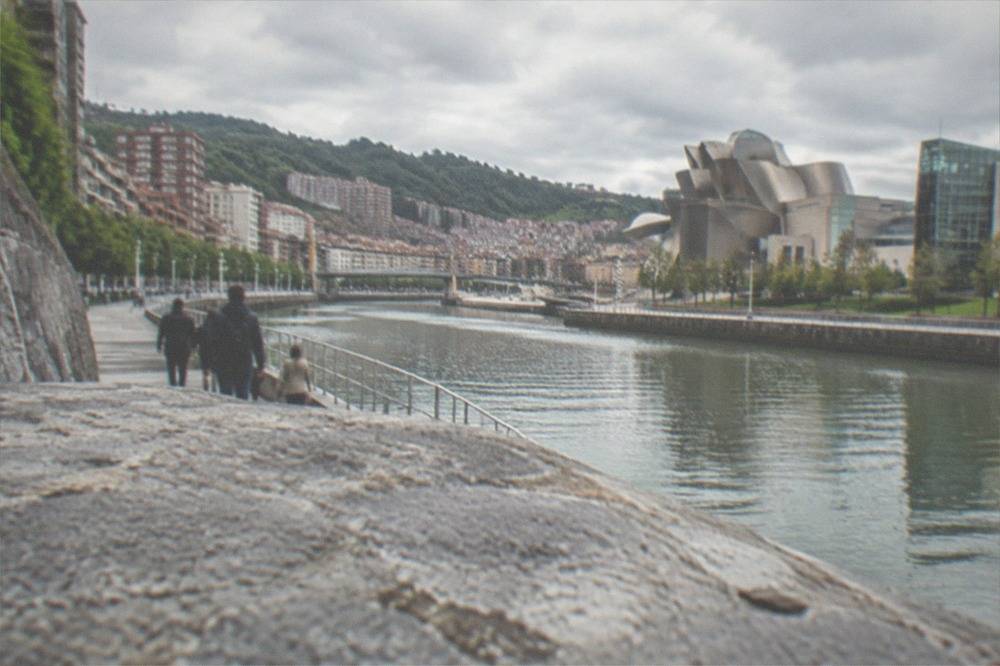
Here is the whole three days at a glance:
| Day | Morning | Afternoon | Evening |
|---|---|---|---|
| Day 1 | Plaza Nueva coffee, Siete Calles, Catedral de Santiago | Ribera Market, river walk, Zubizuri | Pintxos crawl in Plaza Nueva and Calle Somera |
| Day 2 | Guggenheim from 10:00 opening | Abandoibarra walk, Azkuna Zentroa or Fine Arts Museum | Funicular de Artxanda viewpoint |
| Day 3 | Gaztelugatxe, Getxo or San Sebastián excursion | Coast time or return to city | Final dinner in the Ensanche |
How Do You Get Around During Three Days In Bilbao?
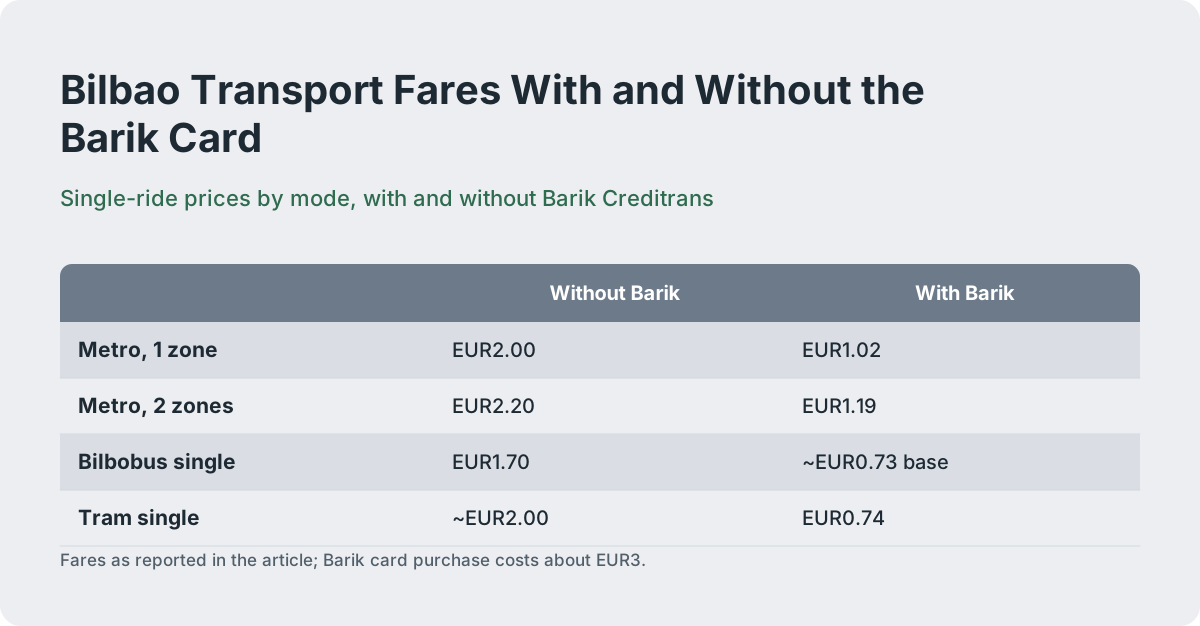
You get around Bilbao on the Barik card: it costs about EUR3 to buy (commonly reported, not confirmed on the official fares page), drops a Zone 1 metro ride from EUR2.00 to EUR1.02, and works on the metro, Bilbobus, the tram, Bizkaibus and Euskotren alike, so for a three-day stay the card plus pay-as-you-go beats every other option unless you are riding constantly, in which case the 72-hour Bilbao Bizkaia Card at EUR20 wins. The CTB Barik fares page gives the exact numbers, and they are worth knowing before you buy anything.
The maths. A Zone 1 metro single without Barik is EUR2.00 with two hours of validity; with Barik Creditrans it is EUR1.02. Bilbobus is EUR1.70 without a card and roughly EUR0.73 base with one. The tram is EUR0.74 flat with Barik, around EUR2.00 without. If day three is a metro trip to Getxo, that is a Zone 2 ride at EUR1.19 with Barik. Six or seven rides over three days at Barik prices recovers the card purchase quickly.
The 72-hour question. The Bilbao Bizkaia Card at EUR20 covers unlimited transport for exactly three days, plus the discounts and skip-the-line access the card site lists at the main museums. If you are doing the metro twice a day plus buses, the card pays for itself; if you are mostly walking, and in central Bilbao you mostly will be, the plain Barik wins.
| Mode | Without Barik | With Barik Creditrans |
|---|---|---|
| Metro, 1 zone | EUR2.00 | EUR1.02 |
| Metro, 2 zones | EUR2.20 | EUR1.19 |
| Bilbobus single | EUR1.70 | ~EUR0.73 base |
| Tram single | ~EUR2.00 | EUR0.74 |
| Funicular de Artxanda | EUR3.50 one way | Lower social/Barik tariffs |
| Airport bus A3247 | EUR5 | ~EUR1.19 or lower |
One thing not to plan around: there is no metro or train link to Bilbao Airport, and the city council's own position is that none arrives before 2035. The Bizkaibus A3247 runs every 15 minutes, takes 15 to 25 minutes to the centre, and a taxi runs roughly EUR24-29 with no airport supplement.
How Much Does Three Days In Bilbao Cost?
A comfortable three days in Bilbao costs roughly EUR60-100 per person per day mid-range, with the Guggenheim at EUR18 the single biggest fixed sightseeing expense, museum-light days much cheaper, and the main variables being accommodation and how many guided tours you add, while 2026 visitors pay no tourist tax because the Bizkaia levy does not start until 1 January 2027. The tourist tax point matters for anyone booking now: reservations made before early February 2026 are generally exempt even from the 2027 charge, but as reported, 2026 stays carry nothing.
The fixed costs are low. The Guggenheim at EUR18 is the ceiling for a single sight. The Fine Arts Museum at EUR12 from 14 October 2026, the Artean joint pass at EUR16 covering both museums, the funicular at EUR3.50 each way, the Vizcaya gondola at EUR0.60: none of these will break a day. Food is where the range opens up. Pintxos at traditional bars typically run a few euros each, so a four-bar crawl lands in a very different place from a sit-down dinner, and the Michelin-starred rooms in the city, several of them, start a different conversation entirely.
| Expense | Budget | Mid-range | Comfortable |
|---|---|---|---|
| Accommodation | Hostel or pension | 3-star city hotel | 4-star or design hotel |
| Guggenheim ticket | EUR18 | EUR18 | EUR18 |
| Transport over 3 days | ~EUR10 (Barik) | EUR20 (72h card) | EUR20 + taxis |
| Food per day | Pintxos bars only | Pintxos plus one sit-down meal | Fine dining included |
| Day 3 excursion | Public transport only | Guided day trip | Private tour |
The is Bilbao expensive guide goes deeper on costs, and the budget-tips itinerary covers the low end. For anyone compressing spend, the free options are real: the riverside architecture, the Azkuna Zentroa's public spaces, the walk across the Vizcaya Bridge's gondola at EUR0.60, and the free-entry week at the Fine Arts Museum from 6 to 13 October 2026.
Where Should You Stay For Three Days In Bilbao?
For a three-day stay, base yourself in the Ensanche-Abando area between Moyua and Abando station, because it puts you a short walk from both the Old Town and the Guggenheim, sits on the airport bus route, and sits on metro and tram lines for the day-three excursion, while the Old Town itself suits visitors who prioritise the pintxos evenings over the mornings. The where to stay in Bilbao guide covers every district in detail.
The trade-offs are geographic. The Ensanche is the grid of the newer city, businesslike and quiet at night, with the bulk of the hotel stock. Casco Viejo is atmospheric and lively, with the noise that implies. Indautxu sits between them, often cheaper for the same walking distance. Abandoibarra, the riverside strip by the Guggenheim, has the newest and most design-forward options, at the prices you would expect.
For three days specifically, one hotel is enough. There is no neighbourhood that is badly connected enough to justify moving, and the city is small: the walk from the Catedral de Santiago to the Guggenheim takes under half an hour at a visitor's pace, which is the single most useful fact about Bilbao hotel geography.
| Area | Best for | Walk to Guggenheim | Character |
|---|---|---|---|
| Ensanche-Abando | First-timers, transport links | ~15-20 min | Central, commercial, quiet nights |
| Casco Viejo | Pintxos evenings, atmosphere | ~25-30 min | Medieval, lively, sometimes loud |
| Indautxu | Value, food scene | ~10-15 min | Residential, good bars |
| Abandoibarra | Design hotels, museum proximity | ~5 min | New, riverside, pricier |
When Is The Best Time For Three Days In Bilbao?
July and August are the warmest and driest months for a Bilbao visit, with AEMET's Bilbao Aeropuerto/Loiu station (1082) normals showing July at a 20.4 C mean with 50 mm of rain and August at 20.9 C with 76 mm, but June and September run close behind with thinner crowds, while November is the wettest month at 147 mm and the one to avoid if your day three is the coastal excursion. The climate here is temperate oceanic, Atlantic-influenced, not Mediterranean, and that means rain is possible in every month of the year.
The three-day shape is weather-sensitive in one specific way: day three is the outdoor day. Gaztelugatxe is a long exposed climb, the Getxo coast is a walking coast, and neither is fun in the rain that Bilbao averages 1,134 mm of annually. If the forecast turns during your trip, swap days: the Guggenheim and the Fine Arts Museum make the perfect rainy-day pair, and the rainy-day itinerary exists for exactly this.
| Month | Mean temp (C) | Rain (mm) | Notes for a 3-day trip |
|---|---|---|---|
| March | 11.5 | 90 | Cool, changeable |
| May | 15.7 | 78 | Pleasant, green |
| June | 18.4 | 60 | Good balance |
| July | 20.4 | 50 | Warmest, driest |
| August | 20.9 | 76 | Aste Nagusia, 22-30 Aug 2026 |
| September | 19.2 | 73 | Quieter after the festival |
| November | 12.4 | 147 | Wettest month |
One calendar note worth planning around: Aste Nagusia, the city's nine-day festival, ran 22-30 August 2026 with the txupin opening at 19:00 in Plaza Arriaga. If your three days overlap a future edition, the Old Town evenings become a festival rather than a crawl, which is either the best or worst timing depending on your tolerance for crowds. The Aste Nagusia guide covers it.
What If You Have More Or Less Than Three Days In Bilbao?
If you have fewer than three days, cut day three and keep days one and two, because the Old Town and the Guggenheim are the non-negotiable halves of Bilbao; if you have four or more, add a second excursion, because San Sebastián, the Rioja wine country and the French Basque coast are all realistic additions that three days cannot fit. The city itself does not need a fourth day.
The compressed versions already exist as full guides: the one-day itinerary pairs the Old Town morning with the Guggenheim afternoon, and the weekend version stretches to a Sunday. Families should note the with-kids itinerary reshuffles the same sights around playgrounds and the funicular, and cruise passengers docking for a single day have their own port-day plan.
The expansion path runs outward. Four days adds Rioja, five adds the French Basque towns, and the question of combining the city with its famous coastal rival is answered in the Bilbao and San Sebastian together guide. First-timers unsure of anything should start with the compiled things to do in Bilbao page, which lists every sight on this itinerary and more.
Common Questions About Three Days In Bilbao
Is Three Days In Bilbao Enough?
Yes for the city itself: three days covers the Old Town, the Guggenheim and Abandoibarra, and one coastal or wine-country excursion. It is not enough to add San Sebastián and the Rioja region as well, so pick one direction for day three.
What Is The Best Three-Day Itinerary For Bilbao?
Day one in Casco Viejo with a Plaza Nueva pintxos evening, day two around the Guggenheim and the Abandoibarra riverside ending at the Artxanda funicular viewpoint, and day three on a day trip to Gaztelugatxe, Getxo and the Vizcaya Bridge, or a full-day excursion to San Sebastián.
Do You Need A Car For Three Days In Bilbao?
No. The metro, tram, Bilbobus, Bizkaibus and Euskotren cover the city and the coast on the Barik card, and the CTB fares page puts a Zone 1 metro ride at EUR1.02 with Barik. A car only helps if day three is a multi-stop coastal route at your own pace.
Is There A Tourist Tax In Bilbao?
Not in 2026. The Bizkaia regional tourist tax under Norma Foral 3/2026, and Bilbao's own municipal rates from EUR1 per night in pensions to EUR6.50 for tourist apartments, take effect on 1 January 2027.
What Is The Wettest Month In Bilbao?
November, with AEMET's 1981-2010 normals for the Bilbao Aeropuerto/Loiu station showing 147 mm of rain. July is the driest at 50 mm, and the climate is temperate oceanic year-round, so pack a layer and a light shell in any season.
Should You Book The Guggenheim In Advance?
It is wise in summer and around Aste Nagusia in late August, when the museum stays open until 20:00 from 15 June to 13 September. Adult admission is EUR18 as listed on the museum's own site, and under-18s enter free with the audio guide included in every ticket.
Three days in Bilbao, split city-river-coast, is the version of the trip where nothing gets shortchanged: the pintxos bars get a whole evening, the Guggenheim gets a whole morning, and the Atlantic gets the day it deserves.