A Photography Itinerary For Bilbao
A shot-by-shot photography itinerary for Bilbao, from the Guggenheim's titanium curves at dawn to the Siete Calles at golden hour, with verified light, weather and access data.
Short answer
The best photography itinerary for Bilbao starts at the Guggenheim and Zubizuri bridge in early morning light, moves through Abandoibarra and the Arriaga theatre by midday, and finishes in the Siete Calles and Plaza Nueva at golden hour, with the Artxanda funicular viewpoint as the optional sunset finale.
Bilbao, in Biscay (Bizkaia) province in the Basque Country of northern Spain, is one of Europe's most photogenic mid-sized cities, and it rewards a planned route far more than a random wander. The titanium panels of the Guggenheim Museum Bilbao change character with every shift in the Atlantic light, the tidal Nervion estuary doubles every building in its surface, and the seven medieval streets of the Casco Viejo compress more frames per square metre than anywhere else in the city. This itinerary for Bilbao Travel Guide lays out a full shooting day, with the verified opening hours, fares and weather data you need to be standing in the right place at the right time.
What Are The Best Photography Spots In Bilbao?
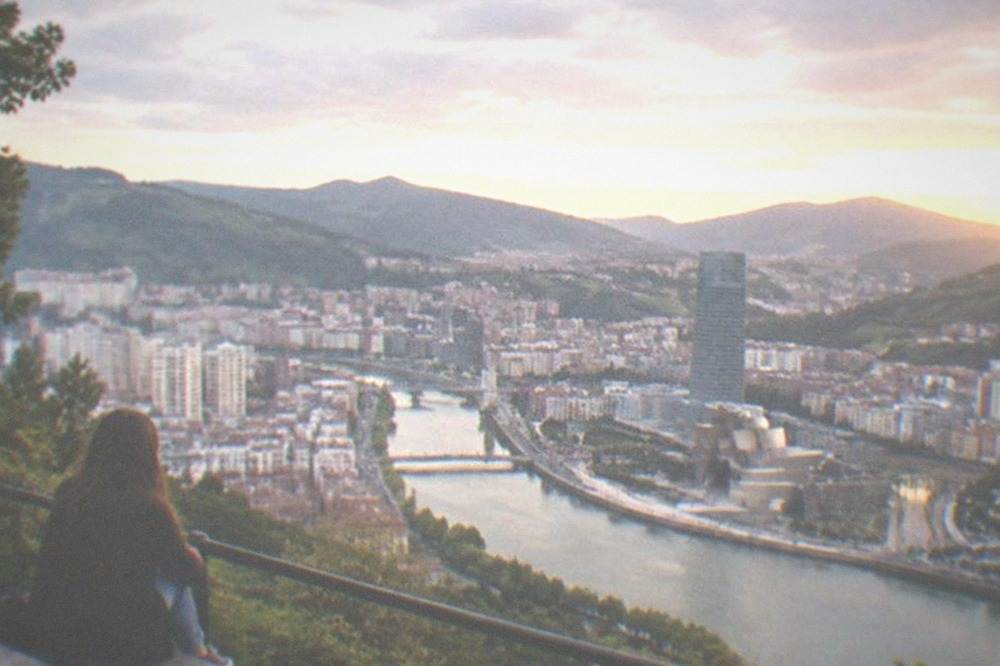
The best photography spots in Bilbao cluster along a walkable east-west spine: the Guggenheim Museum Bilbao and Puppy at the east end, the Zubizuri and La Salve bridges over the Nervion, the Artium-facing promenade of Abandoibarra, the Arriaga theatre and the Siete Calles of the Casco Viejo, and Plaza Nueva at the west end, with the Artxanda hill viewpoint above it all. The whole chain is roughly two kilometres end to end, which is why a single well-ordered day works so well here. The estuary runs through the middle of everything, so nearly every stop offers both an architectural frame and a reflection frame if you cross to the opposite bank.
The list below is the working shortlist for a one-day route. Times assume summer light; the light-timing section further down adjusts for season.
| Order | Spot | Signature frame | Best light |
|---|---|---|---|
| 1 | Guggenheim Museum Bilbao | Titanium curves with Puppy in the foreground | First hour after sunrise |
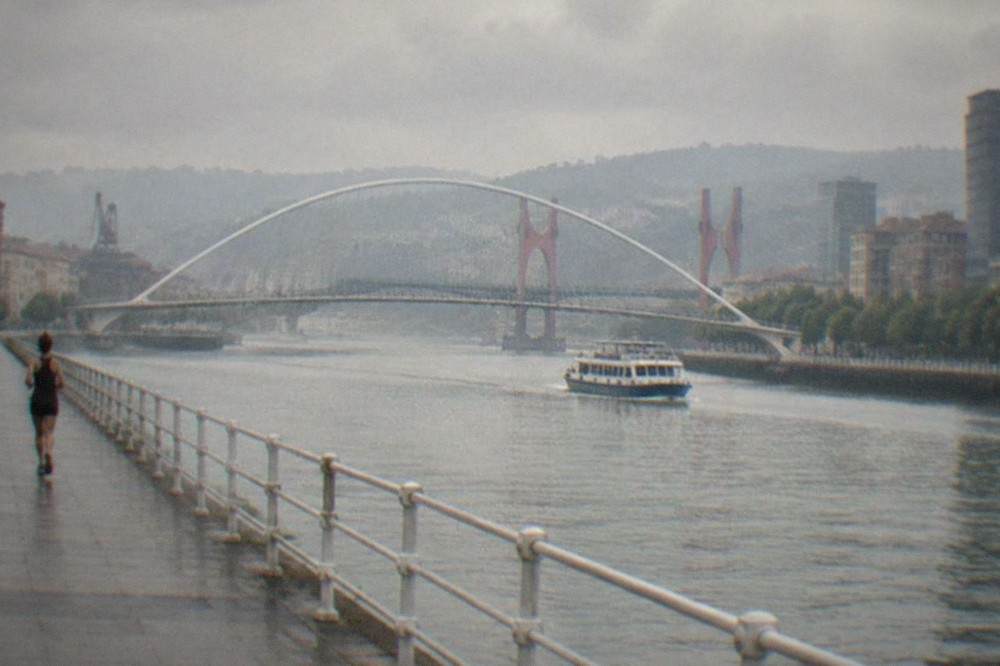
| 2 | Zubizuri bridge | White arch against La Salve's red pylons | Morning |
| 3 | Abandoibarra promenade | Euskalduna Palace and estuary reflections | Midday overcast |
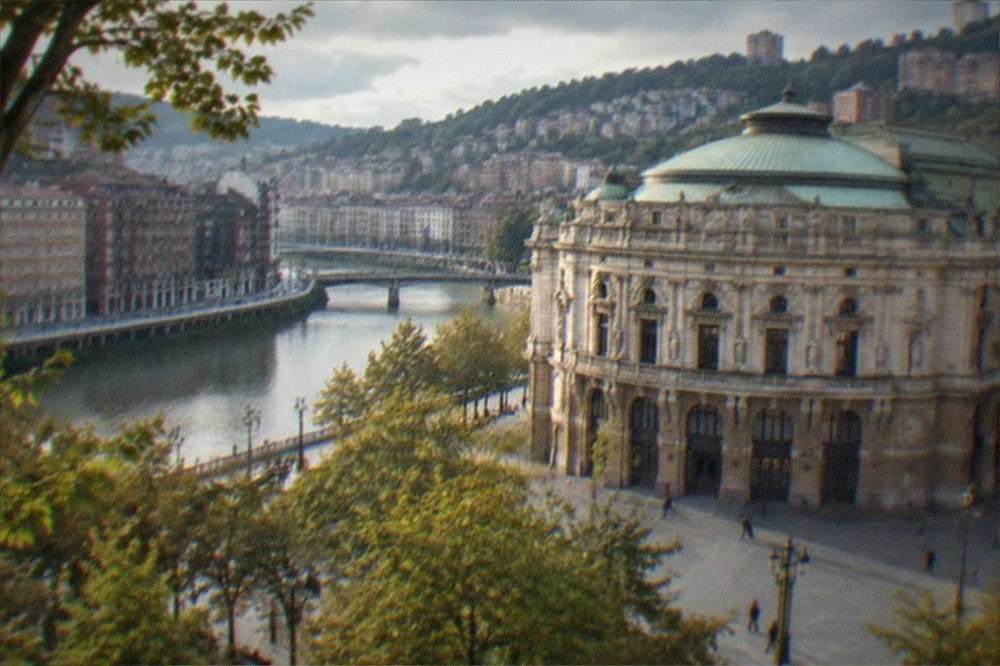
| 4 | Arriaga theatre | Ornate facade from the Arenal | Early afternoon |
| 5 | Siete Calles (Casco Viejo) | Narrow street canyons and hanging laundry | Late afternoon |
| 6 | Plaza Nueva | Symmetric arcades and pintxos-bar life | Golden hour |
| 7 | Artxanda viewpoint | Panorama of the whole city and estuary | Sunset |
For a deeper architectural route that overlaps with this one, the Bilbao architecture walking itinerary covers the buildings street by street, and the first-timers guide to Bilbao explains the geography if this is a first visit.
How Do You Photograph The Guggenheim Museum Bilbao?
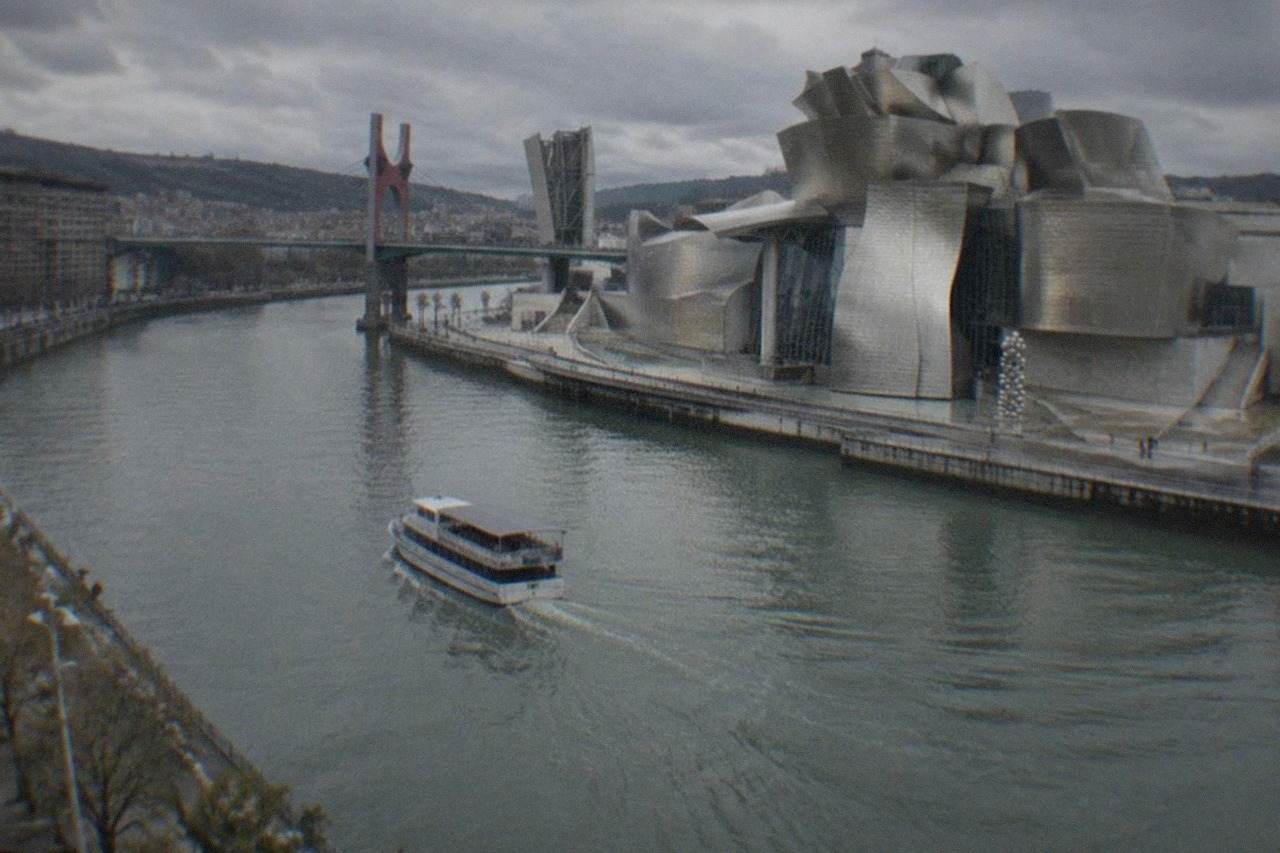
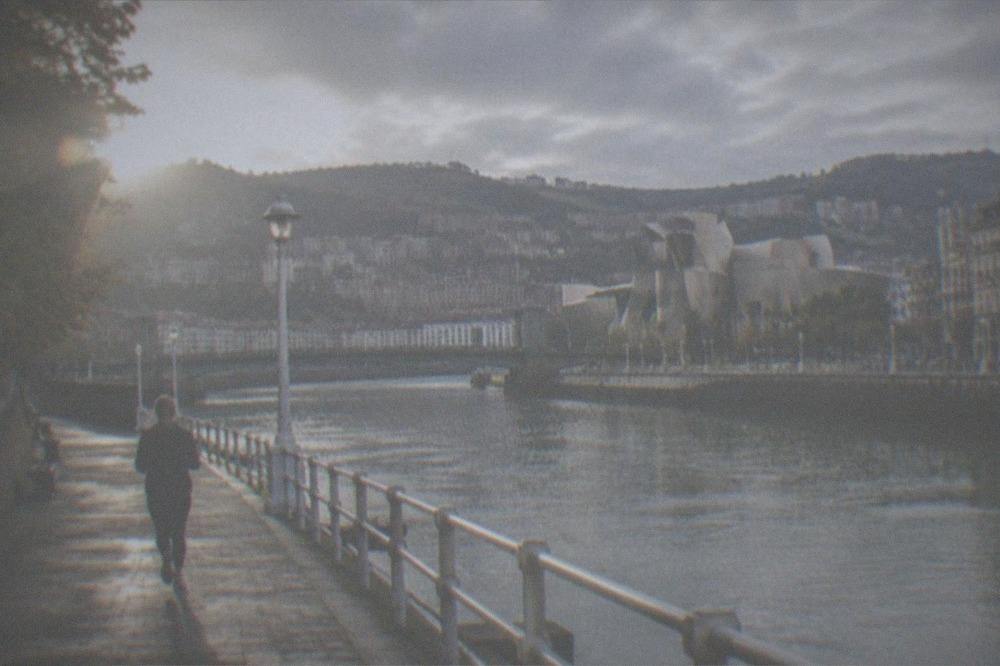
The Guggenheim Museum Bilbao is best photographed in the first hour after sunrise from the riverside path opposite, when the titanium panels pick up low, warm Atlantic light and the estuary is at its stillest, and the museum opens Tuesday to Sunday from 10:00 to 19:00, extending to 20:00 from 15 June to 13 September, so exterior shooting is best done before the crowds arrive. The museum's own site lists an adult ticket at EUR 18, with under-18s free, and every ticket includes the audio guide. For exteriors you need no ticket at all, only patience with the light.
Three frames matter here. First, the classic Puppy shot from the west, with Jeff Koons' flower dog in the foreground and the museum's curved mass behind it. Second, the reflection shot from the opposite (right) bank of the Nervion, where the building's silver skin doubles itself in the water at low tide. Third, the Maman spider sculpture beneath the elevated passarela, which works best in flat midday light when the overcast sky acts as a giant softbox, something Bilbao's oceanic climate supplies often.
Overcast is not a consolation prize in Bilbao, it is the default. AEMET's Bilbao Aeropuerto/Loiu station (1082), 1981-2010 normals, show 1,134 mm of rain a year spread across every month, from about 50 mm in July to 147 mm in November. Cloud cover diffuses the light and makes the titanium read as a smooth grey-silver rather than a harsh mirror, which is exactly what the wide architectural shots want. If you want blue sky behind the building, the July-August window is the statistically driest stretch.
Where Should You Shoot The Casco Viejo And Plaza Nueva?
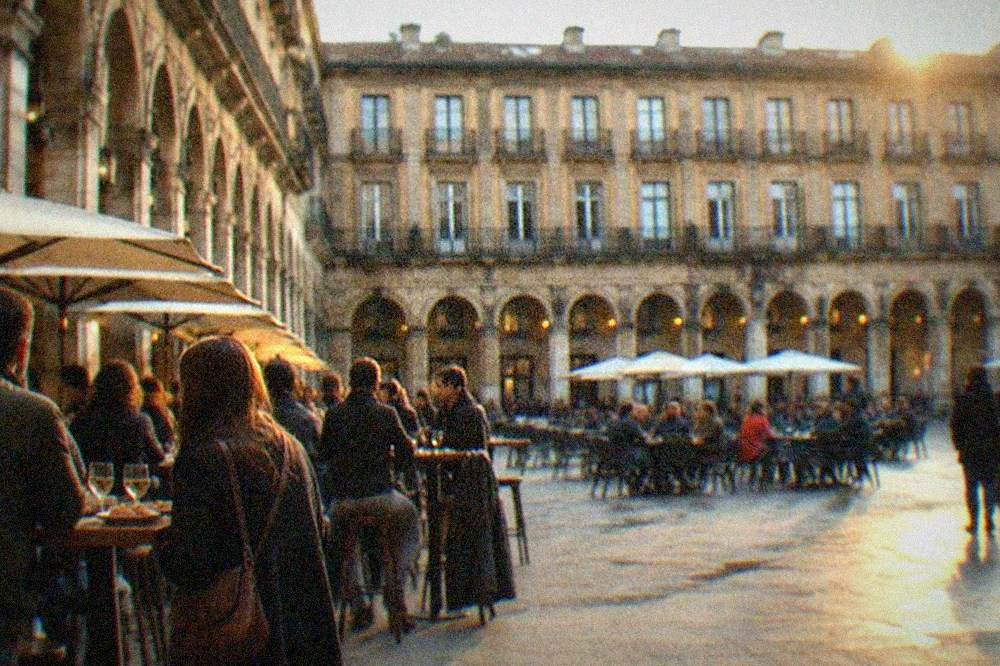
The Casco Viejo's Siete Calles and Plaza Nueva give Bilbao its most atmospheric frames between one and two hours before sunset, when the low sun rakes across the narrow street canyons of Somera, Infermiño and Barrenkale, and Plaza Nueva's symmetric sandstone arcades glow in golden-hour light while the pintxos bars set up for the evening txikiteo. The seven streets are the original medieval core, and their irregular widths, hanging signs and worn stone reward a short lens and a documentary eye.
Plaza Nueva is the single most reliable golden-hour frame in the city. The square is a closed rectangle of arcades, so whichever side the sun hits, the opposite arcade falls into clean shadow with warm reflected light bouncing off the stone floor. The bars around the perimeter, names like Gure Toki and Sorginzulo appear repeatedly in recent pintxos rankings, put people, motion and colour into the frame from late afternoon onward. Expect pintxo prices in the traditional bars to run roughly EUR 2-5 per piece, with drinks around EUR 2-3.50; check each bar's board, prices vary by preparation.
A food walk is the most natural way to shoot this quarter, because the bars themselves are the subject. The Bilbao food crawl itinerary is built around exactly these streets, and the best pintxos in Bilbao guide names the bars bar by bar.
A guided option pairs the photography with the eating: Check availability for the pintxos-and-drinks walk with a local, which moves through these same lanes at exactly the hours the light is best.
When Is The Best Light And Weather For Photography In Bilbao?
The best light for photography in Bilbao falls in July and August, the warmest and driest months in AEMET's 1981-2010 normals for station 1082, with means of 20.4 C and 20.9 C and about 50 and 76 mm of rain respectively, while November is the wettest month at 147 mm and the worst for reliable shooting, and the city's temperate oceanic climate means overcast soft light is available year-round. Never plan around Mediterranean assumptions: Bilbao sits on a tidal estuary about 15 km from the Bay of Biscay, and its weather behaves accordingly, with rain possible in every month.
The monthly figures below are the planning backbone for any photo trip. They are AEMET's official normals, not forecasts, so treat them as odds rather than promises.
| Month | Mean temp (C) | Rainfall (mm) | Photo-planning note |
|---|---|---|---|
| January | 9.3 | 120 | Cold, wet, moody estuary shots |
| February | 9.7 | 86 | Quieter streets, soft light |
| March | 11.5 | 90 | Spring green on the hillsides |
| April | 12.6 | 107 | Showery, dramatic skies |
| May | 15.7 | 78 | Long evenings, mild |
| June | 18.4 | 60 | Good balance of light and crowds |
| July | 20.4 | 50 | Driest, warmest, busiest |
| August | 20.9 | 76 | Aste Nagusia adds festival frames |
| September | 19.2 | 73 | Soft post-summer light |
| October | 16.4 | 111 | Autumn colour, wetter |
| November | 12.4 | 147 | Wettest, lowest light odds |
| December | 9.9 | 122 | Christmas lights, short days |
Golden-hour timing matters more than season. In midsummer the sun sets late enough that Plaza Nueva's golden hour can follow a full dinner-adjacent shoot; in December the light goes almost immediately after the working day ends, so the whole route compresses. If the forecast turns wet, the rainy day Bilbao itinerary lists the indoor-heavy alternatives, and the covered market halls and arcades of the Old Town keep shooting possible in anything short of a downpour.
One seasonal bonus worth marking: Aste Nagusia, Bilbao's nine-day main festival, ran 22-30 August in 2026, with the txupin opening at 19:00 in Plaza Arriaga and international fireworks each night at 22:30. A festival week multiplies the night-photography opportunities, at the cost of crowds in every frame.
What Camera Gear Works For A Bilbao Photo Walk?
A Bilbao photo walk is best served by one wide zoom for architecture (roughly 16-35mm equivalent), one fast standard prime (35mm or 50mm) for the Old Town's dim lanes and bars, a polariser for estuary reflections, and a small tripod or rigid clamp for the blue-hour Guggenheim shot, because the whole route is walkable and the city's oceanic light rewards diffusion over power. Leave the big bag at the hotel; the route is flat along the estuary and only climbs at the Artxanda end.
| Gear | Why it earns its place | Where it matters most |
|---|---|---|
| Wide zoom (16-35mm) | Handles the Guggenheim's scale and the bridge combos | Guggenheim, La Salve, Artxanda panorama |
| 35mm or 50mm prime, f/1.8 or faster | Low light inside bars and narrow streets | Siete Calles, Plaza Nueva, pintxos bars |
| Circular polariser | Controls estuary glare and wet-stone reflections | Nervion riverbank, Zubizuri |
| Compact tripod or clamp | Blue-hour and fireworks frames | Guggenheim riverside, Aste Nagusia nights |
| Rain sleeve or umbrella-friendly strap | 1,134 mm of annual rain, in every month | Everywhere, all year |
| Neutral-density filter | Smooths the tidal estuary into long exposures | Estuary promenade |
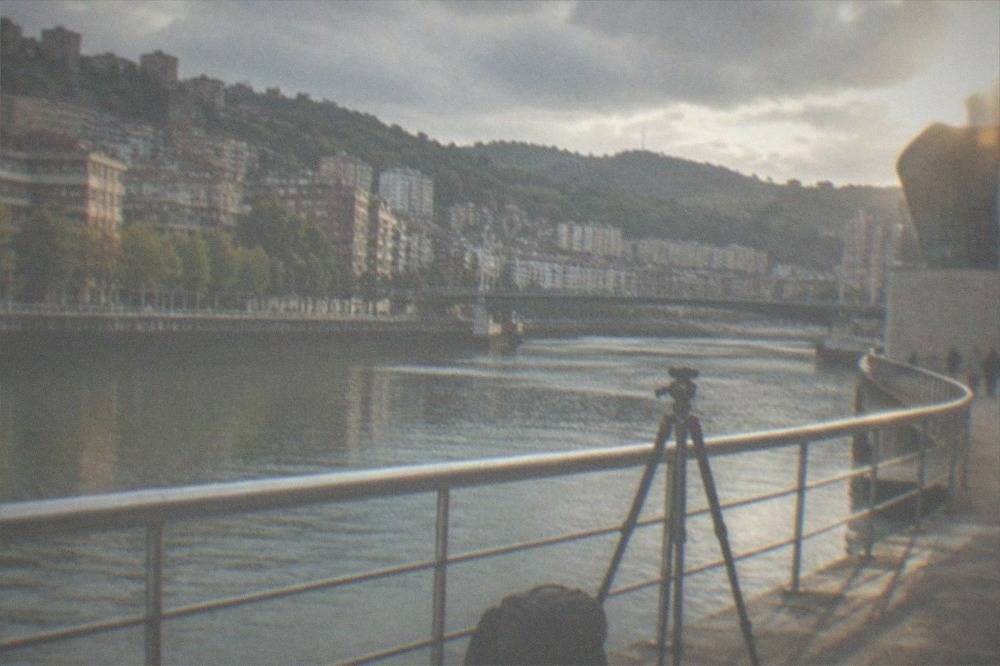
The one purchase decision specific to Bilbao is the tripod question at the Guggenheim. The exterior is public space and long exposures after dark are straightforward from the opposite bank, where the building's illuminated skin reflects in the water. Keep the tripod light and the footprint small; the riverside path is shared with runners and evening strollers.
How Do You Build A One-Day Bilbao Photography Itinerary?
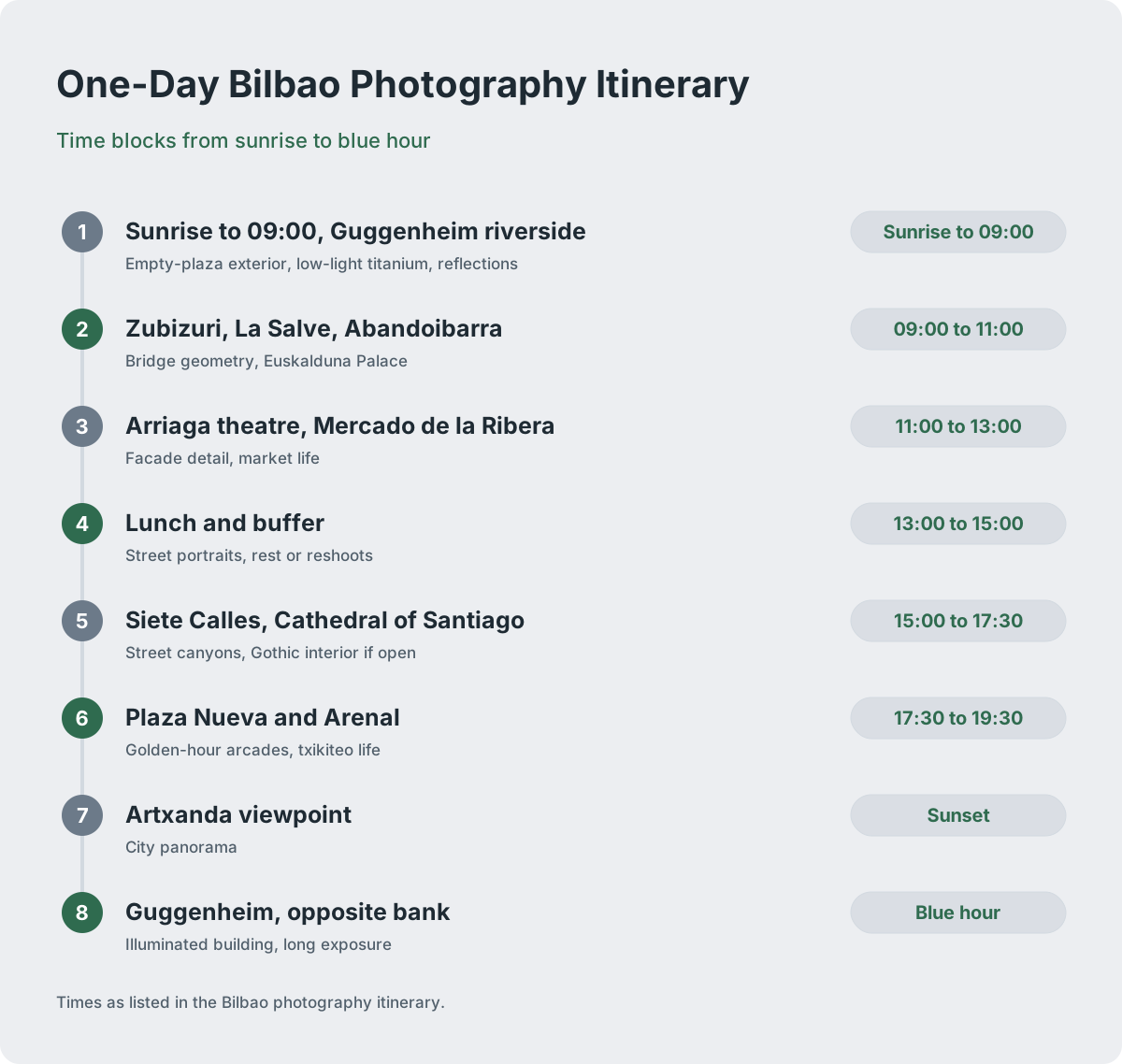
A one-day Bilbao photography itinerary runs dawn to night: the Guggenheim and riverside in the first two hours, Zubizuri and Abandoibarra through the morning, the Arriaga theatre and Mercado de la Ribera at midday, the Siete Calles from mid-afternoon, Plaza Nueva at golden hour, the Artxanda viewpoint for sunset, and the illuminated Guggenheim on the way back for a blue-hour finale. The order is dictated by the sun's east-west path and the fact that the estuary reflections are calmest early.
| Time block | Location | Frames to get |
|---|---|---|
| Sunrise to 09:00 | Guggenheim riverside, Puppy | Empty-plaza exterior, low-light titanium, reflections |
| 09:00 to 11:00 | Zubizuri, La Salve, Abandoibarra | Bridge geometry, Euskalduna Palace |
| 11:00 to 13:00 | Arriaga theatre, Mercado de la Ribera | Facade detail, market life |
| 13:00 to 15:00 | Lunch and buffer | Street portraits, rest or reshoots |
| 15:00 to 17:30 | Siete Calles, Cathedral of Santiago | Street canyons, Gothic interior if open |
| 17:30 to 19:30 | Plaza Nueva and Arenal | Golden-hour arcades, txikiteo life |
| Sunset | Artxanda viewpoint | City panorama |
| Blue hour | Guggenheim, opposite bank | Illuminated building, long exposure |
Two practical notes. First, the Artxanda funicular is the fastest way to the viewpoint: the reported occasional fare is EUR 3.50 one-way or EUR 6.00 round-trip, with lower Barik and social tariffs, though the operator's fares subpage should be checked on the day. Second, if you are trimming the day, cut the midday market block rather than either golden-hour slot; the market is lively but the light is at its least interesting then.
If one day is all you have, the one day in Bilbao itinerary is the non-photographer's version of the same geography, and the weekend in Bilbao plan adds a second day that could absorb the day-trip options below.
Which Bilbao Day Trips Reward The Camera Most?
The camera-first day trips from Bilbao are San Juan de Gaztelugatxe, the rocky hermitage-islet reached by a stone causeway and stairway, the Vizcaya Bridge at Portugalete, a UNESCO World Heritage transporter bridge whose gondola still carries passengers for EUR 0.60 one-way, and the coastal towns of the Urdaibai biosphere such as Bermeo and Mundaka, all reachable within about an hour to ninety minutes by public transport or tour. Gaztelugatxe in particular is one of the most photographed sites in northern Spain, and it needs planning, not just transport.
The access rules matter for photographers. A free timed reservation is required only on official controlled-access days, roughly mid-June to about 20 September daily plus Easter and holiday weekends per the yearly calendar, with a daily cap of 1,462 visitors and booking via tiketa.eus for up to 10 people per reservation. On all other days access is free without reservation, and as of 21 September 2026 it reverted to free, no-reservation access through the end of September. Certain romeria festival days (24 June, 31 July, 29 and 31 August, 30 December) are reserved for local events and are best avoided. The Gaztelugatxe day trip guide covers the logistics in full.
The Vizcaya Bridge is the other standout. It was inscribed by UNESCO in 2006 as the first industrial heritage site in Spain on the World Heritage list, and the pedestrian gondola crossing costs EUR 0.60 one-way in daytime hours, with the elevated walkway reported at EUR 11 adult round-trip (EUR 9 reduced, under-5s free, audio guide plus EUR 3); the walkway figure is a single-source report, so confirm at the site. Shooting the bridge's steel suspension profile from the Portugalete bank at low tide is the classic frame. The Vizcaya Bridge guide details the visit.
For a two-city photography trip, the San Sebastian day trip adds a second, very different photographic city, and the Bilbao and San Sebastian together plan shows how to split a week between them.
What Are The Photography Rules And Etiquette In Bilbao?
Photography in Bilbao's public spaces is generally straightforward, with the main constraints being inside museums and churches, where the Guggenheim permits non-flash photography in most galleries but bans tripods and commercial shoots, and inside the Cathedral of Santiago and other working churches where services take precedence and flash is discouraged, while street photography of people is subject to Spain's privacy norms and a polite ask goes further than a long lens. None of the outdoor spots on this itinerary requires a permit for personal use.
| Location | Photography rules as reported |
|---|---|
| Guggenheim Museum Bilbao exterior | Public space, no restrictions on personal photography |
| Guggenheim galleries | No flash, no tripod, no commercial shoots; check signage per exhibition |
| Cathedral of Santiago | No flash, no tripod; avoid services |
| Mercado de la Ribera | Ask stallholders before close-ups of their counters |
| Pintxos bars | Ask before photographing staff and the bar display at busy times |
| San Mamés stadium tour | Interior tour photography generally permitted; match days restrict access |
| Vizcaya Bridge walkway | Personal photography fine; watch the open grill decking near the edge |
One museum-timing note for the fine-art-inclined: the Bilbao Fine Arts Museum was closed from 31 August to 5 October 2026 for final renovation works and reopened on 6 October 2026, with a free entry week reported for 6-13 October and adult admission of EUR 12 from 14 October, plus a joint Artean pass with the Guggenheim at EUR 16. Treat the reopening details as reported rather than guaranteed, and check the museum's own page before planning an interior shoot.
Common Questions About A Photography Itinerary For Bilbao
What Is The Best Time Of Day To Photograph The Guggenheim Museum Bilbao?
The first hour after sunrise for empty exteriors and calm estuary reflections, or blue hour for the illuminated titanium skin. The museum itself opens Tuesday to Sunday from 10:00 to 19:00, extending to 20:00 from 15 June to 13 September.
How Many Days Do You Need For A Photography Itinerary For Bilbao?
One full day covers the core city route from the Guggenheim to Plaza Nueva with the Artxanda sunset. A second day is worth adding for Gaztelugatxe and the coast, and a third for San Sebastián or the Rioja wine country.
Is Bilbao Good For Street Photography?
Yes. The Siete Calles, Plaza Nueva, the Arenal and the riverside promenades give a compact, walkable mix of medieval lanes, arcades and modern architecture, and the evening txikiteo puts people and colour into every frame.
What Weather Should Photographers Expect In Bilbao?
A temperate oceanic climate with 1,134 mm of rain a year, from about 50 mm in July to 147 mm in November. Overcast soft light is common and works well for architecture; bring rain protection in every season.
Do You Need A Tripod For Night Photography In Bilbao?
A small one helps for the blue-hour Guggenheim reflection shot and the Aste Nagusia fireworks, but tripods are not allowed inside the museum galleries, so keep it light and use it only in the public riverside spaces.
Can You Photograph San Juan De Gaztelugatxe Without A Reservation?
On non-controlled days, yes, access is free without any reservation. On controlled-access days, roughly mid-June to about 20 September plus Easter and holiday weekends, a free timed ticket via tiketa.eus is required, with a daily cap of 1,462 visitors.
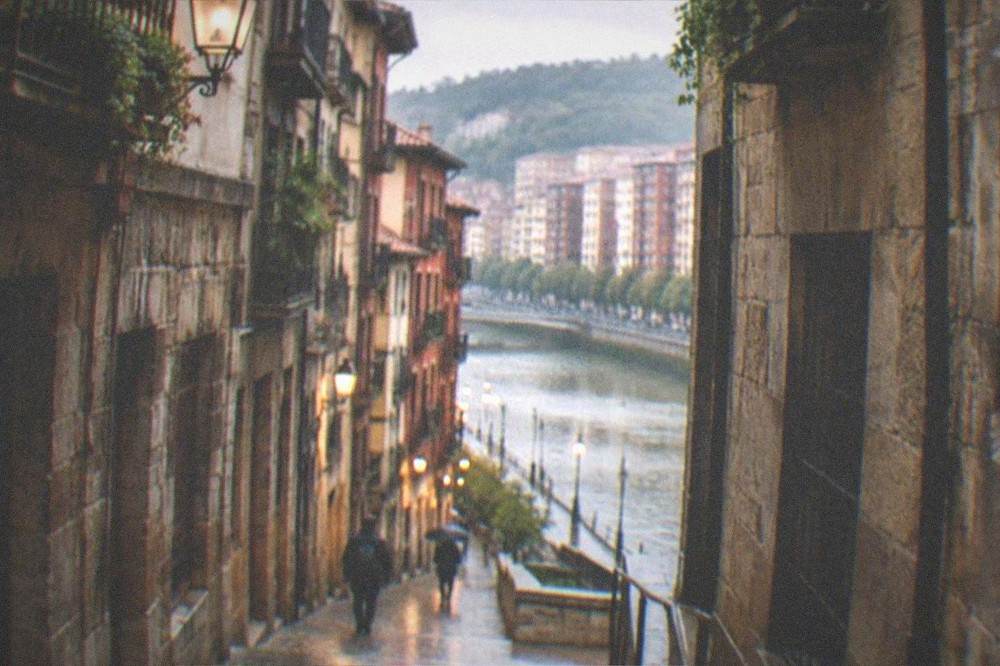
The final planning note is the one most guides miss: Bilbao's light is Atlantic light, and it changes fast. A morning that opens grey can deliver a burnished golden hour two streets later, so build slack into the route, keep the polariser handy, and let the estuary decide the order of the day.