Bilbao's Architecture Beyond The Guggenheim
Bilbao, in Spain's Basque Country, is one of Europe's most compact case studies in urban architecture, and almost none of that story is actually about titanium.
Short answer
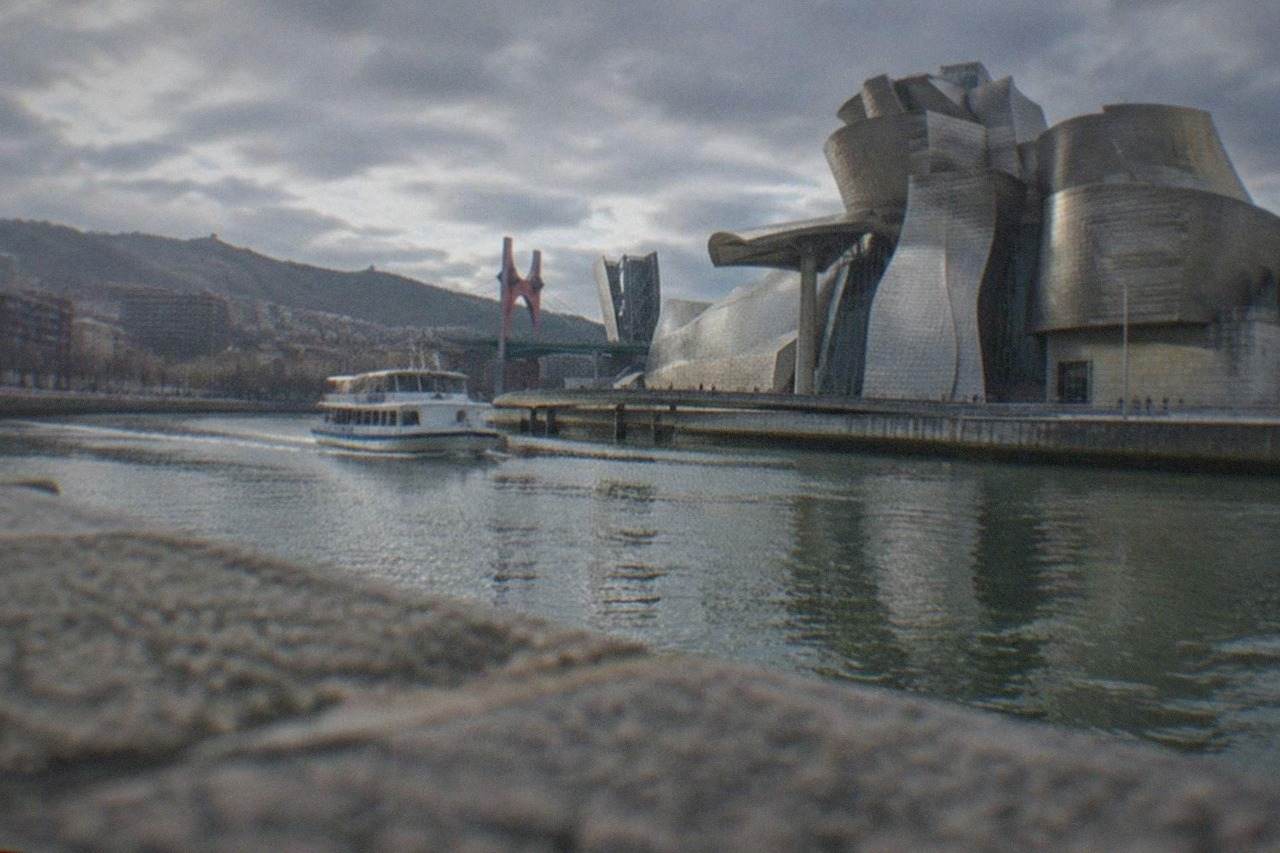
Bilbao's architecture runs from the medieval Seven Streets of Casco Viejo through the Ensanche grid to a dense band of contemporary landmarks along the Nervion estuary, with the Guggenheim as the best known but by no means the only turning point.
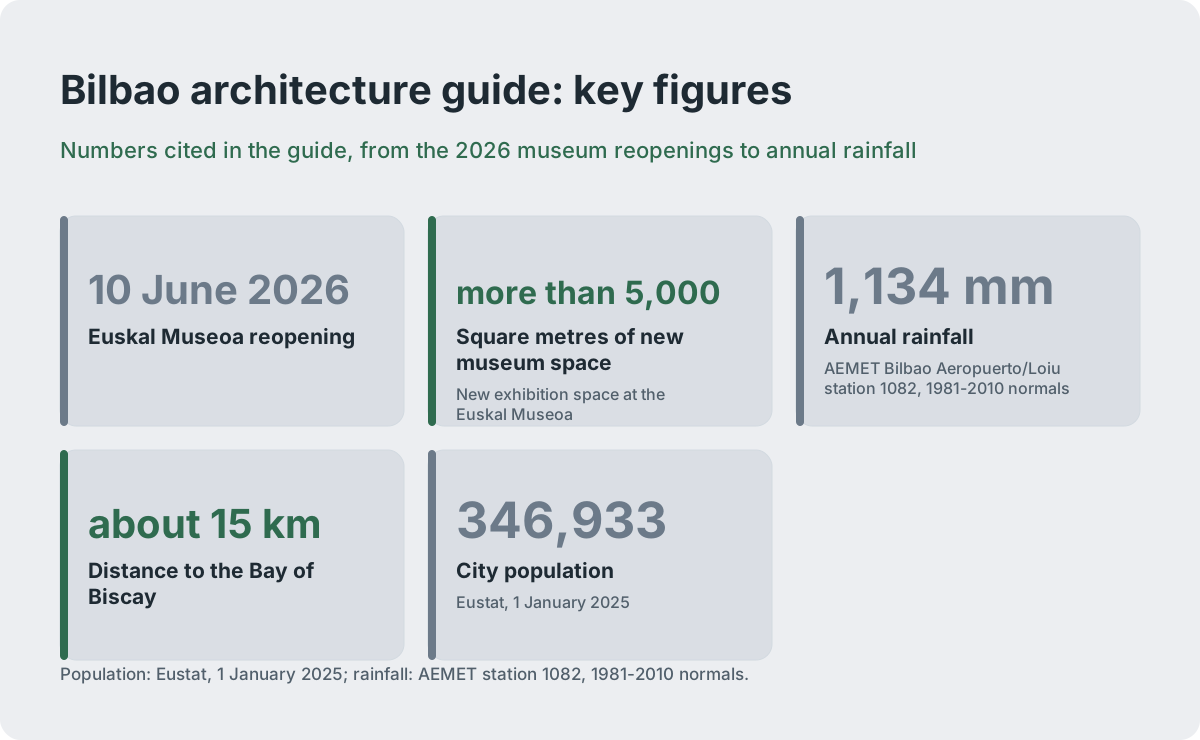
Bilbao, in Biscay (Bizkaia) province, Basque Country, northern Spain, is a city whose architectural reputation was captured by a single building in 1997, which is exactly why the rest of its built fabric is so under-read. The city of 346,933 people (Eustat, 1 January 2025) sits on the tidal Nervion/Ibaizabal estuary about 15 km from the Bay of Biscay, and its buildings tell a long story: a medieval trading town of Seven Streets, an industrial boom that funded a planned grid of banking blocks, and a deliberate reinvention that scattered contemporary landmarks along the waterfront. The Guggenheim is one chapter. This guide walks the whole book.
What Defines Bilbao's Architecture Beyond The Guggenheim?
Bilbao's architectural identity is a layered sequence rather than a single style: a medieval core of narrow stone streets, the planned Ensanche district of grid-laid blocks, an industrial riverfront of warehouses, cranes and iron bridges, and a post-1997 band of contemporary cultural buildings that turned the derelict waterfront into the city's main stage. Understanding the city means reading all four layers, because each one was built in direct reaction to the one before it.
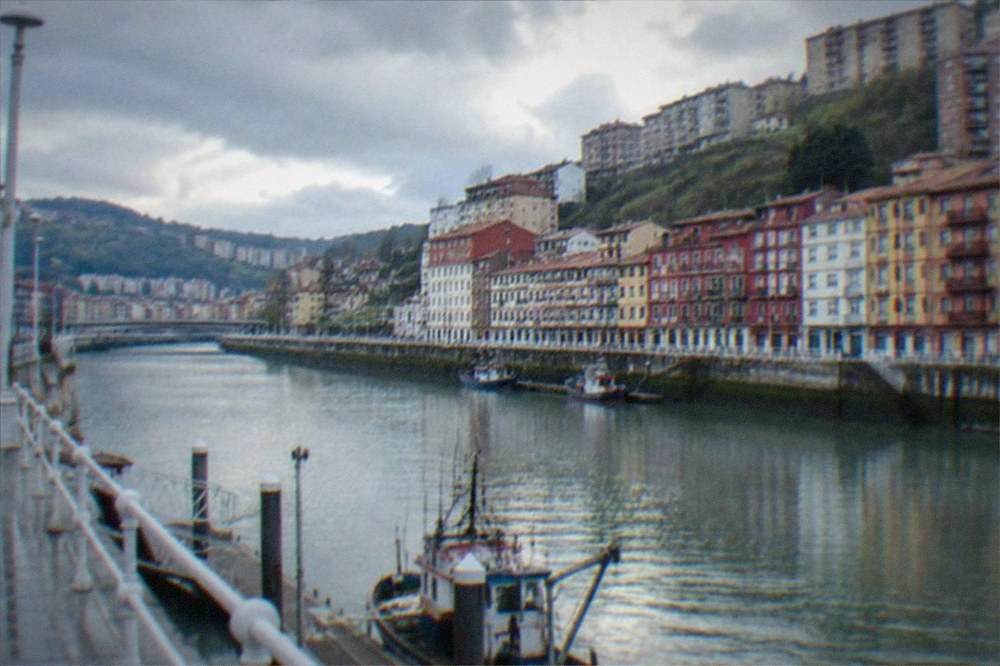
The deepest layer is Casco Viejo, the Old Town on the right bank of the estuary, where the Siete Calles (Seven Streets) preserve a medieval street plan of the kind that survived elsewhere in northern Spain precisely because Bilbao's later money moved the city centre downhill. The second layer is the Ensanche, the planned extension drawn up after the city's walls came down, a regular grid of blocks that gave Bilbao its banking and commercial quarter and still defines the modern city centre around Moyua. The third layer is industrial: quays, iron bridges, and the transporter bridge at Portugalete downstream. The fourth layer is the reinvention, the museums, towers and footbridges built along the water after the shipyards closed.
That sequence is unusually legible for a city of this size. A visitor can walk all four layers in a single afternoon, which is the main argument for treating Bilbao as an architecture destination in its own right rather than a one-building detour. The Bilbao architecture walking itinerary on this site sequences the full route stop by stop, and the rest of this guide explains what you are actually looking at.
Which Buildings Shaped Bilbao Before The Guggenheim?
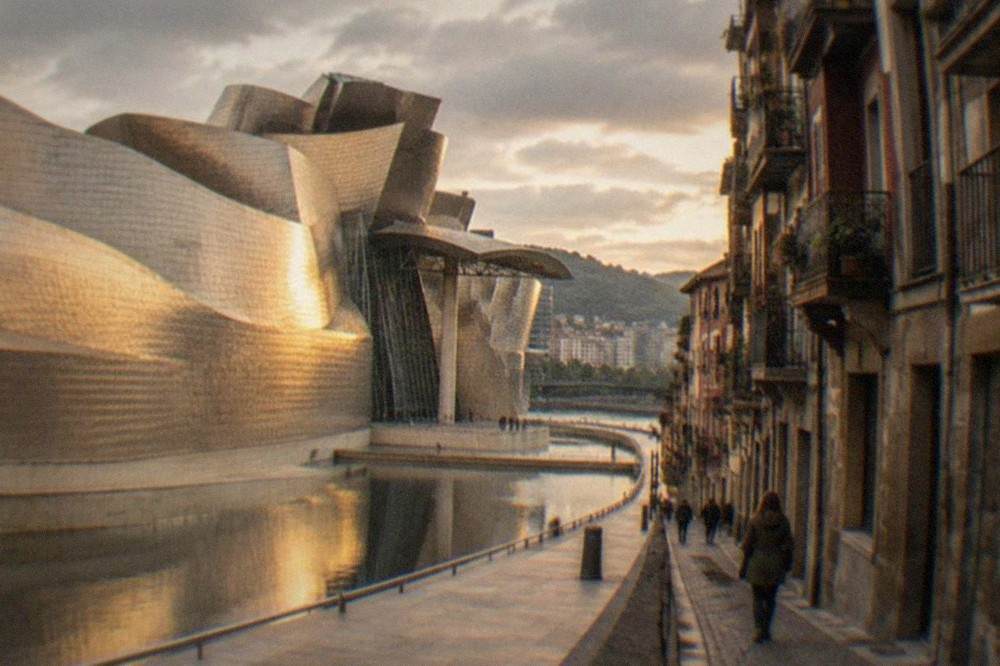
The buildings that made pre-Guggenheim Bilbao are the Gothic Santiago Cathedral at the heart of Casco Viejo, the festive opera house of the Arriaga Theatre facing it across a small square, the iron-framed Mercado de la Ribera, the great Alhondiga wine warehouse, and the Ensanche's arcaded blocks around Moyua square, together with the Vizcaya Bridge downstream at Portugalete, the world's first transporter bridge and a UNESCO World Heritage Site since 2006.
The Santiago Cathedral is the Old Town's anchor: a modest Gothic church on the pilgrimage route to Santiago de Compostela, hemmed in by the Seven Streets on all sides so that it can only be seen properly from its small adjoining square. It is a church that grew with the town, not over it, and its compressed setting is the point. The Casco Viejo Old Town area guide covers the surrounding streets, whose dense four- and five-storey buildings with overhanging balconies date largely from later rebuilds after the area's repeated floods.
Across the estuary in the Ensanche, the pre-Guggenheim city is at its most formal. The Arriaga Theatre, an ornate opera house in a celebratory historicist style, sits at the head of the Arenal, the promenade that was for decades Bilbao's front room. The Mercado de la Ribera, rebuilt in the interwar years as one of Europe's largest covered markets, brings an Art Deco-inflected industrial vocabulary to the river edge of the Old Town. And the Alhondiga, the monumental wine warehouse of the city's industrial era, spent decades as a derelict monument to that past before its conversion into the Azkuna Zentroa cultural centre, complete with a swimming pool suspended above the atrium floor.
The single most important pre-Guggenheim structure is not in the city centre at all. The Vizcaya Bridge at Portugalete was built to carry passengers and vehicles across the estuary while letting tall-masted ships pass beneath, and it was the first transporter bridge ever constructed. UNESCO inscribed it in 2006 as the first industrial heritage site in Spain on the World Heritage list. The gondola still carries pedestrians across for EUR0.60 one-way in daytime hours, higher at night; the upper walkway ticket is reported at EUR11 adult round-trip (EUR9 reduced, under 5 free, audio guide +EUR3), though that walkway figure comes from a single source and should be confirmed on the operator's own listing. The Vizcaya Bridge guide covers the visit in full.
| Building | District | Architectural layer | What to look for |
|---|---|---|---|
| Santiago Cathedral | Casco Viejo | Medieval | Gothic church hemmed in by the Seven Streets |
| Arriaga Theatre | Arenal / Old Town edge | Historicist | Festive opera-house facade on the promenade |
| Mercado de la Ribera | Casco Viejo riverfront | Industrial | Iron frame and river-facing market hall |
| Alhondiga (now Azkuna Zentroa) | Abando / Indautxu edge | Industrial, converted | Brick shell and column grid around a new interior |
| Vizcaya Bridge | Portugalete-Getxo | Engineering | Suspended gondola crossing, UNESCO-listed |
The point of the table is that Bilbao's "old" architecture is not one period but at least three, and they sit within twenty minutes' walk of one another. Even the most architecture-focused visitor usually pairs the city's buildings with its food culture, since the Old Town's bars sit inside the same streets; the best pintxos are mapped against exactly these blocks elsewhere on this site.
If your architecture trip has a spare day, the Basque coast and inland towns offer a completely different built heritage, from fishing-port stone to walled Riojan villages. These three excursions are the ones architecture-minded visitors most often add to a Bilbao stay:
How Did The Guggenheim Change Bilbao's Skyline?
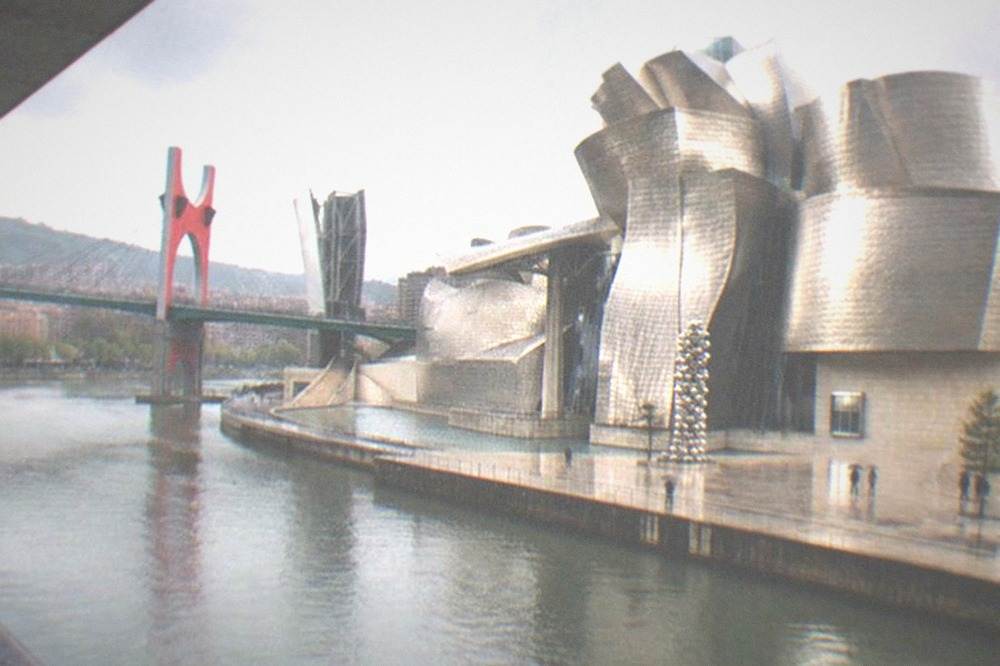
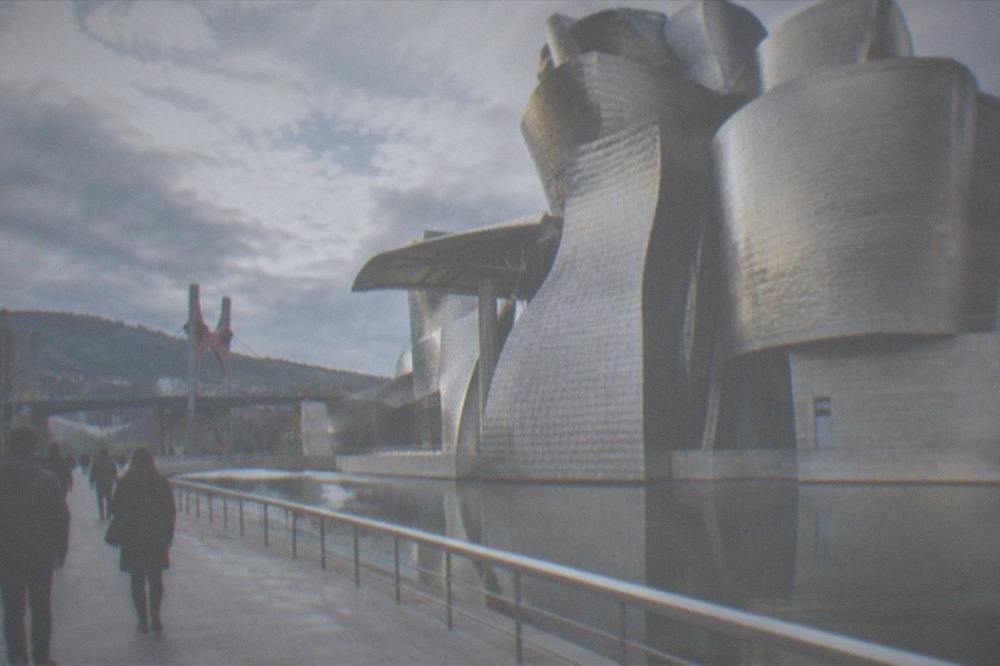
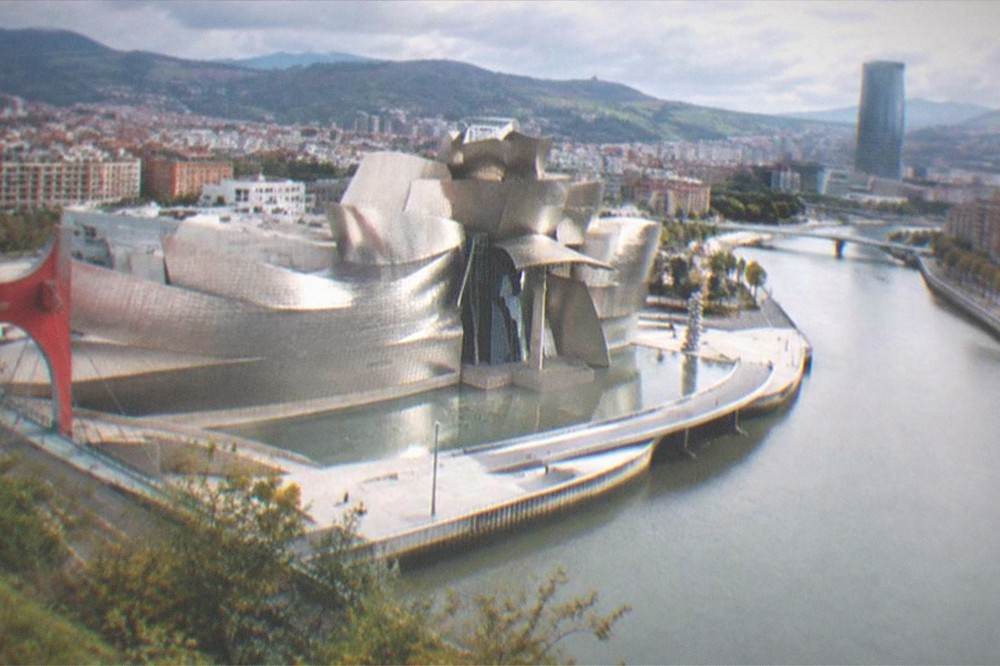
The Guggenheim Museum Bilbao, opened in October 1997 on a derelict riverfront shipyard site, replaced Bilbao's industrial skyline with a free-form titanium-clad building that became the global shorthand for culture-led urban regeneration, and the museum district around it, Abandoibarra, was subsequently rebuilt as a planned quarter of towers, parks and cultural venues on land the shipyard had previously occupied.
The building itself needs no introduction, but its site does. Frank Gehry's museum stands on the Nervion's bend at the foot of the Salve bridge, where the city's port activity had decayed into vacant land well before the project was conceived. The Basque administration's decision to place a branch of the Solomon R. Guggenheim Foundation there was part of a wider plan, not a lone gesture: the riverside promenade, the Euskalduna Conference Centre a few hundred metres downstream, and the later redevelopment of the whole Abandoibarra peninsula were all elements of the same strategy. The Guggenheim Museum Bilbao attraction guide covers the visit itself; the museum's own site lists an adult ticket at EUR18 and opening hours of Tuesday to Sunday 10:00-19:00, extended to 20:00 during Easter week and from 15 June to 13 September.
What the building did to the skyline is subtler than the postcard suggests. The museum's curved forms deliberately mirror and engage the Salve bridge it sits beneath, and its limestone and titanium surfaces were chosen to read against the grey Atlantic light of a city with 1,134 mm of annual rainfall (AEMET Bilbao Aeropuerto/Loiu station 1082, 1981-2010 normals). The museum works in Bilbao's climate rather than despite it: wet titanium and dry titanium are almost two different buildings.
The regeneration effect, the so-called "Bilbao effect", has been debated in urban planning circles ever since, but the physical facts on the ground are not in dispute. Abandoibarra, formerly the shipyard, is now a quarter of law courts, the Iberdrola Tower, riverside parks and the museum itself. The Euskalduna Palace, built on the site of the former Euskalduna shipyard whose name it carries, opened as a conference centre and opera house whose rust-toned cladding is a deliberate reference to the hulls once built there.
| Abandoibarra-area landmark | Former use of the site |
|---|---|
| Guggenheim Museum Bilbao | Shipyard and port land |
| Euskalduna Conference Centre | Euskalduna shipyard |
| Iberdrola Tower | Railyards and cleared industrial land |
| Azkuna Zentroa (Alhondiga conversion) | Wine warehouse |
Visitors who want the museum's interior with expert context rather than a self-guided wander can book a small-group guided visit; the VIP Guggenheim experience below is the most-reviewed option of that kind, and the entry-ticket-only option suits visitors planning their own route through the galleries.
Which Contemporary Buildings Complete The Post-1997 Set?
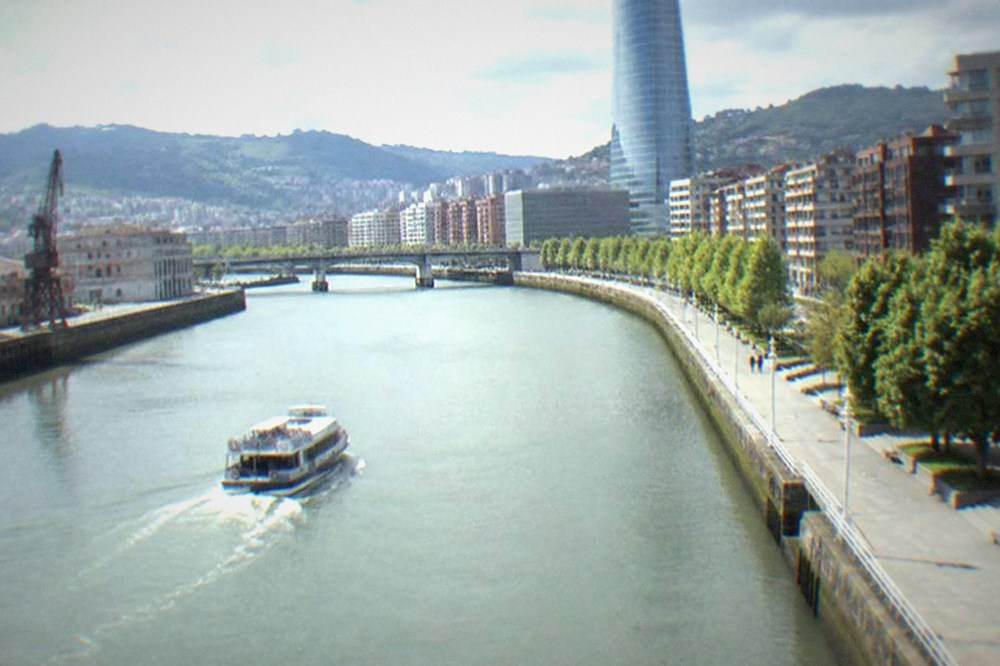
Beyond the Guggenheim, the contemporary landmarks that complete Bilbao's architectural reinvention are the Azkuna Zentroa's conversion of the old Alhondiga warehouse, the Iberdrola Tower, the Zubizuri footbridge by Santiago Calatrava, the Isozaki Towers at the Bilbao Exhibition Centre site in Barakaldo, and the renovated museum buildings of 2026, the reopened Euskal Museoa and the Fine Arts Museum, which together keep the city's building stock in permanent motion.
The Azkuna Zentroa deserves more attention than it usually gets from visitors heading straight for the Guggenheim. The conversion kept the warehouse's brick shell and column grid and inserted a leisure centre, library, cinema and exhibition halls, with the celebrated suspended pool visible from below through a glass floor. It is the clearest single demonstration of Bilbao's core architectural idea: the new city is built inside and around the industrial one rather than on top of it. The Azkuna Zentroa guide covers the building and its programme.
The Iberdrola Tower, at the Abandoibarra end of the quarter, brought high-rise corporate architecture to a city that had none, and its stepped profile now anchors the skyline view from the Funicular de Artxanda's upper station. The funicular itself, a historic iron railway climbing the hillside above the estuary, is architecture of a different and older kind, and one of the best vantage points for reading the city's layers from above; its reported fares are EUR3.50 one-way and EUR6.00 round-trip, though that figure comes from a single source and should be checked against the operator's own listing.
The Zubizuri, Calatrava's white tied-arch footbridge across the Nervion, and the Puente de la Salve, the road bridge the Guggenheim nestles against, complete the contemporary river crossings; both are covered in the bridges section below. And the 2026 museum works matter to any architecture itinerary: the Euskal Museoa's reopening on 10 June 2026 added more than 5,000 square metres of new exhibition space to a historic Casco Viejo building, while the Fine Arts Museum's 6 October 2026 reopening restores one of the city's major cultural buildings after its final renovation phase. The Bilbao museums guide tracks all of them.
| Contemporary landmark | What it demonstrates |
|---|---|
| Azkuna Zentroa | Adaptive reuse of industrial heritage |
| Iberdrola Tower | Corporate high-rise on regenerated land |
| Zubizuri footbridge | Signature infrastructure as public space |
| Euskal Museoa renovation | Historic building expanded, reopened 10 June 2026 |
How Do Bilbao's Bridges Read As Architecture?
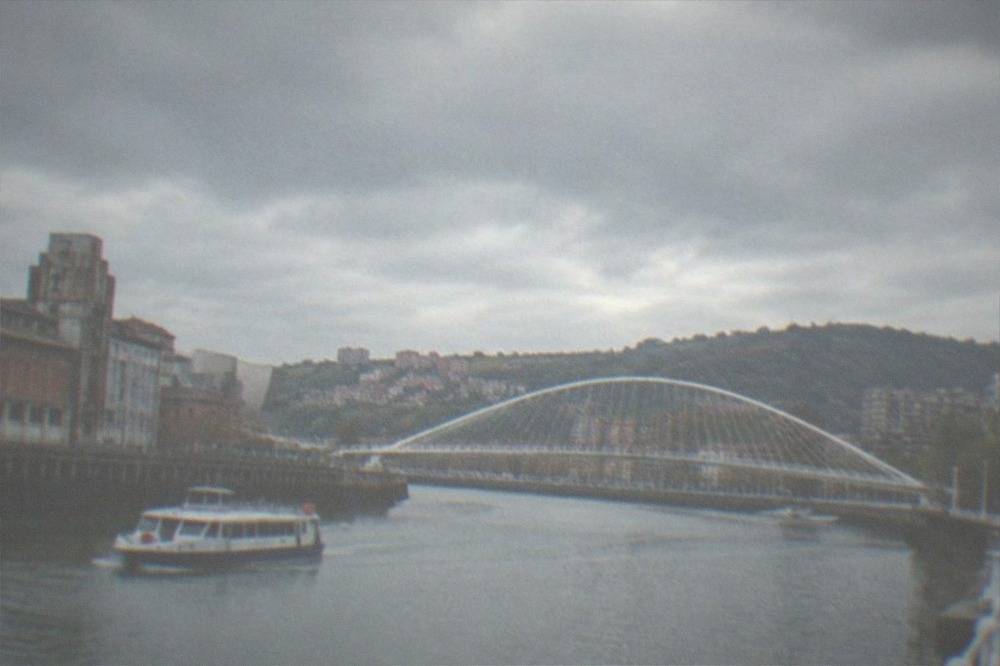
Bilbao's bridges are architecture in their own right, spanning several distinct eras in a single two-kilometre stretch of the Nervion: the old stone crossings at the Old Town's core, the Puente de la Salve's high road deck that the Guggenheim deliberately engages, Calatrava's Zubizuri white footbridge, the UNESCO-listed transporter bridge downstream at Portugalete, and the series of steel and concrete crossings that each solved the estuary's ship traffic problem in a different era's engineering language.
The estuary made Bilbao, and the estuary's crossings are the city's most honest architectural record, because every bridge here had to answer the same question, how to let ocean-going ships pass, and each era answered it differently. Stone arches in the shallow upper reaches where masts were short. High-deck road bridges where ships had stopped coming. A suspended gondola at Portugalete where the crossing had to stay low but the ships stayed tall.
The Zubizuri is the most photographed after the Guggenheim itself, a white tied-arch deck that reads as sculpture from the riverbank and as a gentle S-curve underfoot. It was completed in 1997, the same year as the museum, and the pairing of a signature-architect footbridge with a signature-architect museum within a few hundred metres is the clearest signal of how deliberately the city commissioned its reinvention. The Puente de la Salve, by contrast, is the bridge that architecture tourists photograph by accident: its red-painted steel approach ramps frame the Guggenheim from the east, and Gehry's building was sited to complete the bridge's composition rather than compete with it.
Downstream at Portugalete, the Vizcaya Bridge answers the same question with genuine period engineering: a rigid steel span high enough for sailing ships, carrying a suspended gondola that shuttles pedestrians and a handful of vehicles across in a couple of minutes. It is the only bridge on the list that is itself a visitor attraction with a ticket, and the only one that is UNESCO-listed. Reaching it is simple on the metro toward Getxo, and the Getxo guide pairs the bridge with the coastal architecture of the Neguri mansions on the far bank.
| Bridge | Crossing type | Distinct feature |
|---|---|---|
| Old Town stone bridges | Stone arch | Low-deck river crossings |
| Puente de la Salve | Steel road bridge | Frames the Guggenheim from the east |
| Zubizuri | Tied-arch footbridge | White signature deck by Calatrava |
| Vizcaya Bridge | Transporter bridge | UNESCO-listed gondola crossing |
How Do You Explore Bilbao's Architecture On Foot?
Bilbao's architectural layers compress into a walkable sequence of roughly two to three hours from Casco Viejo through the Ensanche to Abandoibarra, following the estuary's right bank past the Ribera Market and Arriaga Theatre, crossing to the Ensanche grid at the Arenal, then returning to the river for the Zubizuri, the Guggenheim and the Euskalduna, with the Artxanda funicular as an optional elevated finale that shows the whole sequence from above.
The walk works because the city's geography enforces the order. The Old Town sits on the right bank at the estuary's narrowest medieval crossing point; the Ensanche spreads southwest of it on higher, flatter ground; and Abandoibarra returns to the water downstream. A visitor who simply follows the river from the Ribera Market to the Euskalduna passes through every architectural era in chronological order without ever needing a map, and the Bilbao architecture walking itinerary adds timings, stops and detours to that spine.
Two practical notes change the experience. First, the weather: AEMET's Bilbao Aeropuerto/Loiu station 1082 normals give monthly rainfall from 50 mm in July to 147 mm in November, so the outdoor two-thirds of the walk is far better in the July-August window of 20.4-20.9 C mean temperatures than in the November peak; the Bilbao weather guide has the full monthly picture, and the rainy-day itinerary elsewhere on this site reroutes the same interest indoors. Second, the indoor anchors: the Fine Arts Museum's closure window of 31 August to 5 October 2026 removes one of the walk's traditional wet-weather stops, so check its reopening status (6 October 2026, with a free-entry week 6-13 October) before planning around it.
For visitors who prefer the river from the water rather than the bank, the estuary's boat tours give the only vantage point from which the Guggenheim, the Salve bridge and the Euskalduna read as a single composition. And for those who want a guide rather than a map, a small-group walking tour of the Old Town's architectural core is the most popular format:
Where Does Bilbao's Architecture Sit In The Wider Basque Context?
Bilbao is the Basque Country's architectural capital but not its whole story: San Sebastián's belle epoque waterfront, the walled medieval village of Laguardia in Rioja Alavesa, the fishing-port stone of Bermeo and Lekeitio, and the French Basque towns of Biarritz and Saint-Jean-de-Luz form a regional ring of contrasting built traditions, all reachable from Bilbao in under two and a half hours, which makes the city the natural base for a comparative architecture trip.
The comparison is not decorative. San Sebastián, about an hour and twenty minutes east along the coast by direct bus, is the counter-example that defines Bilbao: a purpose-built resort of white belle epoque facades facing a perfect bay, where Bilbao is a working port city that happened to acquire a museum. The San Sebastian day trip guide covers the practical route, and the Bilbao-versus-San-Sebastian comparison elsewhere on this site helps decide which city suits your trip.
Inland, the Rioja Alavesa villages, Laguardia above all, preserve a completely different tradition: walled medieval hill towns in honey-coloured stone, sitting above vineyards whose own winery architecture, from showpiece contemporary buildings to deep underground cellars, forms a second architectural circuit that pairs naturally with Bilbao's contemporary one. The Rioja wine day trip guide covers the route.
The Basque coast supplies the third register. Bermeo's harbour houses, Gaztelugatxe's hermitage on its rock causeway, and the seaside mansions of Getxo's Neguri district are all vernacular traditions that the Guggenheim era deliberately did not touch, which is exactly why they read so clearly. A day trip that strings the coast's architecture together is the most efficient way to see it, and the most-booked coastal excursion from Bilbao is below; you can also Check availability alongside the internal guide to that San Sebastian and Getaria excursion.
| Regional architecture day trip | Tradition you see | Travel basis from Bilbao |
|---|---|---|
| San Sebastián | Belle epoque resort waterfront | Direct bus, about 1h 20m |
| Laguardia (Rioja Alavesa) | Walled medieval hill town | Car or organised excursion |
| Getxo / Portugalete | Seaside mansions and the transporter bridge | Metro, about 30 min |
| Bermeo / Gaztelugatxe | Fishing port and rock hermitage | Train or excursion, about 1h 20m |
When Is The Best Time To See Bilbao's Architecture?
The best months for architecture-focused sightseeing in Bilbao are July and August, when AEMET's Bilbao Aeropuerto/Loiu station 1082 normals give mean temperatures of 20.4 and 20.9 C with the year's lowest rainfall of 50 and 76 mm respectively, though June and September run close behind at 18.4 and 19.2 C with 60 and 73 mm, and the November peak of 147 mm is the month to avoid for a walking-heavy itinerary built around outdoor landmarks.
The reasoning is about light and surface as much as dry pavement. Bilbao's climate is temperate oceanic, Atlantic-influenced, never Mediterranean, and its 1,134 mm of annual rain is what keeps the Guggenheim's titanium reading as a soft silver rather than a hard glare. Photographers who want the building's wet-surface reflections actually want the shoulder months; photographers who want blue-sky postcards want July and August.
Two timing factors are unique to 2026 and 2027. First, the museum calendar: the Fine Arts Museum is closed 31 August to 5 October 2026 and reopens 6 October with a free-entry week to 13 October, so an autumn 2026 visit can catch the reopened building at no admission cost, and the Euskal Museoa has been open since 10 June 2026. Second, the tourist tax: a Bizkaia regional tax (Norma Foral 3/2026) takes effect on 1 January 2027, with Bilbao's municipal rates running from EUR1 per night at pensions to EUR5 at 5-star hotels and EUR6.50 for tourist apartments; visitors staying during 2026 pay no tourist tax at all, which makes a 2026 visit measurably cheaper than an identical 2027 one.
Festival timing cuts both ways. Aste Nagusia, running 22-30 August 2026, fills the riverbanks and the Casco Viejo with stages and crowds, which is superb for atmosphere and poor for quiet architectural photography. The summer and off-season itineraries elsewhere on this site cover both regimes.
| Month | Mean temperature (C) | Rainfall (mm) | Fit for an architecture walk |
|---|---|---|---|
| January | 9.3 | 120 | Poor: cold and wet |
| April | 12.6 | 107 | Mixed: mild but wet |
| July | 20.4 | 50 | Excellent: driest month |
| August | 20.9 | 76 | Excellent but festival-crowded late in the month |
| September | 19.2 | 73 | Very good: quieter than August |
| November | 12.4 | 147 | Poor: wettest month |
What Should Every First-Time Architecture Visitor Know About Bilbao?
Every first-time architecture visitor to Bilbao should know three things: the Guggenheim is the headline but only a third of the story, since the medieval Old Town and the Ensanche grid are equally deliberate pieces of city-making; the whole architectural sequence is walkable in a day because the city is compact and linear along the estuary; and the 2026-2027 calendar matters, with two museum renovations completing, a regional tourist tax arriving on 1 January 2027, and no tourist tax charged for stays during 2026.
Practicalities follow from the city's shape. Bilbao is linear: the estuary runs through everything, the metro follows it, and the two banks are bridged every few hundred metres in the centre. The transport and tourist-card guides on this site cover the fare system, whose headline numbers are EUR10 for 24 hours, EUR15 for 48 hours and EUR20 for 72 hours of unlimited transport plus attraction discounts, per the card's own site. Arriving by air, the Bizkaibus A3247 airport line runs every 15 minutes and costs EUR5 without a Barik card, according to the operator's own listing.
Where to sleep follows the same logic: the district guides on this site map the neighbourhoods against the architecture, with Abando and Indautxu putting you between the Ensanche and the riverfront, and Casco Viejo putting you inside the medieval layer itself. Budget expectations and wider orientation both have their own pages, and the Bilbao first-timers guide is the right starting point for visitors whose interest in buildings is one thread of a general trip.
One last planning note that most guides miss: the things to do in Bilbao compiled page is the right place to start if architecture is one of several interests, but for a buildings-first trip the sequence in this guide, Old Town, Ensanche, riverfront, bridges, viewpoint, is the order the city itself imposes. Follow the river and you cannot get it wrong. This Bilbao Travel Guide exists to make that sequence legible, building by building, era by era.
If your trip allows one more day beyond the city, the region's architecture extends the story in three directions, coastal, medieval and winery-modern, and these are the three excursions that best complete it:
Common Questions About Bilbao's Architecture
Is the Guggenheim the only architecturally significant building in Bilbao?
No. The Guggenheim is the most famous, but Bilbao's architectural story includes the medieval Seven Streets of Casco Viejo, the Ensanche grid, the Vizcaya transporter bridge (a UNESCO World Heritage Site since 2006), the Alhondiga warehouse converted into the Azkuna Zentroa, and the Iberdrola Tower, among others.
Can you walk between all of Bilbao's main architectural sights?
Yes. The core sequence from Casco Viejo through the Ensanche to Abandoibarra is roughly a two to three hour walk, because the city is compact and linear along the Nervion estuary. The Vizcaya Bridge at Portugalete is the one major outlier, reached by metro toward Getxo in about half an hour.
Which of Bilbao's museums are closed for renovation in 2026?
The Bilbao Fine Arts Museum is closed from 31 August to 5 October 2026 for final renovation works and reopens on 6 October 2026, with a free-entry week from 6 to 13 October. The Euskal Museoa reopened earlier, on 10 June 2026, after a roughly four-year renovation adding more than 5,000 square metres of space.
What is the oldest architecture in Bilbao?
The Gothic core of the Santiago Cathedral and the street plan of the Seven Streets in Casco Viejo hold the city's oldest surviving architecture, though most of the Old Town's standing buildings date from later rebuilds after repeated floods. The medieval street pattern is older than any of the buildings on it.
When is the best weather for photographing Bilbao's buildings?
July and August bring the warmest, driest conditions, with mean temperatures of 20.4 and 20.9 C and rainfall of 50 and 76 mm per AEMET's Bilbao Aeropuerto/Loiu normals. Photographers who want the Guggenheim's wet-titanium reflections often prefer the wetter shoulder months instead.
Do visitors to Bilbao pay a tourist tax?
Not in 2026. A Bizkaia regional tourist tax takes effect on 1 January 2027, with Bilbao's approved municipal rates ranging from EUR1 per night at pensions to EUR5 at 5-star hotels and EUR6.50 for tourist apartments. Stays during 2026 carry no tourist tax.