What Movie Was Filmed In The Guggenheim?
The Guggenheim Museum Bilbao in Spain opened the James Bond film The World Is Not Enough. Here is what was filmed there, how the museum landed the role, and how to visit it today.
The Guggenheim Museum Bilbao, the titanium-clad landmark on the Nervion estuary in Bilbao, Biscay province, Basque Country, northern Spain, served as a key location for the James Bond film The World Is Not Enough. The museum's opening was still fresh at the time: the building had welcomed its first visitors in October 1997, and by the time Pierce Brosnan's Bond arrived on screen, the museum was already the most photographed structure in the Basque Country. For a city better known then for shipyards and ironworks, the Bond opening sequence was a cinematic announcement that Bilbao had a new icon.
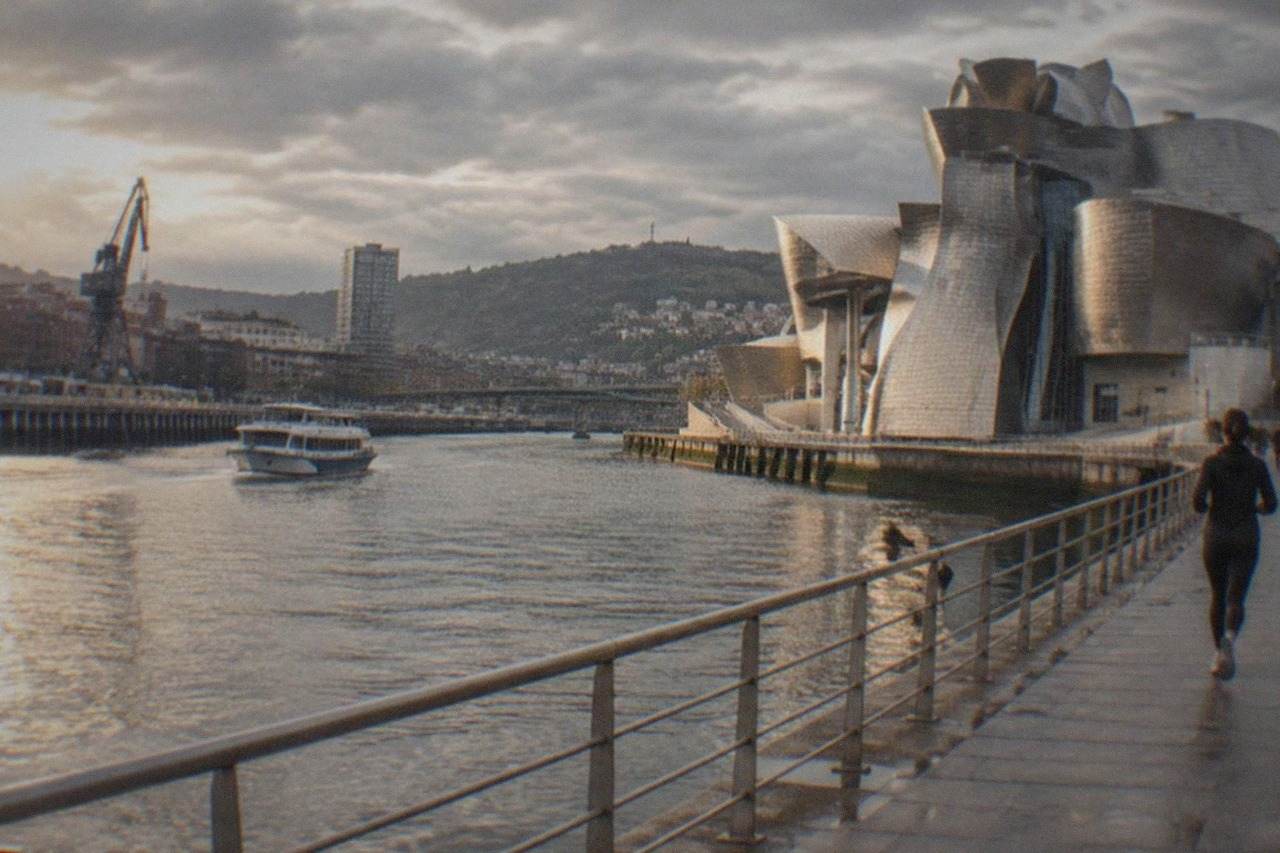
The choice was not accidental. The film's producers wanted an opening location that looked like nowhere else on earth, and the museum's billowing titanium panels delivered exactly that. The sequence helped fix the building's image in the minds of millions of viewers who had never heard of Bilbao, and it remains the single most famous piece of screen exposure the city has ever had. This page from Bilbao Travel Guide covers what was filmed, why the museum worked so well on camera, and what a visitor to Bilbao today needs to know to stand in the same spot.
What Movie Was Filmed In The Guggenheim?
The movie filmed in the Guggenheim was The World Is Not Enough, the James Bond film starring Pierce Brosnan, which used the Guggenheim Museum Bilbao in northern Spain as the setting for its opening sequence. The scene was shot around the museum's riverside exterior and its plaza, giving the titanium building prominent screen time in one of the most-watched film franchises in the world.
The sequence places Bond in Bilbao at the start of the film, and the museum's architecture does much of the storytelling. The reflective titanium panels, the stacked limestone forms and the Jeff Koons sculpture Puppy, the giant flowering dog that guards the entrance, all appear on screen. For a building barely two years old when the film reached cinemas, the exposure was extraordinary. The museum had opened in October 1997 as the centerpiece of Bilbao's regeneration along the Nervion estuary, and the Bond film delivered it to a global audience faster than any tourism campaign could have.
The filming mattered to Bilbao because the city was mid-transformation. The estuary that the museum sits beside was once the working heart of an industrial port city, and the museum's arrival on a former shipyard site was the most visible sign of the change. When cinema audiences saw Bond walking past the museum's curves, they were seeing the new Bilbao, the one that now draws the visitor numbers the city's tourism office reports today. Readers planning a trip can start with things to do in Bilbao and the museum's own visitor page at the Guggenheim Museum Bilbao attraction guide.
Why The Guggenheim Bilbao Worked So Well On Camera?
The Guggenheim Museum Bilbao worked so well on camera because its curved titanium surfaces catch and reflect light differently at every hour of the day, giving filmmakers a building that looks metallic and futuristic from any angle. The design has almost no flat facade, so the camera never finds a dull side of the structure, and the riverside setting frames it against water and green hills rather than ordinary city streets.
That reflectivity is the practical reason the building photographs and films so well. The titanium panels that clad the exterior behave like a mirror for the region's famously changeable Atlantic sky, which is one reason the museum looks different in almost every photograph taken of it. The Basque Country's temperate oceanic climate, with AEMET's Bilbao Aeropuerto station recording an annual mean of 14.7 C and 1,134 mm of rain a year, means the building is constantly lit by shifting cloud, sun and rain-washed sheen. A film crew could shoot at dawn or dusk and get two entirely different buildings.
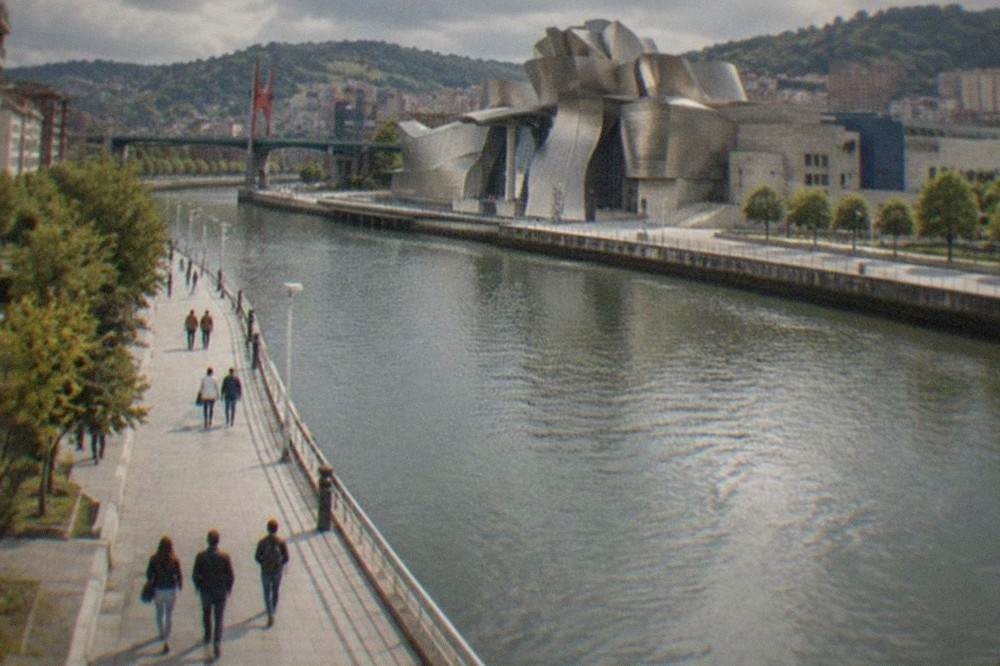
The museum also sits in a district built for pictures. Abandoibarra, the redeveloped riverside quarter around the museum, keeps sightlines open along the water, and the adjacent Zubizuri bridge and the Puente de la Salve crossing appear in many of the same frames photographers chase today. The city's architecture is the subject of its own Bilbao architecture guide, and the wider story of the city's rise is told in why Bilbao is famous. Visitors who want the classic post-Bond shot of the museum usually head to the riverside walk opposite the building, where the full curve reads in one frame.
A guided visit is one way to see the building with the context the film could only hint at. A small-group e-bike tour covers the riverside landmarks efficiently, and a walking tour of the Old Town adds the pre-museum Bilbao that the Bond sequence never shows.
Can You Visit The Guggenheim Museum Bilbao Today?
Yes, the Guggenheim Museum Bilbao is fully open to visitors, charging 18 EUR for a standalone adult ticket and operating Tuesday through Sunday from 10:00 to 19:00, with hours extended to 20:00 during Easter week and again from 15 June to 13 September. The museum's own hours-and-admission page lists those times, and under-18s enter free, so the building Bond ran past is easy to visit on any Bilbao trip.
The museum's own site lists the full admission structure: adults 18 EUR, students aged 18 to under 26 and seniors over 65 at 9 EUR, children and youths under 18 free. Every ticket includes an audio guide, and reduced rates require proof at the desk. There is also a combination ticket with the Bilbao Fine Arts Museum, which is worth knowing about because that museum is itself in transition: it is closed from 31 August to 5 October 2026 for the final phase of its renovation, reopens on 6 October 2026 with a free-entry week through 13 October, and then charges 12 EUR general admission, as reported.
The museum is also one of the most accessible major attractions in Spain. The Guggenheim's own accessibility pages describe full wheelchair access, with two accessible entrances, loaner wheelchairs at the coatroom, accessible restrooms on every floor and an induction loop in the auditorium. The city's transport network matches: Metro Bilbao stations carry elevators and tactile paving, the entire Bilbobus fleet is low-floor with ramps, and the Artxanda funicular offers step-free access with free travel for one companion of a wheelchair user. Anyone planning around mobility needs will find the details in the site's accessibility coverage.
| Visit detail | Figure | Source basis |
|---|---|---|
| Adult ticket | 18 EUR | Museum's own hours-and-admission page |
| Student (18 to under 26) / senior (over 65) | 9 EUR | Museum's own hours-and-admission page |
| Under 18 | Free | Museum's own hours-and-admission page |
| Standard hours | Tue-Sun, 10:00-19:00 | Museum's own hours-and-admission page |
| Extended hours | To 20:00, Easter week and 15 June-13 September | Museum's own hours-and-admission page |
| Audio guide | Included with every ticket | Museum's own hours-and-admission page |
The practical advice is simple: buy ahead in the extended summer season, when the 20:00 closing pulls evening crowds, and check the museum's page for the specific Monday openings it lists in summer and on certain holiday dates. Ticket desks close 30 minutes before the museum closes, and galleries clear 15 minutes before closing.
What Else Should Film Fans See In Bilbao?
Film fans in Bilbao should see the riverside stretch of the Nervion where the Bond sequence was framed, the Puppy sculpture at the museum entrance, and the surrounding Abandoibarra district that gave the film its futuristic backdrop, then branch out to the Old Town for the contrast the movie never showed. The city rewards walking: the Casco Viejo's seven streets, the Ribera Market hall and the riverside bridges all sit within a short stroll of the museum district.
The contrast is the point. Bond's Bilbao was all titanium and money; the real city layers that icon on top of a medieval core. The Casco Viejo, covered in the Casco Viejo Old Town area guide, is where the txikiteo pintxos crawl tradition lives, and the difference between the two Bilbaos is a 15-minute walk. First-time visitors weighing the city against its coastal rival can read is Bilbao worth visiting and the Bilbao versus San Sebastian comparison.
| Bilbao landmark | Why it belongs on a film-fan walk | Verified detail |
|---|---|---|
| Guggenheim Museum Bilbao | The Bond opening's principal location | 18 EUR adult ticket, open Tue-Sun 10:00-19:00 |
| Puppy, museum entrance | The flowering sculpture seen at the museum door | Part of the museum's permanent exterior installation |
| Abandoibarra riverside | The sightlines the film used along the estuary | Redeveloped former shipyard district |
| Casco Viejo | The medieval city the sequence never shows | The original seven-street core of Bilbao |
| Vizcaya Bridge, Portugalete | A UNESCO-listed industrial landmark downstream | Inscribed 2006, first industrial World Heritage site in Spain, gondola 0.60 EUR one-way daytime |
A day trip extends the same logic. The Gaztelugatxe hermitage and the Gernika day trip route show the coastline and history that Bilbao's regeneration was built beside, and both are covered in depth elsewhere on this site.
A chef-led wine and food walk is the natural evening companion to a museum day: it runs through the streets near where the film's action was set and pairs Basque wine with the pintxos counters the city is now as famous for as its architecture.
Common Questions About Movies Filmed In The Guggenheim Bilbao
What movie was filmed in the Guggenheim?
The World Is Not Enough, the James Bond film starring Pierce Brosnan, filmed its opening sequence at the Guggenheim Museum Bilbao in northern Spain. The museum's titanium exterior and its riverside plaza appear prominently in the scene.
Which James Bond movie opens in Bilbao?
The World Is Not Enough opens in Bilbao, using the Guggenheim Museum Bilbao as its principal Spanish location. The building had opened to the public only two years earlier, in October 1997.
Was the Guggenheim Bilbao in any other famous films?
The Bond film is the museum's defining screen appearance and the one almost every visitor asks about. The building's photogenic titanium cladding keeps it in constant demand for photography and advertising shoots, but no other major studio film is as closely associated with it.
Can you visit the exact spot where the Bond scene was filmed?
Yes. The museum's exterior, its entrance plaza and the riverside promenade are all publicly accessible without a ticket, and the Puppy sculpture at the entrance appears in the film. Only entering the galleries requires the 18 EUR adult admission.
How much does it cost to visit the Guggenheim Museum Bilbao?
An adult ticket costs 18 EUR, with students aged 18 to under 26 and seniors over 65 paying 9 EUR and under-18s free, per the museum's own hours-and-admission page. The museum opens Tuesday to Sunday, 10:00 to 19:00, extending to 20:00 during Easter week and from 15 June to 13 September.
Is the Guggenheim Bilbao worth visiting if you have seen the movie?
Yes, and for many visitors the film is only the hook. The museum's permanent works, its rotating exhibitions and the architecture itself reward a half-day, and the surrounding Abandoibarra district plus the Old Town fill the rest easily.
The museum that James Bond made famous is now the anchor of a city that has far outgrown that single scene, but standing on the riverside with the titanium curves overhead, it is easy to see why a film crew chose it. Book the ticket, walk the promenade, and see for yourself.