Is Bilbao Worth Visiting For Tourists?
Is Bilbao worth visiting for tourists? A direct, sourced answer on the Guggenheim, pintxos, day trips, costs, weather and transport in Bilbao, Basque Country, northern Spain.
Bilbao, in Biscay (Bizkaia) province in the Basque Country of northern Spain, is worth visiting for most travellers, and the honest answer to whether it deserves a slot on a Spain itinerary is yes, with one caveat: it rewards a specific kind of visitor. This is a mid-sized city of 346,933 people (Eustat, 1 January 2025) built on a tidal estuary about 15 km from the Bay of Biscay, not a beach resort and not a Mediterranean open-air museum. It is a food, architecture and museum city with an unusually strong day-trip hinterland, and 2025 drew 1,396,841 visitor entries and 2,723,725 overnight stays across hotels and tourist apartments combined, per Bilbao Ekintza's own tourism report. This page lays out the verified case on both sides so the decision can be made on facts rather than postcard impressions.
Is Bilbao Worth Visiting For Tourists?
Yes, Bilbao is worth visiting for tourists who care about food, architecture, museums and coastal day trips, and a weaker choice for travellers whose main goal is beaches, all-day sun or a classic Mediterranean old-town break. The city pairs a world-class art museum, the Guggenheim, with one of Europe's most respected pintxos scenes, and it sits within easy reach of San Juan de Gaztelugatxe, San Sebastián and the Rioja wine region. The climate is temperate oceanic, not Mediterranean, so packing and expectations should follow that reality.
The strongest argument for Bilbao is density. The Guggenheim Museum Bilbao charges EUR 18 for a standard adult ticket and opens Tuesday to Sunday from 10:00 to 19:00, extending to 20:00 during Easter week and again from 15 June to 13 September, per the museum's own hours-and-admission page. The Guggenheim sits a short riverside walk from the Euskalduna Palace and the Old Town's Seven Streets, so a first day covers a striking amount of ground on foot. The food scene backs it up: the best pintxos bars cluster around Plaza Nueva and the Ensanche, and Bizkaia as a province holds one of the densest concentrations of Michelin stars in Spain.
The strongest argument against is weather and tone. AEMET's Bilbao Aeropuerto/Loiu station (1082), 1981-2010 normals, show 1,134 mm of rain a year with November the wettest month at 147 mm. This is a green, atmospheric Atlantic city, and a visitor expecting Andalusian light will be disappointed roughly a third of the time.
| Month | Mean temperature (C) | Mean precipitation (mm) |
|---|---|---|
| January | 9.3 | 120 |
| March | 11.5 | 90 |
| May | 15.7 | 78 |
| July | 20.4 | 50 |
| August | 20.9 | 76 |
| September | 19.2 | 73 |
| November | 12.4 | 147 |
What Makes Bilbao Famous?
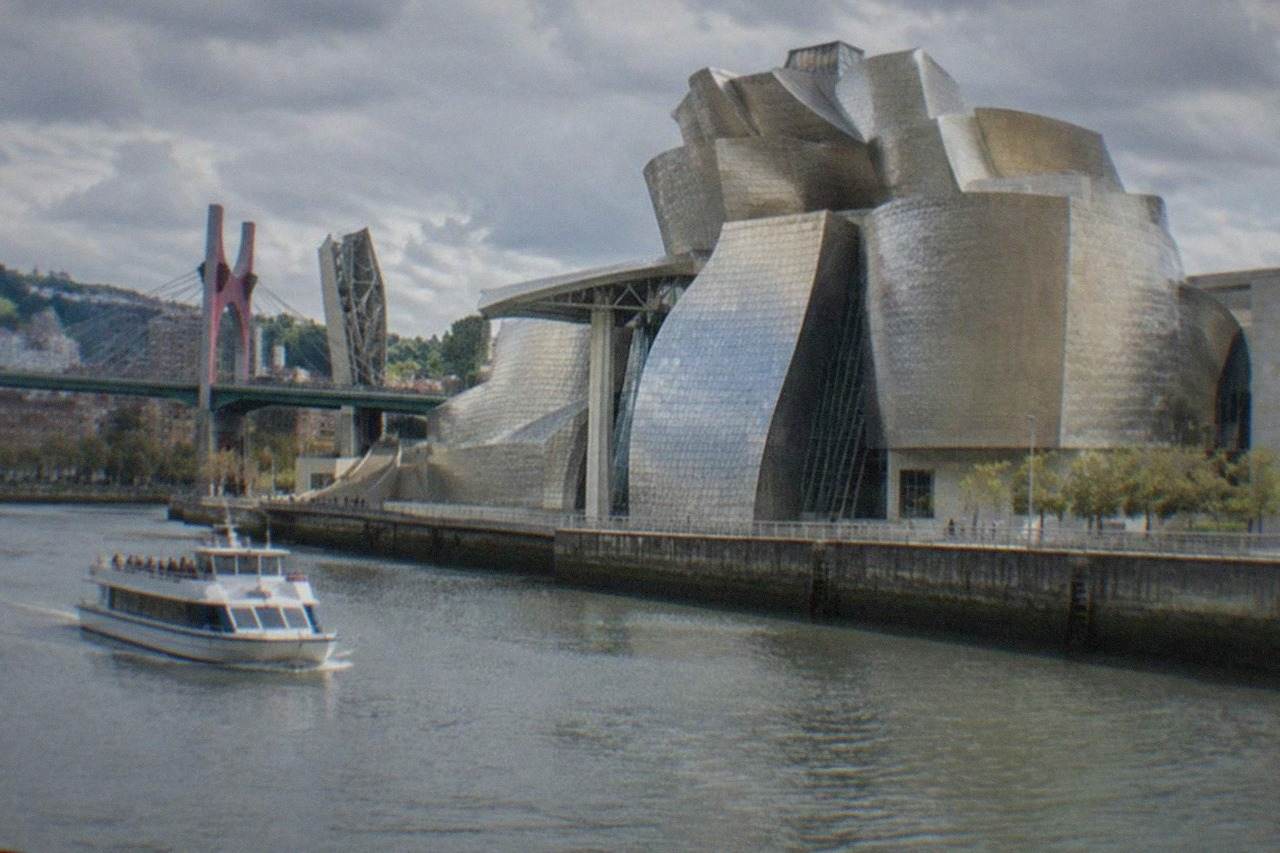
Bilbao is famous above all for the Guggenheim Museum, the Frank Gehry-designed titanium building that opened in 1997 and gave its name to the "Bilbao effect", the idea that a single landmark museum can regenerate an entire industrial city. Beyond the museum, it is known for pintxos culture, the Casco Viejo old town, the UNESCO-listed Vizcaya Bridge at Portugalete, and as the gateway to San Juan de Gaztelugatxe, the Dragonstone filming site from Game of Thrones.
Athletic Club's San Mames stadium adds a football dimension few Spanish cities can match.
The Guggenheim is the anchor and it is genuinely distinctive rather than merely famous. The museum's own site lists a permanent collection strong in large-scale contemporary sculpture, and the building itself, mirrored in the Nervion's tidal water, is the single most photographed subject in the city. The regeneration story is real: a port-and-steel town that lost its heavy industry rebuilt itself around culture, transit and the riverside, and the metro system is part of that same legacy.
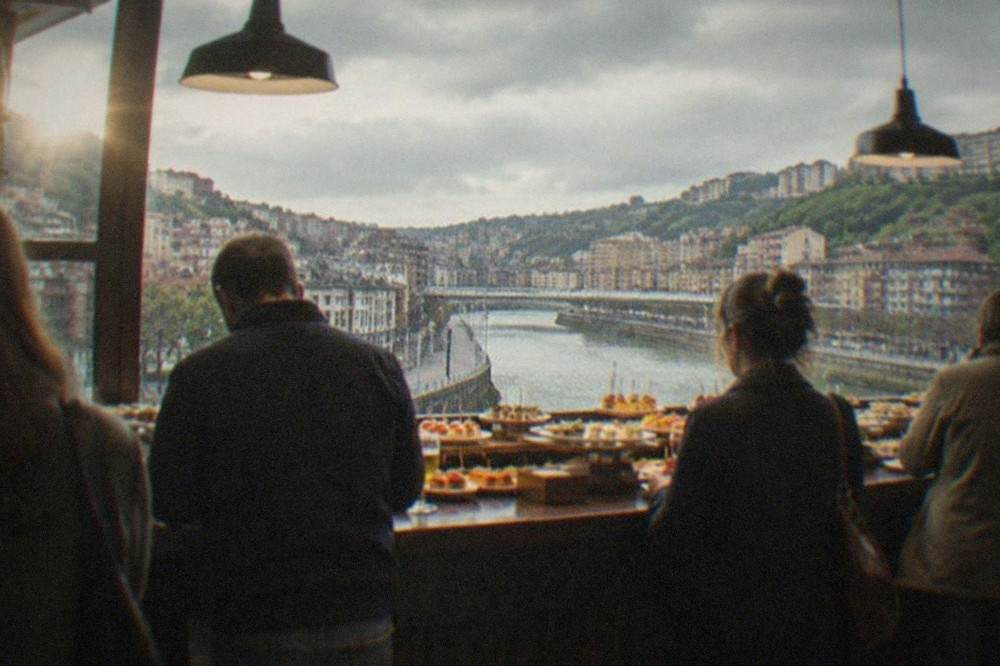
The second fame pillar is food. Pintxos, the Basque answer to tapas, are eaten standing at the bar, and the Casco Viejo and Ensanche hold dozens of high-level rooms within walking distance of each other. The Casco Viejo itself, with its Seven Streets and Plaza Nueva, delivers the historic-city atmosphere many visitors assume they must go further south to find.
For a fuller treatment of the city's reputation, see why Bilbao is famous.
How Many Days Do You Need In Bilbao?
Two full days is the honest minimum for Bilbao itself, and three to four is the sweet spot once the day trips are counted, because the city's biggest strength is what sits within ninety minutes of it. A first day covers the Guggenheim, the riverside and the Casco Viejo; a second adds the Fine Arts Museum, Plaza Nueva and the pintxos circuit; from day three the choice opens between Gaztelugatxe, San Sebastián, the Rioja wineries and the French Basque coast.
Fewer than two days means choosing between the city and its surroundings, and that choice has a cost.
The city proper is compact. The museum district of Abandoibarra, the Ensanche grid and the Old Town all sit within a walkable triangle, and the tram and metro stitch the rest together at low cost: a Metro Zone 1 trip with a Barik card is EUR 1.02, per the CTB Barik fares page, and the Bilbao Bizkaia Card site states its 24-hour version costs EUR 10 with unlimited transport included.
The day trips are where the itinerary math gets interesting. San Juan de Gaztelugatxe, the hermitage on a rocky islet reached by a winding stone causeway, requires a free timed reservation only on official controlled-access days, roughly mid-June to about 20 September plus Easter and holiday weekends per the yearly calendar, and is free without a reservation on all other days. The Gaztelugatxe day trip is the single most popular excursion from the city, and organised versions bundle it with Bermeo, Mundaka and Gernika. The Vizcaya Bridge, a UNESCO World Heritage transporter bridge inscribed in 2006 and the first industrial heritage site in Spain on the list, is a short metro ride away at Portugalete, with its pedestrian gondola crossing costing EUR 0.60 one-way in daytime.
Is Bilbao Expensive To Visit?
Bilbao is moderately priced by western European standards, though the headline museums charge real money: the Guggenheim is EUR 18 for an adult, and the Fine Arts Museum, once it reopens on 6 October 2026 as reported, will charge EUR 12 general admission with a EUR 16 joint Artean pass covering both museums. Transport is cheap, with Barik-card metro fares from EUR 1.02 and a EUR 5 airport bus. No tourist tax applies in 2026; the Bizkaia regional tax takes effect 1 January 2027.
The cost structure favours the visitor who eats at the bar. Pintxos prices generally run low per item at traditional rooms, and the crawl, not the sit-down restaurant, is the economical way to eat well here. Museum admission is the main fixed cost, and the Artean joint pass is the sensible buy for anyone planning both museums, though note the Fine Arts Museum is closed from 31 August to 5 October 2026 for final renovation works, with a free entry week reported for 6 to 13 October 2026.
The tourist tax point matters for anyone comparing 2026 against 2027 trips. A regional tourist tax under Norma Foral 3/2026 takes effect across Bizkaia on 1 January 2027, and Bilbao's approved municipal rates run from EUR 1 per night at pensions to EUR 5 at five-star hotels, with EUR 6.50 for tourist apartments. Visitors in 2026 pay none of this, and reservations made before early February 2026 are generally exempt even once the tax starts.
| Cost item | Verified figure | Source basis |
|---|---|---|
| Guggenheim adult ticket | EUR 18 | Museum's own site |
| Fine Arts Museum general admission (from 14 Oct 2026, as reported) | EUR 12 | Reported reopening rates |
| Joint Artean pass, both museums | EUR 16 general / EUR 8 reduced | Reported |
| Bilbao Bizkaia Card, 24h | EUR 10 | Card's own site |
| Metro Zone 1 with Barik | EUR 1.02 | CTB Barik fares page |
| Airport bus A3247, no Barik | EUR 5 | Bizkaibus |
| Tourist tax in 2026 | None in force | Norma Foral 3/2026, effective 1 Jan 2027 |
For a deeper comparison with its coastal rival, including character differences, see Bilbao vs San Sebastian.
What Is The Best Time Of Year To Visit Bilbao?
July and August are the best months for weather, with AEMET's 1981-2010 normals for station 1082 showing July at 20.4 C mean and just 50 mm of rain, the warmest and driest stretch of the year, and the Guggenheim staying open until 20:00 from 15 June to 13 September. The trade-off is peak crowds and peak lodging prices.
May, June and September offer nearly as good a balance with fewer visitors, while November is the wettest month at 147 mm and the weakest choice for an outdoor-heavy itinerary.
The city's festival calendar can outweigh the weather math. Aste Nagusia, Bilbao's nine-day main festival, runs 22 to 30 August 2026, opening with the txupin rocket at 19:00 in Plaza Arriaga, and it fills the Casco Viejo with concerts, fireworks and txosna street bars every night. A visitor who lands during those nine days gets a version of the city that ordinary weeks do not show, at the price of full hotels and loud streets. BBK Live, the major music festival, next runs 8 to 10 July 2027 at Kobetamendi, with no lineup announced yet.
Shoulder seasons have a specific advantage here: the controlled-access reservation system at Gaztelugatxe applies mainly in summer and around Easter, so a spring or autumn visitor often walks the causeway without booking anything at all. The weather guide carries the full monthly breakdown.
Is Bilbao Easy To Reach And Get Around?
Bilbao is easy to reach and unusually easy to get around for a city of its size. The airport is served by the Bizkaibus A3247 every 15 minutes, taking 15 to 25 minutes to the centre for EUR 5 without a Barik card, with taxis at roughly EUR 24 to 29 including the Artxanda tunnel toll and no airport supplement. There is no metro or rail link to the airport, and the city council's own position is that none arrives before 2035.
Inside the city, the metro, tram, buses and funicular share one integrated Barik fare system.
The transport system is one of the city's quiet strengths. The CTB Barik fares page gives Metro Zone 1 at EUR 1.02 with the card against EUR 2.00 without it, Bilbobus singles at EUR 1.70 without Barik, and the tram at a flat EUR 0.74 with Barik. The Artxanda funicular, which lifts visitors to the hillside viewpoint above the city, is commonly reported to cost EUR 3.50 one-way, though that fare rests on a single source and the official CTB pages do not state the card's own purchase price, which is commonly reported as EUR 3. The Bilbao Bizkaia Card wraps unlimited transport plus museum fast passes into one personal, non-transferable card at EUR 10 for 24 hours.
Accessibility proves surprisingly good: Metro Bilbao's stations carry elevators and tactile paving per its own 2025 accessibility brochure, the entire Bilbobus fleet is low-floor accessible, and the Guggenheim offers two step-free entrances and loaner wheelchairs, per the museum's own accessibility pages.
Common Questions About Whether Bilbao Is Worth Visiting
Is Bilbao worth visiting for tourists?
Yes. Bilbao rewards visitors interested in architecture, museums and food, pairing the Guggenheim with a dense pintxos scene and a strong day-trip hinterland. It is a weaker pick for travellers seeking beaches or guaranteed sun, since the climate is temperate oceanic with 1,134 mm of rain a year.
Is Bilbao cheaper than Madrid or Barcelona?
This site's cost figures cover Bilbao only, so no comparison number is published for the other cities. In absolute terms, Bilbao's key costs are EUR 18 Guggenheim admission, EUR 1.02 metro trips with a Barik card and a EUR 5 airport bus, and no tourist tax applies in 2026.
Can you visit Bilbao without speaking Spanish or Basque?
Yes. The Guggenheim's own site operates in English, museum audio guides and major attractions carry English material, and the tourist infrastructure handles English routinely. Basque and Spanish are both official, and English is common in the visitor-facing parts of the city.
Is one day in Bilbao enough?
One day covers the Guggenheim, the riverside and a pintxos crawl through the Casco Viejo, but it forces a choice against every day trip. Two days in the city plus one or two excursion days is the more rewarding shape for a first visit.
Do you need a car in Bilbao?
No. The metro, tram, buses and funicular share the Barik system, and the main excursions to Gaztelugatxe, Getxo and Portugalete work by public transport or organised tour. A car helps mainly for loose coastal routes, but parking in the centre is the trade-off.
What is the single biggest reason to go?
The combination. A Gehry museum of genuine international rank, a bar-food culture that stands with Spain's best, and a green Atlantic setting within ninety minutes of Dragonstone, San Sebastián and Rioja, in a city small enough to walk. That mix is the honest answer to whether Bilbao Travel Guide territory earns its itinerary slot, and for most travellers it does.