What Airlines Fly Direct To Bilbao, Spain?
Which carriers serve Bilbao Airport (BIO) in the Basque Country, how the airport works, and how to reach the city centre in 15 to 25 minutes once you land.
Bilbao, in Biscay (Bizkaia) province in the Basque Country of northern Spain, is served by a single commercial airport: Bilbao Airport, code BIO, located in the municipality of Loiu roughly 15 to 25 minutes from the centre of the city. It is the region's main gateway and one of the faster airport-to-city transfers anywhere in Spain, because the airport sits close in and the Bizkaibus A3247 shuttle runs every 15 minutes. The airport has also just been approved for the largest expansion in its history, a 364 million euro programme under DORA III that will add 25,000 square metres of terminal space and double the boarding bridges from six to twelve, with completion expected around 2032.
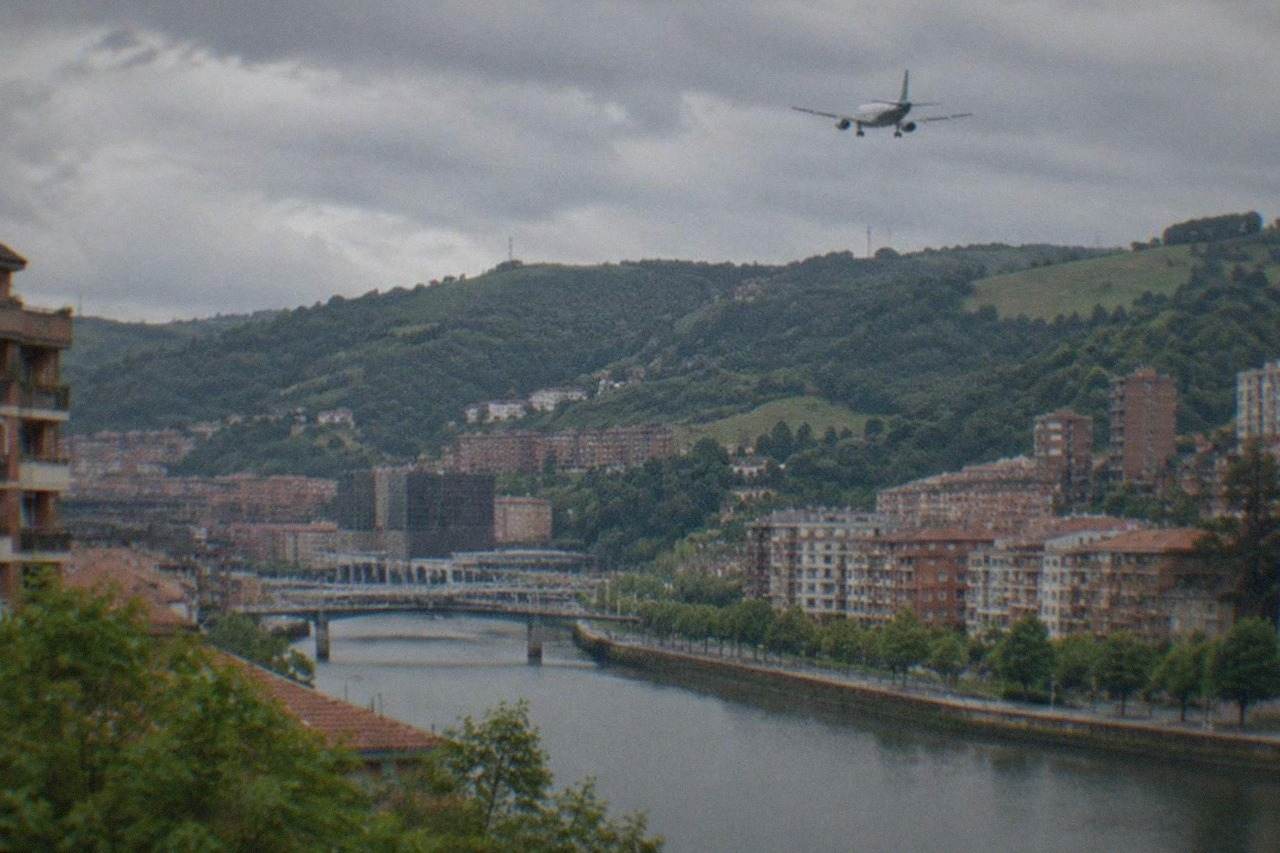
What Airlines Fly Direct To Bilbao, Spain?
Bilbao Airport (BIO) is served by a rotating mix of scheduled Spanish and European carriers plus seasonal operators, and the specific airline list changes with the season, so the authoritative answer is the airport's own live airline directory rather than any fixed list. What is stable is the shape of the network: BIO is a compact single-terminal airport handling over 7 million passengers recently, with the great majority of its routes concentrated within Spain and the wider Schengen area.
Spain is a founding-era Schengen member, so travelers from most of Europe arrive at BIO as domestic-style passengers with no internal border check. The airport's operator, Aena, publishes the current carrier and destination list on its official Bilbao airport pages, and that directory is the only source that stays correct as airlines add summer routes and drop winter ones. Treat any third-party list, including one printed in a guide, as a snapshot: low-cost and legacy carriers alike adjust Bilbao capacity season by season.
What the figures do establish is scale and direction of growth. Bilbao Airport passed 7 million passengers in recent years, and the 2026-approved expansion programme is explicitly designed around a target of roughly 8 million passengers a year. That investment signals confidence in route growth, which matters if you are booking far ahead: more destinations tend to follow terminal capacity, and the doubling of boarding bridges points to more scheduled widebody-compatible stands, though no specific new carrier or route has been announced in the verified material.
For practical planning, the reliable pattern is this. Domestic Spanish routes connect Bilbao to the major peninsula hubs, and European routes cover the main business and leisure cities of the continent. If your home city has no direct Bilbao flight, the common workaround is a connection through a Spanish or major European hub rather than flying into a different Basque airport; Bilbao is by far the region's principal air gateway. Before booking, check the live directory on the airport's own site, then confirm the operating carrier on your booking, because seasonal routes in particular are sometimes flown under codeshares.
How Far Is Bilbao Airport From The City Centre?
Bilbao Airport is in Loiu, on the edge of the city, and the journey to the centre takes 15 to 25 minutes depending on traffic. The Bizkaibus A3247 line runs every 15 minutes, roughly 06:10 to 23:40 from the airport and 05:00 to 22:00 from Bilbao, and costs 5 EUR without a Barik card, about 1.19 EUR or lower with one. A taxi to the centre runs approximately 24 to 29 EUR depending on the fare band.
That bus frequency is the detail most first-time visitors miss. An airport shuttle every 15 minutes, for a flat 5 EUR cash-or-card fare payable to the driver or at the arrivals-level Bizkaibus desk, removes most of the usual pressure to book a private transfer. The bus stops at Termibus and central stops including Gran Via, Plaza Moyua and Alameda Recalde, which covers the main hotel districts of the Ensanche. Schedules can see minor variations on dates like 24, 25 and 31 December, so check the posted times if you land on a holiday edge case.
Taxis are the white cars with a red stripe from the rank outside Arrivals, Level 1. The indicative fare to the centre is about 24 to 29 EUR, metered under regulated tariff bands: Fare 3 applies on daytime weekdays, Fare 4 on nights, holidays and weekends. There is no airport supplement, and the Artxanda tunnel toll is already included in the guidance prices, which is a small honesty win compared with airports that stack surcharges. Ride-hailing apps operate in the city where available, and pre-booked private transfers at fixed prices are the higher-cost door-to-door option.
| Transfer | Frequency / availability | Journey time | Fare (verified) |
|---|---|---|---|
| Bizkaibus A3247 | Every 15 min; airport approx 06:10-23:40, city approx 05:00-22:00 | 15-25 min | 5 EUR without Barik; about 1.19 EUR or lower with Barik |
| Taxi (rank, Arrivals Level 1) | On demand | Approx 10-15 min to centre | Approx 24-29 EUR by fare band, tunnel toll included, no airport supplement |
| Metro or train to BIO | Does not exist | Not applicable | The city council's own position is that no link arrives before 2035 |
One thing to plan around: there is no metro or train link to Bilbao Airport, and the city council's own stated position is that none arrives before 2035. Any source implying a rail connection exists today, or is imminent this year, is wrong. The A3247 bus is the public link, full stop. The full transfer picture, including where the bus stops and how the Barik card works, is covered in detail in the Bilbao airport guide.
When Is The Best Time To Book A Flight To Bilbao?
The best flying window for Bilbao is July and August, when AEMET's 1981-2010 normals for station 1082 (Bilbao Aeropuerto/Loiu) show the warmest and driest conditions of the year: mean temperatures of 20.4 and 20.9 C and monthly rainfall of 50 and 76 mm respectively. The worst is November, the wettest month at 147 mm, followed by the cool, wet December-to-January stretch, so flight prices and weather both argue for summer or the June and September shoulders.
Bilbao's climate is temperate oceanic, Atlantic-influenced, not Mediterranean and not continental, and that shapes what a "good" flight month means here. The city averages 14.7 C across the year and takes 1,134 mm of rain annually, spread through every month. Even the driest month, July at 50 mm, is not bone dry by Mediterranean standards. What you are choosing between is warm-and-drier against cool-and-wetter, never hot-and-arid, and packing for Bilbao means a light rain layer in any season, a point expanded in the site's Bilbao weather guide.
| Period | Mean temperature | Mean rainfall | What it means for flying |
|---|---|---|---|
| July | 20.4 C | 50 mm | Warmest, driest month; peak fares and biggest crowds |
| August | 20.9 C | 76 mm | Warmest mean of the year; Aste Nagusia festival runs 22-30 August 2026 |
| November | 12.4 C | 147 mm | Wettest month; lowest fares, most weather risk |
| January | 9.3 C | 120 mm | Coldest month; quiet city, short days |
Two dated events are worth building a flight around if festivals are your reason to travel. Aste Nagusia, Bilbao's nine-day main festival, runs 22 to 30 August 2026, opening with the txupin on 22 August at 19:00 in Plaza Arriaga; hotel and flight demand spikes that week. BBK Live runs 8 to 10 July 2027 at Kobetamendi, with no lineup announced at the time of this site's research, so treat any artist list you see elsewhere as unconfirmed. The rest of the planning pages sit on Bilbao Travel Guide.
One planning note that almost no other Bilbao coverage has yet: a regional tourist tax under Norma Foral 3/2026 takes effect across Bizkaia on 1 January 2027, with Bilbao's approved municipal rates running from 1 EUR per night for pensions up to 5 EUR for five-star hotels and 6.50 EUR for tourist apartments. Visitors in 2026 pay no tourist tax. Reservations made before early February 2026 are generally exempt from the 2027 charge, so the timing of your booking, not just your flight, has a small financial edge to it.
What Should You Do First After Landing In Bilbao?
The single best first move after landing in Bilbao is to head straight for the pintxos bars of the Casco Viejo or the Ensanche, because the city's food culture is its most immediate introduction: a guided pintxos tour with a local turns the first evening into a working map of the old town, and the plaza-and-bar geography of Bilbao means you eat, walk and orient yourself at the same time. The airport transfer is short enough that a morning arrival leaves a full first afternoon.
Bilbao's fame rests on the Guggenheim, and rightly so, but the verified visitor numbers tell a broader story. Bilbao Ekintza's 2025 tourism report cites 1,396,841 visitor entries and 2,723,725 overnight stays across hotels and tourist apartments combined, while Eustat's hotel-only series shows roughly 1.2 million visitors and about 2.38 million stays on the narrower basis; the two figures use different denominators and should never be merged. Either way, the city draws well beyond its museum, and the first evening is when you feel it: the Siete Calles of the old town fill with locals doing the txikiteo pintxos crawl rather than tourists doing a checklist.
A word on orientation. The city sits on the tidal Nervion/Ibaizabal estuary, about 15 km from the open Bay of Biscay, and it is genuinely tidal, not a beach town. The Guggenheim and the Abandoibarra waterfront sit on one bank of the ria, the Casco Viejo on the other side of the centre, and the Zubizuri and La Salve bridges stitch it together. If you are weighing which base suits you, the site compares the two in old town versus city centre, and the case for the city as a whole is laid out in why Bilbao is famous and is Bilbao worth visiting.
For the first evening specifically, a food walk earns its keep. The pintxos tour with drinks and a local guide covers the bar-hopping format that defines eating in Bilbao, where a crawl of four to six bites with drinks is the local dinner. Check availability if you want the first night handled. The wider pintxos landscape, from Plaza Nueva institutions to the Ensanche classics, is mapped in the site's best pintxos in Bilbao guide.

How Does Bilbao Airport Compare For Day Trips Beyond The City?
Bilbao Airport is unusually well positioned as a base airport, because the city it serves is the transport hub of the whole Basque Country: San Sebastián is about 1 hour 20 minutes by direct bus, the Gaztelugatxe coast is 30 to 45 minutes by car, and the Rioja wine region sits within day-trip range, so a single flight into BIO unlocks coastal, cultural and wine destinations without changing hotels.
The bus to San Sebastián runs direct from Bilbao's intermodal station in about 1 hour 20 minutes at fares in the 8 to 19 EUR range, roughly every 30 minutes at busy times, and it is the practical public option since there is no direct high-speed train. Gaztelugatxe, the hermitage islet known to Game of Thrones viewers as Dragonstone, is a 30 to 45 minute drive, with public buses taking an hour or more; a free timed reservation is required only on official controlled-access days, roughly mid-June to about 20 September plus Easter and holiday weekends, with a daily cap of 1,462 visitors on controlled days and booking always free via tiketa.eus. On all other days access is free without a reservation, and as of the most recent reporting it reverted to free, no-reservation access from 21 September 2026 through the end of September.
This is where the airport choice pays compound interest. A traveler flying into BIO can spend the mornings on Basque coast cliffs and the evenings back in Bilbao's pintxos bars, or push into the French Basque country, Biarritz and Saint-Jean-de-Luz included, on a single long day trip. The trade-offs between the region's two headline cities are compared in Bilbao versus San Sebastian, and the full menu of options starts from things to do in Bilbao.
Common Questions About Flying Direct To Bilbao, Spain
What airlines fly direct to Bilbao, Spain?
The carrier list at Bilbao Airport changes seasonally, so the authoritative source is the airport's own live airline directory on its operator's site. What is stable is the network's shape: a compact single-terminal airport handling over 7 million passengers recently, concentrated on Spanish domestic and wider European routes within the Schengen area, with a 364 million euro expansion approved in September 2026 to grow capacity toward roughly 8 million passengers a year.
How do I get from Bilbao Airport to the city centre?
The Bizkaibus A3247 runs every 15 minutes, roughly 06:10 to 23:40 from the airport and 05:00 to 22:00 from Bilbao, taking 15 to 25 minutes and costing 5 EUR without a Barik card, about 1.19 EUR or lower with one. A taxi from the rank at Arrivals Level 1 costs approximately 24 to 29 EUR depending on the fare band, with the Artxanda tunnel toll included and no airport supplement.
Is there a metro or train from Bilbao Airport?
No. There is no metro or rail link to BIO, and the city council's own position is that none arrives before 2035. The A3247 bus is the only public transport link, running every 15 minutes for most of the day.
Do I need a visa to fly to Bilbao?
Spain is a founding-era Schengen member, so travelers from within the Schengen area arrive with no internal border check. Entry requirements for other nationalities follow standard Schengen rules; check your own government's current travel advice before booking, since requirements such as the upcoming biometric entry system are administered at the external Schengen border, not by Bilbao specifically.
Is there a tourist tax when flying into Bilbao?
Not in 2026. The Bizkaia regional tourist tax under Norma Foral 3/2026 takes effect on 1 January 2027, with Bilbao's approved rates running from 1 EUR per night for pensions to 5 EUR for five-star hotels and 6.50 EUR for tourist apartments. Reservations made before early February 2026 are generally exempt.
Which month is cheapest and driest for flights to Bilbao?
July is the driest month in AEMET's 1981-2010 normals for station 1082, at 50 mm of rain and a 20.4 C mean, but it is peak season for fares. November is the wettest month at 147 mm and typically the quietest for both flights and crowds. June and September offer the best balance of weather and demand.
Flying into Bilbao is, in the end, a low-friction gateway: a single close-in terminal, a 15-minute-frequency bus into the centre, and a city that rewards the first evening with pintxos rather than paperwork.