What Is The Famous Street In Bilbao?
The famous street in Bilbao is Gran Vía Don Diego López de Haro, the grand avenue at the heart of the Ensanche, with the Casco Viejo's Siete Calles as the historic runner-up. Here is what to see on both.
Bilbao, in Biscay (Bizkaia) province in the Basque Country of northern Spain, has one street that appears in nearly every photograph of the city: Gran Vía Don Diego López de Haro, the broad, tree-lined avenue that cuts straight through the Ensanche district. It is the street locals mean when they say "Gran Vía", the street the Christmas lights hang over, and the spine along which most of the city's shopping, banking and strolling life happens. Yet the honest answer has a second half, because the seven medieval lanes of the Casco Viejo, the Siete Calles, are arguably just as famous, and certainly older. This page, from the Bilbao Travel Guide editorial desk, takes both seriously.
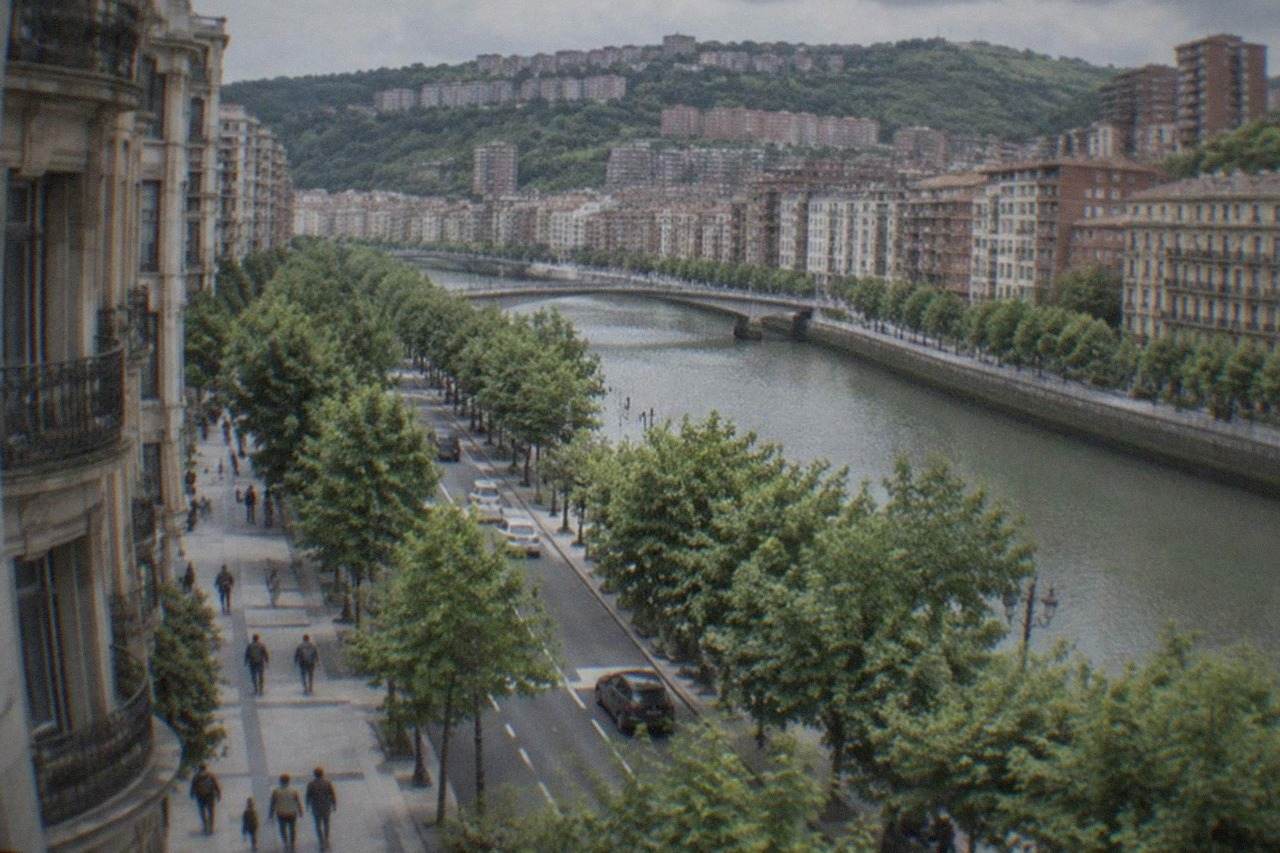
What Is The Famous Street In Bilbao?
The famous street in Bilbao, Spain, is Gran Vía Don Diego López de Haro, a straight, elegant avenue through the Ensanche district, running from Plaza Circular near Abando station up to Plaza Moyúa and on toward the Basque Museum end of the Casco Viejo. It is the city's main shopping and promenade street, and the one many picture when they picture Bilbao.
The street is the product of the city's industrial boom, the era when Bilbao's iron and shipping money pushed the city across the Nervión estuary and out of its medieval core. The Ensanche plan laid out a rational grid of wide blocks, and Gran Vía was designed as its ceremonial centrepiece, carrying the name of the founding family of the city. The architecture along it is a showcase of that era: ornate bank headquarters, department stores, Belle Époque façades and, at the Moyúa midpoint, the two towers that flank the avenue's most photographed stretch.
Plaza Moyúa, formally Plaza Federico Moyúa, splits the street in half and is the natural meeting point. From there the avenue continues northwest past the Chavarri Palace, past the Azkuna Zentroa side streets, and terminates in the green of Doña Casilda park, which sits beside the Fine Arts Museum and a short walk from the Guggenheim. In other words, the famous street is also the most useful street in Bilbao: it connects the transport hub at Abando to the museum district without a single confusing turn.
For orientation, the first-timer's overview of Bilbao puts Gran Vía in context with the other landmarks that made the city's name.
Why Gran Vía Don Diego López De Haro Defines Bilbao
Gran Vía defines Bilbao because it is the single clearest expression of the city's transformation: a planned industrial-era boulevard built by merchant and banking money, now the commercial heart of a city of 346,933 residents (Eustat, 1 January 2025). No other street in Bilbao carries the same concentration of landmark architecture, shopping, and everyday local life, and none is used the same way by residents and visitors alike.
The street works as a promenade in a way few Spanish avenues outside Madrid or Barcelona do. Locals walk it in the evening, shop it on Saturday, and use its café terraces year round, because Bilbao's temperate oceanic climate, with an annual mean of 14.7 C at AEMET's Bilbao Aeropuerto station, keeps the avenue walkable in most seasons. Rain is a fact of life here, 1,134 mm a year on the 1981-2010 normals, and Gran Vía's arcades and café windows are where the city shelters when it arrives.
Three buildings anchor the street's fame. The Chavarri Palace, opposite Moyúa, is the most photographed façade on the avenue, a Flemish-Gothic fantasy that now houses the provincial government. The BBVA tower at the Circular end marks where the financial city begins. And the Gran Hotel Domine at the Alameda de Mazarredo end, one block off the avenue's axis, looks directly toward the Guggenheim, tying the old boulevard to the building that made the Guggenheim Frank Gehry's most famous work.
A guided walk is the efficient way to absorb the avenue's history, and a food tour covers the eating that happens around both ends of it. The Gourmet Tapas and Pintxos Tour in particular works both street scenes, the Ensanche and the Casco Viejo, in one evening, with a local deciding where the group stops. Check availability
What To See Along Gran Vía In Bilbao
Walking Gran Vía from Plaza Circular to Plaza Moyúa takes in Bilbao's densest run of sights: Abando station's stained-glass wall, the Chavarri Palace, the Azkuna Zentroa one block east, the El Corte Inglés department store, and the Moyúa fountain, all within a straight, easy stroll. The street's landmarks sit in a clean line, which is why it anchors almost every first-day itinerary in the city.
The table below lists what the street delivers, stop by stop, in the order a walker meets them coming up from the station:
| Stop on Gran Vía | What it is | Why it matters |
|---|---|---|
| Abando / Cercanías station | Main rail terminus at the avenue's southeast end | Landmark glass façade; arrival point for most visitors |
| Plaza Circular | Round plaza opening the avenue | Entry image of the street, bank towers behind |
| El Corte Inglés | Department store mid-way up | The classic Spanish shopping stop, on the avenue itself |
| Plaza Moyúa | Central square bisecting the street | Meeting point; fountain; Chavarri Palace opposite |
| Chavarri Palace | Flemish-Gothic palace at Moyúa | The avenue's most photographed building |
| Azkuna Zentroa | Culture centre, one block east of Moyúa | Wine warehouse redesign, exhibitions and rooftop views |
| Doña Casilda park | Green space at the avenue's far end | Leads to the Fine Arts Museum and toward the Guggenheim |
The Azkuna Zentroa deserves the detour. Originally the Alhóndiga wine warehouse, it was rebuilt a century after construction as a multipurpose culture centre, and its interior columns, each designed by a different artist, are one of the city's signature interiors. The Azkuna Zentroa guide page covers it in depth.
From the park end, the museum district arrives quickly: the Fine Arts Museum sits on the park's edge, and the Guggenheim is a few minutes further along the estuary.
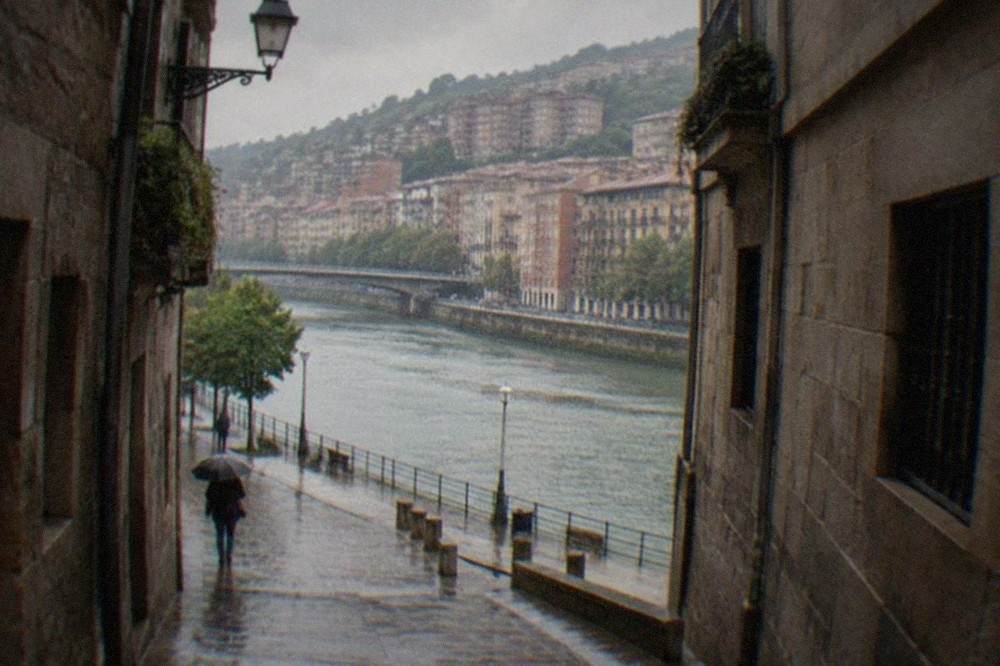
Are The Siete Calles In Casco Viejo Also A Famous Street In Bilbao?
Yes, the Siete Calles, the seven original medieval lanes of Bilbao's Casco Viejo, compete seriously for the title: Somera, Tendería, Belostikale, Carnicería Vieja, Basterkale, Barrenkale and Barrenkale Barrena are the streets the city was actually born on, the core around which Bilbao grew before it ever crossed the estuary. If Gran Vía is the famous modern street, the Siete Calles are the famous historic ones.
The honest framing is that Bilbao has two famous street scenes, and which one a visitor means depends on which postcard they saw. The Casco Viejo's seven lanes run parallel down from the Church of San Antón toward Plaza Nueva, and they carry the oldest fabric in the city: the Santiago Cathedral at the top of the grid, the Ribera Market at the bottom, and the Arriaga theatre at the edge of the district. The Casco Viejo area guide walks the whole quarter street by street.
Plaza Nueva, the neoclassical square that closes the Siete Calles grid, is where the two street cultures meet the pintxos bar. Under its arcades sit several of the bars that Bilbao's food press keeps in its rankings: Gure Toki and Sorginzulo at number 12, Café Bar Bilbao, a bar trading since 1911, Víctor Montes, and Antxoa Taberna. Recent 2025-2026 guides place these among the city's emblematic bars, and the 2025 Bizkaia traditional pintxo championship was won by La Bodeguita del 12 in the Ensanche. Pintxos at traditional bars generally run 2-5 EUR each and drinks 2-3.50 EUR, planning ranges rather than promises; check the chalkboard at each bar.
| Street scene | Era | Character | Signature stops |
|---|---|---|---|
| Gran Vía Don Diego López de Haro | Industrial-era boulevard | Grand avenue, shopping, bank architecture | Plaza Moyúa, Chavarri Palace, El Corte Inglés |
| The Siete Calles, Casco Viejo | Medieval | Narrow lanes, pintxos bars, historic buildings | Santiago Cathedral, Plaza Nueva, Ribera Market |
| Around Plaza Nueva | Neoclassical square | Arcaded bars, txikiteo crawl culture | Gure Toki, Sorginzulo, Café Bar Bilbao, Víctor Montes |
The distinction matters for planning. Travelers deciding between the two districts for a hotel base can read the comparison of Bilbao's Old Town and city centre; the short version is that the Ensanche around Gran Vía is quieter at night and better connected, while the Casco Viejo puts the pintxos bars underfoot. The difference between the city's bar snacks and the tapas found further south is covered in the pintxos versus tapas explainer.
How To Walk The Famous Streets Of Bilbao Like A Local
The classic local route is to walk Gran Vía in the late afternoon, cut down to the Casco Viejo through the Ribera Market area as the bars open, and finish with a txikiteo, a moving pintxos crawl, through the Siete Calles and Plaza Nueva, taking in two or three bars and one pintxo and one drink at each. It costs roughly 25-45 EUR per person for a full evening at traditional bars, and it is the single best way to experience both famous streets in one night.
The order matters less than the pacing. Bilbao's bars fill after 20:00, and the Siete Calles are at their best when the arcades of Plaza Nueva are busy rather than empty. A guided version removes the guesswork entirely: the Gourmet Tapas and Pintxos Tour moves through the same lanes with a local choosing the stops, and there are similar guided crawls covering the same ground with wine pairings. The full bar-by-bar shortlist lives in the best pintxos in Bilbao guide.
Two practical notes for 2026 and 2027 visitors. First, there is no tourist tax in force in 2026: the Bizkaia regional tax under Norma Foral 3/2026 takes effect on 1 January 2027, with Bilbao's approved municipal rates running from 1 EUR per night at pensions to 5 EUR at five-star hotels and 6.50 EUR for tourist apartments, so a 2026 visit pays nothing and a 2027 one should budget for it. Second, the Euskal Museoa, the Basque Museum on the edge of the Casco Viejo, reopened on 10 June 2026 after a four-year, 20.3 million euro renovation, adding more than 5,000 square metres of exhibition space, which makes the Siete Calles end of the walk richer than it has been in years.
Whichever street a visitor chooses as the headline, the two scenes are close enough that a single evening covers both, and a guide who knows the arcades saves the trial and error of picking bars cold.
Common Questions About The Famous Street In Bilbao
What is the famous street in Bilbao?
The famous street in Bilbao, Spain, is Gran Vía Don Diego López de Haro, the grand avenue through the Ensanche district running from Plaza Circular to Plaza Moyúa and on toward Doña Casilda park. The seven medieval lanes of the Casco Viejo, the Siete Calles, are the city's other famous streets and its oldest.
Is the famous street in Bilbao in the Old Town?
Not the main one. Gran Vía Don Diego López de Haro is in the Ensanche, the industrial-era expansion across the estuary. The Old Town's own famous streets are the Siete Calles, the seven lanes at the medieval core of the city.
What can you see on Gran Vía in Bilbao?
Abando station at one end, the Chavarri Palace at Plaza Moyúa, the El Corte Inglés department store, the Azkuna Zentroa one block east, and Doña Casilda park at the far end, leading to the Fine Arts Museum and the Guggenheim.
Where do locals go to eat near the famous streets?
The arcades of Plaza Nueva in the Casco Viejo hold several of the city's best-known pintxos bars, including Gure Toki, Sorginzulo, Café Bar Bilbao and Víctor Montes. Pintxos at traditional bars generally run 2-5 EUR each, with drinks typically 2-3.50 EUR.
How long does it take to walk Gran Vía?
The full avenue from Plaza Circular to Doña Casilda park is a straight, easy stroll of well under half an hour without stops, with time to spare for the squares, the palace and the side streets.
Is Bilbao's famous street walkable in winter?
Yes. Bilbao has a temperate oceanic climate with a January mean of 9.3 C, so the avenue stays walkable year round. Rain is common, 1,134 mm a year on the AEMET 1981-2010 normals, so keep an umbrella handy and use the café terraces when the showers pass.